Article begins
As the United States celebrates the 250th anniversary of its independence, members of the executive, legislative, and judicial branches of the government are rewriting and weaponizing history, narrowing the definition of who and what counts as American. Amid the celebrations, our team completed two years of fieldwork in Pennsylvania exploring the myths and realities of data center investment and expansion in one of the foundational states of the American project. This mythic narrative—shared by companies and media outlets alike—attempts to sell a single vision of a future where data centers represent the latest in a long lineage of industrial development in Pennsylvania.
Credit:
Ana Carolina de Assis Nunes

Celebratory banner of America’s 250th independence anniversary in Carbon County, Pennsylvania.
Data centers are facilities where data is processed or stored, where computer power is redistributed, where “the cloud [also known as the internet] touches the ground.” A data center signals a centralization of information processing and distribution, especially as it houses the cloud and computing technologies that rely on its infrastructure.
Credit:
Ana Carolina de Assis Nunes
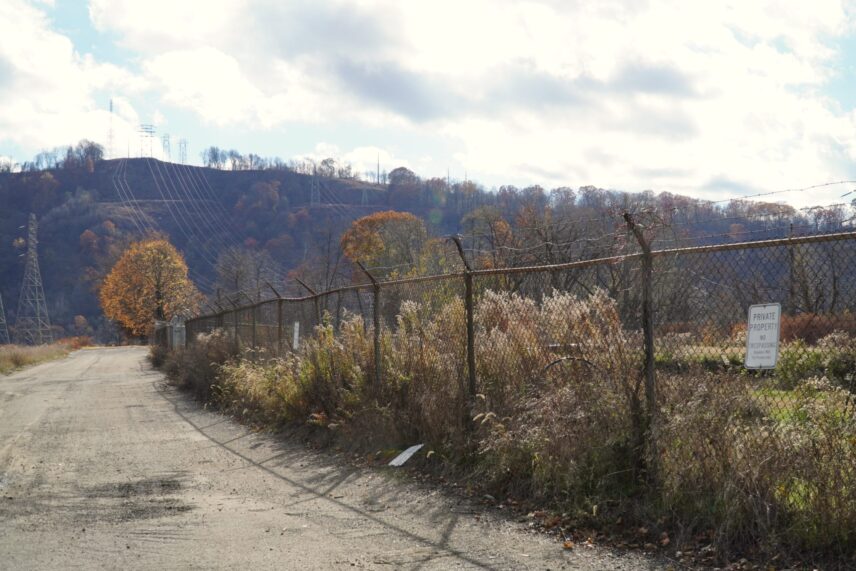
A data center construction site just outside of Pittsburgh, Pennsylvania.
Pennsylvania’s forested landscape is crossed by rivers and railroads, and dotted by coal mines, power lines, and hulking industrial ruins from the steel-making era. Today, some lawmakers and private investors see the state as a national hub for data center and AI infrastructure. This aligns with federal initiatives such as the Trump administration’s AI Action Plan, which encourages state legislation to accelerate AI infrastructure and energy development.
Credit:
Ana Carolina de Assis Nunes
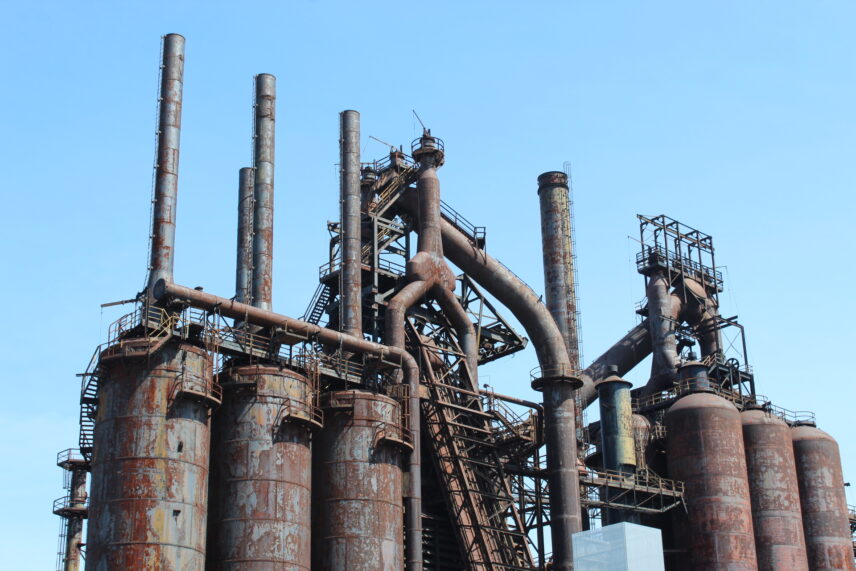
The former Bethlehem Steel stacks, in Bethlehem, PA.
In our fieldwork, we observed multiple spatial and temporal layers across rural and late-industrial areas of Pennsylvania as the state confronts yet another sociopolitical and economic transformation, now pushed by Big Tech. What is the shape of this new American myth? What’s the role of industry in this new future? Is artificial intelligence investment a return to blue-collar work and an age of prosperity—a promise sold by politicians and hoped for by disillusioned communities who have borne the brunt of rapid deindustrialization?
Credit:
Livia Garofalo
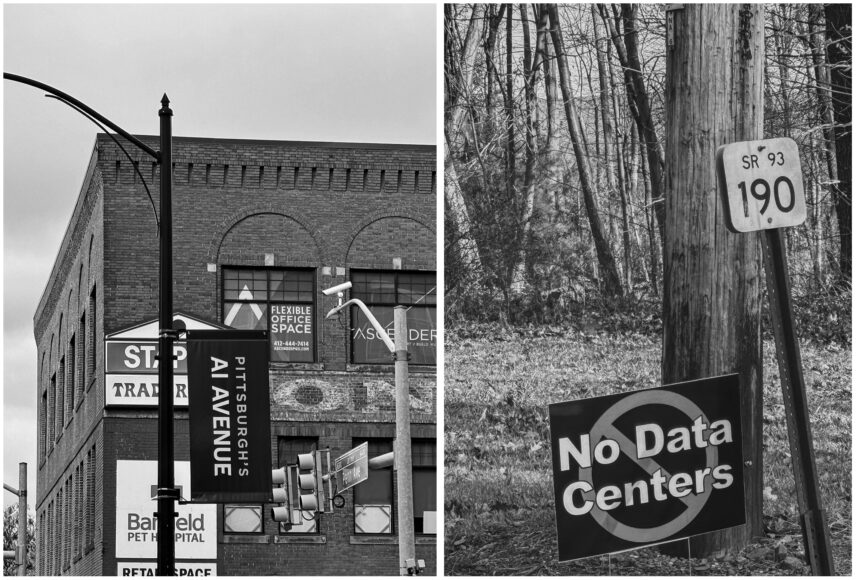
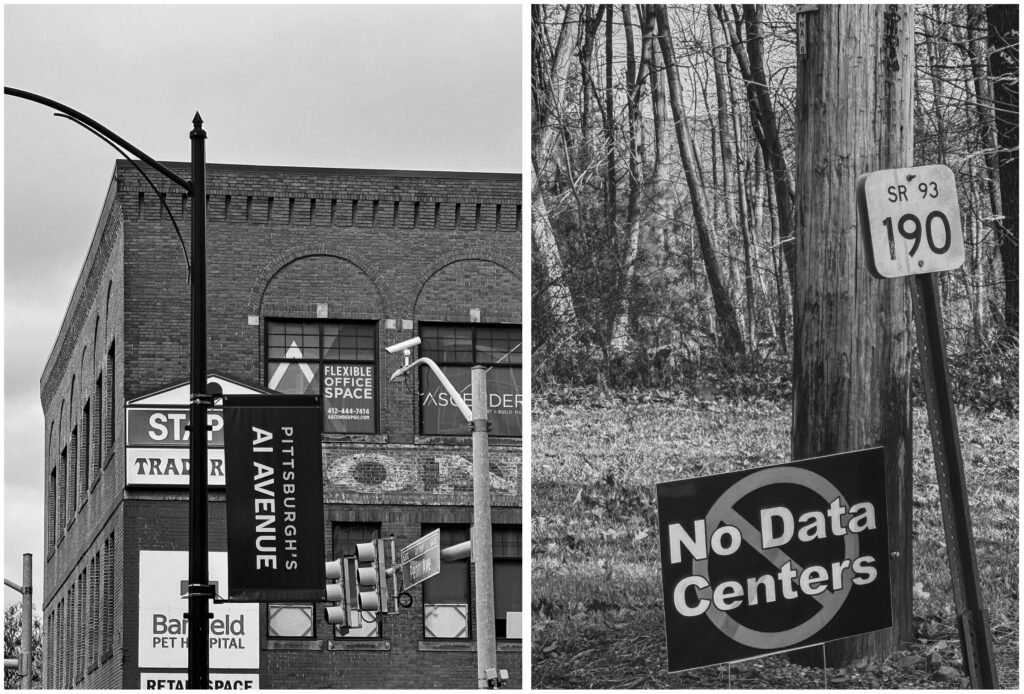
Contrasting views. Left: Politicians and industrialists promote AI and data centers in PA. Right: Community members protest their presence in their neighborhoods.
On one hand, Pennsylvania is being framed as an “AI-ready” state, primed to serve as a national hub for data center and AI infrastructure development given its energy and natural resources: the state is the second-largest natural gas and nuclear producer, third in coal production in the US, and possesses a large water supply. On the other hand, because of the state’s rich industrial history, Pennsylvanians are familiar with boom-and-bust cycles, and especially in areas such as Homer City, residents are not buying the promises of the data center industry.
Credit:
Livia Garofalo
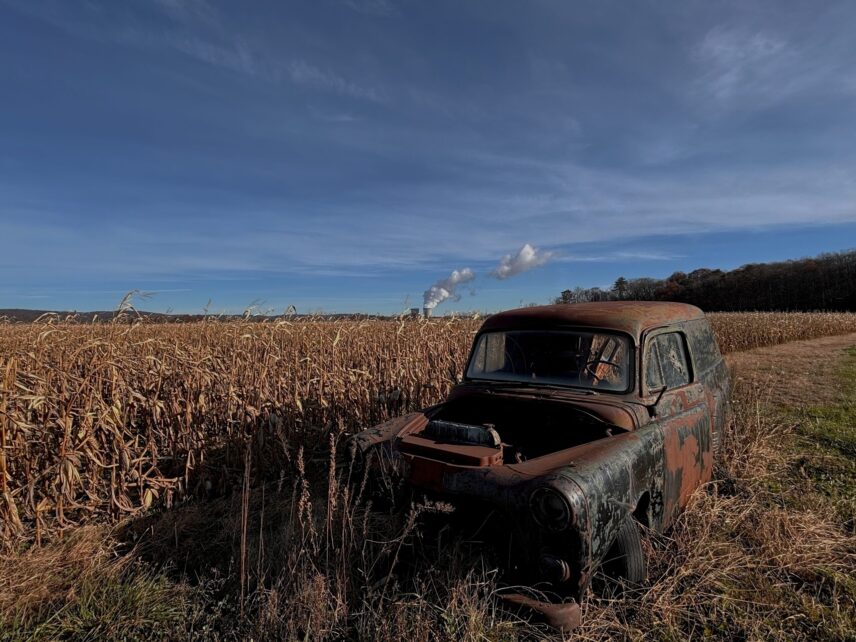
Nuclear plant and dried cornfield in Archbald, PA, one of the sites proposed for a future AWS data center.
Credit:
Livia Garofalo
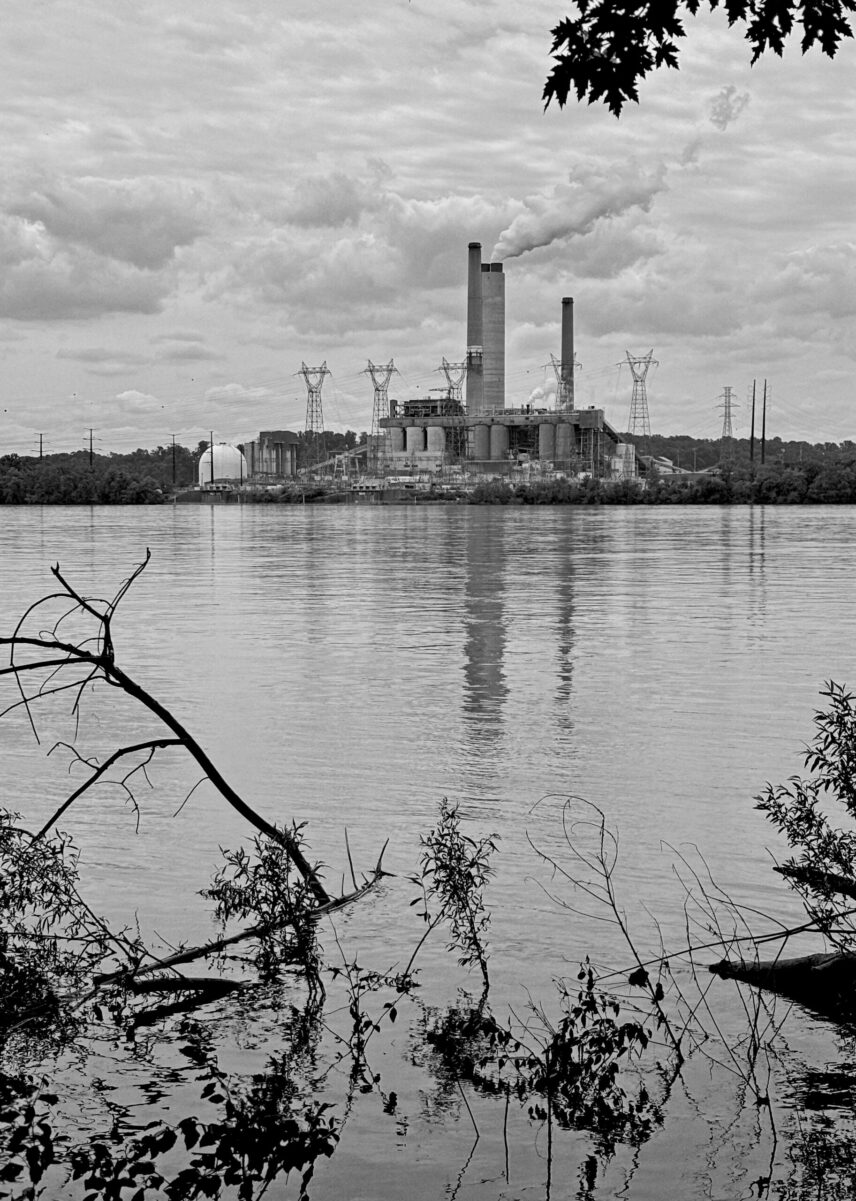
An electric hydropower station on the Susquehanna River.
Our images embrace this complexity. They showcase how both landscape and people have survived decades of resource and labor extraction, while also documenting the growing opposition to big tech and data centers on the ground. They display an inflection point in the American myth at a time when distrust in government has become pervasive among Pennsylvania residents.
Credit:
Ana Carolina de Assis Nunes

A researcher photographing another researcher – behind the scenes of a collaborative ethnographic project.
As anthropologists working in a team, we observed together, co-wrote field notes, and are co-authoring a final report. The myth of the lone anthropologist has dominated disciplinary training in the field for decades, yet collaborative ethnography calls its principles and practices into question. In other words, with this project, we also question ethnographic authority, acknowledging that anthropologists rarely work alone.
Fieldwork has always been a delicate subject for anthropologists. It is often described as a “rite of passage” associated with a masculine figure “heroically roughing it in a faraway ‘field’ site in which he must test his own physical limits in a challenging environment.” Doing ethnographic fieldwork beyond traditional methods has allowed us to part ways with the “default fieldworker,” who is always historically situated, classed, gendered, and racialized.
As we study a pivotal moment in American history, our approach also prompts us to reckon with the stories we tell about our own discipline, who gets to practice it, and how. Our images reflect this process of reckoning.
Joshua Babcock is the section contributing editor for the General Anthropology Division.