Episode 50: How Can I Involve My Kids In The Family Travel Planning? – The Wandering Daughter


In this episode of the Worldschooling Q&A Podcast, Astrid and Clint answer how families can involve their kids in family travel planning.
Worldschooling Q&A Podcast – Episode 50
Hosts: Astrid & Clint, creators of The Wandering Daughter
Title: Episode 50: How can I involve my kids in the family travel planning?
This post may contain affiliate links. That means I may receive a small commission if you click on the link and purchase something. But don’t worry, this will not result in any extra costs to you.
Worldschooling podcast episode summary
In this episode, we dig into a question that comes up constantly in worldschooling circles: how do we actually involve our kids in family travel planning? It is one thing to say kids should have a voice, and another thing to build family travel planning habits that hold up when itineraries get complicated.

This episode connects directly to our own family travel planning story, starting with our four and a half years of full-time travel and continuing into the shorter vacations we take now that our kids are back in traditional school.
We walk through practical family travel planning tools we have used at different ages: offering toddlers a short menu of choices, letting older kids pick destinations, and eventually handing teens a real planning project, like the week our kids mapped out an entire day in London using a maps app and a budget.

Worldschooling consultations
Meet with Clint and Astrid for personalized help with your worldschooling plan.
We also talk honestly about what happens when family travel planning goes sideways, like the day our daughter just wanted to go home from Edinburgh Castle. This episode is for any parent who wants family travel planning to feel like a shared family project instead of a chore that falls entirely on the adults.
Why family travel planning benefits from including kids early
Family travel planning works better when kids are part of it from the start, not handed a finished itinerary. We have found this true at every age and stage of our travels.
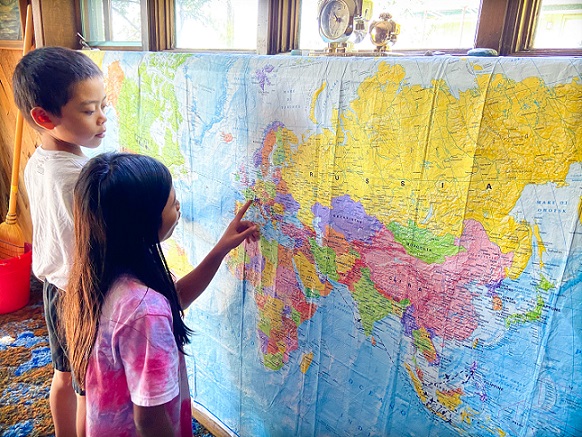
Reducing parental stress through shared family travel planning
One of the biggest benefits of collaborative family travel planning is that it takes pressure off the parents. When kids help choose activities or work through a list of options, that input genuinely lightens the load.
It also protects against the worst version of family travel planning: spending weeks building an itinerary, only to have your kids reject it the moment you arrive. Giving kids a stake in the plan from the beginning heads that off.
Avoiding the sting of rejection in family travel planning
Family travel planning can feel personal when a kid says they would rather stay at the hotel than go out. It is easy to interpret that as rejection of all the work you put in.
We have learned to see it differently. When kids help build the plan, an activity they later skip was still their choice, not something imposed on them. That changes how the moment lands.
Ready for a change? Take the first step to living a life of full time travel.
Letting kids flag pace and downtime needs
Involving kids in family travel planning from the start also gives them room to say when a schedule feels too busy. Our teenage daughter can now tell us directly when a day is packed too tight.
That feedback lets us build in down days or slower activities before we even leave home, which makes the whole trip run smoother. Down time is very important to us, and something we include in every trip that we do.
Family travel planning at every age, from toddlers to teens
Family travel planning doesn’t look the same at every age. What works for a five-year-old looks nothing like what works for a fourteen-year-old. Good family travel planning adjusts for that.

Involving toddlers and young kids in family travel planning
With younger kids, family travel planning starts with offering a short list of choices rather than open-ended questions. We might describe a park, a museum, or a battleship exhibit and ask which one sounds interesting.
We also use videos and movies tied to a destination to get young kids excited and talking. Kids respond more to visual things at that age. This is not about handing them full responsibility. It is about gauging interest and building enthusiasm early.

Get prepared for any emergency with the insurance made for digital nomads!
Letting older kids help choose destinations
As kids get older, family travel planning can expand to include picking actual destinations. For example, when we planned for our four-year trip, we started by asking everyone to name three places they wanted to go.
Our daughter picked Italy, France, and China. Our son, who was turning five, picked the beach, New York City, and Africa, which were not exactly countries, but we understood what he meant and kept those interests in mind throughout our travels.

Following through so family travel planning input feels real
A key part of family travel planning is not treating a kid’s request as something that disappears if you cannot act on it right away. When the pandemic forced us to put trips to Madagascar and Japan on hold, we kept that in mind. And we kept looking for opportunities when we could actually go on those trips.
We eventually made it to Japan because we never let that idea drop out of our family travel planning conversations. Circling back later matters as much as listening in the first place.

Get weekly worldschooling tips sent to your inbox with my Worldschooling Wednesday email series.
Giving teens real ownership of a trip
By the time kids are teens, family travel planning can shift toward real responsibility. We know friends who gave their teenage daughter a budget and a framework, then let her plan an entire trip, bookings and all.

We have moved toward smaller versions of that ourselves. Before a week in London, we had our kids research attractions, plan routes using a maps app, and calculate costs for an entire day. This turned family travel planning into a genuine project for them.
Submit your worldschooling questions here!
Key topics covered in this episode
Why we involve kids in family travel planning
- Kids feel more engaged and excited when they have a voice in the plan
- Shared family travel planning reduces stress on parents
- It prevents the letdown of planning a trip kids do not want to do
Handling rejection during family travel planning
- A kid skipping a planned activity is not a rejection of the parents’ effort
- Framing choices as the kid’s own reduces hurt feelings on both sides
- Balance is needed between structure and letting kids opt out

Family travel planning for toddlers and young kids
- Offer a short menu of choices rather than open-ended questions
- Use videos or movies tied to a destination to build excitement
- Focus on gauging interest, not handing over full responsibility yet
Learn more about the amazing family travel resources we use for worldschooling!
Choosing destinations together
- Have each family member pick destinations they want to visit
- Kids’ answers do not need to be literal countries to be useful
- Revisit skipped destinations later so kids see their input mattered
Giving teens real responsibility in family travel planning
- Some families hand teens a budget and let them plan an entire trip
- We had our kids research, route, and cost out a full day in London
- Age-appropriate autonomy builds planning confidence over time
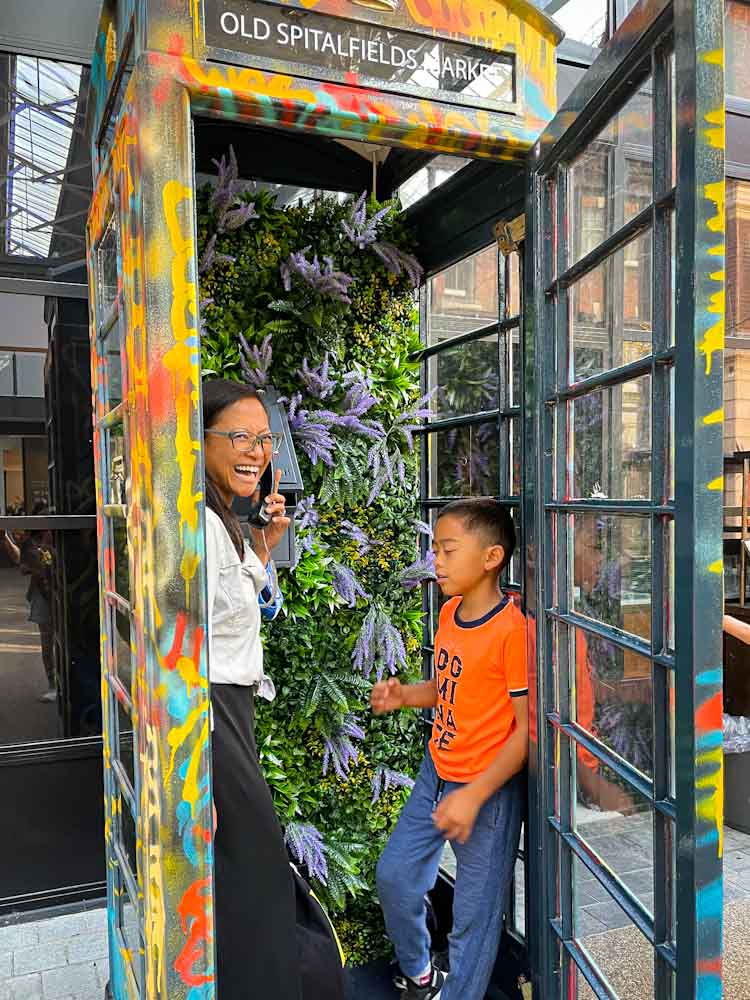
Reflection and feedback loops
- Ask kids for feedback during and after a trip, not just before
- Use negative feedback, like wanting to leave early, as information, not judgment
- Bring meaningful moments home and make them part of your family rituals
Managing pace and expectations
- Busy family schedules at home can make a packed vacation feel like more of the same
- Slowing down the week before a trip can create space for kids to relax
- Long-term travel makes it easier to slow down than a single week off

Find the perfect place to stay during your worldschooling adventure through Booking!
Episode chapters
00:00:00 – Introduction
00:00:15 – Astrid’s Worldschooling Q&A Welcome
00:01:00 – Today’s Question: How Can I Involve My Child in Travel Planning?
00:01:08 – Why Worldschooling Families Involve Kids in Planning
00:02:44 – Avoiding the Sting of Kids Rejecting the Plan
00:04:36 – Involving Toddlers and Young Kids from the Start
00:07:03 – Letting Older Kids Help Choose Destinations
00:08:19 – Three Dream Destinations for the Big Trip
00:13:24 – Kids Plan Their Own Day in London
00:14:12 – ↩ Source of Intro Clip: The Singing Elevator in London
00:16:49 – Getting Feedback and the Edinburgh Castle Lesson
00:24:18 – Wrap-Up and Where to Learn More

Further worldschooling resources