Buying Your First Charcoal BBQ Setup: What Actually Matters (And What Doesn’t)

Everyone who barbecues on charcoal has the same story. They bought the wrong gear, had a shocker of a first cook, and nearly went back to gas.
Most of that is avoidable. It’s usually not a skill problem. People just spend money in the wrong order, buy fuel that doesn’t suit how they cook, and skip the cheap stuff that actually makes the difference.
So here’s how we’d do it if we were starting over.

This is the one people get backwards. They’ll drop serious money on a grill, then grab whatever charcoal’s on special.
Your barbecue holds the heat. Your fuel makes it. If the fuel’s damp, full of binders or built from dust and offcuts, it doesn’t matter how good the hardware is. You’ll spend the whole arvo fighting the temperature and thinking you’re doing something wrong.
Cheap charcoal usually isn’t cheap either. It burns through faster so you use more of it, and it tends to throw enough ash to choke your airflow halfway through the cook. Work it out per cook rather than per bag and the good stuff often comes out in front.
So before you think about anything else, work out which fuel suits the way you actually cook.
They do different jobs, and most people end up keeping both around.
Briquettes are generally all the same size and shape, so they burn at a steady rate and hold temperature for ages. That makes them the go to for anything where time matters: low and slow, rotisserie, a long afternoon feeding a crowd. Our Premium Briquettes are 100% natural hardwood with no chemical additives or binders, which is a big part of why they’ve ended up behind the line in so many restaurants.
Lump charcoal lights quicker and runs hotter. Searing steaks, skewers, anything where you want to be eating within the hour? That’s lump. Our Professional Hardwood Lump is single origin citrus hardwood, so it’s dense, it gets properly hot, and it won’t overpower whatever rub you’ve put on.
If you want to go deeper, we’ve broken down briquettes versus hardwood lump properly.
Be honest with yourself here. Not how you’ll cook once you’ve mastered it. How you cook right now.
If it’s mostly weeknight dinners and a weekend feed for four, a kettle does nearly everything you need, and does it well. Add a rotisserie attachment down the track and you’ve covered most of what a much dearer grill would do.
If you’re genuinely into the idea of long cooks, brisket, pork shoulder, all-day smoking, then a dedicated smoker makes sense. But buying one first, before you’ve done twenty short cooks and worked out how your fire behaves, is how people end up with an expensive thing sitting in the corner under a cover.
And if space is tight, a tabletop or portable unit isn’t settling. Plenty of blokes cook on nothing else and eat better than most.

None of this costs much, and it makes more difference than anything else you’ll buy.
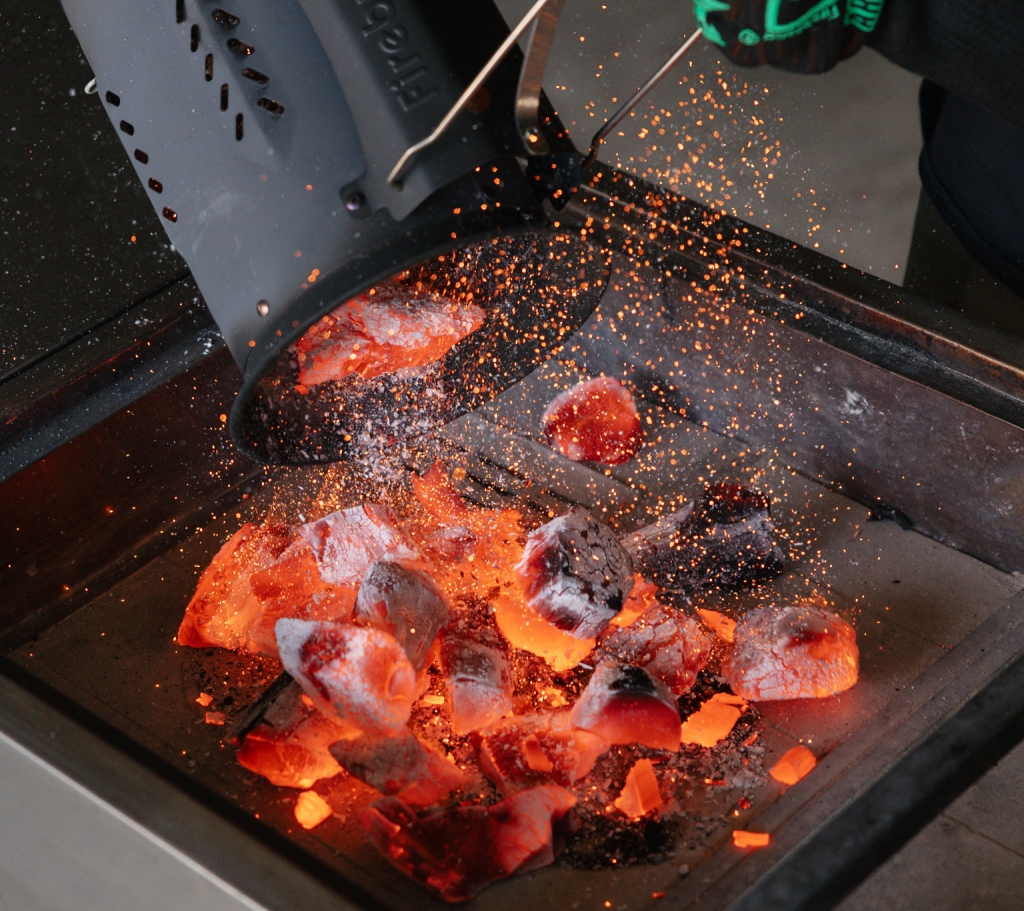
A chimney starter. If you get one thing, get this. Fifteen minutes, a couple of firelighters, and your fuel’s lit evenly right through. No fluid, no chemical taste, no half-lit coals wrecking the first hour. We’ve covered how to light charcoal properly if you want the method.
A thermometer. Not the one in the lid. That’s measuring the air up near the top and not much else. A probe tells you what’s going on at the grate and inside the meat. Once you’ve got one you stop guessing, and that changes everything.
Decent tongs and a heat glove. Long enough to keep your arms out of the fire, sturdy enough to shift a whole chook without dropping it.
That’s about it, really. Everything else can wait until you notice you’re missing it.
You can skip most of the gadgets. Not these.
How much fuel to use. Most people either light nowhere near enough and run out mid-cook, or light a full chimney for a couple of snags and waste the lot. Getting this right saves you money every single time. Here’s how to work out how much charcoal you need.
Heat zones. Instead of spreading the fuel evenly across the base, bank it all to one side. Now you’ve got a hot side for searing and a cooler side for cooking things through without burning them. This one change fixes more problems than any bit of kit will. Here’s how heat zones work.

Smoking woods are worth getting into, just not on day one. Get comfortable running a clean fire first, then start playing with wood and flavour once you’re not thinking about the fire anymore.
Same with the specialist gear. Rib racks, skewers, baskets, injectors. They’ve all got their place, but none of them will make you a better cook until the basics are sorted.
And if you’re already wondering about longer cooks and which fuel suits them, you’re further along than you think.
Spend on fuel. Buy the barbecue that matches what you actually do, not what you picture yourself doing. Get a chimney and a thermometer. Bank your charcoal to one side.
Do those four things and you’ll be cooking better than plenty of people with far dearer setups. The rest is just tinkering.
Still not sure what suits you? Come see us at Arndell Park or give the team a ring. We’ve been at this since 1995, and we’d rather talk you into the right thing than the expensive thing.