

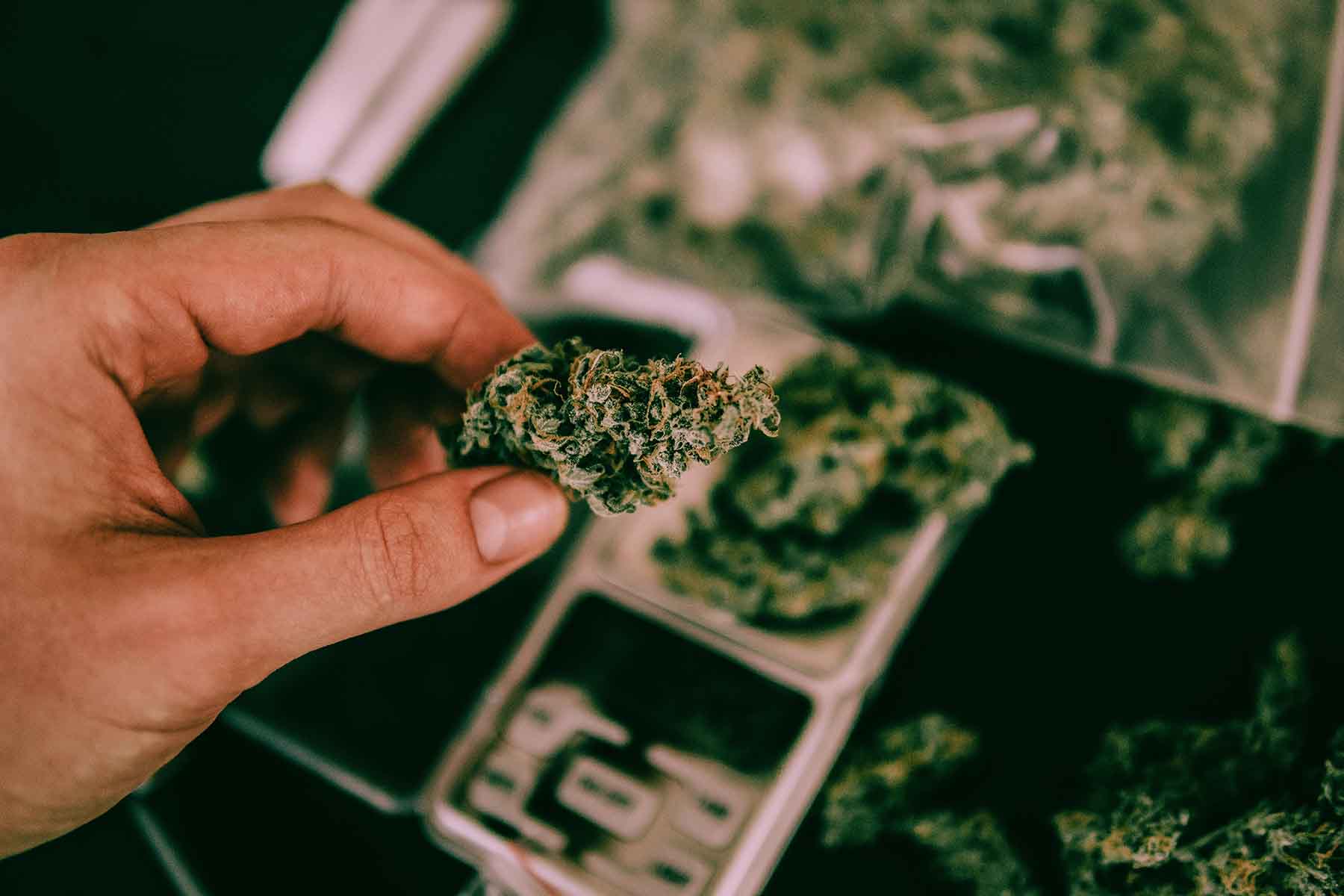
Few strains are as storied in UK cannabis culture as Stardawg. During the 2010s, it went from an exotic American import to something found almost everywhere, a success that eventually turned into backlash. For some people, “dawg” became shorthand for strong, pungent cannabis. For others, the name was so ubiquitous that it became associated with poor-quality, cheaply grown weed and a one-way ticket to asking what else was on the menu.
Did Stardawg deserve the reputation it developed?
The rise of Stardawg in the UK
Like many modern strains, Stardawg’s story begins in the United States, where JJ-NYC of Top Dawg Seeds crossed Chem 4 with Tres Dawg. Its ancestry placed it within the Chem family, known for sharp, diesel and chemical aromas that became central to Stardawg’s identity.
For British consumers waking up to the potential of American genetics in the 2010s, Stardawg’s heritage carried its appeal. Legal cannabis markets were opening in parts of the US, and photographs of carefully presented flowers began circulating through websites, forums and social media. US strains offered the prospect of something different from the familiar European genetics commonly circulating in Britain, like Cheese and Haze.
Stardawg became well known for its high THC content, which commonly reaches around 20–25%, along with its strong fuel, diesel and chemical aroma. The plants grow quickly, needing around 8–10 weeks of flowering to produce roughly 450–600 g/m² when grown indoors under good conditions. This made the strain attractive to both personal and commercial growers looking to maximise output from illicit grow spaces. Those equipped with the right skills could produce substantial crops of potent, resinous flower without an unusually long flowering period. Its distinctive smell gave buyers something recognisable, and its increasingly familiar name gave sellers a useful way to market it.
In short time, demand and production reinforced each other. People asked for dawg, so growers had a commercial reason to keep supplying it. Breeders spun out their own spin on the original genetics, selling cuttings and Stardawg seeds which retained the Chem 4 and Tres Dawg pairing.
The lore like “Manny cut” from Manchester helped Stardawg become well established in the UK market, and to those who have been around cannabis for some time, it might now seem wild that the strain was initially seen as a designer brand. A 2021 Manchester Metropolitan University study found Stardawg was readily associated with high-end, premium-priced cannabis, with one respondent stating that “If it’s something that’s specifically marketed as this is a brand name, be it Cali, be it Stardawg, I think that definitely commands a higher price.” But just as quickly as the strain became popular, the tide began to turn against Stardawg.
Why did Stardawg develop a bad reputation?
In time, Stardawg fell foul of the old adage that you can simply have too much of a good thing. Overexposure played a major role – people who had once been excited to find Stardawg started complaining that everything on every menu seemed to be dawg.

Once a strain becomes a regular fixture, every disappointing example adds to its reputation. With suppliers trying to meet demand, quality began to vary drastically. Poorly finished or badly stored flower could still be sold under a known name that commanded a higher price, while Stardawg’s naturally sharp profile could become particularly unpleasant if the plant wasn’t well grown. Much of the backlash was rooted in oversupply, inconsistent quality and the UK market surrounding Stardawg rather than the original cultivar itself.
Stardawg’s commercial appeal in turn created a vulnerability. Its genetics could attract both careful growers and those interested mainly in churning out another saleable crop. Both could sell their flower under the same name, leaving consumers to judge the strain through very different experiences. Before long, it became a bog-standard crop being passed off as something else. In leafie’s reporting on the rise of “Cali weed” in the UK, a Midlands dealer admitted presenting Stardawg as a rare strain in premium packaging to get “at least double the money” for it.
Stardawg’s reputation was built on its distinct characteristics. The sharp, fuel-heavy character was part of its appeal, but that didn’t mean it was going to suit everyone. Disliking that profile is a perfectly reasonable preference, and as it became more prevalent, sometimes the only strain on offer, many consumers became more vocal about their displeasure.
There was, perhaps, an even simpler complaint: people wanted a change.
As sweeter, dessert-style cultivars attracted attention, Stardawg’s unique aroma and taste offered less novelty. For someone who had encountered it repeatedly, another good example could still feel like a dull choice. Enthusiasm for a strain can fade without anything happening to the plant.
Stardawg 2.0
Despite its fall from grace, Stardawg still survives. Well grown, it still commands a place in people’s strain rotation, and the genetics have given breeders material to work with to create modern variants. Bulk Seeds’ Purple Stardawg crosses Stardawg with Grape Train Kush, bringing grape and fruit characteristics into the familiar diesel profile, with variation in how strongly individual plants express each parent. It offers an example of breeders finding different possibilities in genetics that some smokers had grown tired of.
In truth, Stardawg never really disappeared from the UK. It just took a step out of the limelight. The 2020s have seen American hybrids, dessert strains and colourful crosses step forward to become the new hype strains, with many being in high demand for a short period before being replaced by something else. That gave Stardawg some breathing room. Many people who once avoided it are now happy to consume a good example again, while plenty of others never stopped loving the strain in the first place.
Stardawg’s success gave it an unusually prominent place in British cannabis culture, and that prominence made every flaw more familiar. By the time smokers began asking for anything else, poor quality, personal preference and boredom had become difficult to untangle. Strip away the years of hype and fatigue, however, and Stardawg remains an influential American strain with an unusually important place in modern UK cannabis culture. Brits didn’t necessarily decide that Stardawg was bad; they just had a bit too much of it.
This is a paid-for article published in conjunction with the brand as part of an advertising campaign. Paid-for content helps support our mission of delivering quality journalism.





![Top Bong Names [2020 Edition] – Dopeletter](https://som2nynetwork.com/wp-content/uploads/2025/12/Dopeletter-Blog-Header-8-768x432-336x220.png)
