

The holidays bring plenty of things into your living space: a fresh-cut tree, a box from the attic, decorations that have spent eleven months in the garage, trays of cookies left out for guests, and suitcases straight from a hotel room. Each one is also an easy way for pests to get inside, which makes the most festive time of year a busy one for holiday pest control.
To see how Americans handle unwanted holiday guests, we surveyed 1,004 U.S. adults about their Christmas trees, how they store their decorations, what happens when they host, and how they guard against bed bugs while traveling.
1 in 10 are Buying Fake Trees to Avoid Pests in 2026
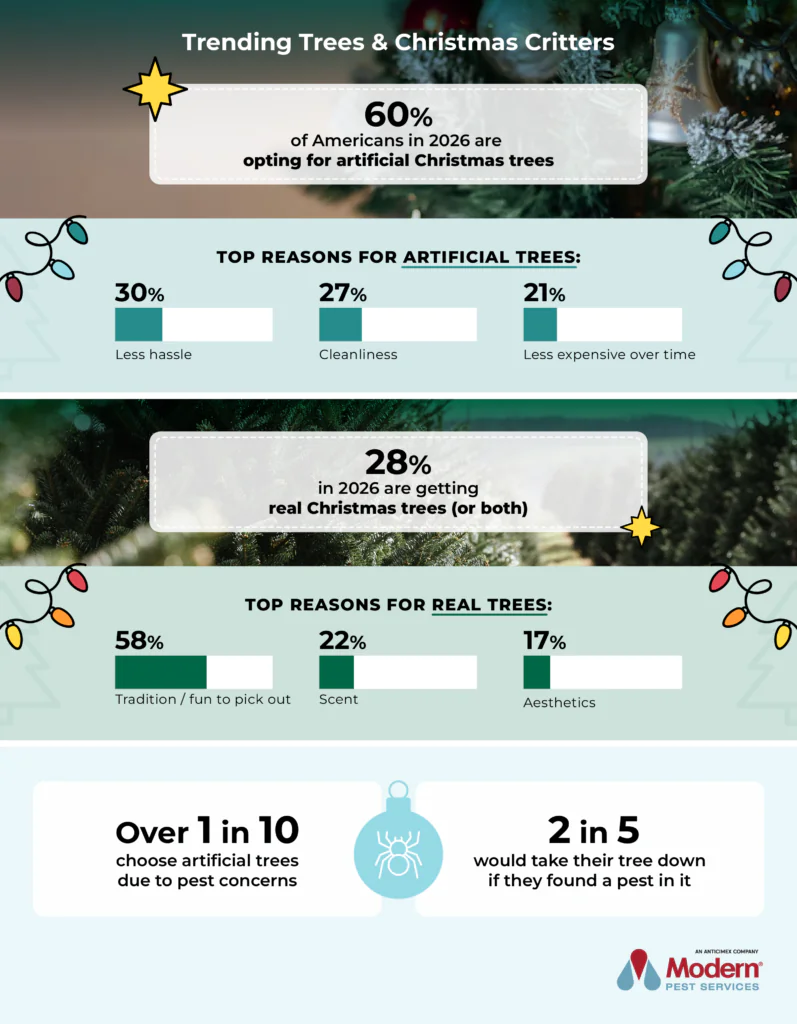
This year, the majority of Americans cannot be bothered with a real tree. Our survey found that 60% of Americans are opting for artificial in 2026. Among fake tree buyers, 30% are looking for a low hassle option, 27% prefer the cleanliness of artificial trees, and 21% appreciate the cost savings over time. Another 1 in 10 choose artificial trees specifically to avoid pests.
Meanwhile, 28% of Americans are bringing home a real tree this year, including 23% who exclusively buy real trees and 5% who get both real and artificial. For these shoppers, tradition is the biggest draw: 58% enjoy the experience of picking out a real tree, while 22% love the scent and 17% prefer the natural look. However, most people set firm boundaries when it comes to critters. Two in five real-tree buyers say they would take their tree down if they discovered pests hiding inside.
How to Prevent Pests this Holiday Season
22% Have Found Pests in Their Christmas Trees
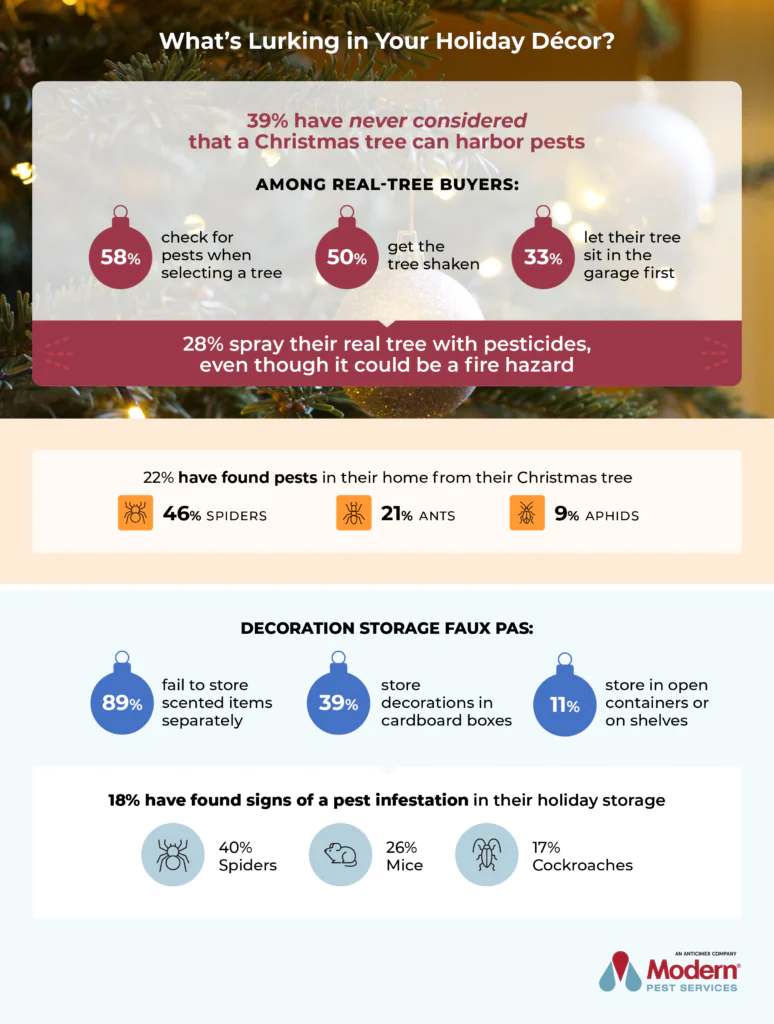
Christmas trees can bring more than holiday cheer into your home. While 39% of Americans have never considered that a Christmas tree could harbor pests, 22% have actually discovered unwanted visitors in their trees.
The most common pests found in Christmas trees include:
- Spiders – 46%
- Ants – 21%
- Aphids – 9%
“Real Christmas trees are grown outdoors, so it’s possible for insects like aphids, spiders, bark beetles, or even egg masses to be tucked into the branches or bark. Many of these insects are dormant in the cold and become more active once the tree is brought into a warm home. I recommend having the tree shaken, inspecting the trunk and branches carefully, and, if possible, leaving it in a cool garage for up to 24 hours before bringing it inside. That gives you another opportunity to spot and remove anything that may have hitched a ride without spraying pesticides on the tree.”
– Dan Smith, Field Specialist at Modern Pest Services
Fortunately, many real-tree buyers are taking precautions to keep pests out of their homes this holiday season. More than half (58%) inspect their tree for pests before purchasing it, 50% have their tree shaken to dislodge insects, and 33% let their tree sit in the garage before bringing it indoors.
However, some Americans may be taking pest prevention a step too far. More than 1 in 4 (28%) spray their Christmas trees with pesticides to keep bugs away. Never use aerosol insect sprays on Christmas trees, as many contain flammable ingredients that can pose a fire hazard. Instead, carefully inspect your tree before bringing it home, shake off loose branches and debris, and remove any visible insects by hand or with a vacuum once indoors.
Safe Storage: 18% Find Pests in Holiday Decorations
Christmas trees aren’t the only holiday decorations that can attract unwanted guests. From ornaments to garlands and wreaths, decorations stored away for months can provide hiding places for pests, especially in garages, attics, and basements.
Our survey revealed several common holiday storage habits that could increase the risk of pest problems:
- 89% don’t store scented decorations separately, potentially attracting pests to fragrant items or natural materials.
- 39% store decorations in cardboard boxes, which can be easier for rodents to chew through and may provide shelter for insects.
- 11% store decorations in open containers or on shelves, leaving them more exposed to pests.
These storage mistakes can lead to unpleasant surprises when it’s time to decorate. Nearly 1 in 5 Americans (18%) have discovered signs of a pest infestation in their holiday storage.
The most common culprits include:
- Spiders – 40%
- Mice – 26%
- Cockroaches – 17%
“With holiday decorations, the bigger risk is often the eleven months they spend sitting undisturbed. Cardboard boxes in garages, attics, and basements can provide mice and insects with both shelter and, in the case of rodents, material they can chew and use for nesting. Sealed plastic containers provide a much better barrier, but I still recommend checking boxes and decorations for droppings, gnaw marks, nesting material, or insects before bringing them into your living space.”
– Dan Smith, Field Specialist at Modern Pest Services
Preventing Pests During Hosting and Travel
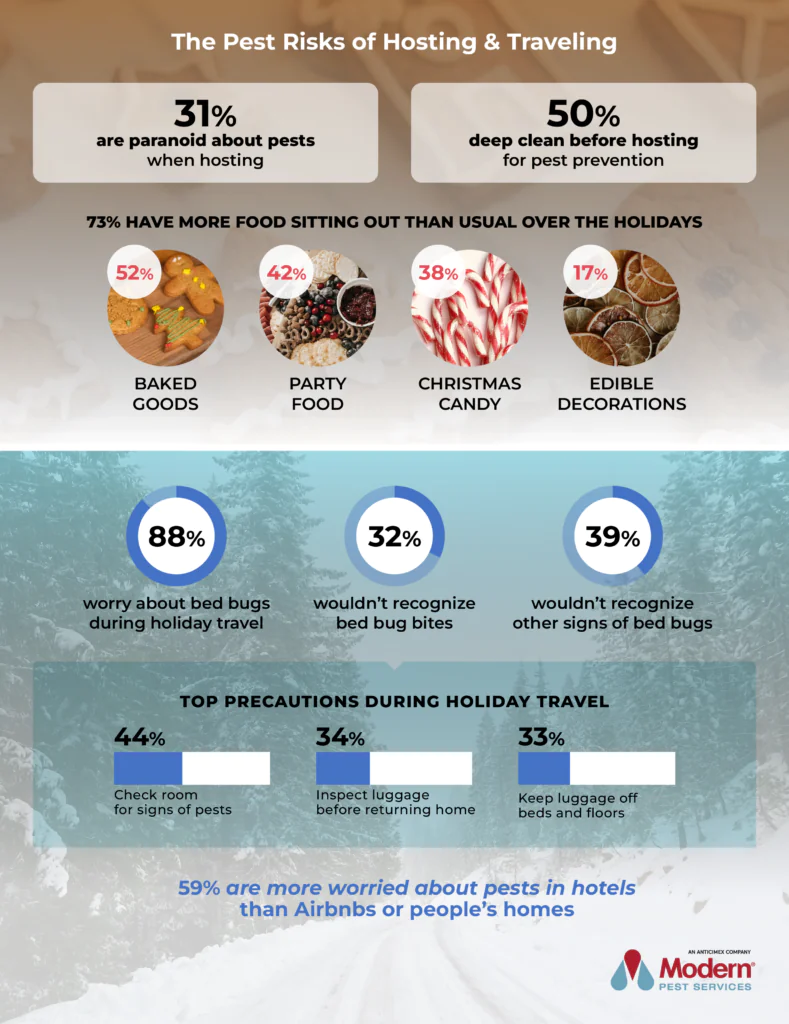
Nearly 1 in 3 Americans (31%) feel paranoid about pests when hosting, and half (50%) deep clean their homes before welcoming guests specifically to prevent pest problems.
Holiday spreads may be part of the problem. Nearly 3 in 4 Americans (73%) leave more food sitting out than usual during the holiday season, creating opportunities for pests to find an easy meal.
The most common foods left out include:
- Baked goods – 52%
- Food from parties or gatherings – 42%
- Christmas candy – 38%
- Edible decorations (ex. Gingerbread houses, popcorn garlands) – 17%
While a plate of cookies or bowl of candy may seem harmless, crumbs, spills, and uncovered food can attract ants, cockroaches, rodents, and other pests. To reduce the risk, keep food covered when possible, clean up spills promptly, and store leftovers in sealed containers. Be especially mindful of edible decorations, such as gingerbread houses and popcorn garlands, that may sit out for days or weeks.
88% Worry About Bed Bugs Over Holiday Travel
Pest worries don’t stop at home. For Americans traveling over the holidays, bed bugs are a major concern, with 88% reporting some level of worry about encountering them during their trips.
Despite these concerns, many travelers may not know what to look for. Nearly 1 in 3 (32%) say they wouldn’t recognize bed bug bites, while 39% wouldn’t recognize other signs of bed bugs, such as dark spots on mattresses, shed skins, or the insects themselves.
Fortunately, many Americans are taking precautions to avoid bringing unwanted souvenirs home.
The top pest prevention measures during holiday travel include:
- Checking accommodations for signs of pests – 44%
- Inspecting luggage before returning home – 34%
- Keeping luggage off beds and floors – 33%
59% of Americans are more concerned about encountering bed bugs in hotels than in Airbnbs or other people’s homes. While they can be found in any type of accommodation, regardless of cleanliness or price, highly trafficked spaces always carry the most risk.
“For anyone traveling, my biggest piece of advice is to be aware of your surroundings and take a few simple precautions when you get home. If you think you may have been exposed to bedbugs—or just want to play it safe—avoid bringing your luggage directly into the house. Instead, unpack outside or in the garage and place items in a sealed trash bag. Move clothing straight to the dryer and run it on the highest heat setting allowed for at least 45 minutes before laundering as usual.
If you notice small bite marks on the arms, chest, or neck, or see rust‑colored spots on bedding, it’s best to call a professional right away. DIY treatments often make infestations worse and can create unsafe conditions for your family and pets. A professional can assess the situation safely and effectively.”
– Dan Smith, Field Specialist at Modern Pest Services
Keep Pests Off Your Holiday Guest List
Many holiday pest problems start in places homeowners rarely check, like the garage and attic where decorations sit all year. Modern Pest Services offers Anticimex SMART monitoring for the garage and attic, which watches for rodent activity around the clock so a mouse in the ornament bin gets caught early. If a bed bug follows you home from your travels, our bed bug treatment team serves homeowners across New England, with eco-friendly pest control options for families and pets.
Methodology
In November 2026, we surveyed 1,004 U.S. adults about their experiences with pests during the holidays. Ages ranged from 22–75, with an average age of 43. Across respondents, 50% were women, 49% were men, and 1% were nonbinary or preferred not to say.
For media inquiries, please reach out to [email protected].
Fair use
When using this data and research, please attribute by linking to this study and citing Modern Pest Services.