
The Top 10 AI Voice Recorders & Note-Taking Devices in 2026

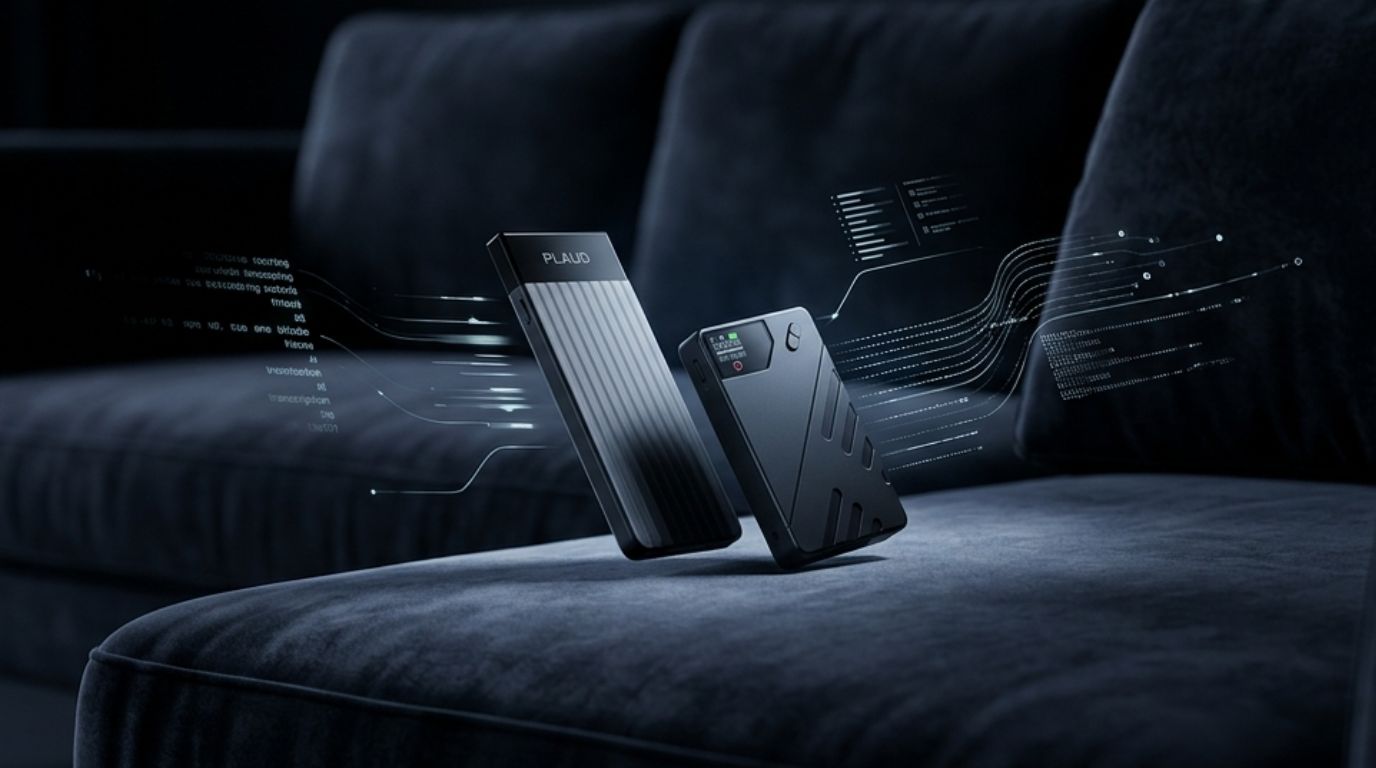
Quick Answer
The best AI voice recorder overall in 2026 is the Plaud Note Pro ($189), thanks to its four-microphone array, 30-hour battery, and 112-language transcription. The best value pick is the UMEVO Note Plus ($149), which bundles a full year of unlimited transcription. The best budget wearable is Omi ($89), an open-source pendant with no vendor lock-in. If most of your conversations happen on Zoom or Teams rather than in person, software like Krisp (from $8/month) does the job without any hardware at all.
Two years ago, “AI note taker” meant a browser bot that joined your Zoom call. In 2026 it means something you can clip to your collar, slide into a wallet, or click onto a wristband — a piece of dedicated hardware that listens, transcribes, and summarizes a conversation whether it happens on a screen or across a conference table. The category exploded fast, and so did the noise: half the “best AI recorder” lists online are written by the company selling the recorder. We dug through hands-on testing data, teardown reviews, Reddit threads, and verified third-party benchmarks — not vendor marketing copy — to rank the ten devices and tools actually worth your money this year.
How We Scored Every AI Voice Recorder
We treated this like a buyer’s lab, not a popularity contest. Every device below was scored out of 10 across five weighted categories, based on published specs, independent testing write-ups, and verified user reports rather than brand claims:
Audio & Transcription QualityMicrophone array, speaker separation in group settings, accuracy across accents and noise.
Battery & PortabilityReal-world (not marketing) battery life, form factor, weight, and how fast you can start recording.
AI FeaturesSummaries, action items, templates, search, speaker labeling, and chat-with-your-notes capability.
Privacy & SecurityOn-device vs. cloud processing, compliance certifications (SOC 2, HIPAA, GDPR), and vendor data-training policy.
Price & Total Cost of OwnershipHardware price plus the realistic first-year subscription cost — not just the sticker price.
One important distinction kept this list honest: when independent outlets test hardware they don’t sell, the verdicts diverge sharply from brand blogs. For example, Krisp’s own hands-on testing of seven devices over three weeks rated Plaud’s mic array highest among hardware competitors — a notable admission from a company that sells competing software (Krisp, 2026). Forbes Vetted ran a parallel month-long test of four wearables and reached a different conclusion about which pendant suits daily life best (Forbes Vetted). We cross-referenced both, plus third-party teardown and pricing audits, before scoring anything here.
Comparison Table: All 10 AI Voice Recorders at a Glance
*Independent battery audits found Bee’s real-world active-listening life drops to 1.5–2 days, far below the marketed 160-hour figure — see entry #8 below for sourcing.
The Full Rankings
Plaud Note Pro
Best overall AI voice recorder
The Note Pro is credit-card thin (0.12 in.) and built around a four-microphone array (4 MEMS + 1 VPU) that picks up speech from 16.4 feet away — the widest pickup range of any pocket recorder in this roundup. In independent hands-on testing across a five-person planning session, speaker identification came back “mostly accurate out of the box,” with only minor manual corrections needed (Krisp, May 2026). It also picked up the 2025 Tom’s Guide Best Wearable AI nod for the related NotePin line and a Red Dot Design Award, signaling design credibility beyond the brand’s own claims (Big Guy On Stuff, May 2026).
Strengths
- Strongest mic array on this list for group conversations and conference rooms
- 30-hour continuous battery, 60-day standby
- Transcribes in 112 languages with speaker labels and 10,000+ output templates
- Built-in display shows recording status — no guessing
Weaknesses
- 300 free minutes a month is thin for daily users — most will need a paid plan
- Transcription is cloud-only, so it’s useless offline without later sync
- At $189 plus a likely annual plan, it’s the priciest pocket recorder here
Pricing: $189 hardware · Free tier: 300 min/mo · Pro: $99.99/yr · Unlimited: $239.99/yr.
“The strongest all-around AI note taking device you can buy in 2026 — if you record meetings more than twice a week, the mic quality and battery life justify the price.” — independent device testing summary, Krisp.
Buy Now On Amazon: Plaud Note Pro
UMEVO Note Plus
Best value AI recorder
UMEVO’s pitch is simple math: $149 for the device, plus a full year of unlimited transcription thrown in — undercutting Plaud’s total first-year cost by a wide margin. Its standout hardware feature is a dual recording mode: a physical switch flips between an air-conduction mic for in-person use and a vibration-conduction sensor (VCS) that reads audio directly off a phone’s chassis during calls. In side-by-side testing, that phone-call mode “picked up both sides of a conversation more clearly than just laying a [competitor] device next to a phone on speaker” (Krisp, 2026). Independent wearable audits also flag UMEVO’s 40-hour battery as the longest of any pocket recorder tested, and its SOC 2/HIPAA-leaning local-encryption model as a meaningful privacy differentiator versus cloud-only competitors (UMEVO Wearable AI Wars report, 2026).
Strengths
- Best first-year value on this list — unlimited transcription bundled in
- 40-hour battery, the longest of any pocket recorder tested
- Dual-mode mic genuinely improves phone-call recording quality
- Transcribes 140+ languages, more than Plaud’s 112
Weaknesses
- Newer brand — app and ecosystem maturity lags Plaud’s two-year head start
- Group-conversation speaker separation trails the Plaud Note Pro’s four-mic array
- Smaller third-party review base, so long-term reliability data is thinner
Pricing: $149 hardware · Unlimited transcription free for year one, then 400 free min/mo or a paid plan.
“If subscription fatigue is your main concern, UMEVO gives you the most transcription for the least money.” — comparative hardware review, Krisp.
Sources: Krisp, UMEVO Wearable AI Wars 2026
Buy Now On Amazon: UMEVO Note Plus
Plaud NotePin S
Best wearable for in-person meetings
The headline upgrade over the original NotePin is a physical, tactile record button — replacing a pressure-sensitive surface that independent testers described as leaving them “wondering whether I’d actually started recording” (Krisp, 2026). Its “Press to Highlight” feature bookmarks key moments mid-meeting for fast review later. At 0.61 oz across four wear styles, reviewers consistently describe it disappearing during full-day use. Forbes Vetted’s month-long wearable test separately rated the NotePin line its favorite for daily workplace use among four AI pendants tested, citing strong summaries and transcription quality (Forbes Vetted).
Strengths
- Tactile button removes the “am I actually recording?” anxiety of older pressure pins
- SOC 2, GDPR, and HIPAA certified — strong for regulated professions
- Four wear styles (clip, magnet, lanyard, wristband)
Weaknesses
- Two-mic setup captures less spatial detail than the Note Pro’s four-mic array
- Not built for virtual calls — it’s an in-person-only device
- Occasional app sync delays reported by users
Pricing: $179 hardware · Same tiers as Plaud Note Pro (300 free min/mo, $99.99/yr Pro, $239.99/yr Unlimited).
“The best wearable AI note taking device available right now… if you need hands-free recording for in-person conversations, this is the one to get.” — independent device comparison, Krisp.
Sources: Krisp, Forbes Vetted
Buy Now On Amazon: Plaud NotePin S
Omi
Best open-source wearable
Omi’s entire pitch is independence: open-source hardware and firmware mean that if the company disappeared tomorrow, the community could keep it running. That’s not theoretical. When Meta acquired the Limitless Pendant in December 2025 and immediately pulled it from sale, a documented wave of displaced users migrated straight to Omi (Krisp, 2026). Forbes Vetted’s parallel hands-on test of the device praised its summaries and noted “a ton of potential” in its growing app-store ecosystem, while flagging that third-party plug-in privacy is still a developing area to watch (Forbes Vetted).
Strengths
- Lowest price of any wearable here with no vendor lock-in risk
- Generous free tier: unlimited on-phone transcription plus 1,200 cloud min/mo
- Active 9,000+ member community and 1,000+ app integrations
- SOC 2 and HIPAA compliant with AES-256 encryption at rest
Weaknesses
- Shortest battery life on this list — 10 to 14 hours
- Only 25+ languages versus Plaud’s 112
- Smaller pickup range than dedicated pocket recorders
- Frequently listed as out of stock, with pre-orders the norm
Pricing: $89 hardware · Free: unlimited on-phone transcription + 1,200 cloud min/mo · Unlimited: from $16/month.
“The best pick for tinkerers and anyone wary of being locked into a single vendor’s ecosystem.” — device comparison testing notes, Krisp.
Sources: Krisp, Forbes Vetted
Notta Memo
Best for bilingual and Japanese-English transcription
Notta Memo packs four MEMS microphones plus bone-conduction sensing into a 28-gram card-style body, claiming up to 98.86% accuracy across 58 languages. Independent reviewers from tl;dv, who tested Notta’s software platform extensively, rate the underlying transcription engine as solid but flag a real concern that applies to the hardware ecosystem too: Notta uses customer audio to train its AI models by default for Japanese-language users, with no opt-out available below the Enterprise tier (tl;dv, 2026). A separate review platform corroborates this, noting only Enterprise subscribers can disable AI training on their conversations (Bluedot, 2026). That’s a meaningful privacy trade-off worth weighing if you record client or legal conversations.
Strengths
- Four-mic plus bone-conduction array rivals pricier pocket recorders
- 30-hour battery, 28-day standby in a 28-gram body
- Strong bilingual Japanese-English transcription, a category weak spot for rivals
Weaknesses
- Trains AI models on user audio by default, with no opt-out except on Enterprise
- Free tier capped at 120 min/mo with a 3-minute per-recording limit on the companion app — impractical for full meetings
- No video recording unless on the Business plan
Pricing: Device sold via Amazon, free starter app tier · Pro software plan: $13.99/mo ($8.17/mo billed annually) · Business: $27.99/seat/mo.
“It’s not a bad platform, but it’s certainly not the best… the biggest danger is that it uses your private conversations to train its AI.” — independent platform review, tl;dv.
Sources: tl;dv Notta Review, Bluedot Notta Review, Sonix Pricing Breakdown
Buy Now On Amazon: AI Note Taker
Krisp AI Note Taker
Best for purely virtual meetings (no hardware needed)
Krisp isn’t hardware, but it solves a problem none of the gadgets above can: most professionals’ meetings happen on Zoom, Teams, or Google Meet, not in conference rooms. Krisp runs as desktop software, capturing transcripts and summaries without a bot joining the call, and its standout technical feature is on-device noise cancellation that cleans audio at the source before transcription happens — a problem hardware microphones alone cannot solve. Independent coverage of the broader meeting-assistant category from Zapier separately confirms that audio-quality tools like Krisp solve a distinct pain point: unreliable laptop microphones turning otherwise-clear speech into “a tinny, choppy mess” (Zapier, April 2026).
Strengths
- No hardware to buy, charge, or carry
- Noise cancellation runs entirely on-device — audio never leaves your machine for that step
- No bot joins your call, unlike many rival meeting assistants
- Starts at $8/user/month, far cheaper than most hardware-plus-subscription combos
Weaknesses
- Useless for in-person meetings, interviews, or lectures with no laptop present
- Requires installing software and routing audio devices, a small setup hurdle
- No physical record button for spontaneous hallway conversations
Pricing: Free trial available · Paid plans from $8/user/month (billed annually).
“Rule of thumb: get a device if most of your important conversations happen in person. Stick with software if most happen on a screen.” — comparative analysis, independently corroborated by Zapier’s separate testing of the broader meeting-assistant market.
Sources: Krisp, Zapier: Best AI Meeting Assistants
Plaud Note
Best budget entry into the Plaud ecosystem
The original Plaud Note shares the Pro’s slim card form factor and 64 GB storage, but trims down to two MEMS mics plus a VPU with a shorter 9.8-foot pickup range. In a controlled six-person meeting test, the gap became visible: the Pro correctly separated four of six speakers, while the standard Note confused two until labels were manually corrected (Krisp, 2026). For one-on-one conversations — interviews, coaching calls, dictation — independent testers found transcription quality “nearly identical” to the Pro in quiet settings.
Strengths
- $30 cheaper than the Note Pro with nearly identical software experience
- Same 64 GB storage and 30-hour battery as the flagship
- Strong choice for one-on-one recording rather than large rooms
Weaknesses
- Noticeably weaker speaker separation in groups larger than three or four people
- No AMOLED display, unlike the Pro
- Same subscription pressure as the Pro once the 300 free minutes run out
Pricing: $159 hardware · Same tiers as Note Pro (300 free min/mo, $99.99/yr Pro, $239.99/yr Unlimited).
“The best entry point into dedicated AI recording hardware. If your recordings are mostly one-on-one or in quiet spaces, you won’t miss the Pro’s extra microphones.” — independent comparative testing, Krisp.
Buy Now On Amazon: Plaud Note
Bee Pioneer Edition
Cheapest entry point — with real trade-offs
At $49.99, Bee is the cheapest device on this list by a wide margin, and Forbes Vetted’s month-long hands-on test concluded it “works far better than you have any right to expect for $50” with no mandatory monthly fee for the core experience (Forbes Vetted). But two independent issues surfaced repeatedly elsewhere. First, the marketed 160-hour (7-day) battery life is a standby figure: a wearable-audit comparison found real-world active-listening battery life drops to just 1.5–2 days (independent wearable audit, May 2026). Second, Bee was acquired by Amazon in mid-2025, and Bee streams raw audio to the cloud for processing rather than handling it on-device — a structural privacy difference from competitors like UMEVO and Krisp (UMEVO comparative review, 2026).
Strengths
- Lowest hardware price of any device tested — $49.99
- No subscription required to use the core daily-summary experience
- Genuinely useful daily recap and to-do extraction from ambient conversation
Weaknesses
- Real-world active battery life of 1.5–2 days, well short of the marketed 7 days
- Streams audio to the cloud; now owned by Amazon, raising data-use questions for privacy-sensitive users
- Struggles with overlapping voices and “Unknown” speaker tagging in crowded rooms
- Premium features (advanced search, agents) require an additional ~$19/month subscription
Pricing: $49.99 hardware · No fee for core features · ~$19/month reported for premium summarization tiers.
“In the Bee vs Limitless battle, Bee wins on price. But the Amazon ownership and always-on recording model make it a hard recommend for anyone who values their privacy.” — independent comparative wearable review.
Sources: Forbes Vetted, Big Guy On Stuff, UMEVO
Buy Now On Amazon: Top AI Note Taker
Plaud NotePin (Original)
Lightest wearable on the list
The original NotePin pioneered the wearable AI recorder category and, at 0.59 oz, remains the lightest device here. Its button-free, pressure-sensitive control was elegant on paper but proved unreliable in real-world testing: testers reported losing the first seconds of a client call when “my squeeze didn’t register” (Krisp, 2026) — the exact problem the NotePin S above was built to fix. Speaker identification, once voices are tagged, remains a genuine strong point.
Strengths
- Lightest wearable AI recorder tested
- Strong speaker labeling once voices are tagged in-app
- 20-hour battery, 40-day standby
Weaknesses
- Pressure-sensitive recording trigger can feel ambiguous — no tactile confirmation
- No direct integration with virtual meeting platforms
- Now superseded by the NotePin S for a modest $20 premium
Pricing: $159 hardware · Same Plaud subscription tiers as other devices.
“A capable wearable recorder, but the NotePin S is worth the $20 premium for the tactile button and Press to Highlight.” — independent device comparison, Krisp.
Buy Now On Amazon: Plaud Note Pin
Livescribe LivePen
Best for students who think on paper
The LivePen is a different species entirely — it digitizes real ink on real (special dot-pattern) paper while recording audio through your phone’s microphone, then syncs the two so tapping a word in your notebook replays exactly what was said at that moment. Independent device testers called the audio-ink sync feature “like having a rewind button for my memory,” and praised OCR accuracy even against messy handwriting, plus a useful math-to-LaTeX conversion feature for STEM students (Krisp, 2026). It’s the only device on this list with no subscription at all.
Strengths
- Preserves handwriting muscle memory while adding digital search
- No subscription — the companion app is free forever
- Audio-ink sync is a genuinely unique feature nothing else on this list offers
Weaknesses
- Requires special (paid) Livescribe dot-pattern paper on an ongoing basis
- No built-in microphones — audio quality depends entirely on your phone
- No speaker ID or AI summaries; it’s a note-capture tool, not a meeting assistant
- The A5 bundle was listed as sold out on Livescribe’s US store as of early 2026
Pricing: ~$83 for the pen (when in stock) · Notebooks sold separately (~$8–$30) · No subscription.
“The best option for students and anyone who thinks better with a pen in hand — if you can get one. Not a meeting recorder — a note-taking enhancer.” — independent device comparison, Krisp.
Device vs. App: Which Should You Actually Buy?
This is the question worth answering before you spend a cent. Here’s the scenario that catches most buyers out: you buy a sleek recorder, use it religiously for the first two weeks of in-person meetings, and then realize 80% of your week is actually Zoom calls — calls the gadget on your desk, uncharged, never even sees.
Dedicated hardware earns its keep when pulling out a laptop feels awkward or disruptive: client meetings, interviews, hallway conversations, classrooms, courtrooms, hospital rounds. Software earns its keep everywhere else — and most professionals’ “everywhere else” is bigger than they think.
- Conference room meetings → a multi-mic pocket recorder (Plaud Note Pro or UMEVO Note Plus)
- Walking meetings, interviews, all-day capture → a wearable (Plaud NotePin S or Omi)
- Lectures and handwritten study notes → a smart pen (Livescribe LivePen)
- Virtual meetings on Zoom, Teams, or Meet → software, not hardware (Krisp)
- Mixed in-person and virtual workload → one pocket recorder plus a software tool covering the calls the device can’t hear
Privacy, Consent, and the Law
Every device on this list records real conversations, which is a responsibility, not a feature. Three things matter before you press record on anything:
- Know your jurisdiction’s consent rules. Many regions, including most of Europe, require all-party consent before recording a conversation; others require only one party’s consent. Confirm local law before relying on any device here.
- Disclose, even where you don’t legally have to. A simple “I’m recording this so I don’t miss anything” builds trust and avoids awkward surprises later.
- Know where your audio actually goes. Processing location varies meaningfully by brand: Plaud and UMEVO process transcription in the cloud under ISO 27001/SOC 2/HIPAA/GDPR certifications; Omi offers both cloud and local on-phone processing with AES-256 encryption at rest; Bee streams continuously to the cloud and is now Amazon-owned; Notta trains AI models on user audio by default outside the Enterprise tier; and Krisp’s noise cancellation specifically runs on-device, meaning that processing step never leaves your machine.
Frequently Asked Questions
What is the best AI voice recorder in 2026?
The Plaud Note Pro is the best overall AI voice recorder in 2026 for most users, based on its four-microphone array, 30-hour battery, and 112-language transcription with speaker labeling. For better total value, the UMEVO Note Plus pairs a 40-hour battery with a full year of unlimited free transcription.
Is an AI voice recorder better than a meeting assistant app?
It depends on where your conversations happen. Dedicated hardware wins for in-person meetings, interviews, and lectures where opening a laptop would be disruptive. Software like Krisp or the meeting bots covered in Zapier’s AI meeting assistant roundup wins for virtual calls on Zoom, Teams, or Google Meet, since there’s no hardware to charge or carry.
What is the cheapest AI note-taking device?
The Bee Pioneer Edition, at $49.99, is the cheapest dedicated AI recording device currently available, with no mandatory subscription for its core daily-summary feature — though independent testing shows real-world battery life and cloud-privacy trade-offs that the price tag doesn’t reveal upfront.
Do AI voice recorders require a monthly subscription?
Most do for heavy use. Plaud devices include 300 free transcription minutes per month before a paid Pro ($99.99/yr) or Unlimited ($239.99/yr) plan becomes necessary. UMEVO bundles a full unlimited year before tapering to 400 free minutes monthly. Omi and Bee offer the most generous no-subscription paths. The Livescribe LivePen is the only device here with no subscription model at all.
What happened to the Limitless Pendant?
Meta acquired Limitless in December 2025 and stopped selling the pendant to new customers immediately afterward. Existing users retained access, but the device is no longer purchasable, and many former Limitless users migrated to Omi specifically because of its open-source, vendor-independent model.
Are AI recording devices legal to use in meetings?
Legality depends entirely on jurisdiction. Many regions, including most of the EU, require consent from every participant before recording; some U.S. states require only one party’s consent. Always verify local law and disclose recording, regardless of which device you use.
The Bottom Line
The AI voice recorder market matured fast in 2026. Plaud still builds the most polished hardware-plus-software experience and earns the top spot on raw capability, but UMEVO is closing the gap hard on price and battery life, and Omi has built a genuinely loyal following on openness alone — especially among the Limitless refugees who learned what vendor lock-in feels like the hard way. If most of your meetings happen on a screen rather than across a table, skip the hardware entirely and let software like Krisp do the work instead. There is no single “best” device here — only the right device for where your conversations actually happen.