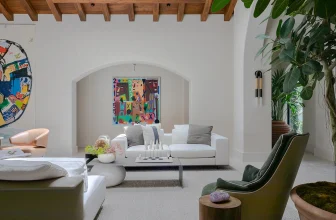
Traditional Interiors are Back in Style

Traditions are Making a Comeback and so are Traditional Interiors
Everyone’s talking about influencers. Here’s mine. The kitchen is the influencer of the whole home. It always has been. So when I walked High Point Market this fall, I was looking for the traditional kitchen design trends the rest of the house is about to ask for. Traditional interiors are back. And they are not shy about it.

Cisco Home Showroom Photo by Sharon L Sherman
Why Is Traditional Interior Design Coming Back?
People want comfort. After years of clean, spare rooms, homeowners want spaces that feel warm, collected and lived in. That shift shows up in furniture first. Then it moves into the kitchen.
I spoke to Julia Reinert, The Lifestyle Historian™, who studies nostalgia and cultural memory. She said that as AI continues to carve out its role in our personal and professional lives, we are clinging to things that are familiar and comfortable, giving nostalgia and tradition a heavy influence on how spaces are designed.
Comfort Came Home
The look I saw everywhere was a livable, collected, Ralph Lauren kind of comfort. Rooms you can actually sit in. Rooms that feel like they’ve been loved for years, even if they were finished last week. That’s a big change. People want rooms that hold them. And once the living room feels like that, an uninviting kitchen next door starts to look out of place.
Traditional Interiors Are Back
Classic Chairs in Unexpected Fabrics Queen Anne and wingback chairs are back in a big way. But they’re not your grandmother’s chairs. The fabrics are fresh and unexpected. For example, one wing chair mixed patchwork tweed and plaid on classic Queen Anne legs. That contrast is exactly what makes it work today.

Fringe, Shirring and Skirted Furniture Then there’s trim and lots and lots of fringe. I saw it at High Point, and again at the Kips Bay Show House. Tassels on light fixtures. Shirring on the arms of sofas. Skirts on chairs. These are the finishing touches we spent years editing out. Well they’re back in the story.

Traditional shirred arm detail

Fresh take on a traditional library
One of my favorite details is contrasting piping. Many showrooms featured this detail and it’s not just for indoors. Harbour featured a textured bouclé outdoor dining chair outlined in a crisp cream welt. It’s a tailor’s trick. The piping traces the shape of the piece, so you notice it. Small detail, big impact.

Traditional Design Trends: What They Mean for Your Kitchen
The kitchen has to talk with the rest of the home. In practice, that means more detailed moldings, darker woods and pattern in places we kept plain. Here’s where I see it going.
Detailed Moldings Are Returning. Expect more detail on cabinetry, at the ceiling and around openings. Crown, panel detail and layered profiles give a kitchen the same tailored feel as the furniture in the next room. Not the heavy curved and carved moldings of the 80’s but a more tailored detail, subtle yet meaningful. More interesting door panels. Shaker with an updated style.
Contrasting Piping and Metallic Trim. I think that contrasting piping is a preview of where moldings are headed. In fact, we’re doing exactly this on one of our current projects. The crown and base moldings are painted in a metallic finish to pick up the accent in the wall covering. Meanwhile, the rest of the room stays in regular matte paint. The trim outlines the room the same way piping outlines a chair. For the kitchen, this detail will be showing up on lighting, hardware, appliances and door details.
Darker Woods and Deeper Stains. Darker woods are coming back around. That alone will change how a lot of kitchens look over the next few years. Darker species and deeper stains bring the warmth of a library or a study into the kitchen. Paired with painted cabinetry, they keep the space grounded without making it heavy.
I Am Mad for Plaid
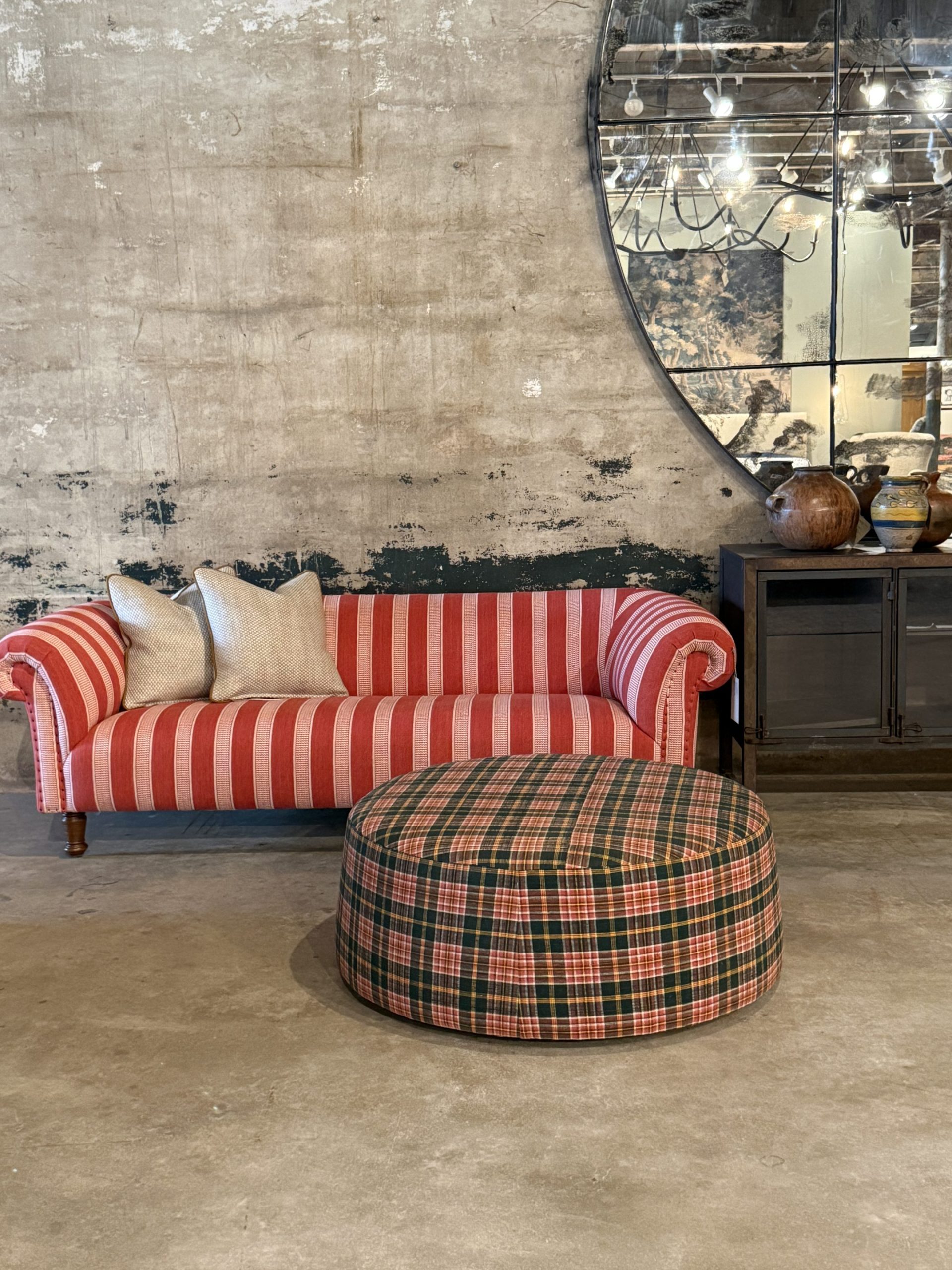
Plaid was a big deal at market, and it’s showing up in tile. A checkerboard floor or a plaid inspired tile backsplash is a confident way to bring a collected, heritage feel into a kitchen or bath. It’s playful. It’s traditional. It’s also a little unexpected, which is exactly what keeps tradition from feeling dated. Here a hushed green plaid fabric paired with a dark stained wood tray is a perfect example of why I am mad for plaid.

Hushed green plaid ottomans at American Leather

Plaid patterned tile.
Quieter Natural Materials and Florals
Natural materials are still here, but they’ve quieted down. They’re less bold and less saturated than before. Tea-stained fabric patterns were everywhere, and they give a room that lived-in feel.
Florals are back, too. York showed wall coverings with big, folk-style blooms in rose, sage and plum on a warm cream ground. Pattern like that does for a wall what fringe does for a sofa.
Metals, Glass and Lighting with Personality
Charleston Forge showed a forged iron table paired with dark wood and custom glass. Think thick, textured tops with real depth and movement. Floor lamps came in sculpted shapes with layered finishes, from warm gold to weathered silver. For the kitchen, that opens the door to hardware, hoods and lighting with real personality.

Forged iron table with custom glass top.

Pooky Lighting with Samuel and Sons Tassels
Woven Shades and Recycled Materials
Woven materials and rattan are still showing up, but in new colorways and shapes. A sculptural woven mirror hung over a russet velvet sofa. Rattan trays sat on dark wood coffee tables. And fringed, woven chandeliers in chevron patterns proved that fringe isn’t only for upholstery.
Lighting caught my eye too, especially PET Lamp. Their shades are woven around recycled plastic bottles. You can still see the bottle necks at the top of each pendant. I think recycled materials in lighting are going to be a big deal, because it’s sustainability you can actually see.

Lights from recycled materials.
Kitchen Color Trends for 2027
Greens will continue to grace our kitchen designs for the next few years. It is how we use them that will provide the comfort of traditional style in an updated way. The colors at market were rich and warm. Deep russets. Sage greens. Deep merlots, combined with softer rose and olive tones.
Benjamin Moore named Webster Green HC-130 its 2027 Color of the Year. It’s a classic green from their Historical Color Collection, and it fits right in with the sage I saw everywhere at market. Sherwin-Williams went green too, with Celery SW 6421, a light herbal green. Two major paint brands landing on green says a lot. Pantone announces its pick in December. My guess? Something more earthy. We will have to wait and see.
Designing for What Comes Next
The return to tradition isn’t about looking backward. It’s about rooms that feel personal, comfortable and lasting. Rooms that are functionally beautiful and beautifully functional. If you’re planning a kitchen, think about the rooms around it. Where is the rest of your home headed? The kitchen should lead the conversation.
Now I want to hear from you. What do you think Pantone’s Color of the Year will be? And how do you see the kitchen influencing the story of the home in 2027? Tell me in the comments.

Sharon L. Sherman, ASID, NCIDQ, CID, CKD
Sharon founded Thyme and Place Design, headquartered in Wyckoff, New Jersey, and has been practicing kitchen, bath, and interior design for over 30 years across New Jersey, New York, Connecticut, Massachusetts, and the Eastern Seaboard. She is the Past President of the American Society of Interior Designers, New Jersey chapter, a professional member of ASID, as well as a Certified Interior Designer in New Jersey, and a Certified Kitchen Designer, and serves on the Board of Directors of the Interior Design Community.
She is a current member of the editorial board of KBB Magazine, the official magazine of the National Kitchen and Bath Association. Sharon was named KBB Person of the Year and received the Kitchen Bath Design News Innovator of the Year Award. Her award-winning designs and editorial comments have been featured in Forbes, The New York Times, Design Milk, Furniture Lighting and Decor, Designers Today, Kitchen & Bath Design News, Country Decorating, Design NJ, New Jersey Home Magazine, 201 Magazine, as well as several books. She has authored the Interior Designers’ Guide to Kitchen and Bath Business Success, available through the website. Sharon is a sought-after conference speaker and CEU provider. You can contact her through the website www.thymeandplacedesign.com.