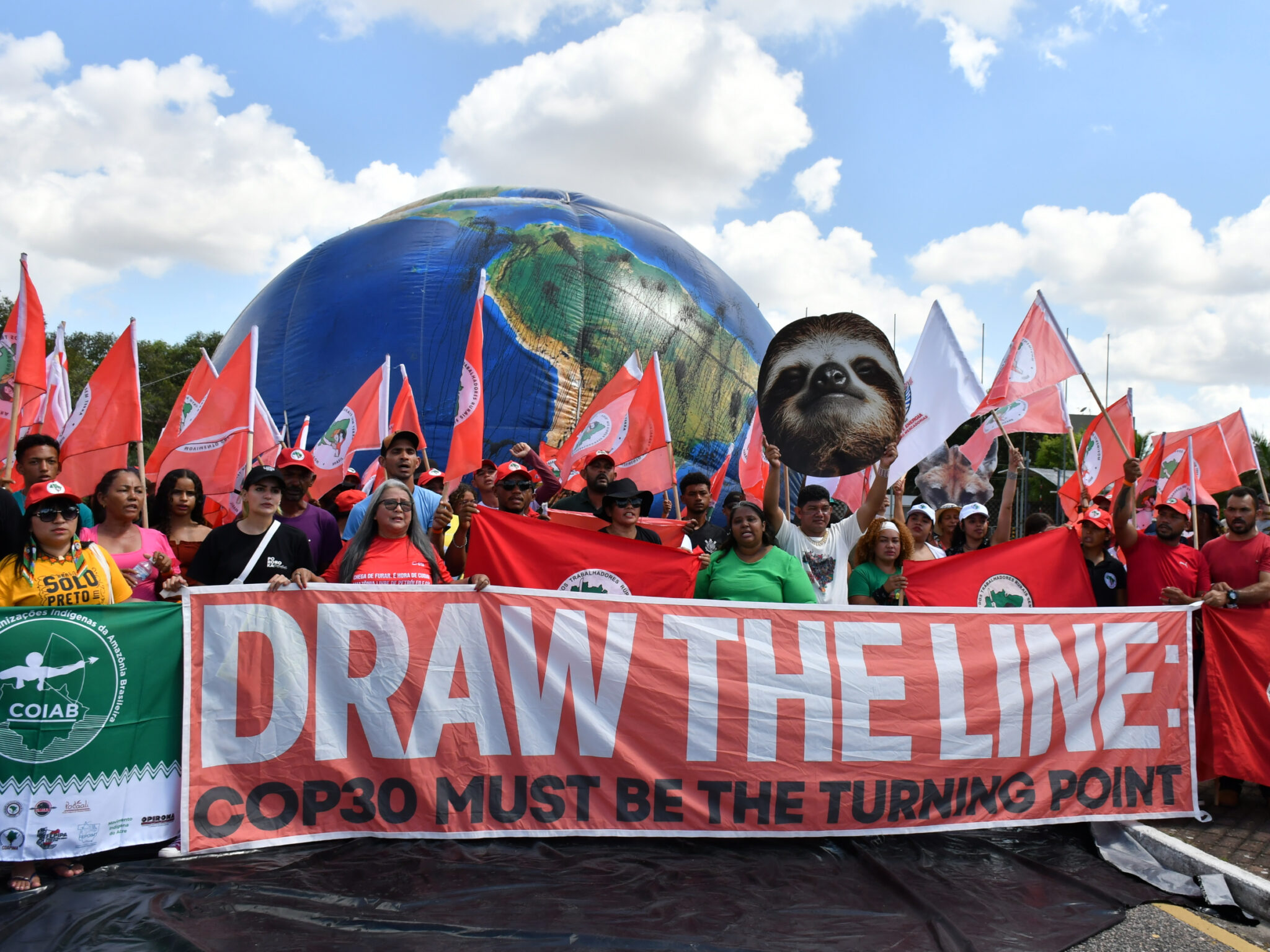
As delegates from over 200 countries wrap up their conversations at this year’s UN Climate Change Conference in Belém, Brazil, or COP30, policymakers continue to grapple with a thorny issue at the heart of global climate action—money.
Developing countries need trillions of dollars to decarbonize, protect biodiversity, and adapt to a rapidly changing climate, which means many are simply unable to deliver on their climate goals.
Two initiatives under discussion at this year’s COP seek to address this funding gap, but neither delivers true climate justice. Instead, they saddle developing countries with the high costs of mitigating and adapting to climate change while unregulated global finance continues to pour money into the activities driving it.
The first initiative is called the Baku to Belém Roadmap, a plan launched at last year’s COP29 in Baku, Azerbaijan. It aims to increase climate financing for developing countries from $300 billion per year to $1.3 trillion by 2035.
But the plan, which is non-binding, falls short of the $2.4 to $3.3 trillion actually needed, and it relies heavily on loans over public grants, which critics worry could push developing countries deeper into debt for a crisis they didn’t cause.
The second initiative, the Tropical Forests Forever Facility (TFFF), suffers from a similar problem. TFFF is a Brazilian government program that plans to pay developing countries per hectare of forest that they protect each year.
This money will come from investment returns on a $125 billion portfolio called the Tropical Forest Investment Fund (TFIF). But these funds will be primarily invested in debt instruments issued by developing countries. In essence, the returns that developing countries will receive for protecting their forests will come out of their own debt repayments.
Ultimately, Baku to Belém and TFFF are a drop in the bucket compared to the unregulated global finance pouring trillions into fossil fuels and other nature-destroying activities like deforestation. It’s a bit like dripping water onto a fire with one hand while pouring gasoline with the other.
That’s why RAN’s policy experts from the Forests and Finance Coalition are on the ground in Belém—not just pushing for climate justice in climate finance, but pushing policymakers to enact genuine financial sector reform in their home countries. We’re hoping that this time, they’ll listen.