

March 2, 2026.
The sudden conflict with Iran has brought Persian Gulf air traffic to a halt. Emirates, Qatar Airways, and Etihad have seen greater than 90 percent of their flights curtailed, leaving hundreds of thousands of people stranded.
This is no small matter. The airports of Doha, Dubai, and Abu Dhabi comprise a massive global crossroads — the biggest transit region on earth — hosting 182 million passengers annually.
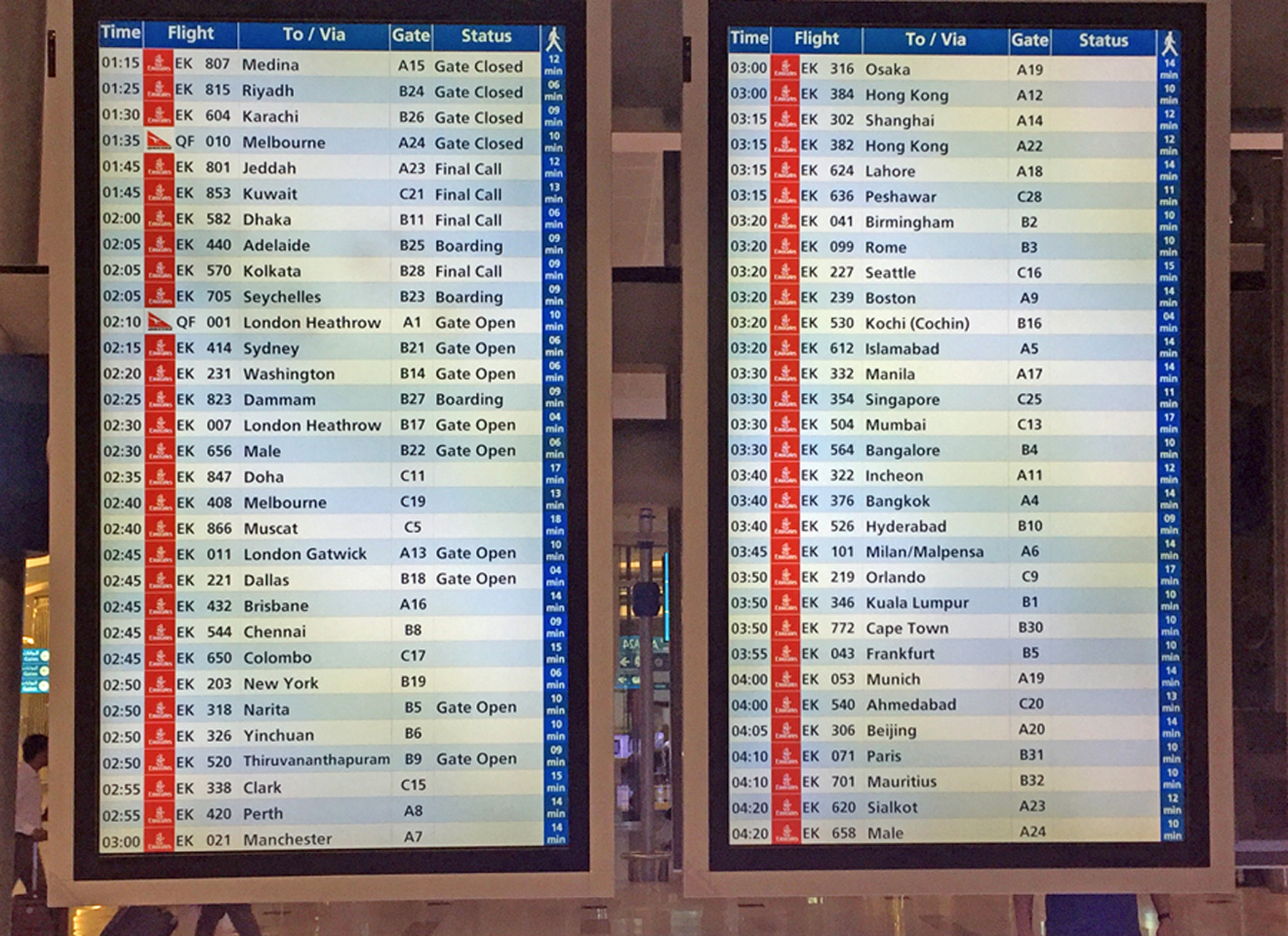
Traveling from the U.S. to Thailand a couple of months ago, I shot this 30-second video of the departure board at Dubai. It was just after midnight, with the screen showing dozens of early-morning Emirates departures to just about anywhere you could imagine.
Each time that I pass through Dubai it knocks my socks off. DXB is the world’s biggest and busiest international hub, and the lineup of Emirates jets is astonishing, with 50 or more A380s, and dozens of 777s, lined up side-by-side. There are flights to six continents and across every ocean. Throughout the long history of commercial aviation, nothing like this has existed.
The growth of Emirates and the other Gulf carriers (together they are sometimes referred to as the “ME3” or “G3”) has been controversial. Lavish government subsidies, many argue, have permitted these airlines to take a huge and unfair advantage over others. Is this true? Sure. But it’s also true these airlines’ hubs are in the perfect geographic position to connect world’s biggest population centers; the governments of the U.A.E and Qatar realized this and ran with it.
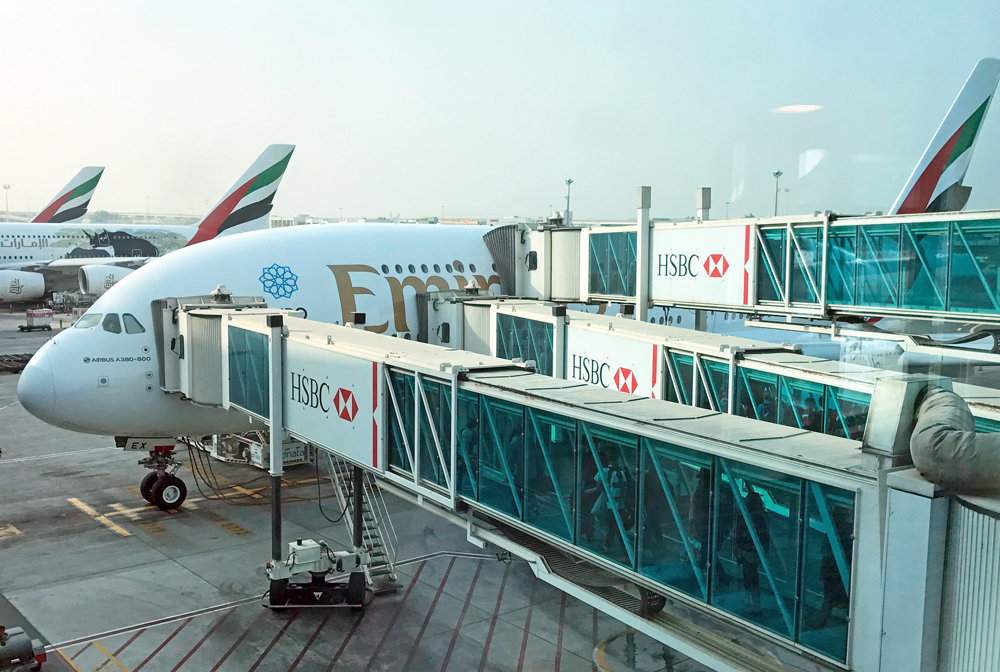
They built their mega-carriers from scratch, and have done well, believing that the commerce generated by air travel is something to be nurtured rather than hindered. You can call it government subsidizing. You also can call it an investment in an industry your economy and society benefit from.
Here in the U.S., it feels like we’ve given up on that concept. Our airports are undersized and dirty, security screening has gone off the rails, and consider the misery we put international connecting passengers through. You ask if the complaint of government subsidies is valid. Yes, but it’s less a complaint against their governments than a complaint against ours. Once upon a time, America was commercial aviation’s global leader. That was then.
Of course, that geographic lucky card that has served the Gulf carriers so well has always been fraught with risk. This perfect connecting point is also a geopolitical powder keg, as we’re seeing right now.
How long the disruption might last is anyone’s guess. The ME3 have plenty of resources to weather the storm, but it’ll be interesting to see airlines from other parts of the world might benefit. Someone has to pick up all the traffic that was flowing through the Gulf.
That so many flights to so many places, carrying so many people, exist in the first place is impressive enough. Equally remarkable is how quickly this movement can be brought to a halt.
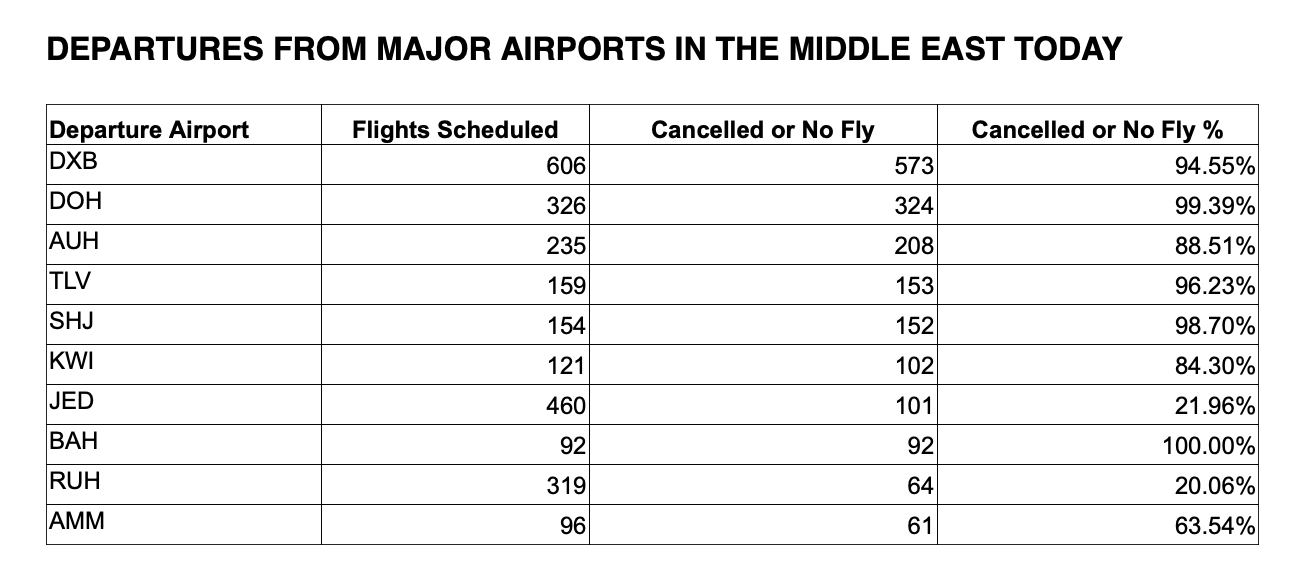
Cancellation stats for March 2nd. Source: Cirium.
Photos and video by the author.
The post Crossroads, Interrupted appeared first on AskThePilot.com.


