From Subject to Citizen: “Seemingly settled history comes alive with renewed vigor …”

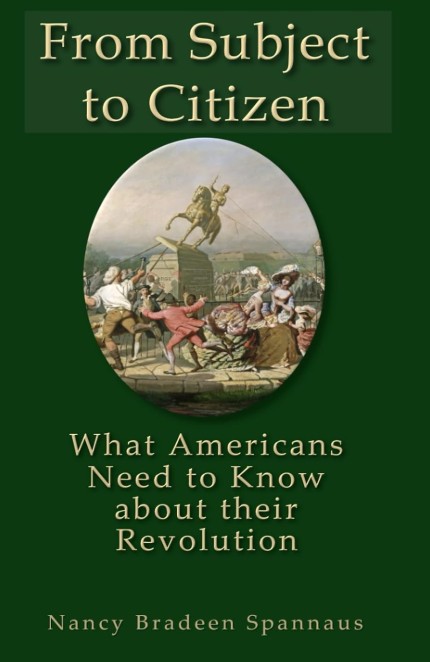
By Nancy Spannaus
August 22, 2025—Kirkus Reviews, the premier book review publication in the United States since 1933, issued the following assessment of my latest book, From Subject to Citizen, yesterday. The review is now posted on Kirkus’ book review site, which is a major source for librarians, in particular, around the country.
Happily, the review captures my intent to challenge Americans to take a new look, a “rethink, if you will,” at their beliefs about our Revolution, as an essential step toward resolving the conflicts in our republic today. I would only add my strong desire that readers pay special attention to the concluding section (entitled The Challenge), in which we get advice from both Abraham Lincoln and Frederick Douglass on how to preserve our republication institutions.
[Buy the book by clicking here .]
My hope is that the publication of this review will help spur contributions by others to expand the book’s circulation. The 250th celebration of America’s independence is upon us, and I believe my small volume, primarily covering the crucial period of 1760 to 1787, can play an important part in clarifying just what we should celebrate, and what we should set aside.
Here’s the review.
FROM SUBJECT TO CITIZEN
What Americans Need to Know About Their Revolution
Nancy Bradeen Spannaus
$15.00 paperback
ISBN: 9798315279716
March 28, 2025
BOOK REVIEW
A historian dissects myths about the American Revolution with surprising results.
“The Die is cast.” With four simple words in his diary—written in 1773 after the dumping of 342 boxes of tea from three British ships into Boston Harbor—Founding Father John Adams voiced a growing sentiment that the 13 American colonies had had enough of British taxation and domination. However, few conflicts are more poorly understood that the American Revolution, argues Spannaus, the author of multiple books on the era, including Political Economy of the American Revolution (1977). Here, she expands on a series of blog posts, which she began in 2017 as “a challenge to my fellow American citizens” to look beyond persistent legends about the struggle.
For instance, the Boston Tea Party—often presented as a tipping point—actually capped a decade of simmering anger over increasingly draconian restrictions on business and civil liberties. Nor was the revolutionary impulse shared by everyone, as Spannaus notes when she points out that the initial proposal to craft the Declaration of Independence passed by a mere 7-6 majority in the Second Continental Congress.

Spannaus is at her most eloquent when refuting that the ideas of philosopher John Locke exerted the greatest influence on the Declaration; she confers that distinction on Swiss legal scholar Emer de Vattel. She notes that many Americans now interpret the Declaration to mean that citizens should “seek freedom from government, rather than the freedom to use government’s powers in order to pursue the common good.” This interpretation, she says, “violates the foundation of our liberty, which relies on our cooperation as a people for the general welfare and rights of all.”
First and foremost, Spannaus’ book is a clarion call to “clear our heads” regarding the foundations of American ideals, especially during times in which the government ships citizens, against their will, to third countries, which parallels how King George III shipped colonists to England to quell what he saw as his subjects’ treasonous impulses. Spannaus makes such realities of history clear in her crisp narrative style.
Seemingly settled history comes alive with renewed vigor in this incisive overview.
You can respond to this post by emailing americansystemnow.com.


Related Posts
Tags: From Subject to Citizen, Kirkus Reviews, Nancy Spannaus