


COME is a hybrid live action and animated documentary, in which fluid handcrafted animation is used to visualize personal and sensitive accounts of female orgasm. The film was made by the powerful daughter-and-mother team of director Bronwen Parker-Rhodes and animator Erica Russell. We asked Bronwen and Erica some questions about their process of making the film.
You can watch COME here.

Did you always intend animation to be part of this project?
BPR: The original idea was always to use animation to illustrate the sensations women feel during orgasm. I’ve worked with my mum a little, but never taken on such a massive project together, it definitely felt like a bit of an experiment. I’ve actually never been a huge fan of animation in documentaries, but my mum’s style is so abstract and unconventional I felt like it could just work.
How hands-on was the commissioner in terms of how the animation would be used in the film?
BPR: The film was initially commissioned by The New York Times (I’ve made three films for them previously) and they were pretty hands off. They provided some initial seed funding – along with the Chicago Media Project – but the majority of the production costs were self-funded.
Did anything surprise you in the process of integrating animation into the project, or in the outcome?
BPR: The process for creating the animation was epic. Even though I grew up with a parent as an animator (who worked from home) I was still shocked at how much work was involved. To start with, we wanted to make the animation in the same way Erica always has – without digital intervention. We experimented with different methods to keep the workflow manageable, and eventually settled on a system: Erica would scan her artwork and send it to me, I’d create a line test and send it back, and then we’d review and refine together. Along the way, we’d also meet up in person to brainstorm new ideas.
Can you talk a bit more about your collaboration? Were you both involved in decisions about which sections would be animated?
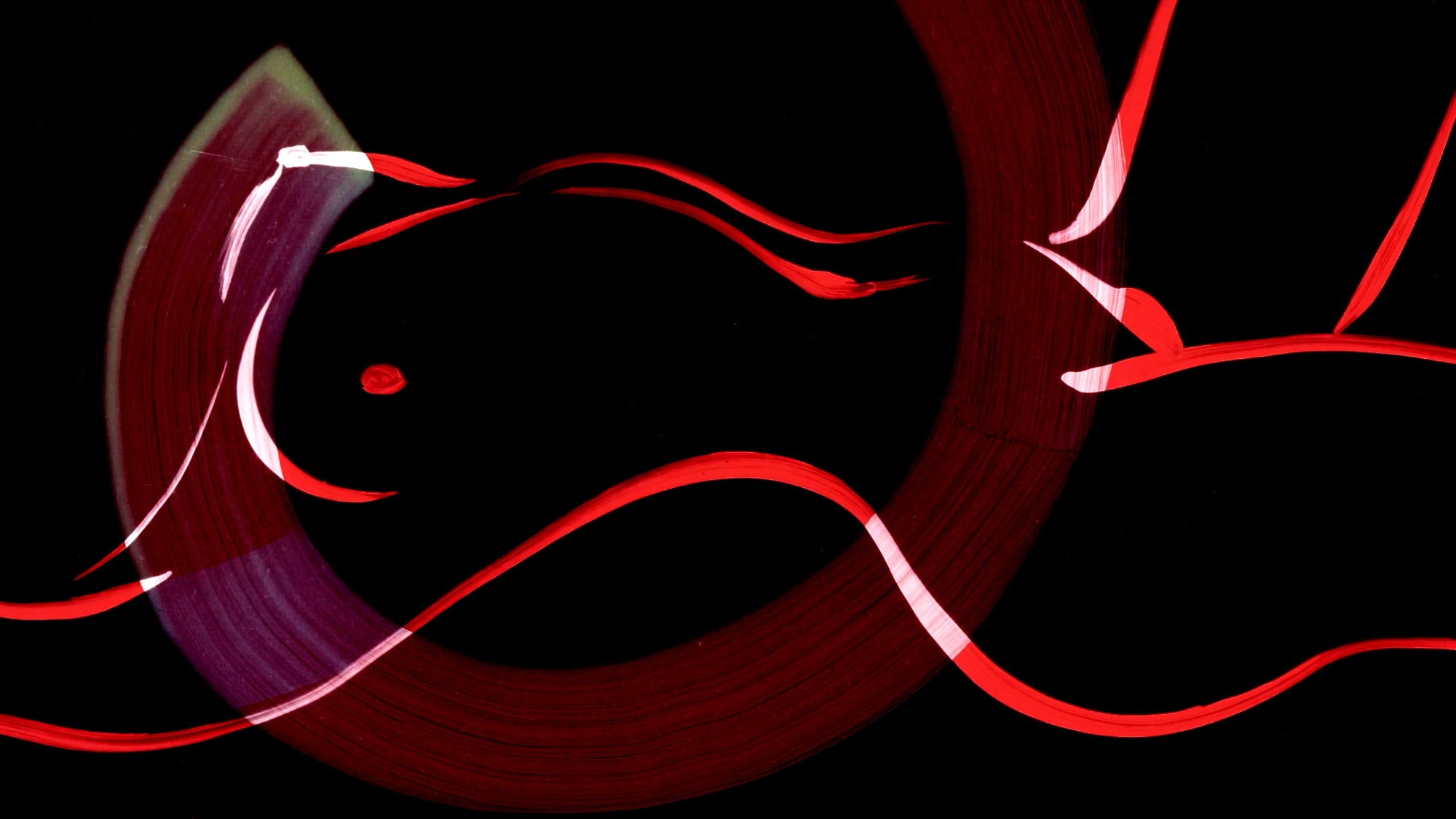
ER: We decided together which pieces I animated, we wanted to create a fluid interpretation and not illustrate the words. I chose loops of action that could be repeated to create rhythm and abstract allusions to the body so it was never literal.
Together we decided on duration, color and positioning. After Bron had shot the live action and done the first cut we started working together. We’d do rough line tests and Bron would edit them into the action. We would then decide how to proceed with timing, color and rhythm of the animation. It was definitely a two way process. A lot of the roughs were discarded and or radically altered until we agreed it had the right FEEL. Feeling the action was really what we were after so it took time and experimentation to arrive at the final pieces.
The animation is wonderfully expressive and refreshingly non-literal. What was the process behind developing the visual language for the animated sections?
ER: I love to animate the body so that was the basis of the form, and from there I abstracted the imagery so it became more of a feeling and flow – than a literal depiction. Hand drawn animation is full of the accidental and irregularities of real body motion which digital animation lacks, so this was definitely the way to go.
There is a strong sense of authorship in the overall film, but also in the animated sections, which have their own flavor. How did you balance/synthesize your personal directorial visions and make it all work together so well?
BPR: To be honest, I was pretty unsure how/if it would all work together until the film was fully finished. I think the music (which was composed by my husband) really helped to tie everything together. He created a soundscape which doesn’t feel too emotive, yet still adds another very important layer to the piece.
Were there any challenges in the bringing together of animation and live action documentary in this project? Do you have any advice for anyone planning to use these forms together in a film?
BPR: Besides the obvious cost and time involved in creating hand-drawn animation, I’d say the biggest challenge was the edit. From the start, it was important to me that the body of the film relied on only two visual elements: the wide interview shots of each contributor, and the animation. I didn’t want to include live-action details or cutaways that might distract from the words being spoken. This meant the animation became essential for covering cuts in the women’s interviews, turning the edit into a very intricate jigsaw puzzle. As for advice – I’m not entirely sure! But I do believe animation has the potential to be much more than just illustrative, and I’d love to see it used in that way more often in documentaries.
_
You can follow Bronwen Parker-Rhodes on Instagram and Vimeo, and see more work on her website.
Interview by Carla MacKinnon


