
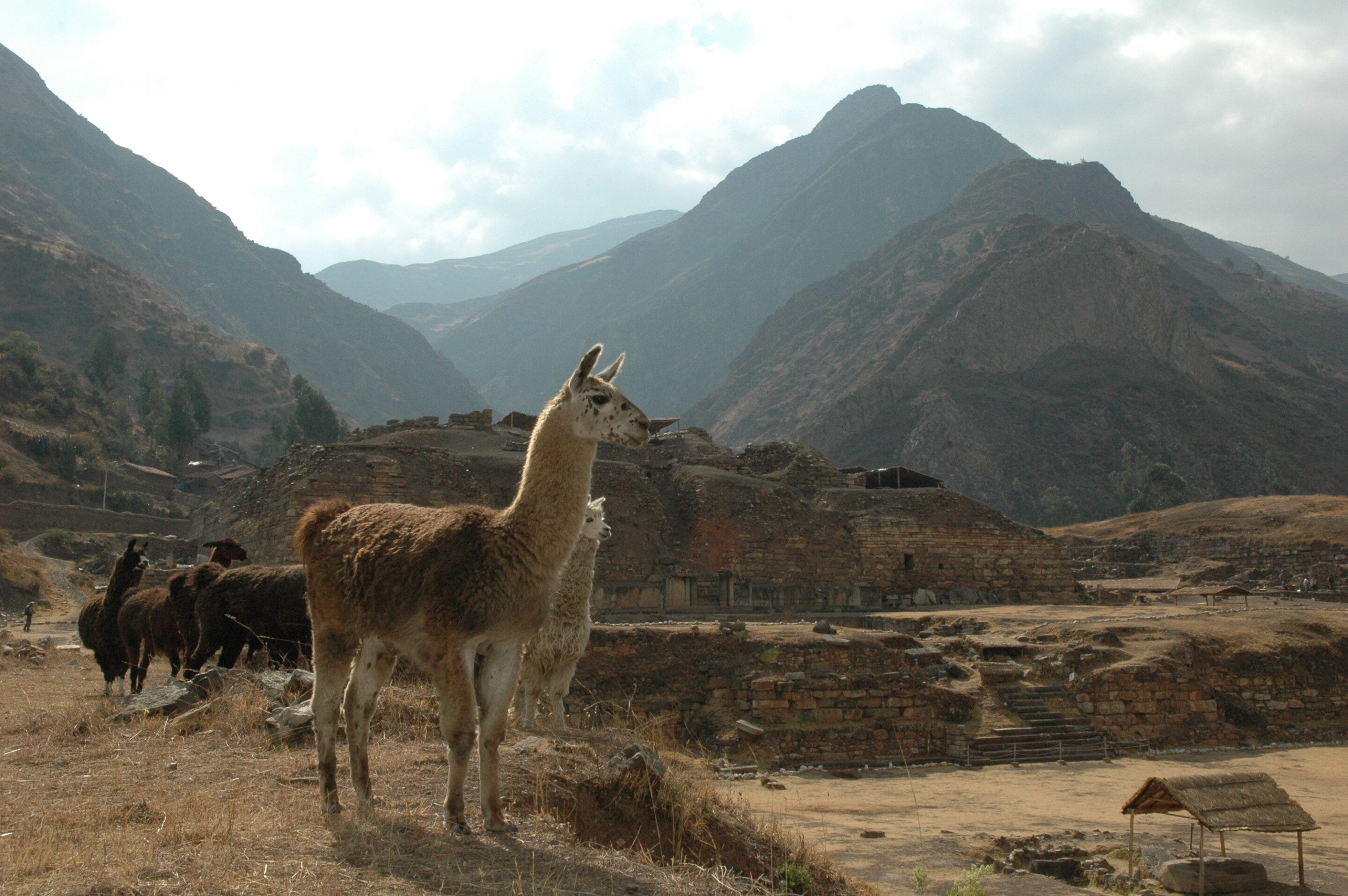
At 10,000 feet above sea level in the Peruvian Andes, stone corridors wind through the ancient ceremonial site of Chavín de Huántar. Built over 3,000 years ago, the architecture still stuns. But its true power wasn’t only in carved granite or megalithic design. It was in the unseen—a ritual world carefully curated by those in charge, where altered states of consciousness became instruments of social cohesion and control.
A recent study published in Proceedings of the National Academy of Sciences delivers the first direct chemical evidence that psychoactive plants were used in these ceremonial settings. Researchers analyzed snuff tubes carved from hollow animal bones, discovered in private chambers deep within the temple complex. Traces of nicotine from wild tobacco species and Anadenanthera seeds—a potent hallucinogen containing DMT-like compounds—were detected.
The implications run deeper than the tubes themselves.
“Taking psychoactives was not just about seeing visions,” said archaeologist Daniel Contreras, co-author of the study. “It was part of a tightly controlled ritual, likely reserved for a select few, reinforcing the social hierarchy.”