

I invited my friend, author and educator Andrea Page, to join me this month on Children’s Book Corner to celebrate the release of her chapter-book biography of Wilma Mankiller. Andrea is smart, kind, thoughtful, and passionate about sharing literature reflecting her culture with young readers. It is my pleasure to introduce you to her here.
Judy Bradbury: Who Was Wilma Mankiller? is part of the Penguin Workshop chapter book series Who HQ Headquarters for History that focuses on history and biographies. Tell us about this line of books.
Andrea Page: The popular WHO/WAS series (published by Penguin Workshop) includes illustrated biographies about significant historical figures. These artists, scientists, athletes, world leaders, etc. made major contributions in their field of expertise. They may have been first at something or may be the best at what they do. Subjects are chosen in advance, and the series follows a consistent structure.
Who Was Wilma Mankiller? highlights the life of Cherokee Nation’s first female Principal Chief. Wilma Mankiller grew up immersed in her Cherokee community and culture of Oklahoma. When her family moved to San Francisco as part of the Indian Relocation Program, she had to adjust to city life. Eventually, Wilma became a major political activist who never lost her dedication to her people.
JB: How did you develop the theme/focus of Who Was Wilma Mankiller?.
AP: I read and research before I begin to outline and write. Once I found a quote she made about her identity being tied to her community and her values, I knew I found a path for the story. Here’s what she said: “To think of myself outside the context of the tribe or my family or my community would be very difficult.” Wilma lost her home, her community and culture, and felt out of place when her family moved away from Oklahoma. California was a whole new world to her. Wilma eventually used her values and perseverance to return to her community and homeland. She used her skills to make a difference in Cherokee Nation and has inspired young women to pursue their dreams.
JB: Tell us about a challenge you faced in the creation of Who Was Wilma Mankiller?, or provide a memorable (or humorous!) anecdote related to the writing of the book.
AP: I’m always trying to find new sources for research. Podcasts have become popular, so I decided to do a quick search for Wilma Mankiller and was surprised by the number of episodes that popped up! One fabulous find was a 2009 interview posted by Voices of Oklahoma. I listened to Wilma’s voice and learned about her life experiences directly from her. That was a memorable moment.
JB: Recount one unexpected joy that came from the creation of Who Was Wilma Mankiller?.
AP: I discovered Wilma was an author of several books herself. Many of the significant events in her life are detailed in her autobiography. I really enjoyed reading her collection of Native women’s voices in her book Every Day is a Good Day as well as her poetry.
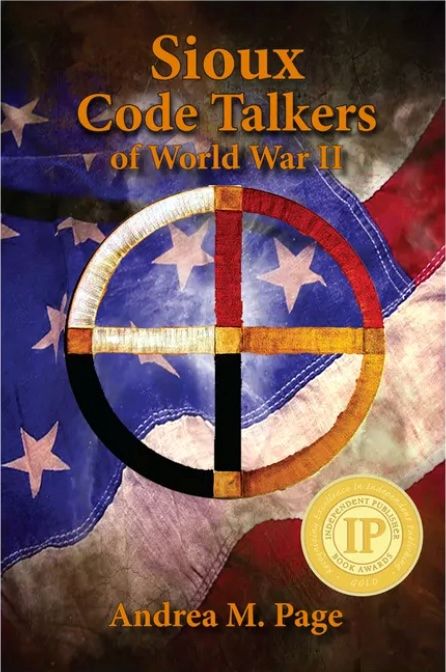
JB: How did your heritage inform the writing of this book, and your previous book, Sioux Code Talkers of World War II?
AP: I’ve learned more about my Native heritage as I’ve grown up. There are nearly 600 federally recognized tribal nations in the United States. I am an enrolled member of one of those nations. My mom grew up on the Standing Rock Reservation in South Dakota. We visit family there as much as we as we can, but I don’t have the lived experience like my mother. So, I am mindful of how I share my Native experience in my writing. Of course I research to make sure I’m including correct facts. Now that I’ve gained more knowledge, I’m very aware that my Lakota (Sioux) background may have similar values to Cherokee people, but we are also different. I wanted to be respectful of the Cherokee community, so I asked the publisher to use a Cherokee reader to make sure the cultural concepts were accurate. The publisher agreed.
I felt the same way about my book, Sioux Code Talkers of World War II. I consulted with several Lakota elders who lived on the reservation. They reviewed my manuscript before I started submitting it to publishers. It’s important to me to be as respectful and accurate as possible.
JB: Early in Wilma Mankiller, you mention Wilma’s resiliency and courage, referring to it as her “good mind”—a Cherokee value. Tell us more about Cherokee values.
AP: Wilma spoke about her ancestral ties. Her grandmother, who sang hymns at work, taught her to be joyful. Her aunties and uncles in Oklahoma, and the intertribal community in San Francisco, taught her about the spirit of community service. She relied on the Cherokee value of having a “good mind” (positive thinking) to navigate difficulties. And, she believed that people who worked together could achieve great things.
JB: What would surprise readers to learn about you or about the writing of Who Was Wilma Mankiller?.
AP: Even though I never met Wilma, I felt a strong connection to her while writing. Her life and work resonated deeply with me. Several months after I submitted my manuscript and met my deadline, I was diagnosed with cancer. The first person who popped into my mind was Wilma. I knew she endured many different physical ailments but always kept “a good mind” and would not let negative thoughts enter her mind. I decided I would follow her lead and hold onto positive thoughts and my faith to keep me strong. I’m happy to say I’ve made it through all my treatments, surgery, etc. and am staying hopeful that I’ll be cancer free for a long time.
JB: I am hoping that for you as well. In the book you highlight personal challenges Wilma overcame in her life as well as groundbreaking accomplishments . What do you consider her greatest achievement?
AP: I believe Wilma would say her greatest accomplishment was inspiring her daughters and other young women. She said, “If you want to see a leader, look in the mirror.” (P156, Tamrala Swafford Bliss, Wilma Mankiller: A Life in American History)
JB: Who do you perceive your book’s target audience to be and why?
AP: Readers at the 4th / 5th grade levels benefit from the length of the biography and the level of vocabulary used. I hope that all readers feel an emotional connection to Wilma’s life and legacy, as I do.
JB: What do you hope young independent readers will take away from Who Was Wilma Mankiller? / What need(s) does this chapter-book biography satisfy?
AP: Young readers can read for pleasure, enjoy the engaging illustrations, and learn about a significant leader along with some historical context of Wilma’s life.
JB: As a former educator, how do you see Who Was Wilma Mankiller? connecting to curriculum or being used in learning settings?
AP: 4.2c NYS SS Standards: Students will examine contributions of Native Americans that are evident today.
Wilma became the first Female Principal Chief despite prejudice against her. She brought clean water to impoverished communities on the Cherokee reservation. She focused on improving education and language programs as well as housing and health care for Cherokee Nation.
SEL connection – Wilma developed a healthy identity by relying on her Cherokee heritage to help her overcome her struggles.
JB: If you could ask your readers a question, what would it be?
AP: I discovered that Who Was Wilma Mankiller? is the first Native authored biography in the series. If you could choose the next modern-day Native person to read about, who do you think should be included in the series? Rank the top three in order of your preference:
- John Herrington (Chickasaw, Astronaut)
- Oren Lyons (Onondaga/Seneca, All-American athlete, activist, environmentalist)
- Sam McCracken (Sioux/Assiniboine, Founder Nike’s N7 shoe line)
- Billy Mills (Lakota, Gold Medal Olympian)
- Elizabeth Peratrovich (Tlingit, Equal Rights Activist)
- Ola Mildred Rexroat (Lakota, WWII Women’s Air Force Service Pilot)
- Wes Studi (Cherokee, Oscar winning actor, artist, musician)
Hint: you’ll need to become a mini-researcher and find out more about each person. Remember, the goals of the series: the first at something or the best at something.
JB: What project(s) are you currently working on?
AP: I’m revising two biographies and a science picture book with a humorous character in a ridiculous scenario.
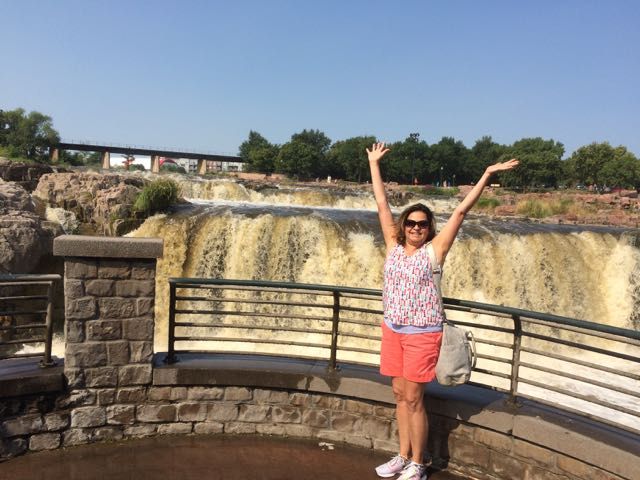
Andrea celebrating the launch of her first book in Sioux Falls.
JB: What is one question you wish I had asked, and what is your answer?
AP: How has Wilma been recognized for her accomplishments?
Answer: Wilma received numerous awards in her lifetime, most notably the Presidential Medal of Freedom (1998) for her contributions to Cherokee Nation. Recently, the U.S. Mint launched a Wilma Mankiller quarter (2022) honoring her legacy.