
Hair in ancient India was never just cosmetic—
it was a language of status, spirituality, and art.
When I explore Indian temple sculptures, one detail consistently captures my attention: the hair. From the cascading locks of apsaras to the tightly bound topknots of ascetics, these hairstyles weren’t decorative accidents. They formed part of Kesh-Vinyas, a sophisticated system of hair arrangement that communicated social position, spiritual practice, and cultural values.
In this guide, I’m sharing findings from my temple fieldwork across India, featuring original photographs from Hampi and other heritage sites—images you won’t see on generic stock platforms. These stone carvings preserve intricate braids, coiled buns, and structured curls that functioned as visual codes in ancient society.
— Indrani Ghose, travel blogger | Updated Nov 2025
Understanding these traditional Indian hair designs reveals how communities used hairstyles in religious ceremonies, classical dance, and everyday life. The carved evidence shows us a world where your hair announced your role—whether priest, performer, warrior, or royal.
This post decodes the meaning behind these ancient styles.
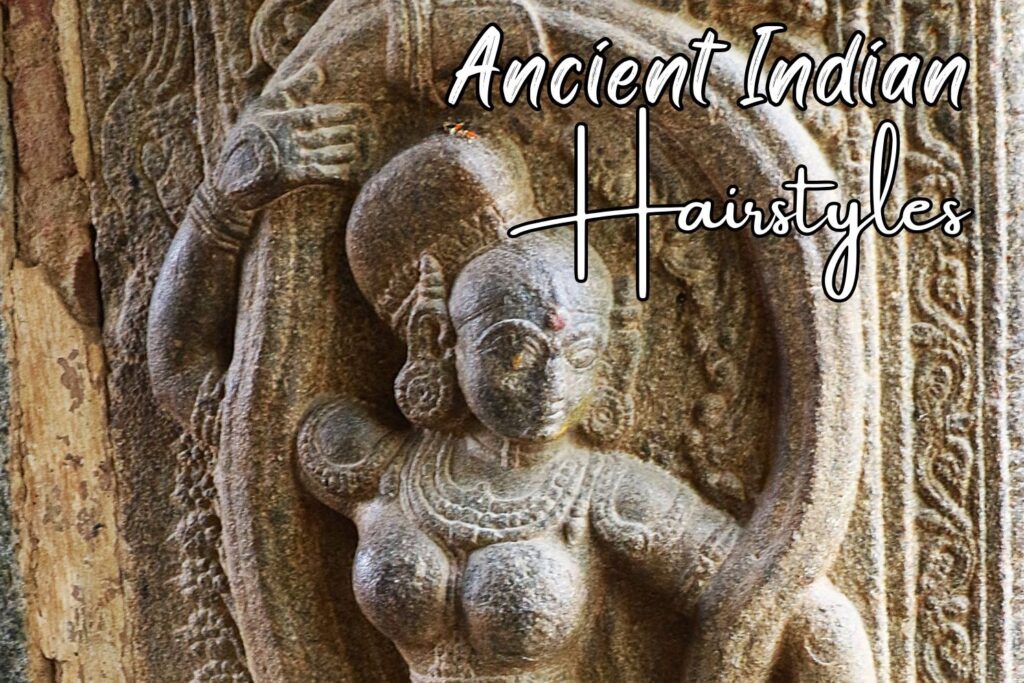
Ancient Indian Hairstyles by Indrani Ghose
Hair as Cultural Identity in Ancient India
In ancient India, hair signaled community, belief, and life stage. Sculptures and texts show how societies used hairstyles as a language of identity.
Religious and Spiritual Markers
The Shikha—a single tuft preserved at the crown—was mandatory for Vedic students and priests. This style served a practical spiritual purpose: focusing energy during meditation and rituals.
Meanwhile, completely loose, uncombed hair typically indicated mourning, renunciation, or chaos. Neatly arranged hair communicated order, self-discipline, and ritual purity.

Men with hairstyles – Jatamukuta
Performance and Prescribed Styles
The Natya Shastra, India’s foundational performing arts text, established specific hair requirements for different character types.
- A romantic heroine needed flowing braids
- Warrior wore a structured topknot
- Sages had matted locks
- A king had decorated, ornament-set hair
Each time I closely examined the hairstyle in the ancient sculptures I could easily identify roles.
Life Stage Transitions
Hair marked major life events, some can be seen in today’s lifestyles too.
- A child’s first haircut (mundan) signified entry into the community.
- Brides wore elaborate plaited styles decorated with flowers and ornaments.
- Widows traditionally cut their hair short, visibly changing their social status.
These weren’t arbitrary customs—they were cultural grammar everyone understood. Temple carvings from Hampi, Khajuraho, and other sites preserve this coded system in stone, showing us exactly how these styles looked and who wore them.

Huge smooth bun – sculpture in Hampi
Hairstyles during different Eras
Vedic and Indus Valley Era (3300 BCE – 500 BCE)
Early cities already used hair for meaning.
- The bronze Dancing Girl of Mohenjo-Daro shows an early Opasa, a loosely gathered topknot.
- Terracotta figures from this period show the Kaparda, a conch-shaped hairstyle linked later to Shiva.
- Excavations found pins, beads, and hair-securing objects.
This proves that hair styling was both intentional and symbolic, not just practical.
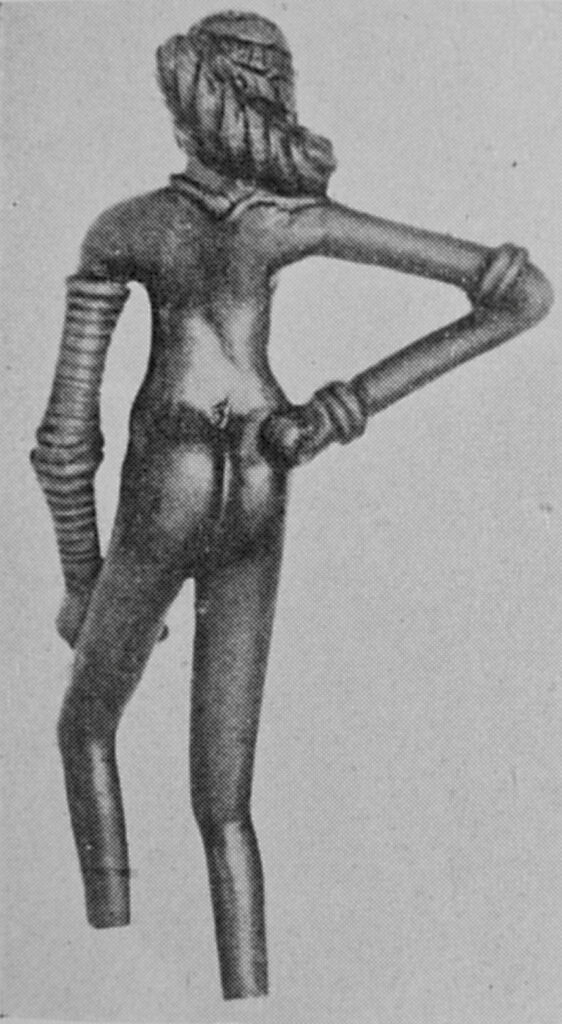
Bronze dancing girl (back view) By Ernest John Henry Mackay (5 July 1880 – 2 October 1943) – Early Indus civilizationPublished in 1935, Public Domain, https://commons.wikimedia.org/w/index.php?curid=113435757
Mauryan and Sunga Period (3rd century BCE – 1st century BCE)
Hairstyles became more complex in the Mauryan era.
The Didarganj Yakshi shows thick, ornamented braids created with technical skill.
The Arthashastra records grooming rules for people serving in royal courts. Hair care and arrangement were tied to conduct, service, and authority.
Carvings at Sanchi show women in layered plaits and men in topknots. Jewelry and flowers were added to indicate status, devotion, and prosperity.

Notice the jasmine string adornment, Photograph from the temples of Hampi
Gupta Period (300 CE – 600 CE)
Gupta sculptures show hair in highly structured curls and plait patterns. Texts use specific terms:
- Alaka (curled sections framing the face)
- Bhramaka (spiral curls)
- other named classifications for curl and plait types.
Pearl strands, flowers, and jeweled pins were part of the design. This was a visual code for refinement, divinity, and high rank. The same style appears on dancers, royalty, and deities, showing its cultural importance.
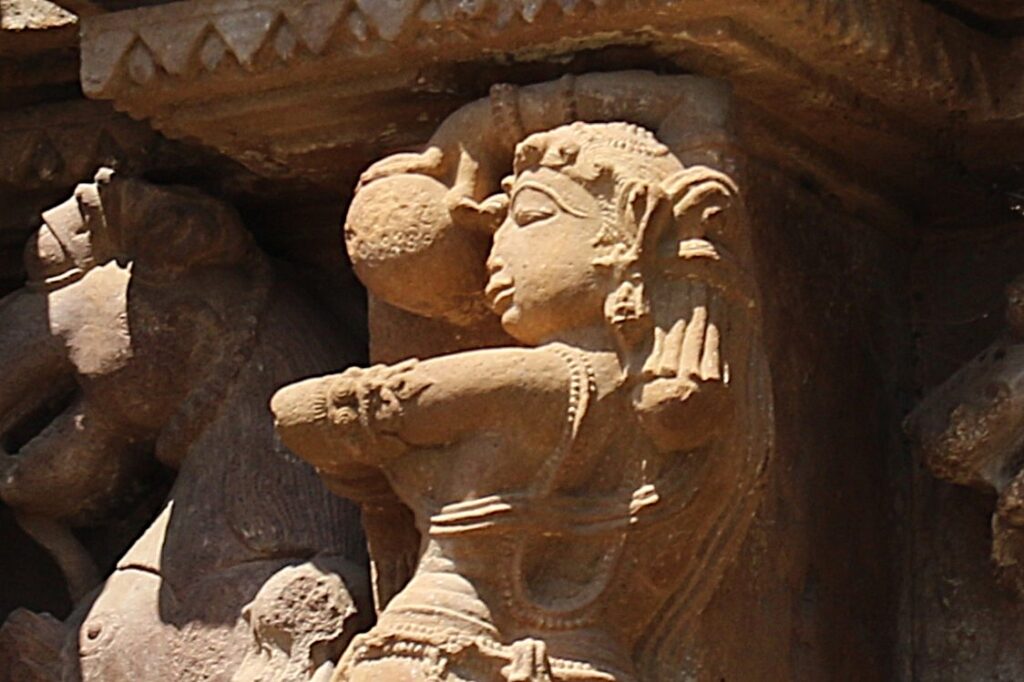
Bhramaka Spiral Curls – Khajuraho

Woman with very long hair from Hampi in Karnataka. Notice the monkey in the corner pulling her hair.
Famous Ancient Indian Hairstyle Types
Dhammilla (The Elaborate Ceremonial Bun)
The Dhammilla represents one of the most ornate styles in ancient Indian hair traditions. This complex bun arrangement sat high on the head, secured with decorative pins and laden with flowers, pearls, and precious ornaments.
Temple sculptures at Hampi and Amaravati preserve stunning examples of this style on queens, celestial dancers, and noblewomen.
I’ve documented the Dhammilla extensively in South Indian temple carvings. The style communicated both wealth and devotion. This wasn’t casual styling; creating a proper Dhammilla required skill, time, and resources.
Among traditional Indian hairstyles, the Dhammilla functioned as a visual announcement of status and ceremonial participation.
Sikhanda (The Spiritual Top Knot)
The Sikhanda was a smooth, egg-shaped knot positioned at the crown, worn primarily by ascetics, sages, and deities. When examining sculptures of Vishnu or Buddhist monks, you’ll consistently find this disciplined style.
The Sikhanda served a functional purpose—keeping hair completely controlled during meditation and ritual practice. This ancient Indian hairstyle carried zero ornamentation, making it instantly recognizable as a marker of spiritual focus rather than social display.
You can see in the sculpted bas relief in Mahabalipuram. The style symbolized mental concentration, self-discipline, and detachment from worldly concerns. In the vocabulary of Kesh-Vinyas, the Sikhanda communicated purity and dedicated practice.
Praveni (The Decorated Long Braid)
The Praveni was the classic single braid that extended down the back, sometimes reaching the waist or beyond. Sculptures of yakshis, apsaras, and noblewomen showcase this style embellished with gold strips, jeweled bands, and woven flowers. I’ve photographed remarkable examples at Belur and Halebidu.
This hairstyle carried strong associations with femininity, prosperity, and marital status in ancient India. The technical skill required for such precise braiding shows how central this style was to ancient Indian coiffure traditions.
Among all traditional hair designs, the Praveni remains one of the most immediately recognizable and culturally significant.

Praveni was the classic single braid
This statue is completely dabbed with sandalwood paste. The hairstyle is completely camouflaged yet the outlines show some interesting pattern.
Jatamukuta (The Ascetic’s Matted Crown)
The Jatamukuta stands apart from decorative hairstyles—this was matted hair piled high into a crown-like structure, most iconically associated with Lord Shiva and with ascetics and yogis. Temple sculptures at Ellora and Badami show Shiva wearing the Jatamukuta, often decorated with the crescent moon, sacred Ganga, or serpent ornaments.
This ancient Indian hairstyle symbolized renunciation, cosmic power, and spiritual intensity. Unlike the groomed precision of the Dhammilla or Praveni, the Jatamukuta was deliberately untamed. The style is one of the most spiritually charged hairstyles in Indian iconography.
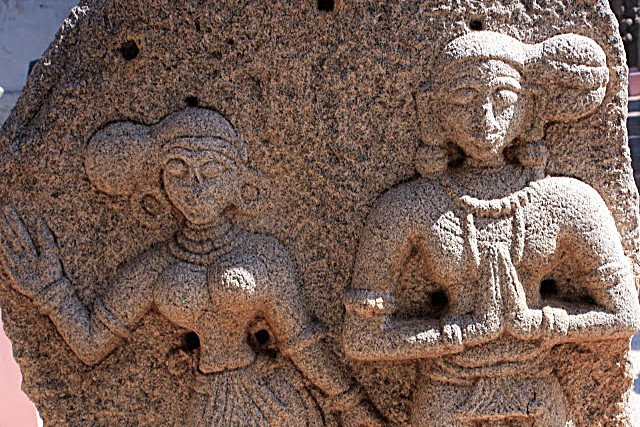
Hairstyles in Ancient Indian Sculptures from museum in Hampi
Hairstyles in Ancient Indian Sculptures from Pattadakal. The figure below is one close shot of another hairstyle.

Notice the strands of hair in the bun. This is from Pattadakal in Karnataka.

In the image above, the sculptor has depicted the male figure supporting the fancy hairstyle while whispering sweet nothings as the female figure rests her hand on his shoulder. In the figure below the male is seen supporting some kind of head gear. The woman has an elegant hair bun. There is a parting in the center and some kind of jewel in the hair bun.

The parting in hair and the bun adorned with jewels and flowers
Pattadakal has some fantastic sculpted images of women with elaborate hairstyles.
From Gopurams of Srirangam – Srirangam has 21 gopurams (gates). Some of them are elaborately carved. This image is from west gopuram in the 3rd layer from outside.

Hair neatly pulled up into neat bun, adorned and individual strands visible
When I visited the Srirangam Gopuram in Tiruchirapalli, Tamil Nadu, I was struck by the female sculptures. In this photo I took (above), you can actually see the individual strands of stone carved into a Dhammilla bun. The craftsmanship is unlike anything I’ve seen in northern India
Regional Masterpieces: Hairstyles in Temple Architecture
Across India’s temple architecture, hairstyles were carved with astonishing detail, turning stone into living fashion. These sculptures are not just decorative—they are cultural records of how people styled their hair in different dynasties.
My own photographs from Chola, Hoysala, Khajuraho and Halebidu sites reveal how regional artistry shaped the story of Ancient India Hairstyles.
Chola Architecture: Royal Grandeur in Stone
The Great Living Chola Temples of Tamil Nadu, particularly Brihadeeswarar at Thanjavur, display hairstyles that emphasize monumentality and divine power.
Female figures wear high, elaborate buns piled with architectural precision and secured with jeweled bands. These elevated styles, often crowned with carved flowers, communicated prosperity and religious devotion.
Male deities and warrior figures appear with structured topknots that signal discipline and authority. The heavy ornamentation carved into these coiffures—every jewel, every securing pin rendered in stone—reflects the Chola dynasty’s emphasis on displaying wealth and cosmic order.
Standing before these 1,000-year-old sculptures, the connection between hairstyle and status becomes immediately clear.
Picture below taken in Someshwar Temple Kolar.
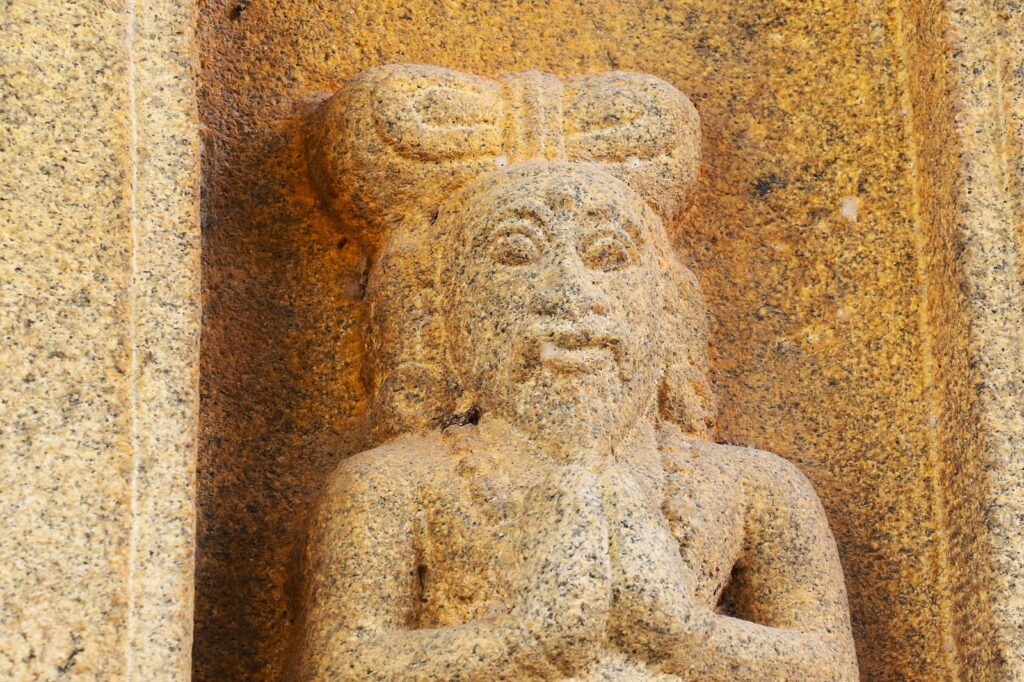
Male figures with structured top knot hairstyle
Hoysala Intricacy: Technical Mastery at Belur and Halebidu
The Hoysala temples of Karnataka represent the pinnacle of detailed hair carving in Indian architecture. At Belur and Halebidu, I’ve documented celestial dancers and apsaras with braids so precisely rendered that individual strands remain visible in stone.
These aren’t simple plaits—they’re multi-layered constructions decorated with carved flowers, beads, and gold-like ornamental strips.
Hoysala sculptors captured texture, movement, and ornamental placement with technical accuracy that turns each figure into a hairstyling tutorial carved in soapstone. For researchers studying traditional Indian hair designs, these temples provide unmatched detail.
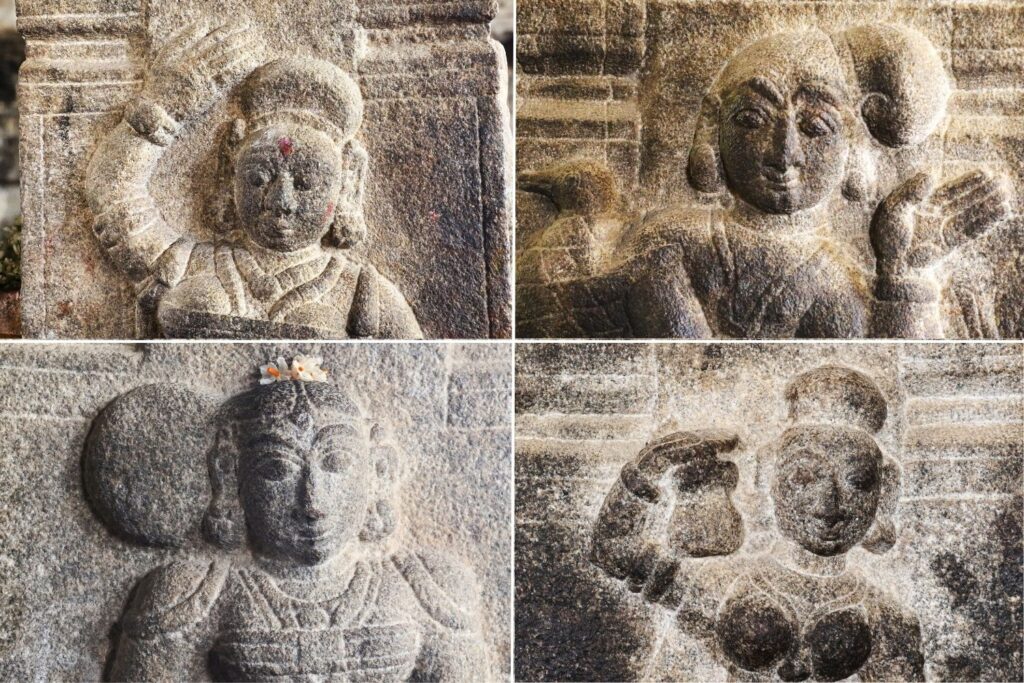
Ancient Indian Hairstyles
Khajuraho and Konark: Intimate and Everyday Styles
Central and eastern Indian temples like Khajuraho and Konark’s Sun Temple preserve a different aesthetic—one focused on approachable, everyday beauty rather than ceremonial grandeur. The Nayikas (romantic heroines) carved here wear loose side braids, casual curls, and relaxed topknots that suggest daily life rather than ritual occasions.
These Chandela and Kalinga dynasty sculptures capture women preparing for dance, romantic encounters, or leisure activities. The hairstyles feel human and relatable compared to the formal arrangements at Chola or Hoysala sites.
These temples function as cultural archives of ordinary beauty—showing us how regular people, not just royalty and deities, styled their hair in ancient India.
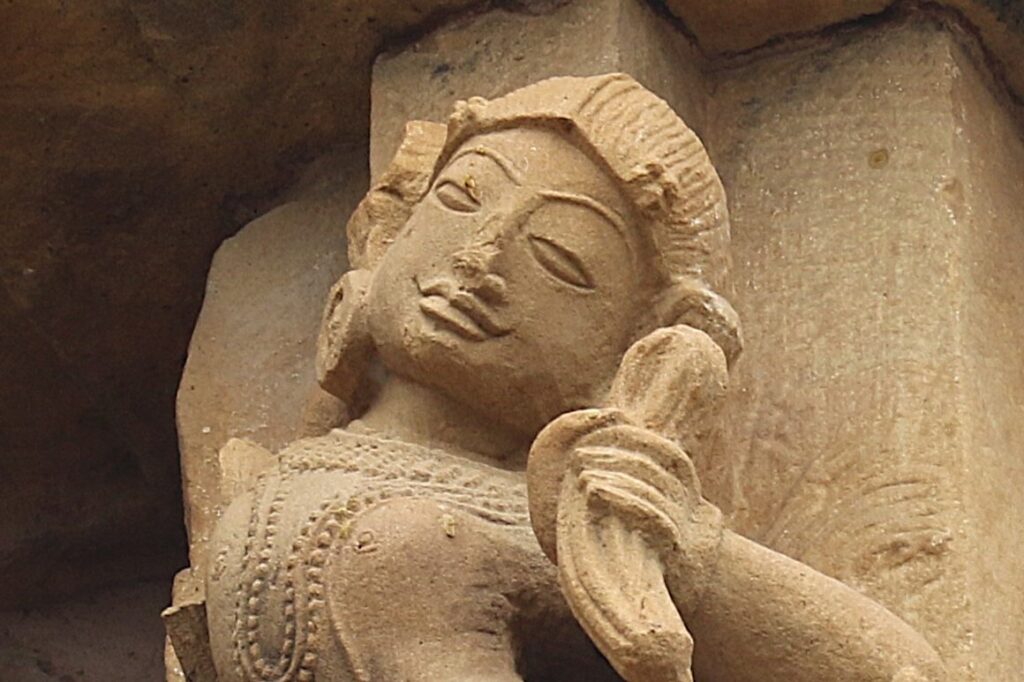
Curls on head – Khajuraho
How to Recreate Ancient Looks
Ancient India hairstyles continue to inspire modern traditions, especially in weddings. The Praveni, a long braid embellished with ornaments, survives today as the Jada Billalu in South Indian bridal hair. Brides wear a single plait that extends down the back, decorated with gold discs, flowers, and jeweled accessories.
When I photographed temple sculptures in Hampi, I noticed how the Praveni braid was carved with beads and floral motifs. Modern hairstylists often recreate this look by weaving extensions for length, adding jasmine flowers, and securing the braid with traditional jadai ornaments.
Other adaptations include high buns inspired by the Dhammilla, often worn at classical dance performances, and top knots reminiscent of the Sikhanda, now seen in yoga and spiritual contexts.
By blending tradition with modern styling tools, these ancient coiffures remain alive in ceremonies, festivals, and stage performances.
For brides and performers, recreating these looks is more than fashion—it is a way of carrying forward centuries of artistry carved into temples and preserved in cultural memory.
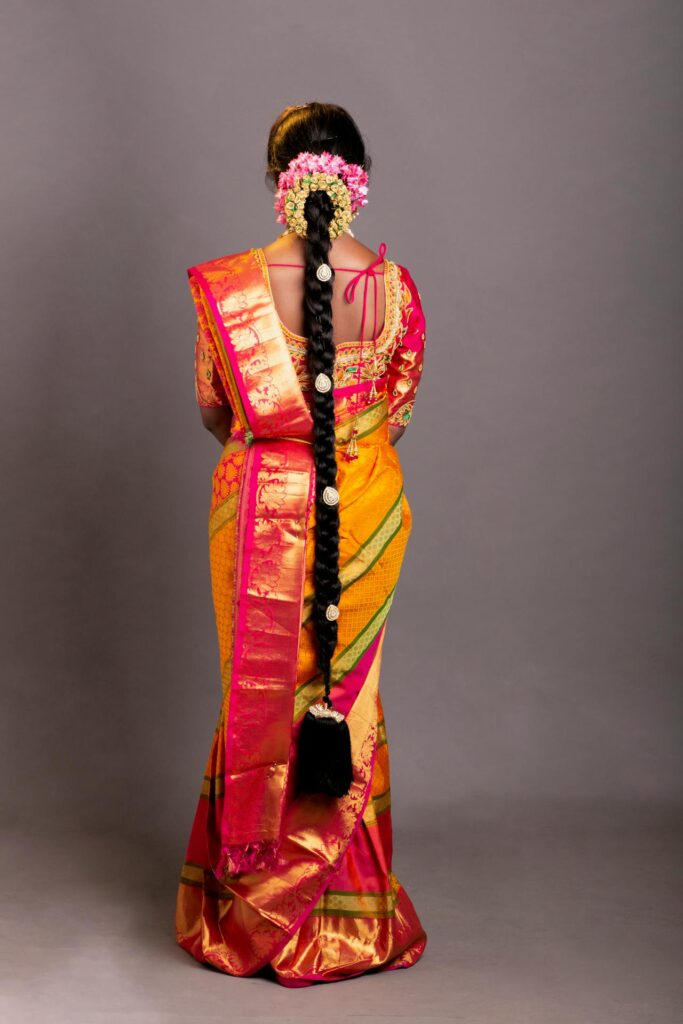
Wedding Hairstyle
FAQ on Ancient Indian Hairstyles
Q1. Why did hair matter so much in ancient India?
Hair symbolized identity, discipline, and spirituality. Styles like the Shikha or Praveni carried social and religious meaning.
Q2. What is the oldest evidence of Indian hairstyles?
The Dancing Girl of Mohenjo-Daro (c. 2500 BCE) shows early hair arrangements, including knots and ornaments.
Q3. Which hairstyle is linked to Lord Shiva?
The Jatamukuta, a crown of matted hair, is Shiva’s signature style, representing ascetic power.
Q4. How are temple sculptures useful for studying hairstyles?
They act as visual records, showing how hair was styled across dynasties—from braids to curls.
Q5. Are modern Indian bridal hairstyles connected to ancient ones?
Yes. The Jada Billalu braid is a direct descendant of the ancient Praveni, continuing the tradition in weddings.
Q6. Can travelers see these hairstyles in temples today?
Absolutely. Sites like Hampi, Belur, Khajuraho, and Konark display intricate carvings of ancient coiffures.

Hairstyle Sculpture from Srirangam Temple
Conclusion
From the simple knots of the Indus Valley to the elaborate curls of the Gupta age, Ancient India hairstyles evolved as markers of culture, spirituality, and artistry. Temple sculptures across regions—from Chola grandeur to Hoysala intricacy—preserve these styles in stone.
Modern traditions like bridal braids and dance buns prove that these looks are not lost but adapted for today. Hair remains a living heritage, connecting us to centuries of identity and devotion.
Which of these hair styles was your favorite? Let me know in the comments.
Pin this for later
If you have liked these medieval hairstyles of women in India add it to your collection by pinning it. You can share with share buttons.
About the Author
 Indrani Ghose is a cultural travel writer and heritage documentation specialist with over 15 years of experience exploring and writing about temples across India and Southeast Asia. Having visited over 150 sacred sites, she brings both scholarly depth and personal narrative to heritage travel writing.
Her work has been published in Lonely Planet, The National (UAE), Whetstone Asia, Deccan Herald, and various architecture and heritage journals.
Connect with Indrani: Follow Indrani on Instagram | Twitter | Facebook for heritage travel insights, photography tips, and offbeat destination discoveries.