
At its heart, it’s about finding your voice, standing up for what’s right, and choosing hope even when the world tells you not to.
B.R. Kang – 17 March 2026
The Back Flap
When Niil Terra sets off to find his missing parents, he ends up in Caput Mundi, a dazzling place filled with flourishing innovation and alchemic wonders. It is also the home of enarii, a shape-shifting metal that can be willed into any shape, whether it be swords, forks or fly swatters. There, Niil’s talent for enarii shaping emerges, and for the first time, he feels like he truly belongs.
But when he discovers that his mother is the leader of the Doubleyes, who is out to eliminate enarii altogether, he is faced with an impossible choice: to stop her or watch hundreds suffer at the hands of someone he’d do anything to reunite.
Caput Mundi: the Head of the World is an upper middle grade adventure fantasy with a touch of hopepunk. At its core, this is an adventure story filled with action, mystery, and well-deserved butt kicking. But it’s also about perseverance, and what it means to stand up for what’s right. It’s about finding your voice, taking your power back, and holding onto who you are. No matter what the world throws at you.
About the book
What is the book about?
Caput Mundi, the Head of the World, is an upper-middle-grade adventure fantasy about children who have to deal with the consequences of the world their parents built. The world is set in a dazzling, innovation-driven society with a prized shape-shifting metal called enarii. The story follows the children as they uncover all the cracks and lies in this seemingly perfect world and fight to set things right. At its heart, it’s about finding your voice, standing up for what’s right, and choosing hope even when the world tells you not to.
When did you start writing the book?
I started writing Caput Mundi in 2007. I was still in high school.
How long did it take you to write it?
Nearly 20 years—it’s a long time to stay with one story! I didn’t work on it continuously, but kept returning to it at different phases of my life. Looking back, I think it helped enrich my story by letting me layer in new perspectives over time.
Where did you get the idea from?
The initial motivation to write came after reading the final Harry Potter book in 2007. I’d grown up with that series, so for the first time, it felt like I’d lost a world I’d lived in. I decided I wanted to create something that felt like home in the same way.
As I built the world, one idea really stuck: the currency system. Instead of gold or coins, I imagined a society where currency had intrinsic, practical value. That led me to wonder what people desire most—which, to my teenage brain, came down to strength, intelligence, beauty and longevity. From there, I asked myself how those traits could be physically traded. The answer became the foundation of the man elements and the world of Caput Mundi.
Were there any parts of the book where you struggled?
One of the biggest challenges for me was learning what not to include. With so many shows, movies, and books now available at our fingertips, inspiration is everywhere. It’s easy to get distracted by shiny new tropes and trends that don’t actually serve the story I’m writing. For example, heists, rivalries, and forbidden love tropes are amazing, but I had to ask: do they belong in my story? It took time to realize that each choice needed intent. Gaining that clarity made Caput Mundi more focused and stronger.
What came easily?
Probably the worldbuilding. It came naturally, since the world was based on Ancient Rome and aspects of modern America (mainly its culture of speed, convenience, and variety). Having those reference points gave me a solid foundation and made it easier to imagine the systems, culture, and daily life that shaped the world of Caput Mundi.
Are your characters entirely fictitious or have you borrowed from real world people you know?
They’re fictional, but many are emotionally rooted in real experiences. The main characters reflect feelings I had growing up, such as frustration, loneliness, and a desire to escape. As I got older, I also found myself understanding and connecting more with my adult characters, which added nuance to the story.
We all know how important it is for writers to read. Are there any particular authors that have influenced how you write and, if so, how have they influenced you?
Absolutely. I’m deeply indebted to authors who wrote stories with hope and trust at their core, like Madeleine L’Engle (A Wrinkle in Time), Frances Hodgson Burnett (The Secret Garden), L. M. Montgomery (Anne of Green Gables), Jeanne DuPrau (City of Ember), and J. R. R. Tolkien (The Hobbit, The Lord of the Rings). I remember, even as a kid, feeling that they treated young readers with respect, and ultimately, their works influenced the kind of writer I wanted to become. They showed me that hopeful stories could still be thoughtful and complex, and that young readers also deserved stories that took them seriously.
Do you have a target reader?
Caput Mundi is written primarily for middle-grade readers (ages 8-12) who enjoy fantasy and adventure, but I believe that its deeper mystery and hopepunk themes would resonate with readers of any age who believe in the power of optimism—or who just want to feel a little better about the world we live in today.
About Writing
Do you have a writing process? If so can you please describe it?
I don’t have a daily routine, but I do have a friend whom I share my writing with regularly. That accountability helps a lot and keeps me moving forward. Knowing someone else is waiting for the next chapter usually does more for my productivity than any strict schedule ever has!
Do you outline? If so, do you do so extensively or just chapter headings and a couple of sentences?
Yes, I’m an extensive outliner. I find it crucial, especially because I like to weave in mystery elements into my story. I love writers who’ve mastered setups and payoffs, and I’ve tried to follow their examples by making sure different plot threads connect in a satisfying way. I guess I think of an outline as a to-do list, where each bullet point is a reminder of what needs to happen emotionally or narratively, for the storyline to effectively converge in the end. When I don’t have an outline, I end up losing track of where the story is going.
That said, I always leave room for flexibility. Some of my favorite subplots have come from writing without an outline and letting ideas flow out organically. I think the best approach for me has been to balance outlining and discovery, and to give myself permission to take a few detours along the way.
Do you edit as you go or wait until you’ve finished?
I edit as I go, though not as much as before. I’ve rewritten Caput Mundi countless times and learned that spending too much time polishing early drafts creates attachment to scenes, making it harder to cut out those sections later. Over time, I’ve focused more on getting the story right first and leaving detailed editing for after.
Did you hire a professional editor?
Yes, I worked with professional editors. A few reviewed my first fifty pages, and later one worked with me through the entire manuscript.
Do you listen to music while you write? If yes, what gets the fingers tapping?
I don’t listen to music when I’m writing, but I love to when I’m outlining. I usually go for instrumental music or soundtracks—video game and fantasy film scores work really well. More recently, I’ve been searching for music by mood instead, like “hopeful”, “melancholic”, or “dramatic” playlists. Not very creative search terms, but they do a great job of getting me emotionally grounded in the story!
About Publishing
Did you submit your work to Agents?
Yes, I queried Caput Mundi for years, over several major revisions.
What made you decide to go Indie, whether self-publishing or with an indie publisher? Was it a particular event or a gradual process?
It was definitely a gradual process. For years, I saw traditional publishing as the only legitimate path and took rejections personally, believing I needed to rewrite and revise more.
It took time, many revisions and conversations with people who had read and loved my book before I started asking myself: why do I want to publish this book in the first place? Once I realized that my goal was to share a message I believed would help people find hope, I decided it didn’t matter if I was chosen by a literary agent. What truly mattered was finding a way to reach and inspire those who needed to hear this message most.
Did you get your book cover professionally done or did you do it yourself?
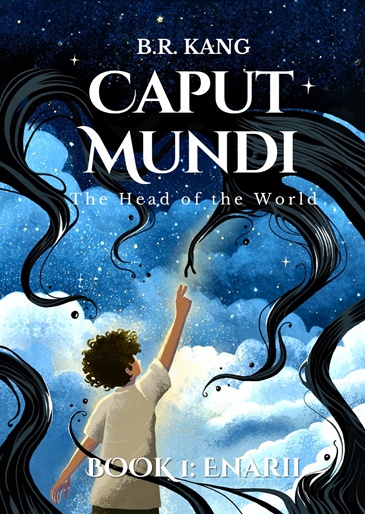
I worked with a professional illustrator for the book cover. Her name is Wilhelmina Craw – check out her works here: https://www.instagram.com/witch.inkantation/
Do you have a marketing plan for the book or are you just winging it?
A little bit of both. I’m building an online presence for the book and reaching out to new readers on my own, but I’m also working with a publicist. I knew early on that visibility would be my biggest challenge, especially since marketing and self-promotion have never been my strong suits. Having someone who understands the book world, knows how to pitch the story, and has a clear plan for reaching readers and influencers has been incredibly helpful so far.
Here’s their social media page: https://www.instagram.com/booksforwardpr/
Any advice that you would like to give to other newbies considering becoming Indie authors?
This is the advice I’d give, knowing it’s what ultimately allowed me to self-publish: find ways to make it okay if your book flops. Self-publishing has worked out well for some, but for the vast majority, it’s a risk—especially if it’s your first time. So don’t put all your hopes, identity, and self-worth into a single work. Even a brilliant book can struggle if it doesn’t reach the right audience. That’s true for every author. These were the hard questions I had to answer: if this book doesn’t do well, do you have another story you’re excited to write? If it takes time for the book to find its readers, do you have a job, a creative outlet, or an identity you can maintain outside of your publishing journey?
Even though this book took a long time to publish, it could have come out much earlier if I had self-published. Was part of the delay about validation from literary agents? Yes, but not entirely. What really held me back was the fear that, after years of hard work, the book might slip into obscurity. I didn’t move forward because I couldn’t figure out who I was without it.
That changed once I built a safety net around that fear. After establishing a stable job, a separate creative outlet (food blogging), and financial stability, I no longer needed Caput Mundi to prove anything. Self-publishing became far less intimidating, and I stopped feeling desperate in my marketing efforts. Instead, it became about patience and finding the readers who were right for the story.
Accepting that a book can fail, and that you will still be okay, is incredibly freeing, even if it really hurts to imagine at first! But if you can create an environment where you can fail safely, you can get back up more quickly, no matter what the numbers say. And as long as you keep going, I truly believe your book will eventually find the readers it was meant for. So don’t give up.
End of Interview:
For more from B.R. Kang, visit her website and follow her on Instagram.
Get your copy of Caput Mundi the Head of the World from Amazon US or Amazon UK.