In March 2021, three Indigenous1 brewers known as the Indigenous Brew Crew, or IBC, spearheaded the “Celebrating Sisters” craft beer campaign across Canada in support of Indigenous women. I was excited, and ready to buy some of the beers if they came to British Columbia.
My optimism was well-intentioned but naïve. Although I knew that alcohol has caused significant harm in many of Canada’s Indigenous communities, I hadn’t fully understood the deep pain some felt as they saw Indigenous folks embrace craft beer.
Online, Indigenous users posted anguished criticisms alongside praise for the project. One Anishinaabe artist, Chief Lady Bird, created a beautiful beer label for the campaign, a blackbird with wings spread across a woodland background sprinkled with stars, that prompted waves of both backlash and support. To her credit, she allowed space for hard conversations; she listened to concerns, explained her position, and thanked people for their feedback.
As the controversy continued, both the IBC and Chief Lady Bird acknowledged the difficulty of reconciling alcohol with Canada’s legacy of Indigenous exploitation. But there was no easy resolution. Months later, the IBC dissolved. Silence cloaked the issue again.
But underneath that silence, Indigenous people are part of this industry. I wanted to hear about this directly from them, in their own words. This is not an opinion piece; this is a spotlight on the experiences, desires, and intentions of some of the Indigenous people shaping Canadian beer today.
A Dark History
Canada’s 1876 Indian Act expanded decades of legislation that supposedly protected Canada’s First Nations by defining “Indian” identity, controlling where they could live, how they should maintain their land, how their government functioned, and more. In reality, these laws were designed to eliminate Indigenous identity and led to what Canada’s 2015 Truth and Reconciliation Commission described as “cultural genocide.”
Under the Indian Act and similar laws, Canada excluded Indigenous people from the alcohol industry. If it wasn’t non-alcoholic beer—referred to as “Indian Beer” because of these laws—they couldn’t buy it, drink it, or vote on it. Settlers also used alcohol to upend Indigenous trading systems, which contributed to generational alcohol dependency. Rampant abuse of Indigenous peoples by church and government worsened the cycle of dependency, and the long history of Canada’s residential schools and, later, the “Sixties Scoop” inflicted deep psychological wounds. Alcohol offered relief in the face of irreparably fractured families and unchecked sexual exploitation and abuse. According to an article by Anishinaabe professor Niigaan Sinclair, “alcohol has always existed in Indigenous communities—many used forms of it in ceremonies and medicines—but it’s been used a great deal over the past few centuries to cope with trauma.”
Provincial and federal legislative changes between the 1950s and 1980s opened alcohol to Indigenous people, but the damage from decades of exclusion and generations of dependency remains. These days, some Indigenous people support prohibition in the name of harm reduction. Others advocate for self-determination. Still others, despite the painful legacy, find reward in making something from the earth to share with friends and family.

Brewing while Indigenous
This fraught history means that some Indigenous people feel conflicted about brewing, but the lack of debate around alcohol can, in itself, be destructive. However, Indigenous brewers and owners are expanding what craft beer is in Canada.
It’s important to see Indigenous people brewing. As Melanie MacInnes, a Métis woman and co-owner of Langley, BC’s Locality Brewing, puts it, “Indigenous people are the fabric of the country and should be represented in every business. Cultural diversity in craft beer can only enrich it.”
Like many Indigenous brewery owners, MacInnes hasn’t always defined her business as Indigenous. She describes her anxiety when she had to decide whether to accept a nomination for Best Indigenous-Led Business in the 2022 BC Food & Beverage Awards. The nomination email loomed in her inbox, unanswered.
“Every time I thought about replying I had a visceral response,” MacInnes told me. “It scared the crap out of me. If I said yes to this, it meant that I was saying yes, Locality is owned and led by a Métis woman. That’s a huge responsibility. Was I ready to walk the walk?”
She was, and Locality won. MacInnes always knew that she wanted her family’s land to be used as a place of gathering and growth, and being open about her Métis identity connected her more closely to her business, her community, and her land.
Darian Kovacs of Jelly Digital Marketing, who submitted the nomination, urges Métis people to take pride in their culture. “Many Métis families—including my own—were encouraged to hide or feel shame about their identity,” he says. “[Melanie’s pride in Locality] is a powerful reminder that Métis culture is not only alive but thriving.”
Brewer Kevin Symington takes pride in his Métis identity. While he’s aware of the stereotypes surrounding Indigenous people and alcohol, he refuses to perpetuate them and rejects their shame. Instead, he focuses on how Indigenous perspectives can enrich the brewing industry. At Fernie Brewing Co., he worked on the DEI committee to establish a relationship between the brewery and local Indigenous groups (the Elk Valley Métis Nation and the Ktunaxa people) to advance truth and reconciliation. From there, he moved to Crannog Ales, a farm brewery that has always prioritized inclusion and justice. “Their core values of respecting the land and [Indigenous] peoples’ history make it a very welcoming and safe space,” says Symington.
Crannog is among many breweries that acknowledge they operate on Indigenous land. However, Quebec’s Kahnawake Brewing Company & Black Bridge Taproom is Canada’s first openly Indigenous-owned craft brewery on Indigenous land. It draws on Indigenous history: the “black bridge” refers to the Saint-Laurent Railway Bridge, built in 1900 by the local Mohawk tribe together with French laborers. One of the Indigenous co-owners, Fred Leblanc, is a former ironworker himself. His simple desire to start a “Native brewery” that would be “not just for Natives but for everyone,” blossomed into an award-winning brewery: in 2024 and 2025, Kahnawake received multiple medals at the Canada Beer Cup.
Matthew Sabourin, co-owner of La Brasserie Nonsuch Brewing Co. in Winnipeg, has felt overwhelming support for his business, despite early hesitation from the Métis business community. That hesitation disappeared when they saw what Nonsuch offered. “We’re trying to create something very special for our province,” he says. “We want to celebrate moments and experiences, not how many beers we can drink.” For Sabourin, it’s about making the best possible beer and doing so in a way that benefits the community.
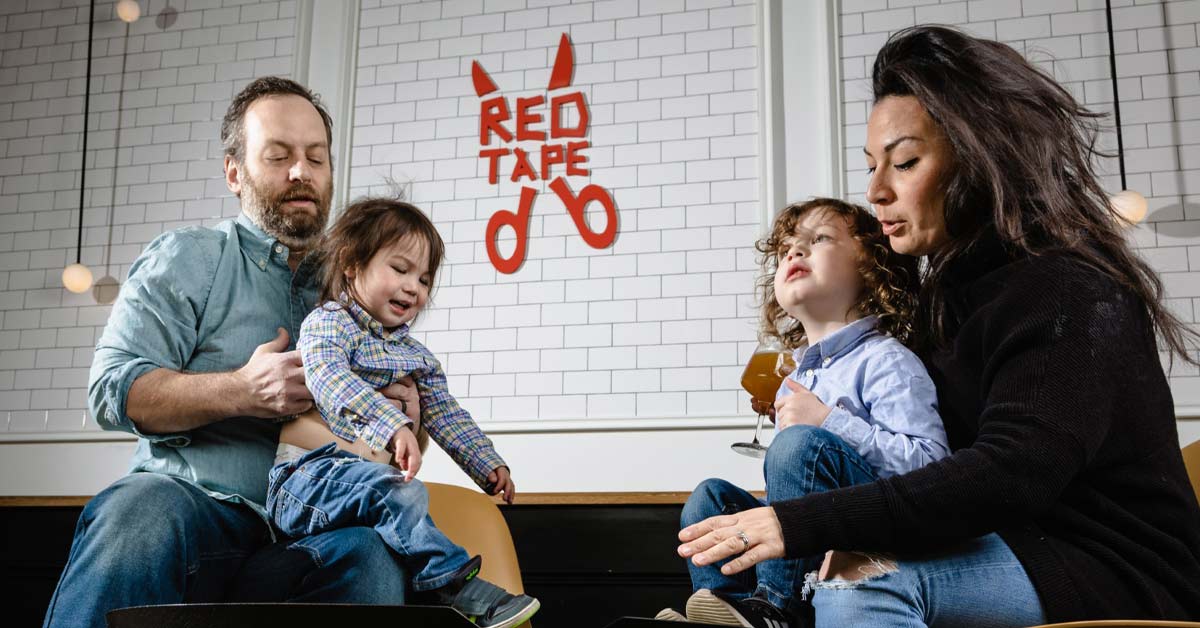
Inuit brewer Sarabeth Holden, a children’s book author and co-owner of Red Tape Brewery in Toronto, which specializes in bespoke beers, sometimes feels she isn’t taken seriously in the industry. Occasionally she feels out of place in the local liquor store because she doesn’t fit the “look” of a beer person, or she has to delegate a brewery business task to her husband because a tradesperson is brushing her off. However, she’s felt nothing but support from her family and community. “Even family members who don’t drink are so happy for me,” she says. “They buy my brewery’s merch, they tell me they’re proud of me.”
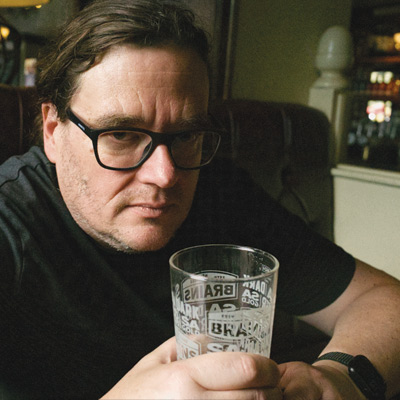
Photo credit Jason Tremblay
Jason Tremblay, a Métis man and head brewer at Toronto’s Two Loons Brewing, also feels his community’s support. However, he recognizes that because he’s white-passing, he hasn’t experienced the discrimination others may face. “There’s privilege there,” he says. “I don’t get the same side-eye that some First Nations brewers I know might receive.”
Tremblay believes that the Indigenous entrepreneurial spirit has tempered some of the negative associations with alcohol. Government theft of Métis lands in the 1870s “forced many of us to hustle in plain sight to get to where we are now,” he says. “Some of that was owning bars and eventually owning breweries. It’s fraught territory for everyone. But that entrepreneurial spirit is important.” Both Tremblay and Sabourin credit the Manitoba Métis Federation for supporting Métis entrepreneurs. Farm Credit Canada is another example of Indigenous-oriented financial infrastructure.
Darnell Stager of Indigenous Tourism BC agrees that supporting Indigenous entrepreneurship is key. As a self-described “urban Indigenous,” he’s seen the ravages of alcohol. However, he views antagonism toward Indigenous brewers as a leftover legacy of economic gatekeeping that ultimately suppresses Indigenous sovereignty. “Ward of the state,” he said to me, eyebrow raised. “That’s what my Indian status card says I am. It shows how much we need self-determination. Indigenous people need to be able to work in any industry they choose.”
Indigenous Beer?
The question of what makes a beer “Indigenous” has no easy answer. The ingredients? The brewer? The brewery?
For MacInnes, it’s the ethical use of land and Indigenous involvement in production and sourcing. For Sabourin at Nonsuch, it’s inviting customers to get involved through events such as their Beer Bannock experience, where they can make bannock (a type of unleavened bread that’s an important cultural symbol for many North American Indigenous peoples) with a Nonsuch beer of their choice while learning about Indigenous history, all under the large mural of Louis Riel. Holden of Red Tape incorporates ingredients tied to Indigenous experience. Her amber ale is brewed with orange pekoe tea, a tribute to the time she spends hunting and fishing in the icy north. She also brews a popular Paunnat (the Inuktitut term for dwarf fireweed) Saison, which is only possible when the plant is in season.
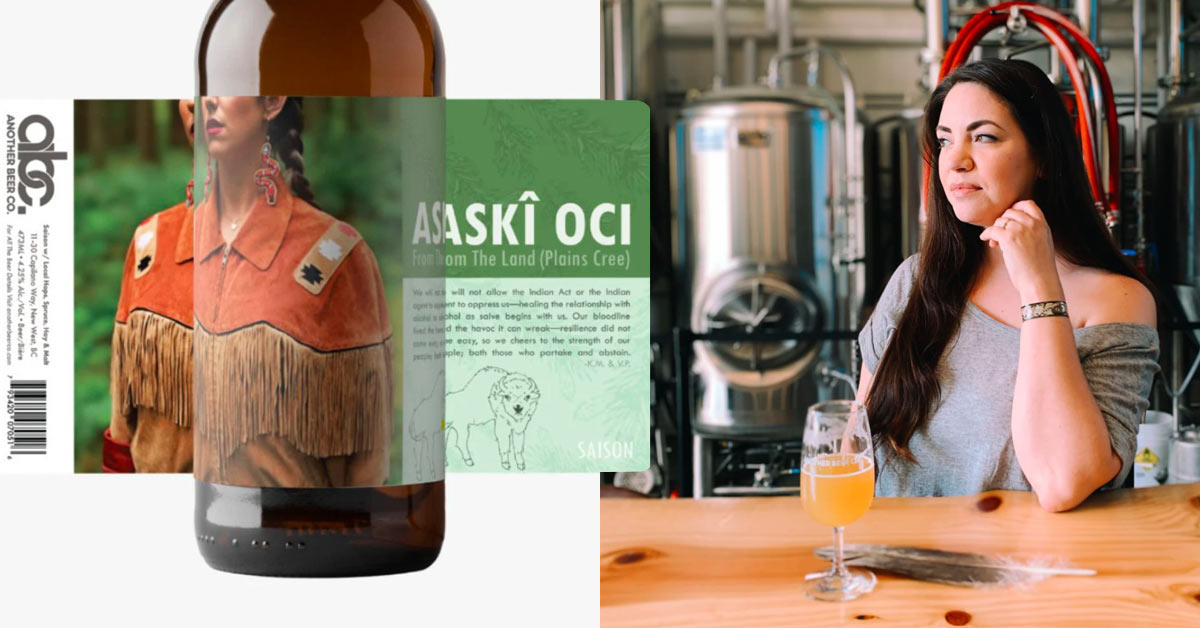
Nadine Jopson, a member of the Cree Nation, co-founder of the now-defunct Another Beer Co. (ABC) in BC, and founder of Heartberry Soda, developed the recipe for ABC’s original Askî Oci saison, a beer made with alfalfa and spruce tips. With its ingredients and its Métis-designed label, the beer symbolized Indigenous pride. The label’s words signaled the importance of Indigenous independence around alcohol: “We will not allow the Indian Act…to oppress us—healing the relationship with alcohol as salve begins with us. […] We cheers to the strength of our people; both those who partake and abstain.”
Indigenous Inclusion and Canadian Craft Beer
Good intentions aside, if you’re not Indigenous, you can’t dictate what inclusion looks like.
Inclusion means more Indigenous people are involved in both ownership and production, as Jopson told me. Tremblay agrees: “We need to see more Indigenous folks working throughout the supply chain, from malt warehouses to hop suppliers.” Symington expressed a similar sentiment, stating that Indigenous people “should be visible at all levels [of the beer industry].”
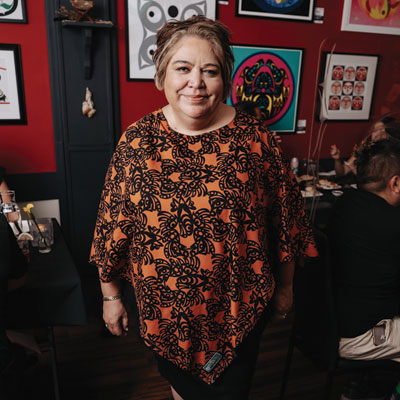
Photo Credit Inez Cook
Inez Cook, co-founder of Vancouver’s only Indigenous restaurant, Salmon n’ Bannock, and a member of the Nuxalk Nation, prioritizes using Indigenous suppliers and chose Locality Brewing as her restaurant’s beer partner for that reason. Locality, similarly, supports other Indigenous-owned businesses.
However, breweries can do more to welcome the Indigenous community. “All businesses should go to the local tribal nation and introduce themselves,” Cook suggests. “Come as a person. Indigenous people do business with people, not with businesses.” And if you’re a brewery owner and haven’t done that, it’s not too late. “You can go, apologize, and start fresh,” Cook says. “Actions and changed behavior create reconciliation.”
Professor Sinclair acknowledges the complexity of Indigenous inclusion in craft beer, yet he knows it must be addressed. “A basic teaching of the Anishinaabe is that we have to figure out a relationship with all things,” he says. “Alcohol has been a violent intrusion into our lives, yet it can have medicinal purposes. Beer comes from natural elements, so we need to figure out a relationship with it.” It’s not about encouraging consumption, but understanding Indigenous sovereignty. “We have to make our own decisions,” he explains. “However, sovereignty doesn’t mean you get to do what you want. It comes with responsibility to avoid causing harm to others.”
Sabourin has a simple outlook on inclusion: “We live by it. Be kind, respectful, open, curious. Give space for folks to share,” he says. “Don’t shy away from the difficult conversations.”
Break the silence, in other words. Avoid harm. Talk through the hard issues. Treat everyone with kindness. Respect the land. Prioritize people over profits. These were the values that my Indigenous interviewees identified as the path toward a more inclusive beer industry. I hope the craft beer community, currently in its moment of crisis, can slow down enough to listen to these voices. It just may be what saves us.
* * *
The Brewers Association and CraftBeer.com are proud to support content that fosters a more diverse and inclusive craft beer community. This post was selected by the North American Guild of Beer Writers as part of its Diversity in Beer Writing Grant series.
1 This article uses the Canadian definition of Indigenous, which includes three broad categories: First Nations, Métis, and Inuit.
CraftBeer.com is fully dedicated to small and independent U.S. breweries. We are published by the Brewers Association, the not-for-profit trade group dedicated to promoting and protecting America’s small and independent craft brewers. Stories and opinions shared on CraftBeer.com do not imply endorsement by or positions taken by the Brewers Association or its members.