


It’s easy to run to the store or order food delivered, but it can be expensive. If you’ve ever wondered, “Can I make dinner with what I have?” I’m here to say, “Yes, yes, you can. And you can save money, too.”
Want to save this post?
Enter your email below and get it sent straight to your inbox. Plus, I’ll send you budget recipes and money-saving tips every week!
When you’re young and just getting your first paychecks, it’s exciting to tap the app and have food or groceries delivered. What luxury! I’m a grown up!
But, over time it gets boring and expensive. Very very expensive.
I learned this the hard way. In our first year of marriage, we spent more on food for two of us than we did a dozen years later with five kids in tow. I can laugh at my spendthrift, younger self because I’ve learned a better, cheaper way – to make dinner with what I have.
Now, I didn’t learn how to shop the kitchen overnight. In fact, it took more than a few pantry challenges to get me tooled up. But, when I focused on using the food we had, I learned to be a better steward of my resources and to be more mindful of how I shop and cook.
In using up what you already have, you clean out the cupboards, getting a chance to tidy and declutter while you’re at it. By eliminating excess, you will free up space, both physical and mental, making cooking more fun.
It seems that I like cooking more when there’s white space in the fridge or freezer. When it’s packed to the gills, I just feel overwhelmed.
Here’s my basic method to make dinner with what I have. It works for a day as well as a month!
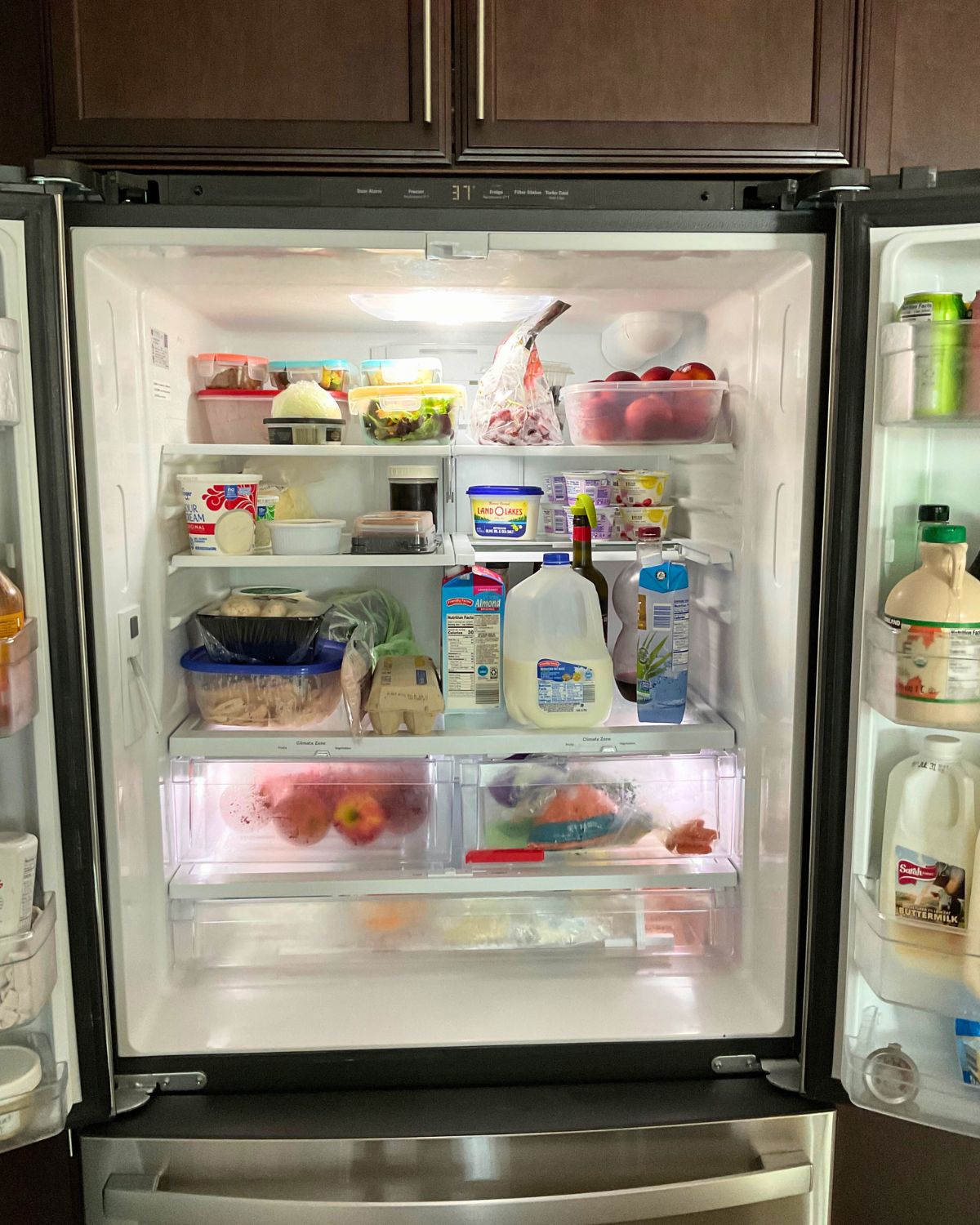
1. Clean out the fridge, freezer, and pantry.
It may take some time, but you’ll find that clean food storage areas will make your cooking much more enjoyable. If it’s been awhile since you tidied up the fridge, freezer, and pantry, then let’s do a quick clean: pull everything out, consolidate duplicates, and dump stuff that is no good.
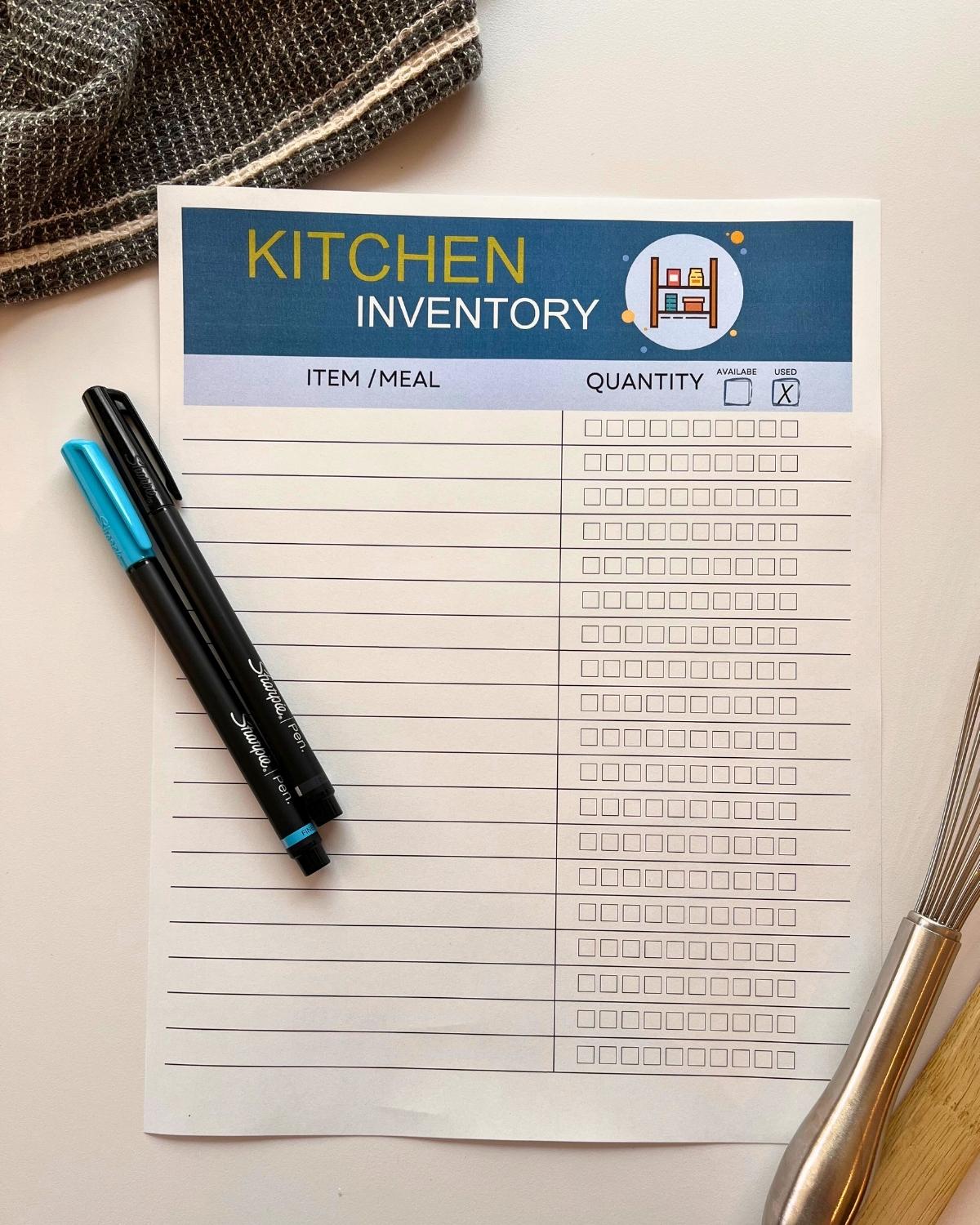
2. Take inventory.
You can’t use what you have if you don’t actually know what’s there to be used, so it’s time to take inventory.
Once you’ve cleaned and organized and discarded the icky stuff, take stock of what you have. It’s really important to know what you have so that you can plan great meals from it.
Unless you have a very small food storage, I wouldn’t write down every single thing, but focus on taking stock of the main items or the items you have a lot of, like:
- proteins such as ground beef, ground pork, pork chops, pork tenderloin, chicken breast
- main grains like pasta, rice, quinoa, etc.
- veggies (everything from frozen bagged veggies to fresh red peppers to canned tomatoes)
- take note of special sauces or unique ingredients that need using up
Those items are the building blocks to easy dinners.
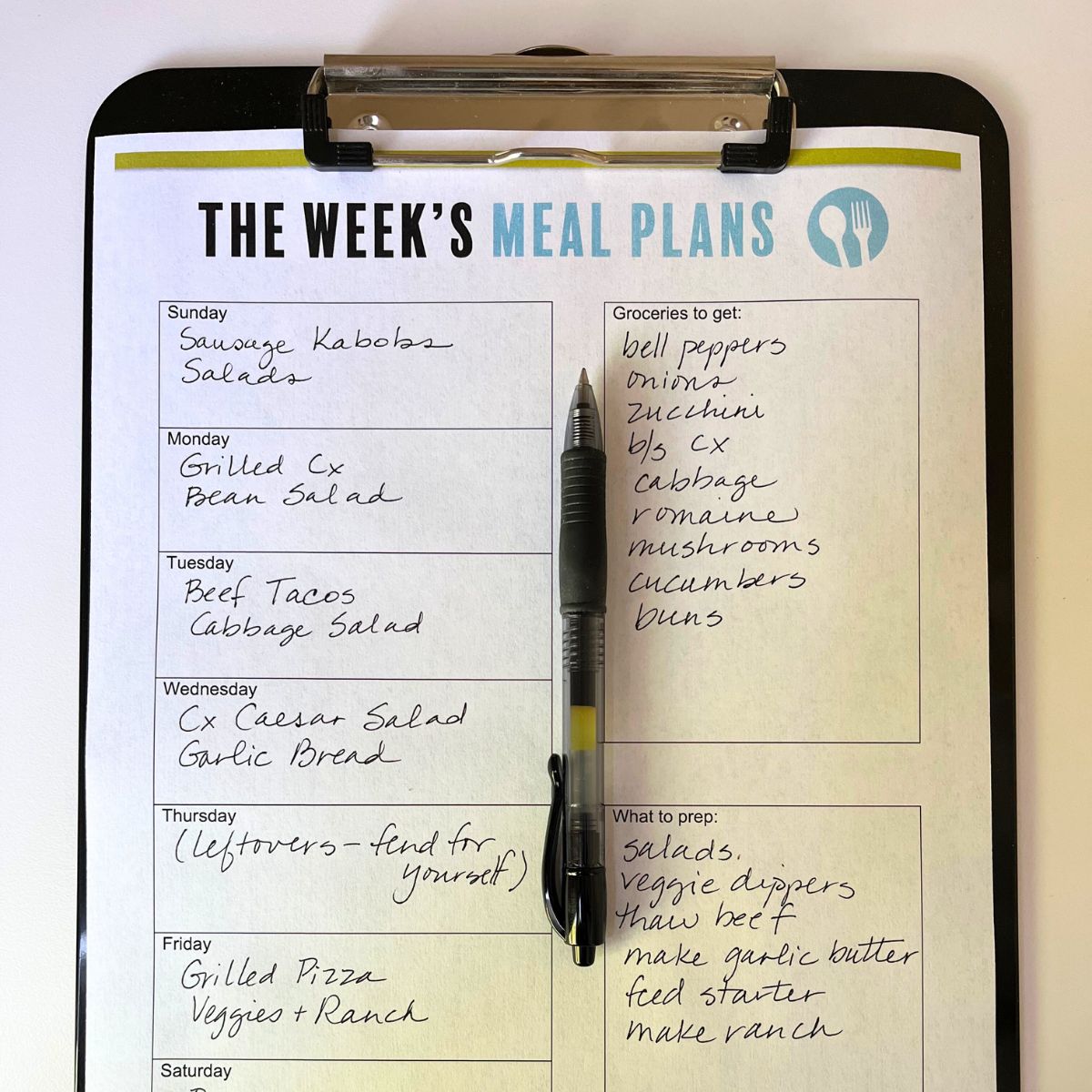
3. Plan meals.
If you’ve cleaned up and organized your food storage and taken inventory of what you have, you can start meal planning. When I do this, I sit down with my food inventory and brainstorm how I can make dinner with what I have.
Looking for ideas in using up certain proteins or bulk ingredients? Scroll through the Good Cheap Eats recipe database here:
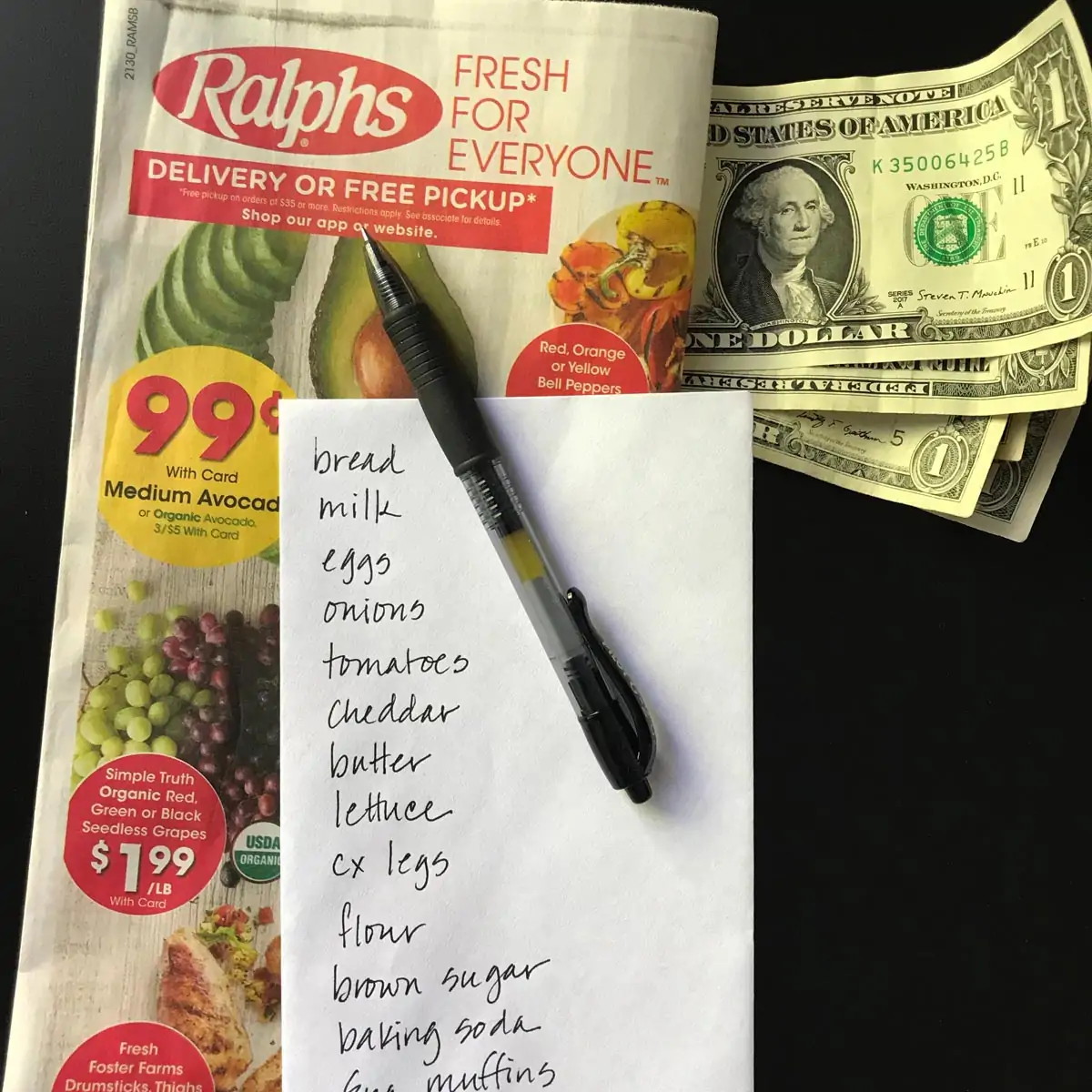
4. Plan a grocery stop. Or maybe not.
You have a clean storage space, an inventory of what you have, and a list of meal plans. Now, it’s just a matter of filling in the gaps. Maybe.
Most of us have enough to make all of some meals, but not all of all meals. In some cases, we could do without that one ingredient. In other cases, it’s nice to have a certain ingredient to make the meal complete.
When push comes to shove, it’s remarkable what we really can do without. For instance, check out these baking substitutions.
In very dire circumstances, you will amaze yourself. If we really didn’t have the money, I would just make do. In this season, I’m good with filling in the gaps with a few things, namely, fresh produce, milk, and cheese.
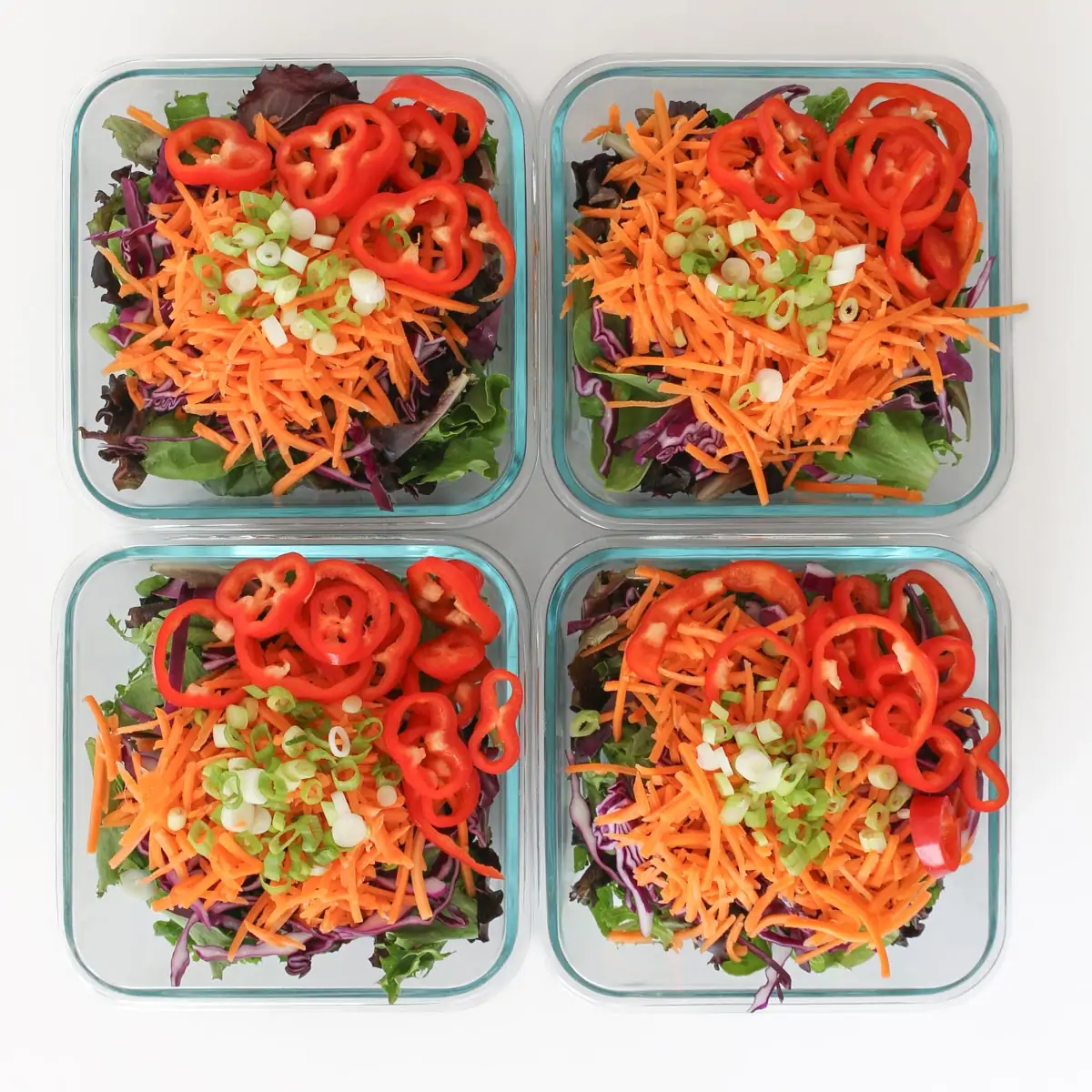
5. Get a meal prep practice going.
To save yourself more time and money in the kitchen, consider where in your schedule you can add a little meal prep.
While advance prep is not absolutely necessary to saving money on food, I’ve found that prepping a few snacks and treats as well as meal prep salads ahead of time really makes it easier to use what we have and enjoy it.
If my kids have freshly baked bread or cookies, they overlook the fact that there’s no cheese in the casserole or no sour cream for their quesadillas.
Preparing a few make-ahead items also makes it easier on me because it reduces my temptation to run to the store or through the take-out lane. It makes cooking at home more fun and definitely more delicious.
Are you ready for a Pantry Challenge?
If you’re the type of person who stocks up on bargains and doesn’t like to let the cupboards go bare, a Pantry Challenge might be in order. It’s a little outside the comfort zone, I admit, to let white space creep into your food storage, but it’s a good thing to help you pare down, save a little coin, and consider how to make the most of what you have. Those who keep stocking up without using up run the risk of wasting food. That defeats the purpose of bargain hunting.
If you have all that you need and money to spare, why should you make things hard on yourself? Having lived a season of fighting debt and a very, very small grocery budget, I know that keeping my skills sharp during my yearly Pantry Challenge is good insurance toward the possibility of future tough times. I don’t anticipate their coming, but I like to prepared just in case.
If you find yourself on tough economic times, here’s hoping that the Pantry Challenge will help you know you’re not alone. It’s my hope that you’ll find recipes, tips, and resources here on Good Cheap Eats to help you weather a tough season.
This year the Big ReDo starts on January 1. There’s something for everyone with a pantry challenge, meal prep tips, a kitchen refresh, and a grocery budget overhaul.

More Ideas for Using What You Have
What do you think?
Let’s chat in the comments!
This post was originally published on January 2, 2014. It has been updated for content and clarity.


