
After Nearly a Decade of Bad Decisions, GM is Gearing Up for an Apology Tour Where It Does Everything Right!


Photo Credit: Chevrolet
The Steve Jobs-esque product presentations, the market cap exceeding GM, Ford, VW, and Toyota combined – despite never turning a profit and continually failing to sell enough total vehicles to match what the F-150 does each year on its own – the products becoming the must-have accessories of all the right people and even coming to signify membership to a stylish in-group. Looking back on the years from 2013 until around 2020, it’s easy to see why almost all traditional automotive executives around the globe envied Tesla and decided to pull every string and ride the political waves of the moment to forcibly reimagine their “legacy” manufacturers in its image.
No company fell harder for the contemporary allure of an Electric/Tech-focused rebrand than General Motors, the 100-year-old American institution that dove directly into the semi-promising realm of Electric Vehicles with a staggering $35 billion investment without even dipping the proverbial toe to test the market’s temperature first. It would have been nice if The General had the experience of inventing the consumer EV in the late ‘90s, only to sell 1,100 units and abandoning ship to lean on. If only it had played around with hybridizing its most popular vehicles from 2008 to 2013 in order to gain a better understanding of the preferences of its customer base before putting everything on green. If only I could have pitched these same people about the benefits of timeshares or the investment opportunities over at Stratton Oakmont!
Actually, the first two things did happen; GM did conceive of the consumer EV more than a decade before the founding of Tesla to no avail, and it did lose money by hybridizing every big-ticket vehicle from the Silverado to the Escalade. The fictional part came when the company learned any lessons from those experiences. Now, the electric chickens are coming home to roost, so to speak. We’ll admit that the first half of our headline isn’t necessarily accurate. Really, it was just the one extremely poor and hasty choice to chase the EV dream and the associated fallout that forced America’s greatest automaker into further regrettable cost and corner-cutting decisions. The opportunity cost of the mountain of cash burned on an all-out EV push includes almost all of its sedans, the Camaro, and could even be partially blamed for the shuttering of the entire Australian automotive sector. It also caused GM’s truck and SUV engine lineup to stagnate with the same old and occasionally reheated 5.3 and 6.2L V8s (a lineup of previously bulletproof small-blocks that have developed an embarrassing propensity to catastrophically fail without warning, by the way), earned us a range of Chinese-built Buick crossovers, and God knows what else. The extent of the collateral damage and resulting loss of faith/brand equity is impossible to calculate, but it’s also difficult to overestimate how bad it’s been.
Present-day GM has announced that its taken a $1.6 Billion haircut on its underperforming EVs which made the stock price… rise dramatically (up 44% over the last six months, as of writing), because, some sixteen years after being bailed out by the US Government (the context that makes the Chinese Buicks and the fact that GM imports 48% of its US sales volume so unacceptable) and formally reorganized as “New GM,” that moniker might finally mean something. The firm has decided to start learning from its mistakes. After washing its hands of the money-bleeding Cruise robotaxi wing last year, it has followed through by folding its failed electric van operation, and cutting 1,750 EV-centric positions in the past few months. All of these moves signify that while not completely phased out, GM’s “New Coke” moment has been reeled back to some semblance of reality, and GM brass can now cross step one (admitting there’s a problem) off of their recovery checklist.
With that process started, GM is making moves directly related to our favorite step – #9: making amends – and it looks like those of us who have stuck by them through this whole, often humiliating, debacle have some damn good recompense heading our way! What follows is a roundup of all of the recent news and rumors that paint a picture of a future filled with the kind of domestic enthusiast vehicles that we feared had been relegated to the history books just a year or two ago, but are miraculously inching ever closer to putting us in the best possible reality. If it sounds like we’re excited about these developments, that’d be an understatement; at CorvetteBlogger, we view the following developments as better than Christmas (the corporate, gift-giving part, of course)!
GM’s Non-Electric Future:
New Sixth-Gen Small-Block V8s
Here, in the Denver area, even at 8-2 and in first place, our beloved football team just hasn’t looked right on the offensive side of the ball most of the season. This has led to a lot of “they need to simplify,” and “get back to basics” takes from local talking heads and passionate fans alike. At General Motors, the same strategy revolves around one piece of tech that has been the undoubted heart and soul of the operation since 1955: THE Small-Block V8. Luckily, the GMs at GM have realized what the lifeblood of their company is and have earmarked $888 million (not exactly EV money – that doesn’t even add up to 3% of the EV investment – but we aren’t talking about a ground-up effort, here, either!) for the creation of a sixth-generation family of bent-eights to take over for the Gen-V that’s been around since 2014. It’s pretty easy to make the argument that the C8’s 495-horse LT2 V8 is just a warmed-over version of the C7’s 460-horse LT1, which itself was basically an update on the 436-horse LS3: the 6.2L has been good to us, but your author is 36 years old, and that displacement debuted when I was a senior in High School. Safe to say it has earned its retirement. Since the LS engine family changed the game in 1997
Sized 5.7L and 6.6L
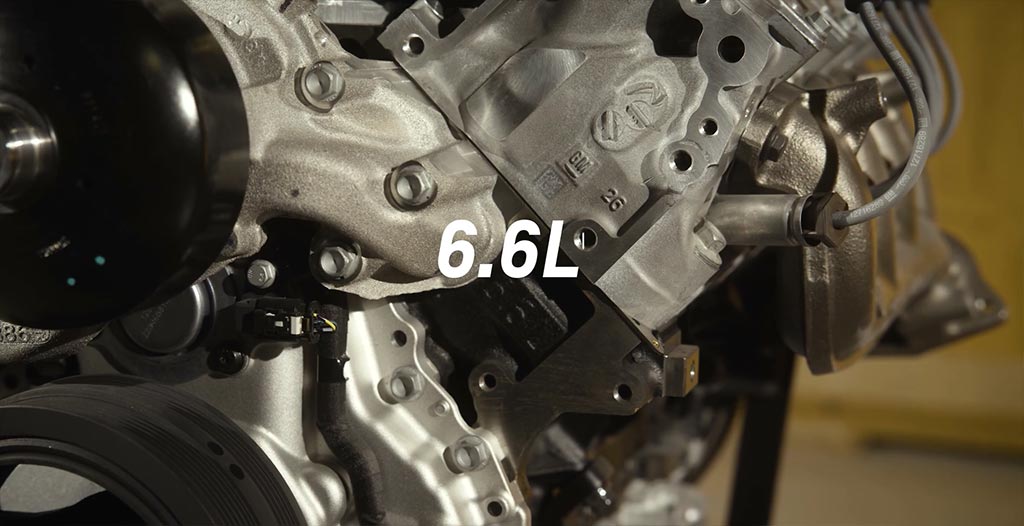
The official line from GM is that the new eight-cylinders are primarily intended for trucks (when aren’t they?), which is a good thing because, as referenced above, the workaday 5.3L V8 found in high-volume/high-profit badges like the Silverado and Tahoe has been around even longer than the 6.2.
While there’s been no confirmation out of Detroit, the pair of V8s replacing the 5.3 and 6.2 will displace 5.7 and 6.6 liters, respectively. The 6.6, in particular, presents a lot of exciting possibilities for us fans of GM’s go-fast offerings. If, and all signs point to it being the case, there’s an all-aluminum, performance-tuned version of the 6.6 in the works, this mill, likely dubbed “LT3,” should be capable of 525-550 HP right out of the gate, and with 670 and 1,064 HP options already under their belts, the powertrain team has more than earned high expectations, so we’re expecting the greater number.
If it comes to fruition, the branding of the LT3 is going to be almost as interesting as the engine itself. With the possibility of trailing only the legendary LS7 as the largest Small-Block ever offered from the factory. Then, there’s the history behind GM’s affiliation with 6.6L (which translates to 402 ci) that has us wondering if the LT3 will follow the C6 Z06 engine in wearing a classic-style displacement, and, if so, which one will it be? Are they going to dust off the “400” most closely associated with the dearly departed Pontiac brand, will it wear a “402” tag, or – and this option gets our vote – will the new 402 earn a 396 badge like the Camaro and Chevelle motivators of old? On the Corvette side, a new 396 would also create some lovely synergy as a callback to the first Big-Block Corvettes that roared onto the scene in 1965.
No matter what numbers are printed on it, the LT3 could slide directly into the LT2’s place amidship of the Stingray and the E-Ray (as long as GM doesn’t mind the hybrid showing up the all-motor Z06), and the perfect way to launch the long-awaited…
C8 Corvette Grand Sport
With the E-Ray struggling to attract customers (a hot new 396 might change that), and the Z06 having to shoulder more capacity than ever before, a widebody take on the Stingray with an LT3, Grand Sport badges, and the option for the definitive Blue/White/Red Corvette livery makes too much sense to leave out in the cold for an entire generation. This is especially true after the last two GSs led the Crossed-Flag pack in popularity every year they were available to order on the C6 and C7. We already thought this was going to happen at some point, but the camo’d ‘Vette running around with a completely covered engine bay and Buick center caps (GS, also being a famed moniker in Tri-Shield lore), makes its arrival feel imminent. We also wouldn’t be surprised if the GS became the exclusive home of the 6.6 at first, at least.
But what about the 5.7? Could that also find a sporting home in an…
Entry-Level, Sub-Stingray C8
Not to make it about us, but we called the 6.6 thing a long time ago (check that main GS link), and we’ve also been beating the drum of a base Corvette under the Stingray for years, and a revived 5.7 is exactly what we had in mind. The existence of the Stingray badge makes the creation of a “regular” Corvette such a logical move. With the bargain of the century that was the 2020 $60k Stingray ballooning 20% to $72,000 and Chevy and GM’s other brands combining for zero V8 performance options under the Stingray after the loss of the Camaro in ’24, there’s a ton of pent-up demand for Small-Block power in the $45-60k range.
The LS6 made 405 horses with 5.7L in 2002. How much could a modern take on that motor churn out? Even standing pat, a mid-mounted 400+ horse sports car from Chevrolet would be a complete nightmare for cars like the Nissan Z and Mustang GT in the showroom and on the street!
We aren’t counting on this rumor materializing because of another, more likely, filler of the sub-Stingray space that we’ll get into later, but, nevertheless, it’s something to keep an eye out for. No matter how many new and updated Corvettes are in the pipeline, the more significant development is that, for the first time in its life cycle, there’s a solid chance that some or all of them could finally be available with…
Manual Transmissions
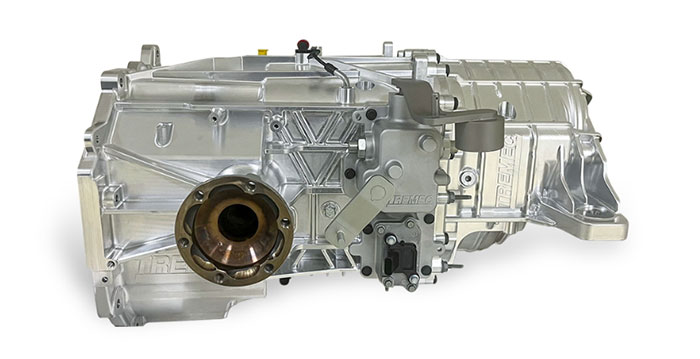
We are over the moon that the C8’s transmission supplier now makes an honest-to-goodness stick shift that not only fits in but was designed specifically for the C8, and based on the amount of traffic our stories on the topic got, we aren’t alone! We’ve never bought the corporate line about there not being enough demand to justify a C8 with a clutch pedal. To wit: manual C7s outsold all Porsche 911s, and the manual C7 Z06 actually outsold the auto before risk-averse dealers took over the majority of ordering. There are countless C7 owners out there who refuse to give up their cars until they can get a new one with three pedals, and as C8 sales begin to plateau and shrink, finally answering their call could be the juice the current car needs to make it another three or more years with profitable volume.
Outside The Corvette Umbrella
A Second-Gen Cadillac CT5
If there was a silver lining to the EV madness, it’s that GM’s engineers approached the development of a few choice cars like they were all-out, no-holds-barred, last-chance moonshots. These projects were given the grand finale treatment because that’s exactly how the bosses sold them. Without the threat of going 100% electric by 2030 or whatever GM was hoping to do, we might not have gotten a Corvette Z06 that shattered Mercedes-AMG’s naturally aspirated V8 power record by 50 ponies while revving to 8,600 rpm, or a manual CT5-V Blackwing that sets a new bar for sport sedan driving excellence.
Two primary themes emerged from the media’s first taste of the latter vehicle. First was the team’s obsession with getting it right because it was the “last of its ilk,” a “swan song,” and a car that “wouldn’t go quietly into the good night;” it was for sure, 100%, no doubt the end of the line for internal combustion in the now-legendary V-series of domestic BMW M-fighters. The second refrain was that it was a no-excuses tour de force. It was hailed as “the best sport sedan money can buy,” “the best car GM makes by far,” and “inarguably a better M5 than BMW’s current effort, the same idea with more feedback, a greater sense of soul and identity, and more rear grip,” an absolute good in a world of ho-hum automobiles, proof of what Detroit is capable of, and a massive credit to GM right when it needed one the most.
When it was revealed that the 5VBW and its CT4 sibling would reach the end of the road after their respective 2026 model years, GM was quick to jump on a podium to announce its change of heart on retiring its four-door masterpiece. Cadillac wouldn’t be bowing out of the sedan segment like previously planned, and the mantle would be carried on by a next-gen CT5. The new car will ride on an updated version of the current car’s renowned RWD Alpha II platform (creatively dubbed Alpha 2-2) and feature internal combustion power. A V or gnarlier Blackwing version hasn’t been confirmed, but with a slew of new V8s already propelling C8s and others waiting in the wings, they’d be crazy not to continue a line that has become so celebrated as to almost challenge the Corvette’s place as company poster child.
During all of the talk of the CT5’s enduring legacy, it was also disclosed that in order to keep the Lansing Grand River plant responsible for CT5 production operating at viable capacity, that “at least one” additional Alpha passenger car was planned for the US market, which points to a very likely culprit, the mere possibility of which has us on cloud nine:
A Proper 7th Gen Camaro
And here it is! The reason we aren’t counting on a new base 5.7L Corvette. That place in the lineup has long been the domain of the Camaro; the ‘Vette’s bigger but excellent to drive little brother who likes to party, and its return to its rightful place in the vast tapestry of Americana is imminent.
Since the abrupt and lackluster sendoff of the Sixth-Generation Camaro a couple of years back, it feels like the Camaro has been at the center of a lot of turmoil within the halls of General Motors. The uncertainty surrounding Chevrolet’s second-most valuable IP is palpable. Every few months, we’re on the receiving end of some new, and often conflicting, information about what could have been and what it still might become – from missed opportunities of ultimate Z/28s to the Seventh-Gen’s outright cancelation to [throws up in mouth] slapping the Camaro name on a four-door plug-in golf cart. The whole thing gives the impression that a conflated GM is putting out feelers about what exactly should be done with the Camaro nameplate. After all the apparent waffling, the newly refocused General must have heard of Occam’s razor. The best way forward for the Camaro isn’t anything outrageous; it simply involves keeping its long-established identity intact, and with the continuation of the Alpha platform and the reveal of Chevy’s new NASCAR (still a Camaro!), it seems like the obvious action is on the doorstep of becoming reality.
Just imagine, an entry-level SS with the 5.7 or a 6.6L rehash of the SS 396, a second chance at an LT6-powered Z/28, and an attainable GTD-killing ZL1 with either a twin-turbo take on the LT7 or a supercharged 396, all wrapped in the seductive shape of the second photo from our recent peek inside one of GM’s design studios. This is the Corvette gateway drug that America, and GM, both need, and, against all odds, it looks like it might actually happen, making it the ultimate apology gift to faithful customers after a regrettable period – let’s call it a mid-life crisis – for a cornerstone of American industry.
Related:
TREMEC Just Released a Manual 6-Speed Transmission with the Same Mounting Points of the C8’s DCT
[RUMORS] New Gen VI Small Block 6.6-Liter V8 Coming for Grand Sport, Stingray, and E-Ray
[SPIED] Could This C8 Widebody Undergoing Emissions Testing Actually Be the Rumored Grand Sport?
Subscribe Now:


