My first trip to California was exactly to Monterey. I flew in from Columbia, MO to the Monterey Regional Airport and was immediately greeted by cool sunny weather and a fresh saltwater breeze.
The two friends I was meeting in California chose a delicious sushi restaurant, Yama Sushi, as the location for our first taste of Monterey.


Over the next few days, we spent time eating, shopping, and exploring the surrounding areas.
With an array of oceanside hiking trails, restaurants, and shopping choices, there are plenty of things to do in Monterey California. It’s the perfect vacation spot if you are looking for a relaxing and scenic location with plenty of adventure!
Here is my honest verdict up front: Monterey is worth two full days, three if you add a Big Sur day trip. The best things to do in Monterey revolve around the water, because the town sits on one of the richest marine sanctuaries in the world, and sea otters, whales, and sea lions are part of everyday scenery here, not a special event.
This post may contain affiliate links. If you purchase through them, I may earn a small commission at no extra cost to you. Thanks for supporting my small business.
Monterey in a Nutshell
- Time needed: 2 full days, 3 if you add Big Sur.
- Best months: September and October. Whale season peaks December to April.
- Don’t miss: Monterey Bay Aquarium ($65, book online in advance, no door sales) and Point Lobos ($10 per car, arrive before 9:30 am).
- Getting around: the town is walkable with a free summer trolley; you only need a car for the day trips.
- Top-rated tour: ➤ 17-Mile Drive guided e-bike tour, 3 hours, from $59 — Get Info
- Best boat trip: ➤ Sunset whale watch in Monterey Bay, 3 hours, from $75 — Get Info
Things to do in Monterey
1. Monterey Bay Aquarium
The Monterey Bay Aquarium is the reason many people come to Monterey at all, and it earns the reputation. It sits directly on the water at the end of Cannery Row, in a converted sardine cannery, and its kelp forest tank and sea otter exhibits are the stars. Plan 2 to 3 hours and check the feeding schedule as soon as you walk in.
As of 2026, tickets cost $65 for adults and around $50 for youth and seniors, and you must buy them online in advance because the aquarium does not sell tickets at the door. It is open daily from 10 am to 5 pm. Summer dates sell out days or even weeks ahead, so book before your trip. And an honest note: if you have seen the world’s big aquariums before and the price stings, you can skip it without ruining your trip. The bay itself is the aquarium, and a kayak or whale tour puts you inside it.
2. Explore the beaches
We spent hours walking and hiking along the shore at Monterey Bay, poking around the clear shallows and the big boulders, and we were surprised by a group of chipmunks dodging through the rocks, not something I expected to see at the beach. Del Monte Beach is the long sandy stretch closest to downtown, good for a morning walk and often nearly empty on weekdays. McAbee Beach is the small cove right on Cannery Row where the kayaks launch, and tide pools appear around the rocks at low tide.
One honest warning: this is not swimming water. The bay hovers around 55°F all year, so locals treat the beach as scenery and exercise, not a pool. Bring a windbreaker even on sunny days, because the afternoon breeze off the water is cold.


3. Shopping in Cannery Row
Cannery Row is Monterey’s most famous street, a row of former sardine canneries converted into gift shops, galleries, tasting rooms, and restaurants. The shops sell everything from shells and gemstones to apparel, and the one that stuck out to us was the Monterey HD Apparel Shop with its Harley-Davidson clothing and collectibles. What I remember most is how talkative and welcoming the shop owners were; we got a conversation in nearly every store we entered.
It is touristy, there is no way around that, but the setting on the water and the industrial bones of the old canneries make it worth an hour or two. Go before 11 am if you want the street quiet and the parking easy.
Some Historical Facts: in the 1930s and 40s this street packed more sardines than anywhere on earth, and John Steinbeck immortalized its canneries and characters in his 1945 novel Cannery Row. By the 1950s the sardines were fished out and the industry collapsed almost overnight. The street was later renamed after the book.


4. Whale watching
Monterey Bay is one of the best whale-watching spots in North America because a deep submarine canyon runs close to shore, pulling the whales within a short boat ride of the harbor. Humpbacks are sighted almost daily from mid-July to October, gray whales migrate past from December to April with a peak in mid-January, and spring is the best window for orcas.
Tours run 2.5 to 4 hours and cost roughly $65 to $100 depending on the season and boat.
I was not able to fit a tour into my own trip, and it is the one thing I would change about how we planned our days. Book a morning departure, since afternoon winds make the water choppier, and take motion sickness tablets an hour before boarding even if you think you will not need them. Read more on Viator
5. Visit Point Lobos Natural Reserve
Once we were ready to venture away from town, we visited Point Lobos State Natural Reserve, and it was the highlight of my whole trip. It sits just 7 miles from Monterey, a 16-minute drive, and packs a huge amount into a small headland: easy flat trails, cliff trails that drop straight into turquoise coves, beaches where harbor seals haul out, and one of only two naturally surviving groves of Monterey cypress in the world. If you only have time for a single loop, the Cypress Grove Trail is the one to do.
Entry costs $10 per vehicle and the reserve is open 8 am to 7 pm. Here is the catch: parking inside is capped at 150 cars and it fills fast. Arrive before 9:30 am or after 3 pm, or you will be queuing on Highway 1.


6. walk around the historical center of Carmel by the sea
We also spent time exploring Carmel-by-the-Sea, the storybook town 10 minutes south of Monterey. The cottages look hand-drawn, the houses famously have names instead of street numbers, and the little historical center is packed with art galleries, easily a full afternoon if you like browsing. The white-sand Carmel Beach at the end of Ocean Avenue is free and open to everyone, and to their dogs, off leash, which is entertainment in itself. Carmel Mission, one of California’s most beautiful Spanish missions, is worth the small entry fee if you have time.
7. Old Fisherman’s Wharf
Old Fisherman’s Wharf is where you go for two things: free clam chowder samples and sea lions. Nearly every restaurant on the wharf hands out sample cups of chowder to lure you in, so taste a few before committing to a bowl. Then walk to the end of the pier and look down at the pilings, where sea lions haul out and bark at each other most of the day. It is a 15-minute walk from Cannery Row along the water.
8. Bike or Walk the Monterey Bay Coastal Trail
The Monterey Bay Coastal Recreation Trail is a paved path that runs 18 miles along the old railway line, connecting Fisherman’s Wharf, Cannery Row, and Pacific Grove without ever leaving the shoreline. The stretch from downtown Monterey to Lovers Point is about 4 flat miles and it is the single best free activity in town. Several shops near Cannery Row rent bikes and e-bikes by the hour, so you can ride to Pacific Grove, stop for otter spotting, and be back for lunch.
9. Kayak Among the Sea Otters
Kayaking is the cheapest way to get close to Monterey’s marine life. Outfitters on Cannery Row and near the harbor rent kayaks for around $50 for a half day, or you can join a guided 2.5-hour tour for a bit more. Paddle out from McAbee Beach or the harbor on a calm morning and you will float over kelp forests with sea otters wrapped in the fronds around you. Keep the legally required distance, about 100 feet, both for their protection and because a startled otter will dive and you lose your photo anyway.
10. Walk the Path of History in Old Monterey
Downtown Monterey has a self-guided 2-mile walking route called the Path of History, marked by round yellow plaques in the sidewalk. It links the Custom House (the oldest public building in California), Colton Hall, and a series of preserved adobes from the Spanish and Mexican eras. Most stops are free or a few dollars, and the whole loop takes about an hour at a relaxed pace. It is the quiet, crowd-free counterweight to Cannery Row.
Some Historical Facts: Monterey was the capital of Alta California under both Spain and Mexico, and California’s first constitution was drafted and signed at Colton Hall in 1849, in both English and Spanish.
11. Watch the Sunrise at Lovers Point, Pacific Grove
Lovers Point is technically in Pacific Grove, but it is a 10-minute drive (or an easy bike ride on the coastal trail) from downtown Monterey. It is one of the rare spots on the US West Coast where the shoreline faces east, which means you can watch the sun rise over the ocean. Pacific Grove itself is a small Victorian town worth an hour of wandering, and from October to February its Monarch Grove Sanctuary fills with thousands of monarch butterflies clustering in the eucalyptus trees. Entry to the sanctuary is free.
12. Browse the Old Monterey Farmers Market
Every Tuesday afternoon, Alvarado Street downtown closes to traffic for the Old Monterey Marketplace, a farmers market with produce from the Salinas Valley (which grows a huge share of America’s lettuce and strawberries), hot food stalls, and live music. If your trip includes a Tuesday, plan dinner around it. It is where you will see actual locals rather than fellow tourists.
13. Drive the 17-Mile Drive
The 17-Mile Drive loops through Pebble Beach between Pacific Grove and Carmel, passing the Lone Cypress (the tree on every Monterey postcard), Spanish Bay, and a string of golf courses and mansions. The gate fee is $12.50 per vehicle as of 2026, and it is refunded if you spend $35 or more at a Pebble Beach restaurant, so a lunch stop effectively makes the drive free. Gates are open sunrise to sunset, and note that motorcycles are not allowed. Budget 2 hours with photo stops.
15. See the Otters at Elkhorn Slough, Moss Landing
Elkhorn Slough, 25 minutes north of Monterey at Moss Landing, has one of the densest concentrations of wild sea otters anywhere in California. You can kayak the calm estuary on your own or take the small electric safari boat that runs guided wildlife trips for around $50. Because the slough is protected from ocean swell, this is the better otter option if you are not confident in a kayak on open water. Rafts of 20 or more otters are a normal sighting here.
16. Day Trip to Big Sur and Bixby Bridge
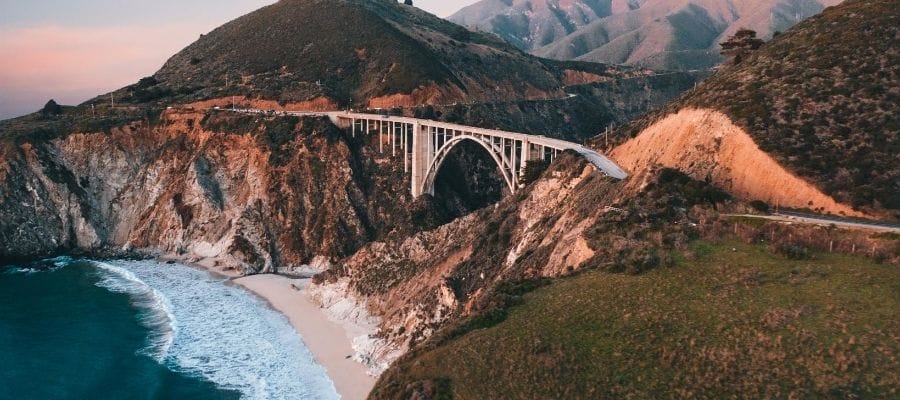
Monterey is the last real town before Big Sur, which makes it the natural base for the most famous stretch of coastal road in America. Bixby Bridge is only about 30 minutes south; McWay Falls, the waterfall that drops onto a beach, is about 1.5 hours. Leave early, because the pullouts at Bixby fill by mid-morning, and always check the Caltrans website for Highway 1 closures before you go, since landslides regularly shut sections of the road. If you want to make a night of it down the coast, some of the most beautiful glamping spots in California are in and around Big Sur.
Top Tours in Monterey
You can do almost everything in this guide on your own, so I only recommend booking a tour where a guide or a boat genuinely adds something you cannot get yourself. These four pass that test, and they are the highest rated experiences in the Monterey area right now.
Sunset Whale Watch in Monterey Bay
Most whale watching boats leave in the morning, when the sea is calmest. This one trades a bit of chop for something better: golden hour light on the water, which is the version I would pick as a photographer. The boat departs at 5 pm from downtown Monterey with a marine biologist on board, carries a maximum of 40 people, and there is coffee and tea to keep you warm once the sun drops. Take motion sickness tablets an hour before boarding even if you think you will not need them.
3 hours, from $75 per person. Rated 4.8 stars from 87 reviews.
➤ Sunset whale watch in Monterey Bay — Get Info
17-Mile Drive Guided E-Bike Tour
The problem with driving the 17-Mile Drive is that the driver sees the road, not the coast. This guided e-bike tour solves it: you cover more than half of the drive’s oceanfront stretch on an electric bike, with stops at China Rock, Fan Shell Beach, Crocker Grove, and the Ghost Tree lookout, and finish at Pebble Beach Market. It starts near Asilomar State Beach in Pacific Grove, bikes and helmets included, and the e-bike does the work on the hills. With over 900 reviews at a perfect 5.0 rating, it is the best reviewed activity in the whole area, and at $59 it costs barely more than four car gate fees.
3 hours, from $59 per person. Rated 5.0 stars from 927 reviews.
➤ 17-Mile Drive guided e-bike tour — Get Info
Carmel Small Group Food and Wine Walking Tour
If you want more from Carmel than window shopping, this small group tour covers about five stops among the town’s restaurants, specialty food shops, and boutiques, with enough tastings to count as lunch and all drinks included, while the guide fills in Carmel’s history between bites. Groups are capped at 16 people, and at just over 3 hours it pairs perfectly with a morning at Point Lobos next door.
3 hours 15 minutes, from $159 per person. Rated 4.9 stars from 412 reviews.
➤ Carmel small group food and wine walking tour — Get Info
Old Monterey Walking Food Tour
This one starts at Fisherman’s Wharf, across from the Custom House, and eats its way through the historic center: enough tastings for a full lunch, plus wine, beer, or cider along the way, with the town’s Spanish and Mexican era history served between stops. It is capped at just 8 people, which is exactly why it books out ahead in summer, so reserve early if your dates are fixed.
3 hours 30 minutes, from $164 per person. Rated 5.0 stars from 227 reviews.
➤ Old Monterey walking food tour — Get Info
Where to Eat in Monterey
I think it is a fair statement to say that eating and trying new foods is often the highlight of any vacation, or at least it is for me.
If you’re a foodie like my friends and me, you’ll love the options offered in Monterey and the surrounding area. We deeply enjoy food, and I am lucky to have friends who love to explore different types of food as much as I do!


Lunch and Dinner in Monterey
Yama Sushi was a great way for us to start our vacation in Monterey, California! This restaurant has a perfect oceanside view and welcoming outdoor seating.
They had an attractive menu with a wide selection of different types of sushi as well as non-sushi choices. I ordered the vegetable Gyoza as an appetizer, which came out crispy and steamy hot. The tangy dipping sauce for this appetizer was the best part, though!
For my entree, I ordered two different types of sushi: The California Dream and the Philadelphia Maki. The sushi came in bigger portions than I am used to here in Missouri, and the seafood was incredibly fresh. One of my friends ordered their Yama Lunch Entree: Chicken Teriyaki, which he reported to be delicious.
There’s a strip of restaurants and shops known as Cannery Row right next to the ocean that is perfect for walking, eating, and window shopping.
We’re big fans of bar food, and we found this location to be the perfect spot to spend our time!


Some noteworthy local favorites in this area, that we did not have a chance to visit, are The Cannery Row Brewing Company and The Bubba Gump Shrimp Co.
And, just a few miles down the road in downtown Carmel, The Forge in the Forest is a fine dining experience with outdoor seating surrounded by a lovely garden.
I like to take chances with food, so I opted for the Three Beet Salad, which turned out to be amazing and not at all what I had guessed. One of my friends loved the Forge Burger, which came on a fancy buttered bun, and we all enjoyed their complimentary bread and butter before the entrees came.


Breakfast in Monterey
We didn’t get to make it to The Acme Coffee Roasting Co., but it is a local favorite for coffee and quick breakfast!
They brew many types of coffee, and they also sell the coffee beans for any coffee connoisseurs out there. Since this place is well-known in the area, they have a gift shop and website open for souvenirs’ orders.
Grab a Drink in Monterey:
After our first day in Monterey, we found ourselves wandering to the surrounding areas.
Carmel-by-the-sea is so close to Monterey that it feels like an extension to the oceanside town. After, or even before, dinner we would usually try a new spot to enjoy a drink.
Our two favorite spots were the Hogs Breath Inn and Yeast of Eden, now Alvarado Street Brewery and Bistro. Both locations also happen to be restaurants.
The Hogs Breath Inn had an indoor bar that opened up to a large patio with cozy burning firepits. January in Monterey and Carmel, California is the perfect place for a relaxing vacation with comfortably warm days and cool nights.


I remember my friend and I all ordered different drinks: beer, wine, and a mixed coffee liquor. We each enjoyed what had ordered!
The Yeast of Eden, brewery and restaurant, appears to have gone through a name change in the last year and is now known as Alvarado Street Brewery and Bistro. They still seem to offer the free beer tastings we were able to experience, though! This is perfect for those of us who are never sure what type of drink to order. Their menu has a cute section for beer called “Hop Forward” where they feature their current selection. And, they also make cocktails and offer an assortment of wines.
Parking in Monterey: What You Need to Know
Parking is the most common complaint about Monterey, and it is avoidable with a little planning.
Cannery Row: street parking here is scarce and time-limited. Use the paid parking garages one block uphill from the Row (follow the signs on Foam Street and Wave Street) and walk down. Arrive before 10 am on weekends or expect to circle.
Fisherman’s Wharf and downtown: the large city lots next to the Wharf charge by the hour and almost always have space. Downtown has metered street parking and garages that are cheap by California standards.
Everywhere: never leave anything visible in your car, not even a jacket. Car break-ins at scenic pullouts and trailhead lots are the one real crime problem on this coast.
PRO TIP: Park once in the Wharf lots, then walk or ride the free summer trolley between downtown, the Wharf, and Cannery Row. Everything in central Monterey is within a 20-minute walk along the water.
Where to stay in Monterey
Monterey hotels are expensive for what you get, especially in summer, so book early. I use Booking.com to compare options because it shows the resort fees upfront, which Monterey hotels love to add at checkout. Stay near Cannery Row for the views, downtown for restaurants and better value, or on Munras Avenue for the budget motels.
Where you stay on vacation really depends on what you value. I’ve stayed in hotels, Bed and Breakfast Inns, and Airbnb rentals.
There are quite a few nice hotels and Bed and Breakfast Inns in Monterey!
For example, the Monterey Plaza Hotel and Spa has great reviews and is a gorgeous building overlooking the sea. I’ve heard the Jabberwock Inn, is a wonderful experience and the architecture of the building is a sight to see!


How to Get to Monterey
By Car
Driving is the best way to do Monterey, full stop. The town itself is walkable, but every good day trip around it, Point Lobos, 17-Mile Drive, Big Sur, requires your own wheels. From San Francisco you can take the fast route on US-101 (2 hours) or the slow, scenic route on Highway 1 through Half Moon Bay and Santa Cruz (closer to 3 hours, worth it at least one way). If you are flying in, I recommend comparing rental prices on Discover Cars since rates at SFO and San Jose are usually much better than renting at the small Monterey airport.
By Air
Monterey Regional Airport (MRY) is 10 minutes from downtown and has direct connections through hubs like San Francisco, Los Angeles, Denver, and Phoenix. That is how I arrived and it could not be easier. Fares are often higher than flying into San Francisco or San Jose, so compare the total cost including the rental car before you book.
By Bus or Train
Amtrak’s Coast Starlight stops in Salinas, 20 miles inland, with a connecting bus into Monterey. Monterey-Salinas Transit also runs regional buses. It works if you only plan to stay in town, but you will not reach Point Lobos or Big Sur easily without a car or a tour.
PRO TIP: In summer, Monterey runs a free trolley that loops between downtown, Fisherman’s Wharf, and Cannery Row roughly every 15 minutes. Park once, then use it all day and forget about the parking hunt.
Best Time to Visit Monterey
September and October are the best months to visit Monterey. The summer fog burns off, the water is at its calmest for kayaking and whale watching, and the school-holiday crowds are gone. Summer (June to August) is peak season, but mornings are often gray and foggy until noon, which surprises a lot of first-time visitors expecting classic California sunshine.
Winter has its own case: gray whales migrate past from December to April, hotel prices drop, and the hills turn green. Spring brings wildflowers to Point Lobos and the best chance of seeing orcas in the bay. If you are planning a bigger winter route, my guide to the best places to visit in California in December pairs well with a Monterey stop.
Photography Tips for Monterey
Sea Otters and Wildlife
Bring the longest lens you own, ideally 300mm or more, because you are required to keep your distance from otters and seals. Early morning is best: the water is glassy, the light is soft, and the otters are actively feeding. Lovers Point, the harbor breakwater, and Elkhorn Slough are the most reliable spots. From April to May, give harbor seal mothers and pups on the beaches a wide berth.
The Coastline
Point Lobos in the last hour before sunset is the best coastal light on this stretch, when the low sun turns the coves turquoise and gold at the same time. Do not pack the camera away on foggy mornings either. Monterey’s fog flattens the light into a natural softbox and makes the cypress trees and kelp beds look like ink drawings. Shoot into it instead of waiting for it to burn off.
Bixby Bridge
The classic shot is from the dirt pullout on the north side of the bridge, looking south. The bridge faces west, so late afternoon gives you warm front light, while sunset itself turns everything to silhouette. If you want the arch without crowds in the frame, be there before 9 am.
Is Monterey Safe for Solo Travelers?
Yes, Monterey is one of the safer destinations you can pick in California, and it is an easy first solo trip. The tourist areas are busy and well lit, distances are short, and walking between downtown, the Wharf, and Cannery Row feels comfortable at any reasonable hour. The real risks here are practical, not personal: car break-ins if you leave valuables visible, cold water and occasional sneaker waves if you turn your back on the ocean on the rocks, and thick fog on Highway 1 if you drive the coast at night. Time your Big Sur driving for daylight and you have handled the worst of it.
FAQ About Monterey, California:
What is there to do in Monterey alone?
Many of the activities I listed above can be happily done alone. If I were to go to Monterey alone, I would spend a lot of time on the beach and exploring the shore. I would also enjoy the hiking trails, visiting Point Lobos, visiting museums, and shopping.
Is Carmel or Monterey better?
In my experience, Monterey was the perfect place to stay as a sort of ‘home base’! From there, you can explore the surrounding area,s including Carmel by the Sea.
How far is Monterey from Carmel-by-the-Sea?
The distance between these two areas is very short—only 3.5-4 miles. Carmel almost feels like an extension of Monterey and is definitely worth visiting!


What is special about Monterey Bay?
Monterey Bay combines a preserved old fishing town with the deepest marine canyon on the US West Coast. Walking through Cannery Row is a wholesome experience that gives off a small-town-by-the-sea vibe.
How far is Monterey from LA?
Monterey is quite a distance from Los Angeles. It’s about a 320-mile drive which comes out to around 5 hours in the car.
We drove from Monterey to San Francisco, and that wasn’t a bad drive! We were only in the car for around two hours.
How do you get around Monterey?
There’s a variety of transportation methods in Monterey! We rented a car while we were there but, I do have to warn you, parking can be hard to find.
If you drive, I recommend parking in a spot where you can easily walk to your destinations. You can also rent electric bikes or take the trolley.


How many days do you need in Monterey, CA?
I would recommend taking a 4-7 day trip to visit Monterey and the surrounding area.
We spent our first day in Monterey exploring the shore, eating at restaurants, and window shopping. From there, we spent the next few days exploring Carmel and hiking at Point Lobos State Natural Reserve (16 miles from Monterey).