Alta Langa Rising: Italy’s Historic Metodo Classico Appellation Deserves Global Attention

For decades, conversations about Italian sparkling wine have largely focused on Prosecco and Franciacorta. Yet quietly, in the rolling hills of southern Piedmont, Alta Langa DOCG has been establishing itself as one of Italy’s most compelling traditional method sparkling wine regions. Defined by high-altitude vineyards, meticulous production standards, and extended aging, the denomination is producing wines that combine freshness, structure, and remarkable elegance.

Alta Langa DOCG at a Glance
- 📍 Region: Southern Piedmont (Cuneo, Asti & Alessandria)
- 🍇 Grapes: Pinot Nero & Chardonnay only
- 🥂 Production: Metodo Classico
- 📅 Vintage: Every wine is vintage dated
- ⏳ Lees Aging: Minimum 30 months
- ⛰️ Elevation: Approximately 250–800 meters
- 🏛️ DOCG Status: Since 2011
- 🍽️ Style: Gastronomic sparkling wines with exceptional aging potential
Stretching across the provinces of Cuneo, Asti, and Alessandria, Alta Langa DOCG is unique among Italy’s sparkling wine appellations. Every wine is vintage dated, produced exclusively from Pinot Nero and Chardonnay, and aged for a minimum of 30 months on the lees. The result is a distinctive style that emphasizes precision, complexity, and an authentic expression of Piedmont’s terroir.

The denomination recently took a significant step onto the international stage with its first dedicated U.S. tasting at Eataly Downtown in New York City. Twenty-seven producers introduced American sommeliers, retailers, educators, and media to Alta Langa DOCG, signaling the region’s growing ambitions in the premium sparkling wine market.
I had the opportunity to taste several Alta Langa wines and speak with Paolo Rossino, Director of the Consorzio Alta Langa DOCG, about the denomination’s evolution and its vision for the American market. Moreover, Rossino explains why Piedmont’s historic high-altitude sparkling wine region is poised for global recognition.
A Region Ready for the World
Rossino believes the timing is no coincidence. “After more than two decades of structured growth, Alta Langa has reached a level of maturity that allows us to present a fully defined identity internationally,” he explained. Built upon vintage-only production, high-altitude vineyards, and extended lees aging, the denomination now has a clear stylistic voice that resonates with today’s consumers.
The United States, he noted, is a natural next step. “The U.S. market has long appreciated Piedmontese wines and is increasingly receptive to terroir-driven sparkling wines,” Rossino said. Rather than pursuing volume, the Consorzio is focused on positioning Alta Langa among the world’s finest traditional method sparkling wines.
Defining Alta Langa DOCG
While Italy offers a diverse range of sparkling wine styles, Alta Langa distinguishes itself through strict production standards and an unwavering commitment to quality. Only Pinot Nero and Chardonnay are permitted. Every bottle is vintage dated, grapes are harvested by hand, and the wines spend at least 30 months on the lees before release. “Alta Langa stands for structure, precision, and long aging potential,” Rossino asserted. “Its philosophy is closer to the world’s great traditional method wines than to more immediate sparkling styles.”
Equally important is the denomination’s gastronomic identity. These are sparkling wines designed not simply for celebrations, but for the dining table, offering versatility throughout an entire meal.
The Advantage of Altitude
Alta Langa vineyards are planted between 250 and 800 meters above sea level, among the highest elevations in Piedmont. Those cooler conditions preserve acidity while allowing grapes to develop aromatic complexity over a longer growing season. Rossino cautions, however, that altitude is only part of the story. Limestone-rich marine soils, significant day-night temperature variation, vineyard exposure, clonal selection, and meticulous vineyard work all contribute to wines with vibrant acidity, firm structure, and exceptional aging potential. Those conditions have become even more valuable as climate change reshapes vineyards around the world.
“Higher-altitude viticulture has become an even greater advantage,” Rossino explained. “Our elevation preserves balance, freshness, and the stylistic identity that defines Alta Langa.”

Time as an Ingredient
Patience is perhaps Alta Langa’s defining characteristic. Every wine spends at least 30 months aging on its lees, with many producers choosing significantly longer maturation. That extended aging develops creaminess, fine mousse, and layered aromas of brioche, bread crust, dried fruit, toasted nuts, and subtle spice while preserving remarkable freshness.
Rossino describes producing Alta Langa as both a commitment and a long-term investment. “It requires vision, confidence, and the willingness to wait years before the wine reaches the market,” he said. The philosophy, he emphasized, always favors quality over production volume.

A Changing American Palate
According to Rossino, American consumers increasingly seek sparkling wines with a strong sense of place rather than generic celebration wines. Collectors, sommeliers, and educators are showing greater interest in vintage-dated, terroir-driven wines with food-pairing versatility—precisely where Alta Langa excels.
The greatest opportunity, he believes, lies in education. “Once people understand the structure and aging philosophy behind Alta Langa DOCG, the wines tend to resonate strongly,” Rossino added. Building awareness will take time, but the denomination’s distinctive identity provides a strong foundation for long-term success.
The Wining Hour Tasting of Alta Langa DOCG
I had an opportunity to taste several expressions firsthand, and the wines I tasted reflected both the consistency of the Alta Langa denomination and the individuality of its producers.

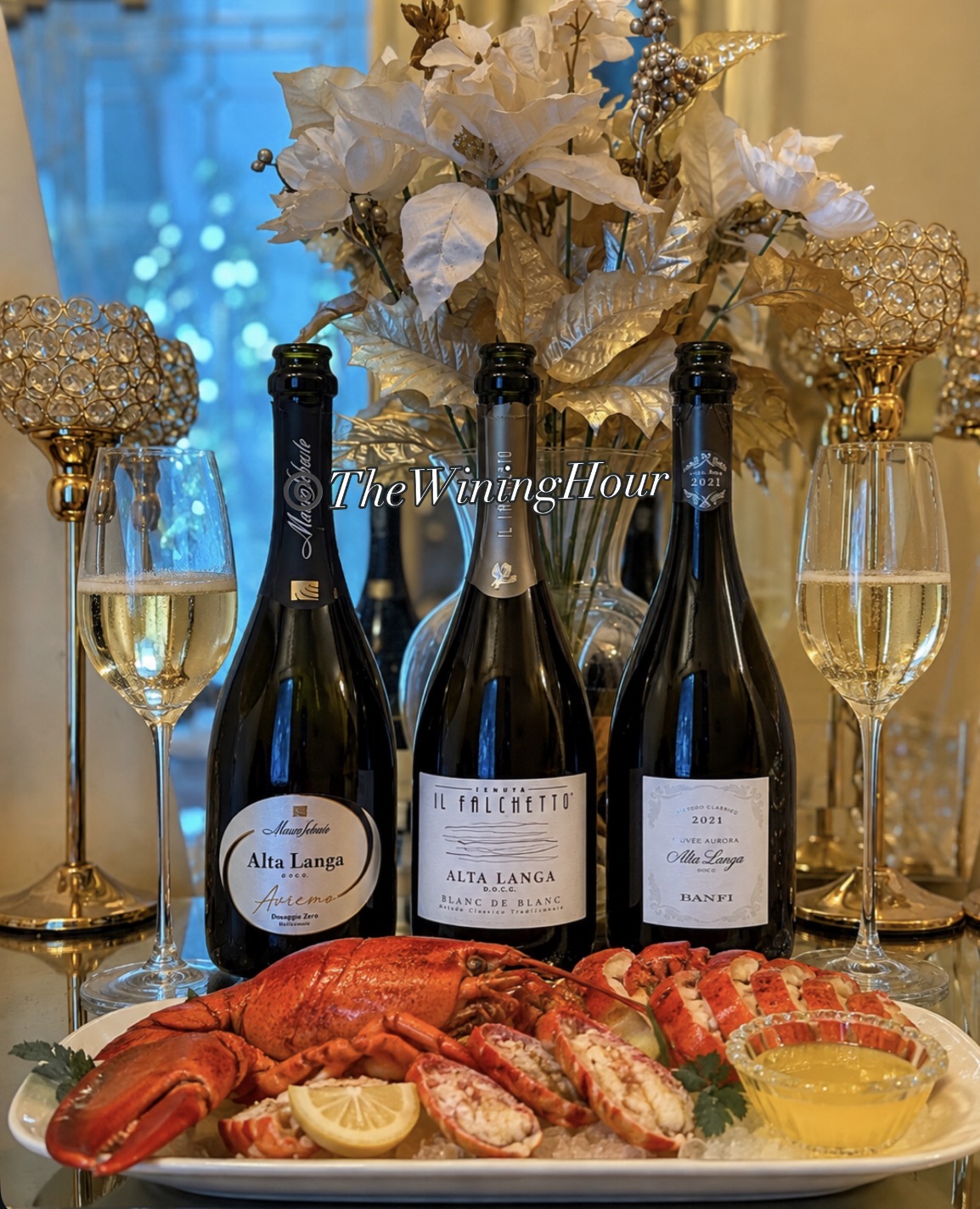
Mauro Sebaste’s Avremo Dosaggio Zero showcased Alta Langa’s mineral precision with aromas of green apple, citrus peel, white flowers, and crushed stone layered over a chalky palate accented by toasted almond and brioche. This wine is focused, elegant and distinctly terroir-driven.
Tenuta Il Falchetto Blanc de Blancs, produced entirely from Chardonnay, offered a softer, more delicate interpretation with notes of lemon, white peach, acacia blossom, and fresh pastry balanced by vibrant acidity and refined texture. It balances freshness with creaminess, showcasing how prolonged lees aging can build complexity without sacrificing finesse.
Banfi Cuvée Aurora demonstrated freshness and impressive depth, combining golden apple, citrus zest, hazelnut, and warm bread with fine bubbles, layered complexity, and a long, energetic finish. This one presented a polished and sophisticated example of Alta Langa DOCG’s aging potential and stylistic refinement.
Each wine expressed a different personality while remaining unmistakably Alta Langa—elegant, structured, and driven by freshness.

Looking Ahead
Rossino’s long-term vision is to establish Alta Langa DOCG among the world’s benchmark traditional method sparkling wine regions while remaining firmly rooted in Piedmont’s unique landscape. He reiterated, “We want people to recognize Alta Langa as a high-altitude, vintage-only sparkling wine that combines Piedmont identity with precision, depth, and gastronomic versatility.”
For American wine professionals and consumers seeking authenticity, vintage character, and terroir-driven sparkling wines, Alta Langa arrives at an opportune moment. Its first dedicated U.S. event represents more than an introduction to a new appellation—it signals that Italy’s premium sparkling wine story continues to evolve beyond its best-known regions. Judging by both the wines I tasted and my conversation with Rossino, Alta Langa DOCG has all the elements to become one of the most exciting names in the global Metodo Classico conversation.