Author Elaine Kachala on Building Homes for all- plus a GIVEWAY! « Lydia Lukidis

Author Elaine Kachala on Building Homes for all- plus a GIVEWAY!
Hello world!!
Welcome to my kidlit blog, Blissfully Bookish. This week, I got to interview a fellow Canadian author who loves to write nonfiction. Please say hi to Elaine Kachala, here to discuss her new middle grade nonfiction novel, Building Homes for All: Technology for a Fair and Green Planet, illustrated by Catherine Chan, and published by Orca Book Publishers.
BUT first- YAY! Elaine is generously giving away a FREE copy of the book! Simply comment on this blog- contest ends June 26, 2026. (Canada / USA only)
Please describe the journey to publication and inspiration for Building Homes for All: Technology for a Fair and Green Planet.
I enjoy writing books about how people working together with technology can shape a better world. My ideas usually develop over time, and Building Homes for All grew from several meaningful experiences.

My background in health promotion was a strong influence. As a health policy advisor, I wrote extensively about how social and environmental factors affect our health, so I naturally view issues through that lens. A pivotal moment came while I was volunteering at a youth shelter with my dog, Tucker, who was a St John Ambulance-certified therapy dog. One of the kids told me, “Tucker makes our place feel like a home.” That comment stayed with me and deepened my thinking about what “home” really means—something many of us take for granted.
As I was researching STEAM topics for middle graders, I came across an article about 3D construction printers as a potential solution to the global housing crisis. That connection sparked the idea: a book exploring how technology could help to address housing inequity. I dug into the research and developed a proposal for my editor at Orca Book Publishers, who immediately saw its potential.
Over the next year and a half, I immersed myself in research, drawing on hundreds of sources and creating multiple drafts to shape the manuscript. Transforming complex information into an engaging, accessible narrative for middle-grade readers is always a challenge—but it’s also the part of the process I find most rewarding.
What message would you like the book to impart to children?
I hope children take away three big ideas. First, that with teamwork and technology, even some of the world’s toughest problems can be solved. Second, that construction, which has long been meaningful, important work, is now part of an exciting, high-tech STEAM future, with growing career opportunities open to everyone. Third, the innovators tackling these challenges don’t get it right the first time. As readers learn about their persistence and dedication, I hope they see that even experts fail—but they learn from it, try again, and find the experience deeply rewarding.
Affordable housing is often discussed as an adult issue. Why was it important for you to introduce these topics to children and young readers?
That’s a great question. Affordable housing and homelessness are often seen as adult issues, but they’re issues that young people are already aware of. As I mentioned early in the book, some readers may know family or friends who are facing housing challenges—or may be experiencing it themselves. Talking about these issues gently, openly, and with accurate information helps dispel myths and reduce stigma.
Today’s students are growing up in a world shaped by complex challenges, from housing to climate issues, which can feel overwhelming and contribute to a sense of helplessness. STEAM books can shift that perspective by showing that problems have solutions and that innovation is already making a difference. That sense of hope is powerful.
Building Homes for All is part of Orca Book Publishers’ Orca Think nonfiction series. It invites middle-grade readers to explore real-world issues, ask questions, and see how they can be part of the solution. Books like these are empowering for young readers because while these challenges are real, so are the possibilities for change, and young people have a role to play.
You write about the concept of 3D printing human settlements on the Moon and Mars in order to help us tackle housing challenges here on Earth. This is fascinating! Please share more.
Yes, it is fascinating! NASA is planning long-term exploration of the Moon and Mars through its Artemis and CHAPEA missions. It partnered with ICON, a construction technology company in Texas, and the architecture firm Bjarke Ingels Group from Denmark to design and build 3D-printed habitats for space.
Because transporting materials to space is so expensive, researchers are developing ways to use lunar soil (regolith) as a 3D-printing material. They’ve also built a 3D printed a habitat called Mars Dune Alpha. Crews are taking turns living in this simulated environment to learn what it’s like to live and work on Mars for long periods of time.
What makes this especially exciting is how these innovations translate back to Earth. Pushing the limits of construction in space is driving new ideas in materials, technology, and design that could help address housing challenges on Earth.
Please paste a short and compelling excerpt from your book.
“We can solve this combination of human need and the planet’s need at the same time,” says Architect Michael Green.
Technology helps people reimagine how to design and construct buildings. Teamwork puts projects on the path to success. But innovating is hard. It takes guts, risks, and money, and a lot of people challenging old rules and ideas…The future is about scaling up from one-off prototypes to building entire neighborhoods and communities. ICON CEO, Jason Ballard, says, “If we can 3D print 100 homes, we can do 1000 and then 10,000. We want to build a house per day, then a house per hour, per minute, and then per second. At a house per second, we can solve the global housing crisis in our lifetime.”

What is your writing process and does it vary depending on the project?
I write STEAM nonfiction books for middle-grade readers, and my process is fairly consistent across projects. It always begins with deep research, focusing on primary sources. I watch presentations and listen to podcasts by experts to better understand the technologies, current issues, and potential interview subjects. These steps help me shape the book’s structure, build an outline, and identify gaps where I still need to dig further.
I also read other middle-grade nonfiction to understand the market and see how authors I admire present complex ideas. Photo research is another key part of my process—something that Orca Book Publishers requires, but that I genuinely enjoy. Seeing the technologies helps me better understand and explain them.
I typically write three or four drafts before submitting the manuscript—the first draft my editor sees.” From there, we revise collaboratively through a few more rounds. That’s really where the book comes together. The magic is in the revision!
Please share your favorite nonfiction books that inspired you.
This is probably the hardest question—there are so many! For adult nonfiction I’ll say The Empathy Diaries by Sherry Turkle. For middle-grade I’ll say the Story of Science and Hope by Andrea Curtis.
What is the best piece of advice you would give to other writers?
I treat writing like a job, with a daily routine and structure to keep things moving forward. When the topic feels overwhelming, as it sometimes does, I set small, manageable goals, such as creating an outline or completing a couple of subsections. Most of all, be patient. The writing and publishing process takes time. Seek advice from other authors and choose a topic you truly love because you will be living with it for a long time!
And a bonus question just for kicks! What was your favorite book when you were a child?
If I had to pick, I’d say Nancy Drew mysteries by Caroline Keene were my favorite fiction books as a middle-grade reader. Born Free by Joy Adamson was my favorite nonfiction book.

Bio
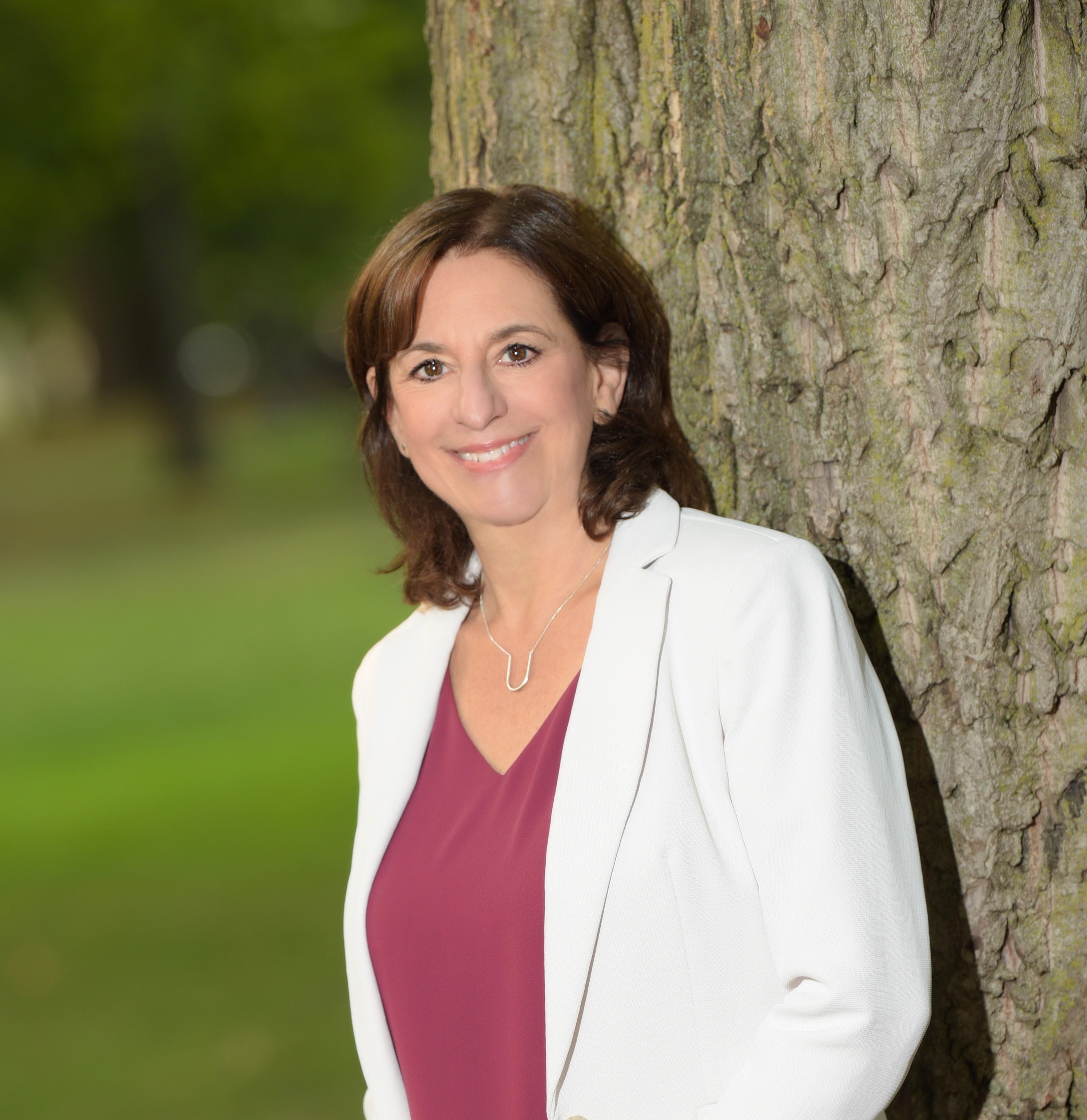
Elaine Kachala writes bold, curiosity-fueled STEAM nonfiction that empowers young readers to imagine—and build—a better world with technology. Her newest book, Building Homes for All: Technology for a Fair and Green Planet (March 2026), is a Junior Library Guild Gold Standard Selection and earned glowing reviews from Kirkus, Booklist, and School Library Journal. Her debut, Superpower? The Wearable-Tech Revolution (2022) was named a Best STEM Book K-12 by the National Science Teaching Association (NSTA) and the Children’s Book Council (CBC) and was a finalist for several major awards, including the AAAS/Subaru SB&F Prize, the Red Cedar Young Readers’ Choice Awards, and the SCBWI Golden Kite Awards.
Before writing for children, Elaine spent over 20 years as a health policy writer and adviser. With degrees in psychology and sociology from the University of Toronto and a master’s in environmental studies from York University, she weaves her knowledge into stories about real-life inventors who dream big while considering the health, social, and ethical impacts of their innovations. Elaine lives in Toronto with her family.
Links
Website: https://www.elainekachala.com/
YouTube Channel: https://www.youtube.com/@elainekachala2009
LinkedIn: https://www.linkedin.com/in/elainekachala/
Instagram: https://www.instagram.com/elainekachala/
acebook: https://www.facebook.com/elainekachala
Book Purchase: https://bit.ly/4gcXiVw