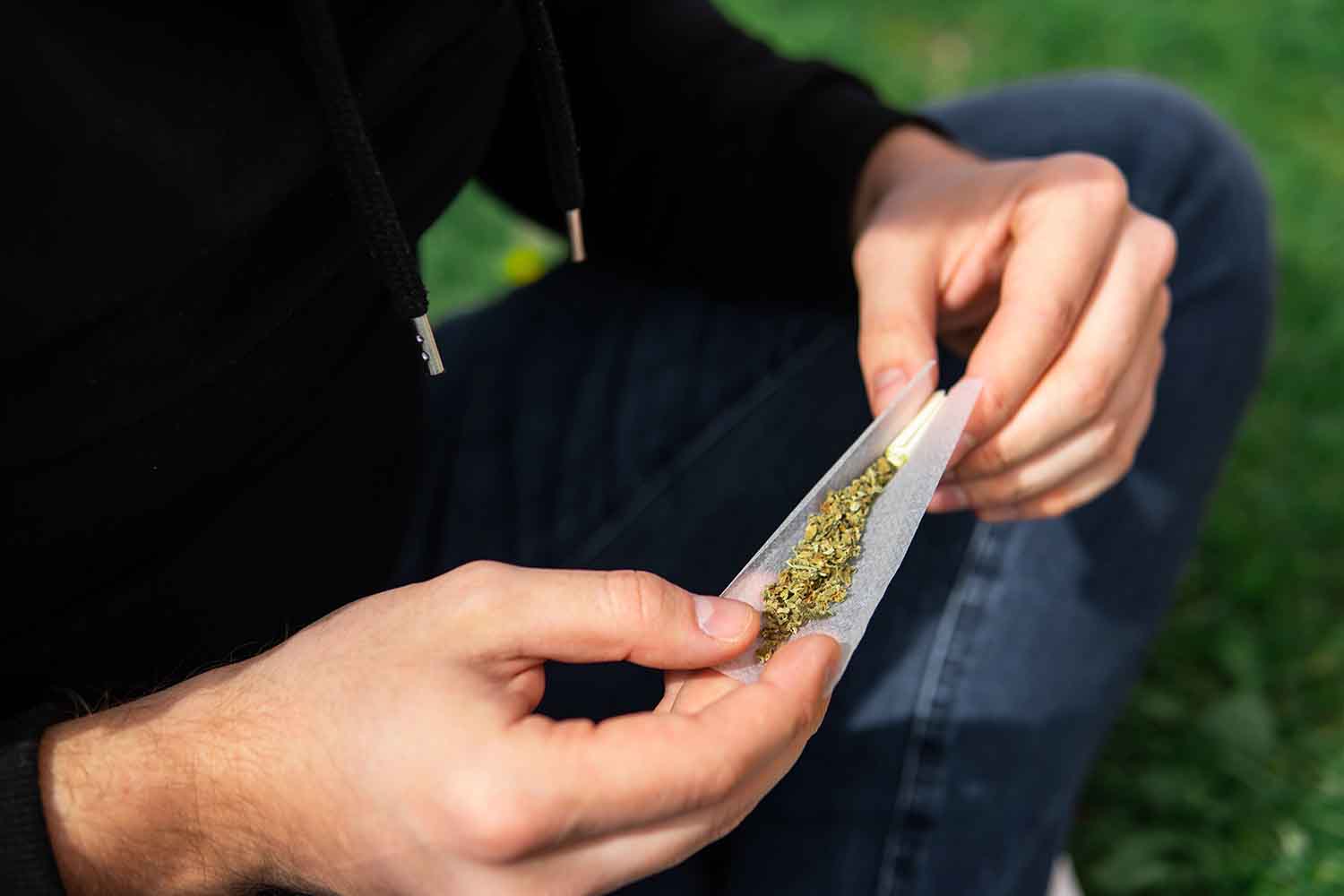
Regular cannabis users experienced significantly fewer early or extra heartbeats on days they smoked or vaped compared with days they abstained, according to the results of a new trial published in the Journal of the American College of Cardiology.
The study, led by researchers at the University of California, San Francisco (UCSF), tracked 108 adults who regularly smoked or vaped cannabis but had no history of diagnosed heart rhythm problems. Over 14 days, each participant was randomly told to either inhale cannabis or abstain. During the study, they wore a monitor that continuously recorded their heartbeat, alongside an activity tracker, sleep monitor and glucose monitor. Because each participant switched between cannabis and abstinence days, they effectively acted as their own control group, letting researchers compare the two conditions directly.
On the days participants used cannabis, they had about 9% fewer premature heartbeats than on the days they didn’t – the opposite of what the research team predicted.
“We were surprised by the results because they contradicted our original hypothesis,” said Gregory Marcus, the study’s senior author and an endowed professor in atrial fibrillation research at UCSF’s Division of Cardiology. “That’s why randomised trials are so important. When the data challenge our expectations, our job as scientists is to understand them, not ignore them.”
Early or extra heartbeats – known clinically as cardiac ectopy – are common, and can originate in either the heart’s upper or lower chambers. The improvement seen in this trial was driven entirely by fewer premature atrial contractions (PACs), the type that begin in the upper chambers and are considered the strongest known predictor of atrial fibrillation, a rhythm disorder linked to blood clots and stroke. There was no meaningful change in premature ventricular contractions (PVCs), which begin in the lower chambers and are linked to future heart failure risk instead.
The monitors also picked up no meaningful differences in how much participants slept, how many steps they took, or their blood sugar levels between cannabis and abstinence days – ruling out some of the more obvious explanations for the effect.

Marcus was careful to stress that the findings shouldn’t be read as a green light. “The overall health effects of inhaled cannabis may still be net negative, but these findings suggest there may be something about cannabis that can teach us more about the biological mechanisms that produce premature atrial contractions,” he said. “That knowledge could eventually lead to new approaches for preventing or treating abnormal heart rhythms.”
He added that the trial only looked at short-term, acute effects in existing regular users, not the long-term consequences of cannabis use, and that it “is not sufficient” on its own to change clinical guidance.
Most previous research linking cannabis to heart problems has relied on self-reported use or medical records gathered after the fact, making it hard to separate cause from coincidence. This trial’s randomised, crossover structure – swapping each participant between cannabis and abstinence days rather than comparing separate groups of users and non-users – is considered a far more reliable way of isolating cause and effect.
A 2025 study tracking more than 4,000 US military veterans with existing heart disease found no increased rate of heart attacks, strokes or cardiovascular death among those with a history of cannabis smoking, despite researchers initially expecting the opposite.
Randomised studies “are the only way to fully avoid confounding effects that interfere with revealing underlying realities…that are so common in the majority of observational research,” Marcus added.