

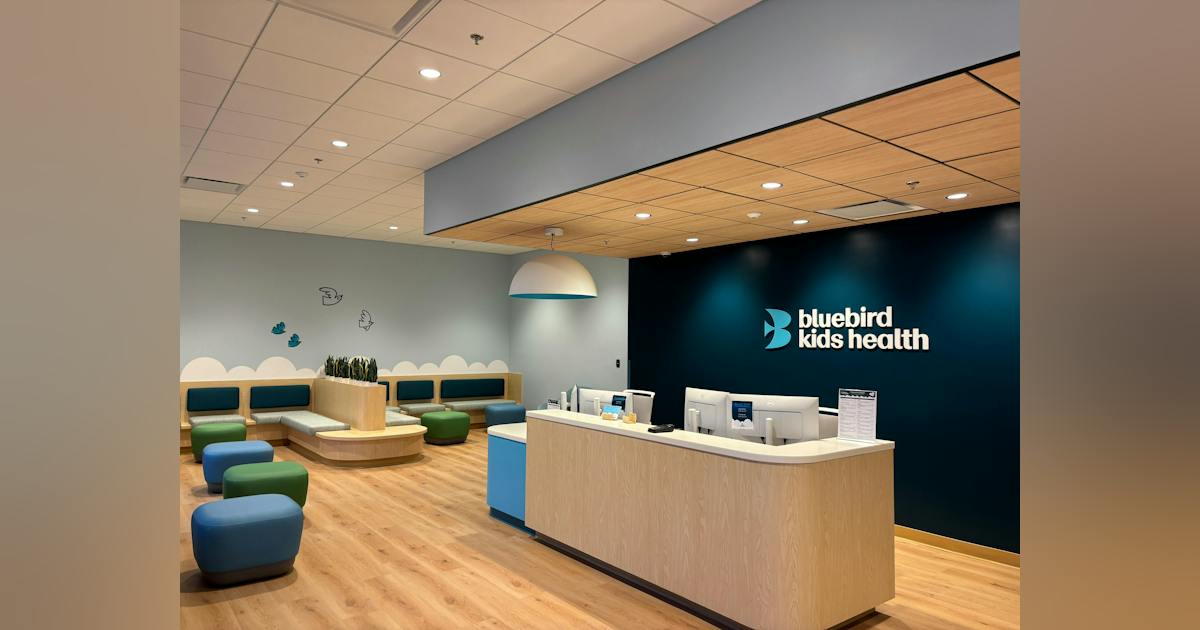
To address the growth of “pediatric care deserts,” Bluebird Kids Health is opening retail clinics in underserved Florida communities through Medicaid partnerships, behavioral health integration, and care management capabilities. Chris Johnson, Bluebird’s founder and CEO, recently spoke with Healthcare Innovation about taking a value-based care approach to pediatrics.
Healthcare Innovation: I saw that you were previously CEO of Landmark Health, which focuses on older adults with complex chronic conditions. How did you make the jump from that into pediatrics in Florida?
Johnson: It certainly was a big jump, both in terms of the size of the organization and the population served. Most of my career has been focused on innovative care delivery models. I joined Landmark when it was a small emerging company, so the transition to a smaller organization was natural. The shift from frail seniors to to newborns certainly is the bigger shift but I focused on figuring out where is there a pretty big unmet medical need? Where do we think that there’s an opportunity to build a better clinical intervention that would improve outcomes for patients? And hopefully, build an organization that providers are excited to be a part of. And because we participate in value-based care arrangements, we could not only improve quality, as a plan would define it, but also bring down long-term utilization and long-term price for the members who receive care in our model. That that the genesis of of Bluebird itself.
HCI: Could you talk about the value-based care contracting you engage in? Is it largely Medicaid managed care?
Johnson: Our model is that we build retail clinics, for instance in busy shopping centers. We site those in what we call pediatric care deserts. We look for communities where the number of children is much greater than the number of family medicine and pediatric providers that exist within a 30-minute driving radius of those communities. Those tend to be middle-income to lower-income communities. Higher income communities tend to have 200% more pediatricians per 1,000 children than lower-income communities. We’ve built a model where we serve all children. We have some folks who do cash pay. We serve a lot of commercial members, but importantly, we don’t have any limit on the number of children on Medicaid that can be on our panels. We’re able to do that in part because of the relationships that we have with managed care organizations where we sign up for not only quality-based value-based care payments, but also some utilization total cost of care measures. We need to make sure that patients come in, the proper things are being diagnosed for intervening appropriately when necessary for children. An interesting thing about pediatrics is that it’s actually a part of medicine that is very prevention- focused already. Most of the things that you’re supposed to do according to general pediatric clinical guidelines are focused on screening, prevention, vaccinations — things that should bend the cost curve. Some will have immediate impact, but many actually have long-term impacts on outcomes.
HCI: Besides Medicaid MCOs, are there value-based care aspects to the work with commercial plans as well?
Johnson: There are some on the commercial side, but I’d say it’s much more prominent on the Medicaid side. In Medicaid, in many markets where we operate, especially in Florida, the vast majority of the beneficiaries are children, so it’s core to the strategy of those MCOs to have aligned partnerships with their provider network. I’d say historically there aren’t a ton of pediatricians out there that have built some of the capabilities that you’ve seen emerge over the last couple of decades on the senior medicine side — the ability to ingest claims, the ability to direct folks to specific care management programs, the ability to outreach and engage attributed membership. Those are some of the capabilities that we’ve adapted from the senior space and then built around a pediatric population. Execution requires a different set of tools and approaches and KPIs.
HCI: As I understand it, Medicaid reimbursement in pediatrics is quite low, relatively speaking, and that’s why practices limit the number of Medicaid patients they see. What are some things that Bluebird does that are different from a typical pediatric practice? Is it tech infrastructure or something else about efficiencies or care coordination?
Johnson: A lot of it is around value-based care. We certainly embrace technology, but I’d say that that’s not unique to our Medicaid population. Our clinical model is highly consistent across all populations. It is around the way that we’ve partnered with health plans, and being able to get increased payments for driving high-quality outcomes. Think of that as kind of like HEDIS-based measures, wellness visit attainment, screenings, vaccination rates, and being a top-quartile performer for these MCOs. It’s very important for them as they contract with the states that they have high quality. Depending on the plan, there are different ways that we do this. Sometimes it’s based on utilization; sometimes it’s based on total medical expense. If that is coming down, we participate in the savings that are generated.
Also, we’ve built the model to make sure that people have a pediatric primary care home.That means not only are you coming in for your wellness visits, things that close quality gaps, but also having a longitudinal relationship. Do you know to call us first when your child is sick vs. going to the emergency room? Do we have the right care management programs in place?
Respiratory distress is a very common type of chronic condition that can lead to inpatient utilization in children, so we’ve built care management programs around that.
HCI: Looking across the country, is it pretty unusual to have a focus on value-based care in pediatrics or do you see other pediatrics practices doing the same thing?
Johnson: I think it’s certainly much less common than you might find in senior healthcare. You need to have technology that helps you do this at scale. Our philosophy is that given the way the reimbursement works, you need to make it much more efficient, so it’s not higher volume than pediatrics normally is. We need to support the providers so that it’s not just what’s happening in the exam room, but there are tools that exist for the the family, the caregiver, the patient when they’re home to help them better manage their asthma, to support them with behavioral health conditions if necessary.
HCI: As you’re building out these clinics in Florida, is it important for you to build relationships with the larger hospital systems and academic medical centers so you can refer patients to specialists if needed and then share information about those patients with the health systems?
Johnson: Yes, 100%, and part of our strategy is to build density when we enter into a market for that very reason. There are technology components to that, like integration to the EHR. In order for a larger health system to invest the time to build those workflows, they have to know you. The harder thing is the human understanding of who you are and why they should take the call from your office. So there’s a certain amount of local volume that you want to have to make sure that you’re part of that local ecosystem. Value-based care is hard to do if you’re only an inch deep in a geography, so we want to make sure that we’re known as one of the main providers of children’s health in the communities where we operate, and that allows for some of that integration with health systems.
But we also try to integrate with a lot of the social service providers that exist in a community. We can be a convenient distribution partner for them. When we have those partnerships and can create win/win opportunities that benefit the children, that’s what we look for.
HCI: How many clinic locations do you have now?
Johnson: We have eight locations open today along the eastern seaboard of Florida. We’re in Jacksonville, Duval County, Palm Beach County, and Broward County. Starting in January we will be opening in Orlando. So by about this time next year, we’ll be up to about 14 clinics across most of the eastern seaboard and into Orlando.
HCI: Do you have a vision of of expanding more in Florida and beyond to other states?
Johnson: We have visions of continuing to expand both into new geographies in Florida, but also into other states. We think it’s really important to make sure that we’re establishing the necessary density in areas where we operate. So our first step was to find the right markets in Florida, establish that local density, and then go on to the next set of geographies where we want to continue to expand. But we think the model is really applicable in just about every state across the country, even though there’s some variation in how Medicaid works state to state. If you can drive improvements in quality outcomes, increase engagement and access for children, and reduce total medical expenditure and utilization, that is fundamentally aligned with what managed Medicaid organizations need in their network partners.


