Day Trips to Antwerp, Bruges, and Ghent from Brussels

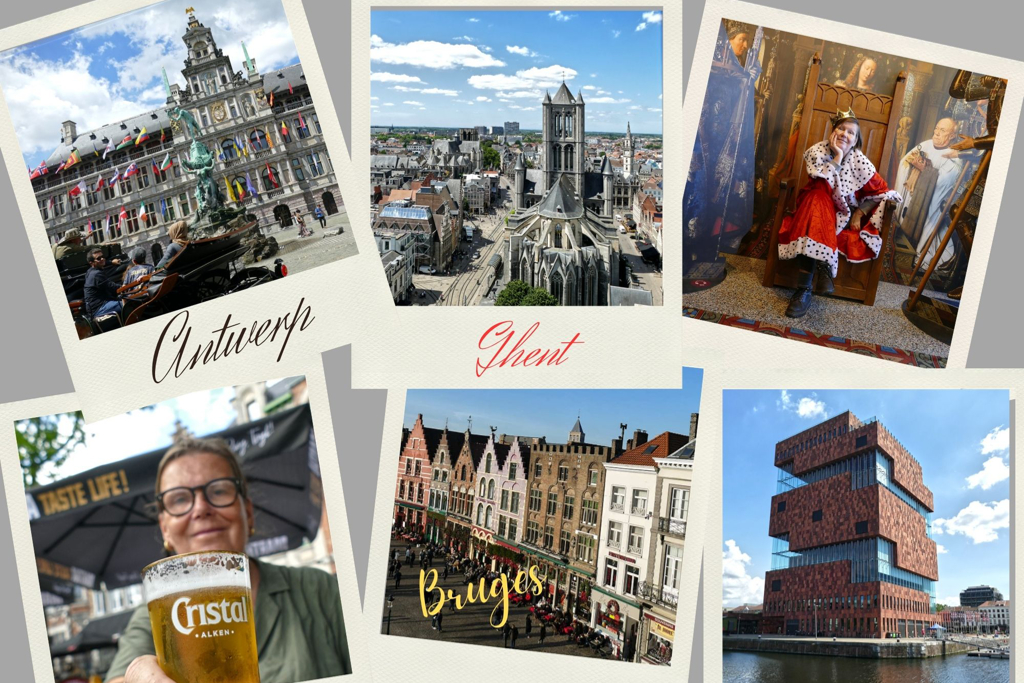
Going on day trips from Brussels to the other Flemish medieval jewels such as Antwerp, Bruges, and Ghent is fun, easy, and surprisingly affordable. Just hop on the next train that will take you to each of them in less than one hour and for around 10 €uro.
I’m a busybody with a chronic case of FOMO.
But Belgium got the cure.
It is relatively small, in fact, the fifth smallest country in the European Union. It slumbers there, nestled between Germany, the Netherlands, France, and Luxembourg, pretty much undisturbed in the middle of the continent, not bragging about its beauty. And beauty it has all right!
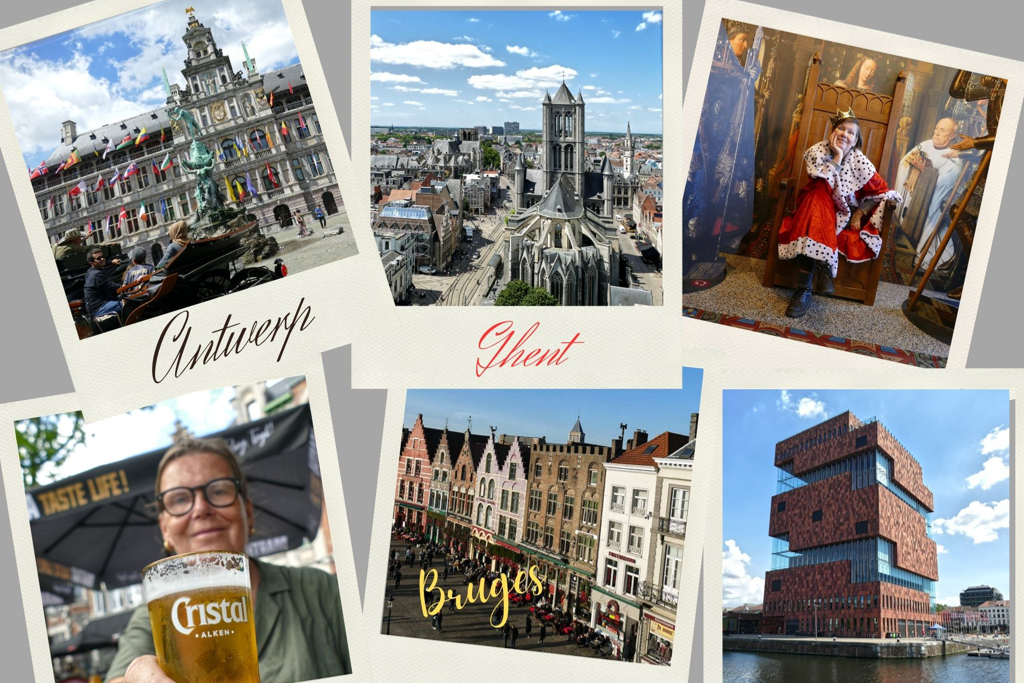
During my stay in Brussels, Belgium’s and secretly also Europe’s capital, I actually managed to visit three other beautiful cities, one more intriguing than the other, so that I list them here fair and square in alphabetical order: Antwerp, Bruges, and Ghent.
The Path to Becoming Belgium
As one of Europe’s wealthiest regions, Flanders was ruled by counts for centuries. Then, during the Middle Ages, the region experienced a decisive shift in power. Flanders came under the dominion of the Dukes of Burgundy and later the Habsburgs. In the 16th century, the region was drawn into the religious and political conflicts associated with the Reformation and the Revolt of the Netherlands. While the Southern Netherlands remained under the rule of the Spanish Habsburgs, the northern provinces eventually evolved into the independent Republic of the Seven United Provinces, known today as the Netherlands. This political division had a lasting impact on the region.
After periods of French and Dutch rule, Belgium gained its independence in 1830. However, within the new Belgian state, the Dutch-speaking population of Flanders initially held significantly less political and social influence than the French-speaking elite. Nevertheless, it developed into an industrial power and one of Europe’s most prosperous regions.
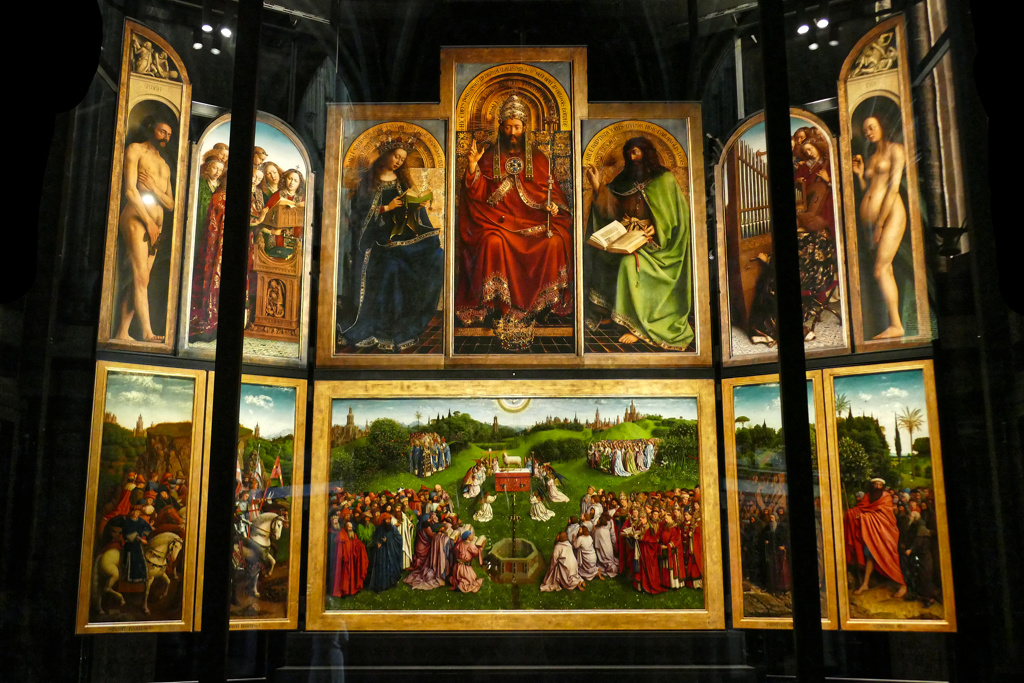
From the 14th and 15th centuries onwards, Flemish cities also became significant centers of art and culture. The Early Netherlandish masters developed an exceptionally detailed style of oil painting that profoundly influenced European art. The cities’ wealth was also reflected in their town halls, guildhalls, churches, and magnificent merchant houses. These structures still define the character of the historic city centers.
Flanders – Shaped by Trade, Textiles, and Art
During the 19th and 20th centuries, the Flemish Movement campaigned for the recognition of Dutch as an equal language and for greater cultural and political autonomy. These developments ultimately contributed to Belgium’s division into three regions, namely the Flemish-speaking Flanders, French-speaking Wallonia, and the Greater Brussels Region. However, Belgium is a constitutional monarchy and a key founding member of the European Union.
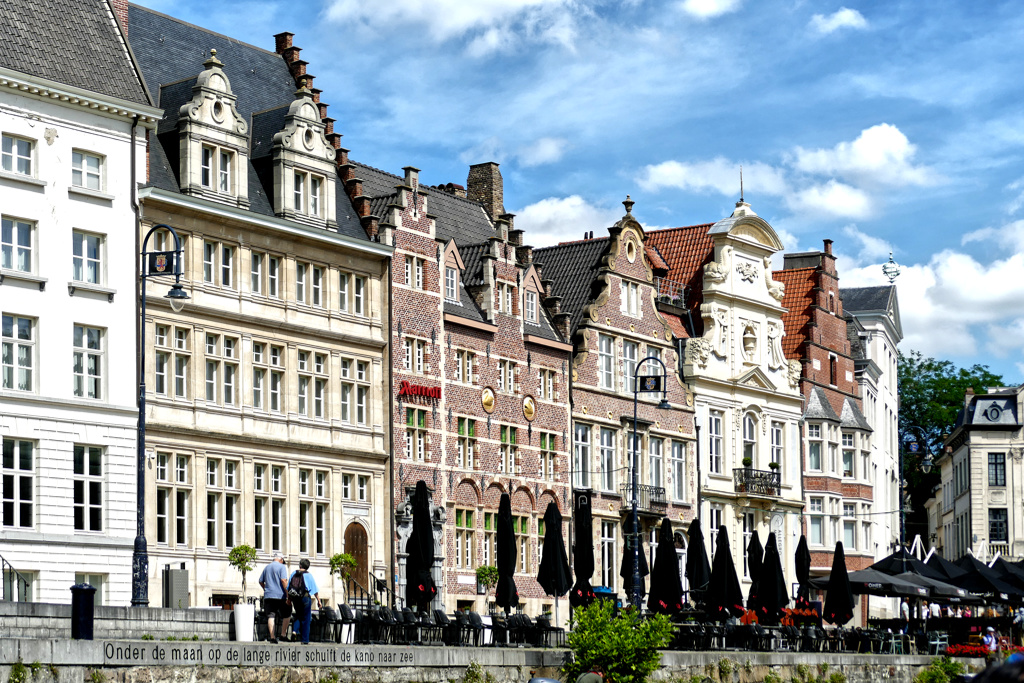
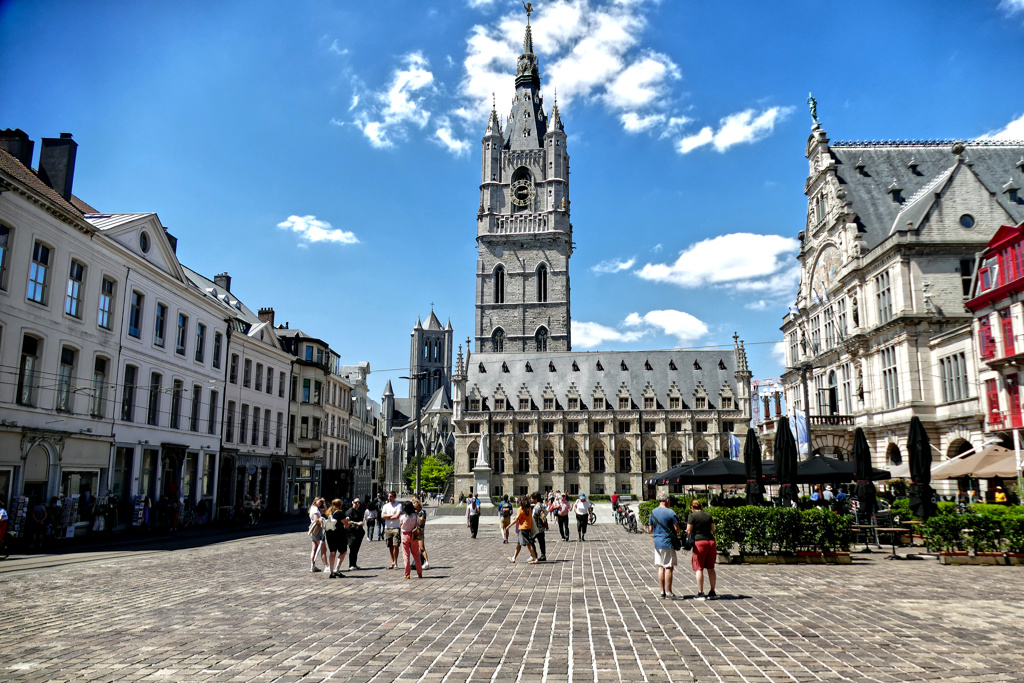
Antwerp, Bruges, and Ghent – these former Flemish economic powerhouses have some of Europe’s most beautiful historic centers. They all boast medieval old towns with cobblestone-plastered alleys, large market squares, and majestic churches with iconic belfries. Mind you, in Belgium alone, UNESCO declared 33 of those towers World Heritage Sites.
But most importantly, there’s water. Rivers and canals divide Antwerp, Bruges, as well as Ghent. It was the water that made the cities accessible and facilitated trade’n’commerce. In fact, to this day, Antwerp has Europe’s second-largest industrial port after Rotterdam. However, the water also makes them very scenic, and a canal cruise, where you can see the cities from a completely different perspective, is an absolute must for any visit. Now add the fact that Belgium is so small that you never spend more than an hour on the train to visit those gems, and you’ll realize why it would be foolish to miss out on some unforgettable day trips.
So you’re looking for a city that’s as trendy as Amsterdam, but without the crowds? A place bursting with Flemish architecture and history like Brussels, but without the fast pace? And one with the creative energy and outstanding design of Copenhagen, but without the price tag? Don’t look any further, as Antwerp unites all those strong suits and still keeps a very laid-back vibe.
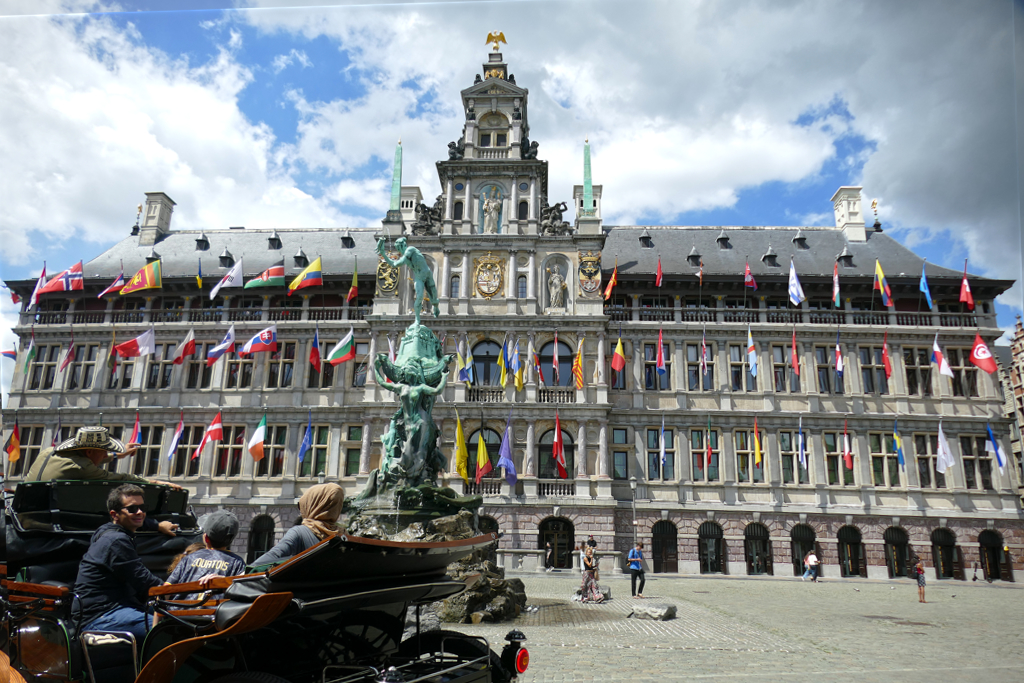
It is Belgium’s largest city and home to Europe’s second-largest port. Culturally, it is famed for its historic old town and its vigorous arts and fashion scene. Last but not least, Antwerp has been a global center for the diamond trade for centuries.
Particularly due to its location on the Scheldt River, Antwerp developed into a major trading city during the Middle Ages. As early as the 12th and 13th centuries, the city attracted merchants from all over Europe.
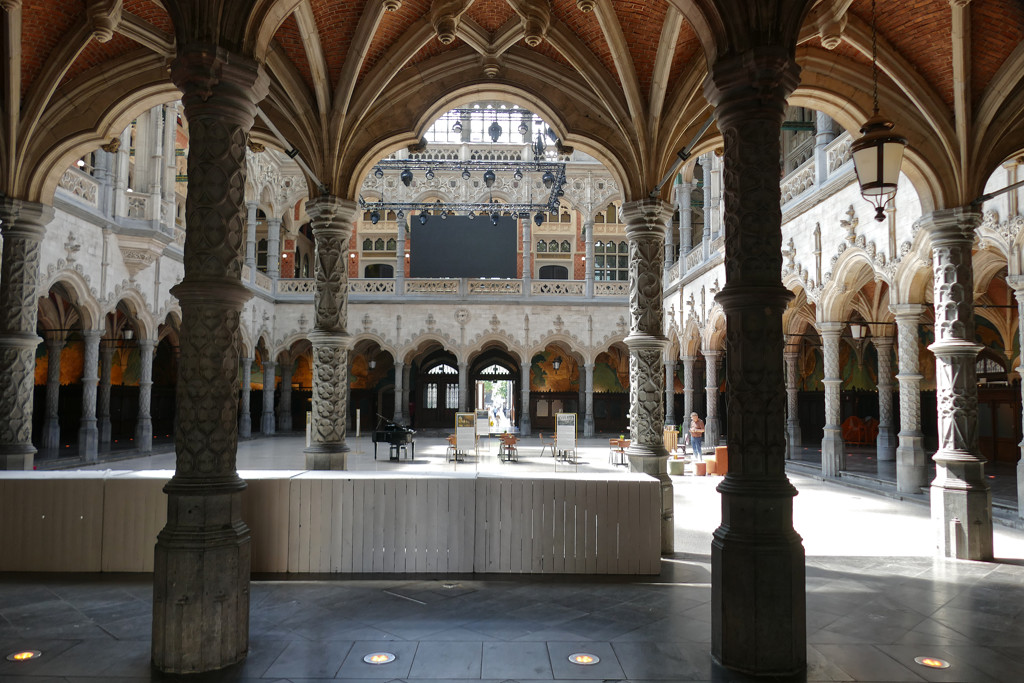
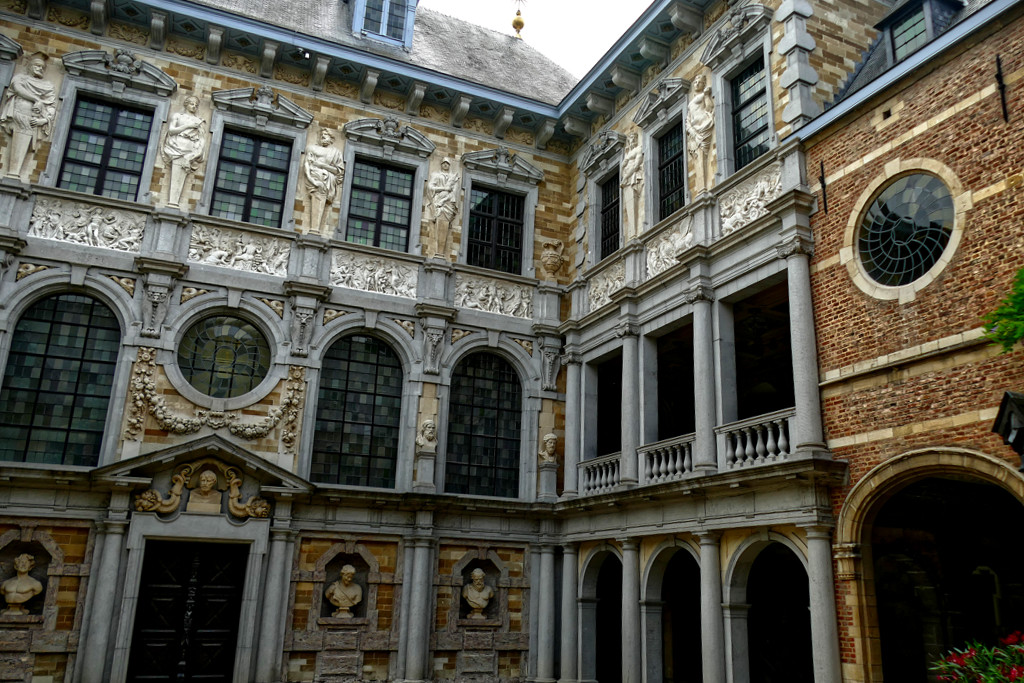
Then, in the 16th century, Antwerp experienced its greatest period of prosperity. The city became one of the most important trading and financial centers in Europe. Spices, fabrics, precious metals, and other goods were traded here. This prosperity enabled rapid development into a center for art, printing, and science. Famous artists such as Peter Paul Rubens shaped the city’s cultural life.
However, this golden age came to an end in the late 16th century. During the Eighty Years’ War between the Netherlands and Spain, Spanish troops besieged Antwerp in 1585. Many Protestant merchants and craftsmen fled the city. Also, with the blocking of the Scheldt, Antwerp lost a large part of its trade.
It wasn’t until the 19th century that the city began its economic recovery. After Belgium gained independence from the Kingdom of the Netherlands, the port was expanded. Over time, it developed into the second-largest seaport in Europe.
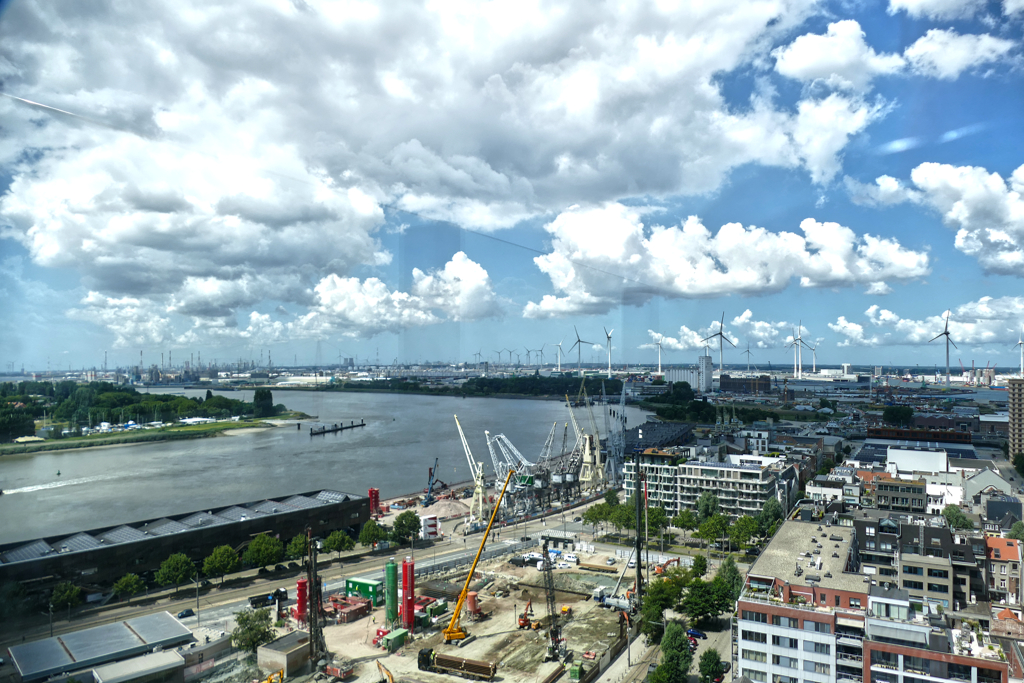
Thanks in no small part to this port, Antwerp has always been a hub of European emigration. That is one reason why the city boasts such an impressively international atmosphere today. Obviously, this also contributed to the development of the significant Orthodox Jewish community. Antwerp is called Jerusalem of the North for a very obvious reason.
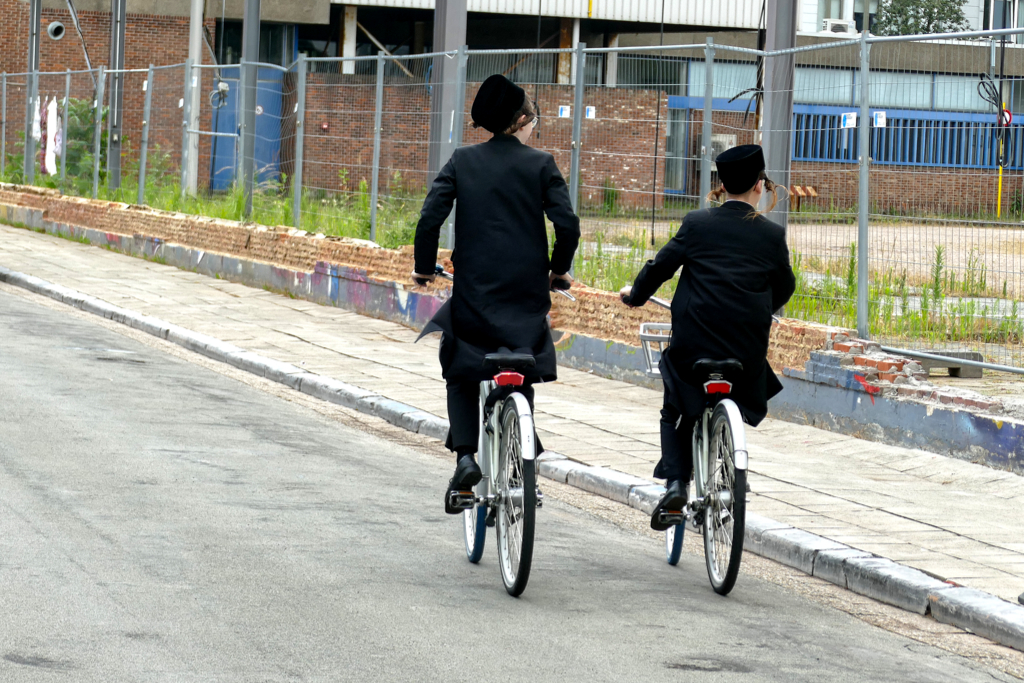
Thanks to its advantageous location and well-organized trade structures, the city developed into a major hub for the diamond trade already in the 15th century. It remains one of the most important international epicenters for high-quality diamonds to this day. Alongside its medieval center, there is a vast array of very diverse museums. And if museum-going isn’t really your thing, you can enjoy monumental murals adorning Antwerp’s walls just by strolling through its streets and alleys.
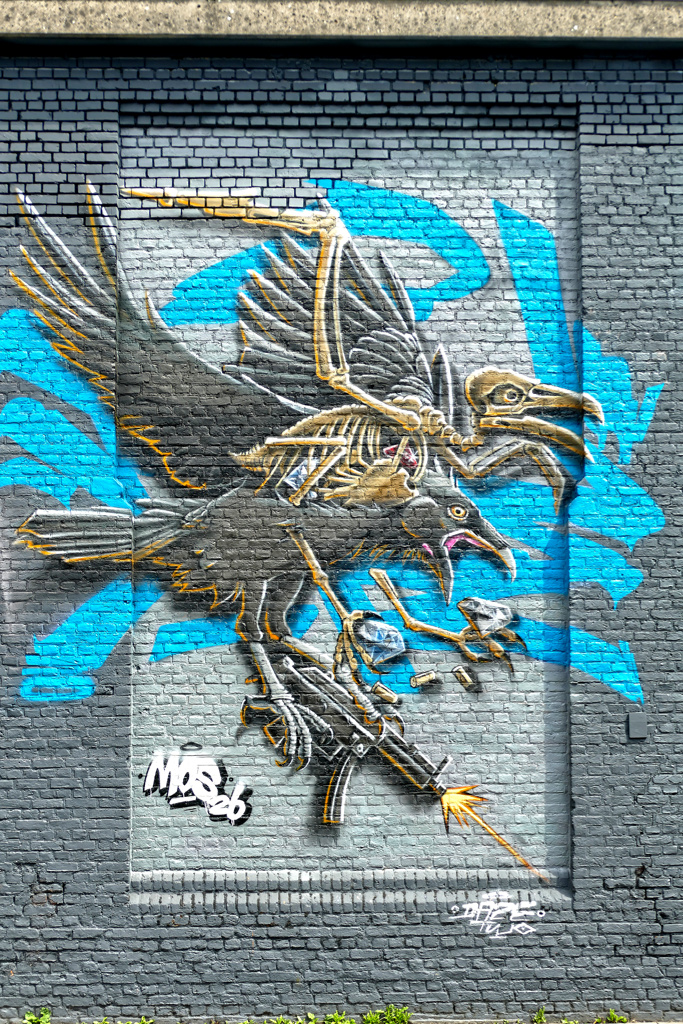
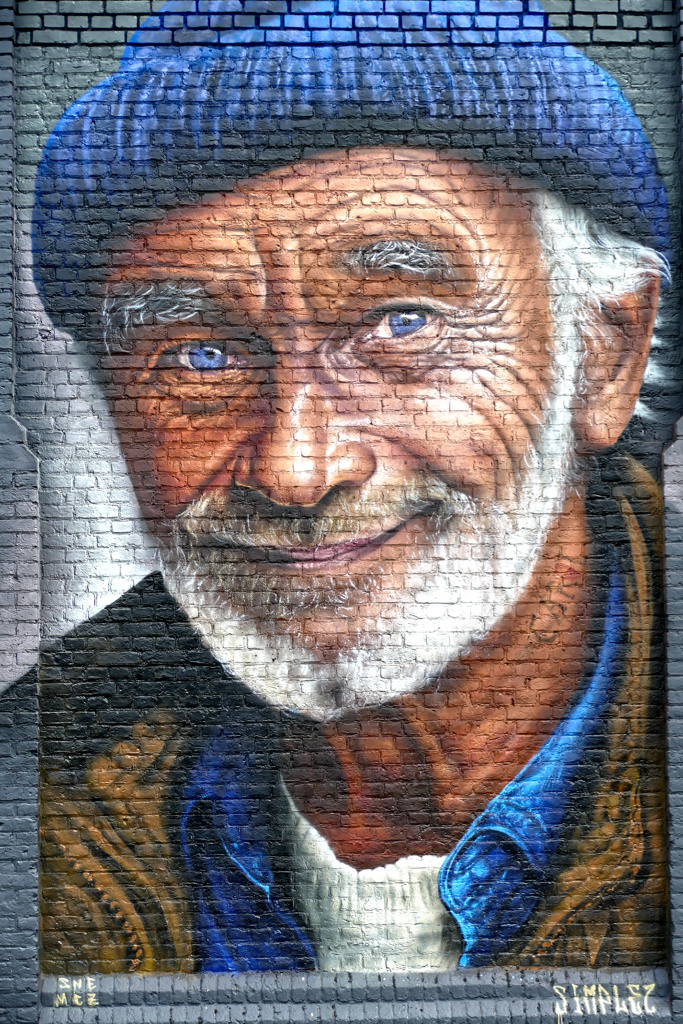
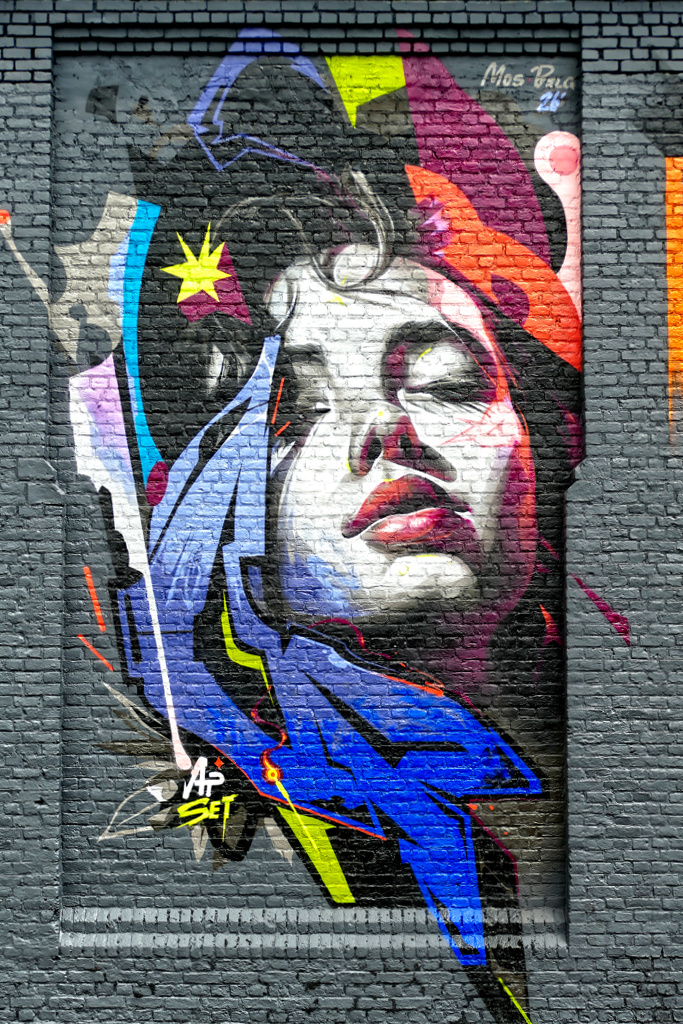
Let me tell you, this bustling metropolis has something for everyone!
Once in Antwerp, you need to
- admire the Rubens paintings and the outstanding contemporary art in the Cathedral of Our Lady
- learn all about diamonds at the DIVA Museum
- trace the emigration via Antwerp’s port at the Red Star Line Museum
- look out over the city from the roof of the Museum aan de Stroom
- pass under the Scheldt through the Sint-Annatunnel
- let the Nottebohm Room at the Hendrik Conscience Heritage Library blow you away
- enjoy the unbridled street art at the Zomerfabriek
Believe it or not, there is still more to explore – as you can read in my post.
Bruges is without a doubt one of Europe’s most captivating cities, and due to its central location, it is easily accessible from many spots in Belgium and the Netherlands. This makes Bruges an ideal day trip destination. With its picturesque canals and romantic bridges, idyllic alleys and squares, magnificent historic townhouses, and the impressive Grote Markt Square, you might think you have stumbled into a medieval knight’s tale.
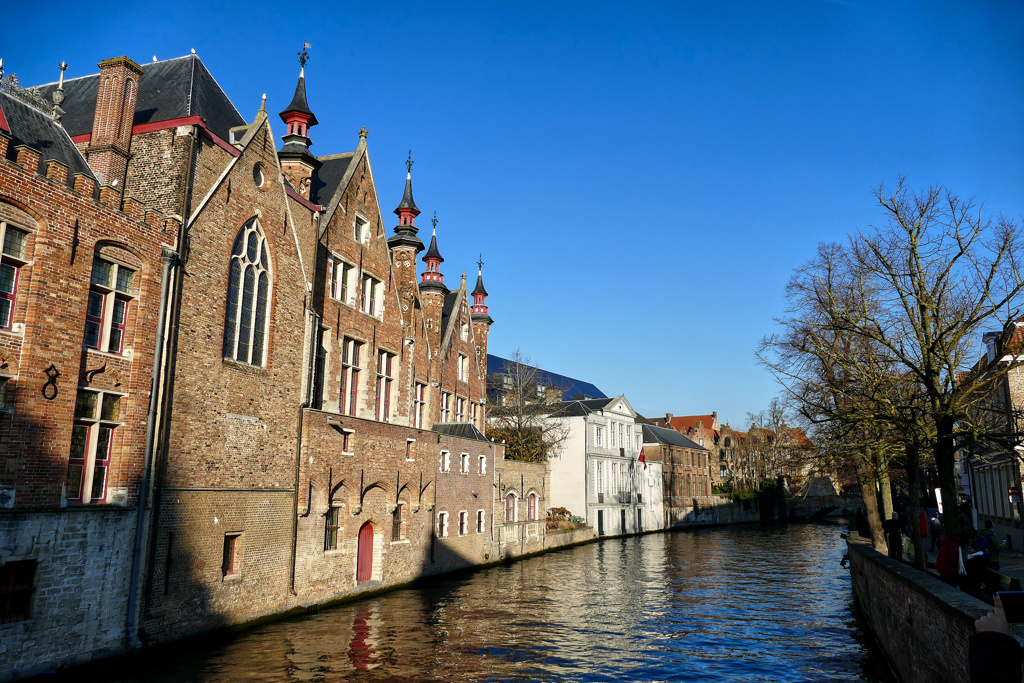
Bruges’ history dates back to the early Middle Ages. The city developed along the Reie River and, through its connection to the North Sea, participated early on in international trade. In the 12th and 13th centuries, Bruges became a major trading center for textiles, wool, spices, and other goods.
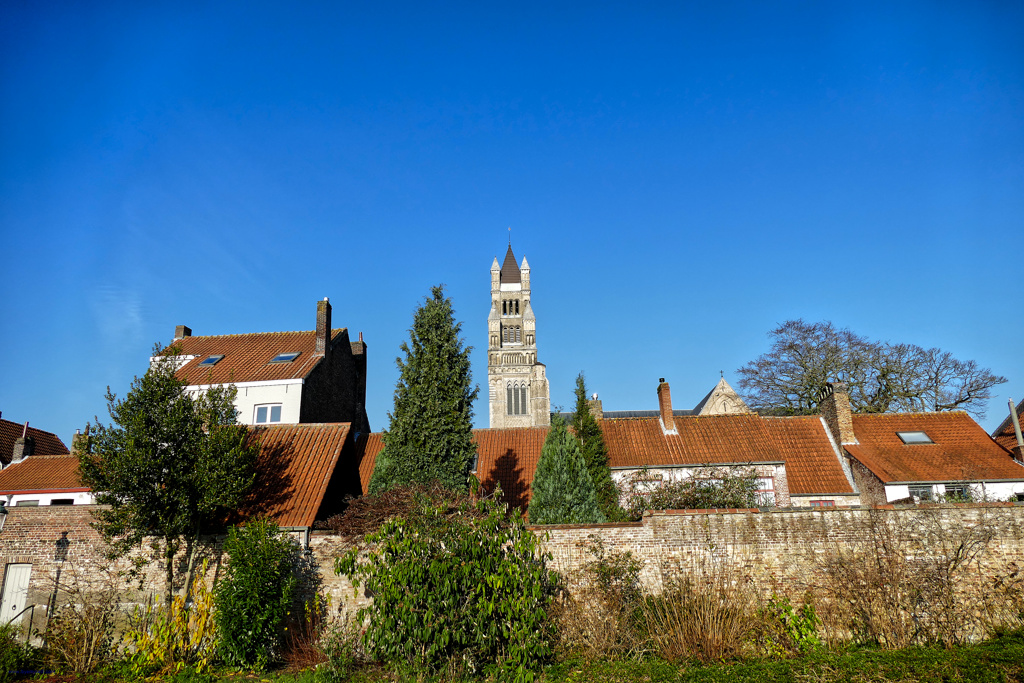
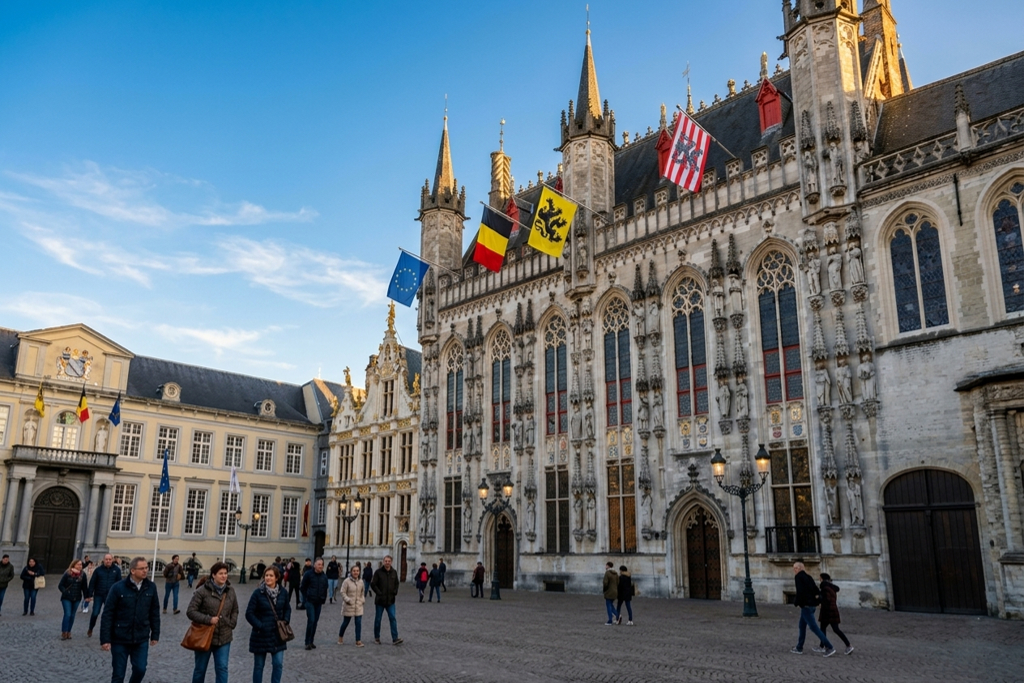
Yet it reached its zenith primarily in the 13th and 14th centuries, when the city was a center of international trade and finance. This led to the construction of numerous impressive buildings, churches, and townhouses that you can admire to this day.
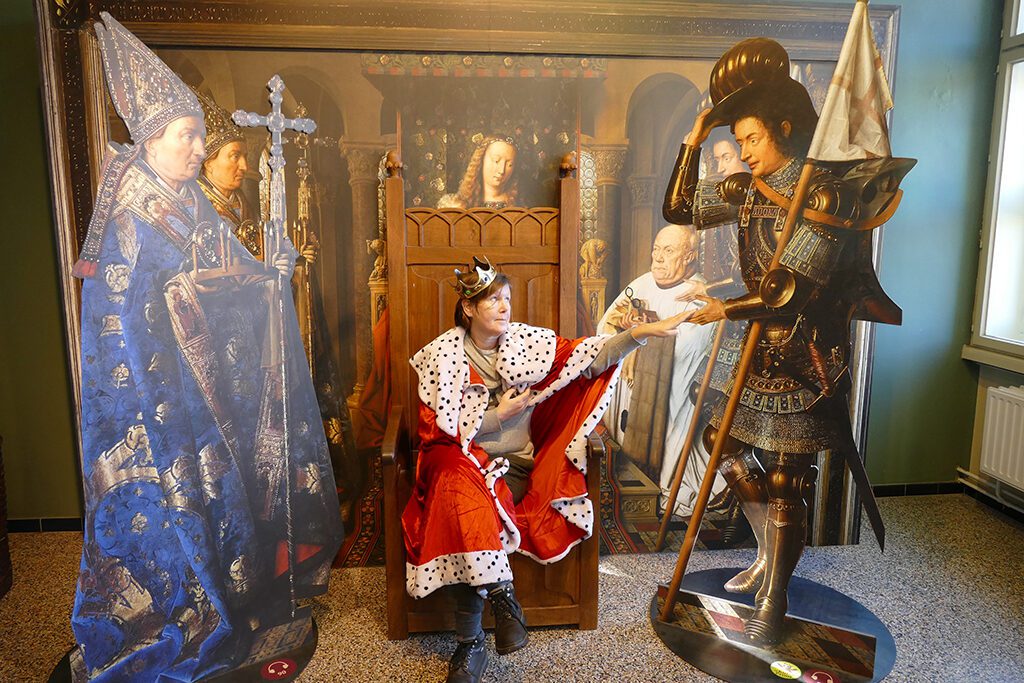
Flemish painting also experienced significant development. Artists such as Jan van Eyck and Hans Memling worked in Bruges and contributed to the city’s cultural standing.
From the 15th century onward, Bruges gradually lost its economic importance. The connection to the North Sea increasingly silted up, while Antwerp gained prominence as a trading center. Bruges became economically marginalized and remained comparatively insignificant for centuries. This very development, however, contributed to the preservation of large parts of the medieval city structure and historic buildings.
In the 19th and early 20th centuries, visitors increasingly discovered Bruges as a romantic destination, so that today the city rather suffers from übertourism. Nevertheless, its historic center has been a UNESCO World Heritage Site since 2000 – very justly so.
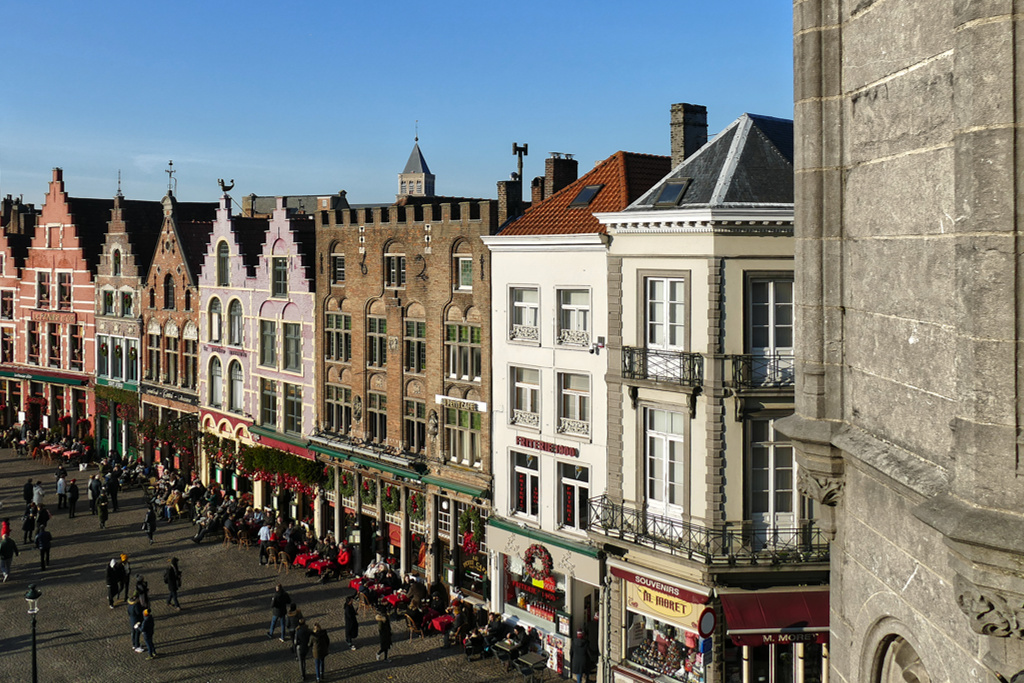
It’s only half an hour from Brussels to Bruges, and trains are frequent and reliable. But that is certainly only one reason why Bruges is one of the most popular places for a day trip. Like many other merchant cities, Bruges had to trade for tourism, and its 120,000 inhabitants currently welcome over 8 million visitors per year. Yes, that’s the price for having one of Europe’s most beautiful and best-preserved historic old towns. Neither wars nor other powers destroyed Bruges. Therefore, the medieval cityscape and historic buildings are very well preserved. In addition, there are dozens of fascinating museums and landmarks to visit.
Once in Bruges, you need to
- take a canal cruise
- travel back to Bruges’ past at the Historium
- climb the 366 steps of the Belfry to get the best panoramic view
- admire the architecture’n’art at the Sint-Janshospitaal
- feel a shiver run down your spine at the Basilica of the Holy Blood
- learn how the wealthy elite shared their riches at the iconic Godshuizen
- visit one of the unusual museums dedicated to chocolate, fries, or beer
But there is much more to explore – as you can read in my post.
Few cities blend centuries of rich heritage into modern urban life as effortlessly as Ghent. Massive medieval structures, picturesque canals, and centuries-old guildhalls form one of Belgium’s most atmospheric historic centers. Yet, behind its magnificent facades, Ghent is a vibrant university city boasting a truly unique energy. Less crowded than Bruges and far more laid-back than Brussels, it strikes the perfect balance between tradition and modernity.
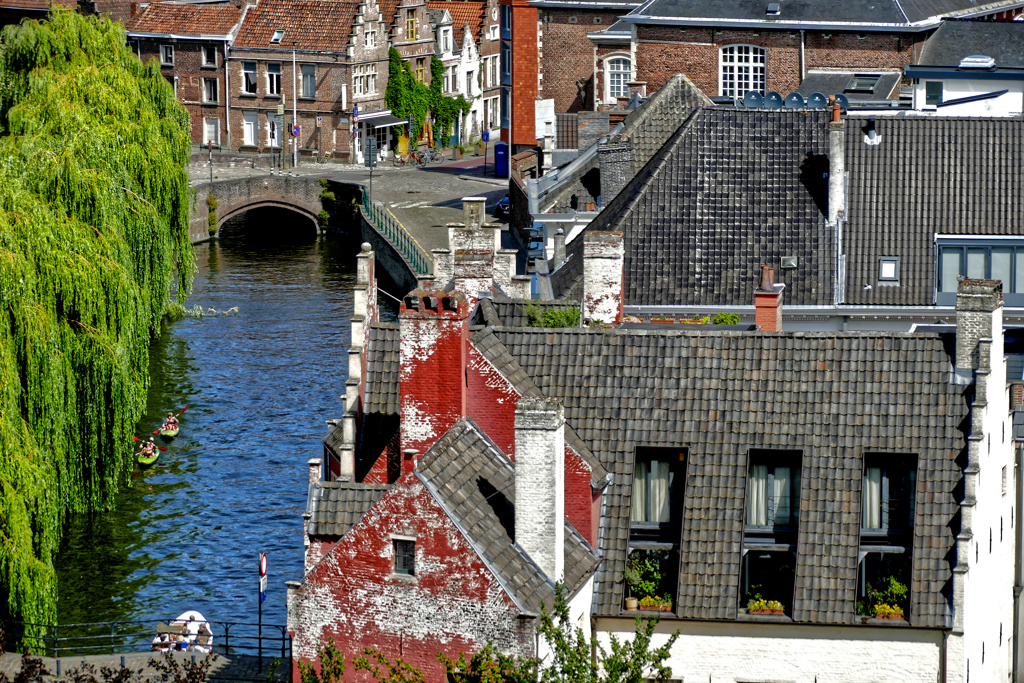
Ghent is only about 50 kilometers from Antwerp, Bruges, as well as Brussels. Therefore, it’s also an ideal base for exploring other iconic cities in Belgium. However, make sure to plan enough time for Ghent since I’d argue that it is just as picturesque as Bruges, although thankfully it hasn’t suffered nearly as much from the current übertourism as its smaller sister to the west. Furthermore, despite its impressive historical architecture, Ghent has retained the welcoming atmosphere of a modern metropolis. So whether you stroll through Ghent’s cobblestone streets, take in the views from dizzying towers, explore museums, or relax on waterfront terraces, the city reveals a different side at every turn.
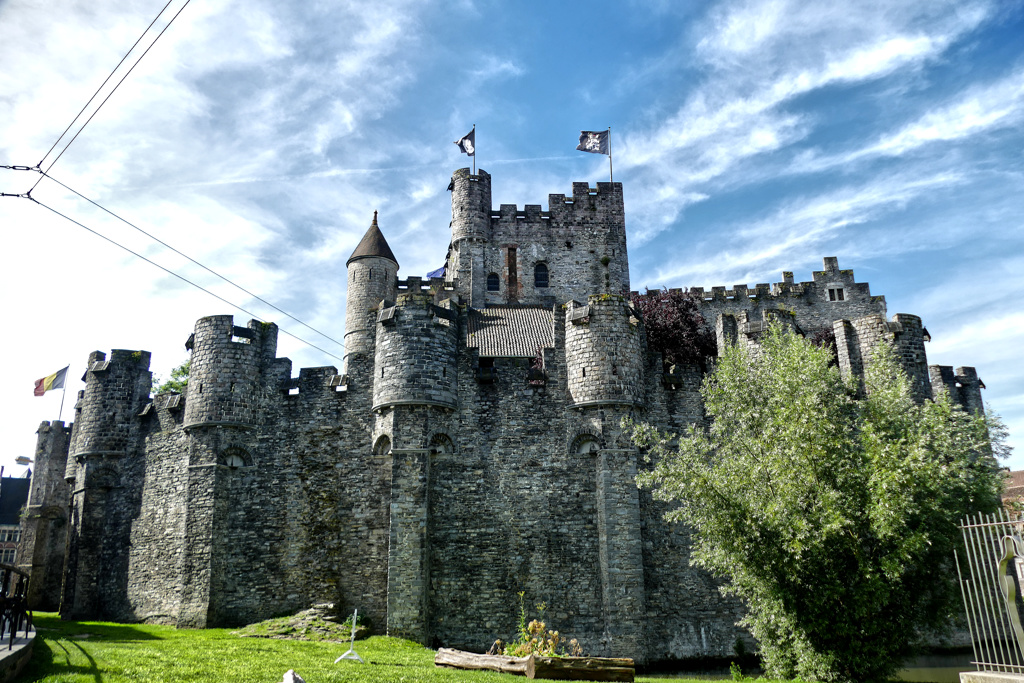
Ghent originated in the early Middle Ages at the confluence of the Scheldt and Leie rivers. In 630, St. Peter’s Abbey was founded there, around which the first settlement developed. Nothing remains above ground of the very first wooden or early medieval structures of the abbey; the complex was destroyed and rebuilt several times over the centuries in the Baroque style.
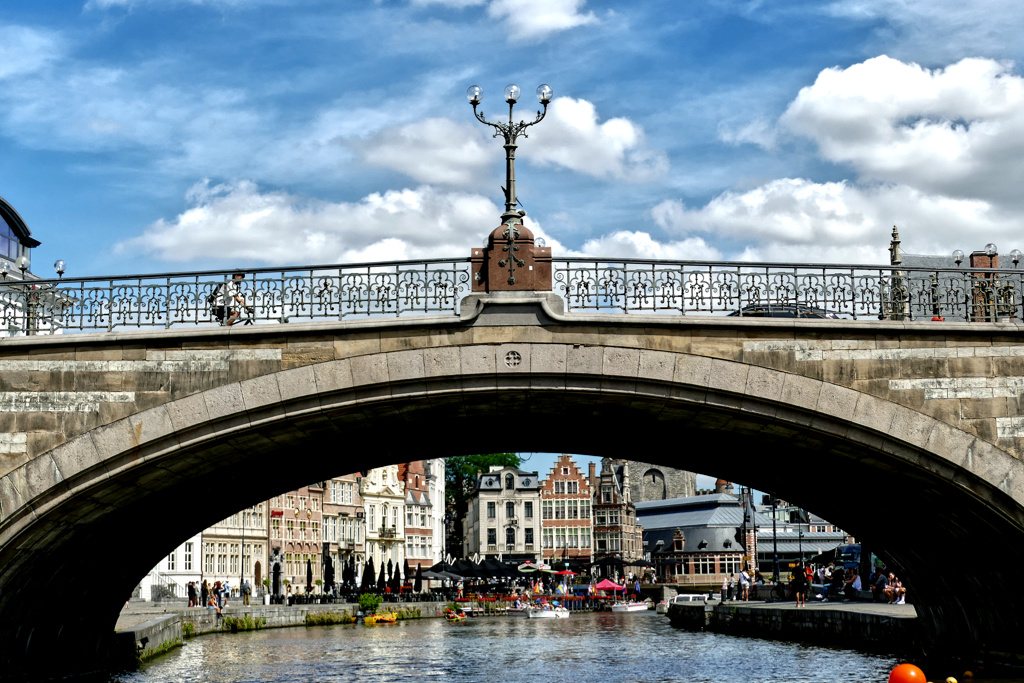
During the Middle Ages, Ghent grew into a significant trading and cloth-making city. The processing and trade of wool, in particular, brought the city great wealth. It was one of the most important cities in Europe. Its wealthy citizenry and craft guilds wielded considerable political influence. In the 13th and 14th centuries, an estimated 65,000 people lived there. According to historical estimates, this made Ghent the second-largest city north of the Alps after Paris, and even larger than London!
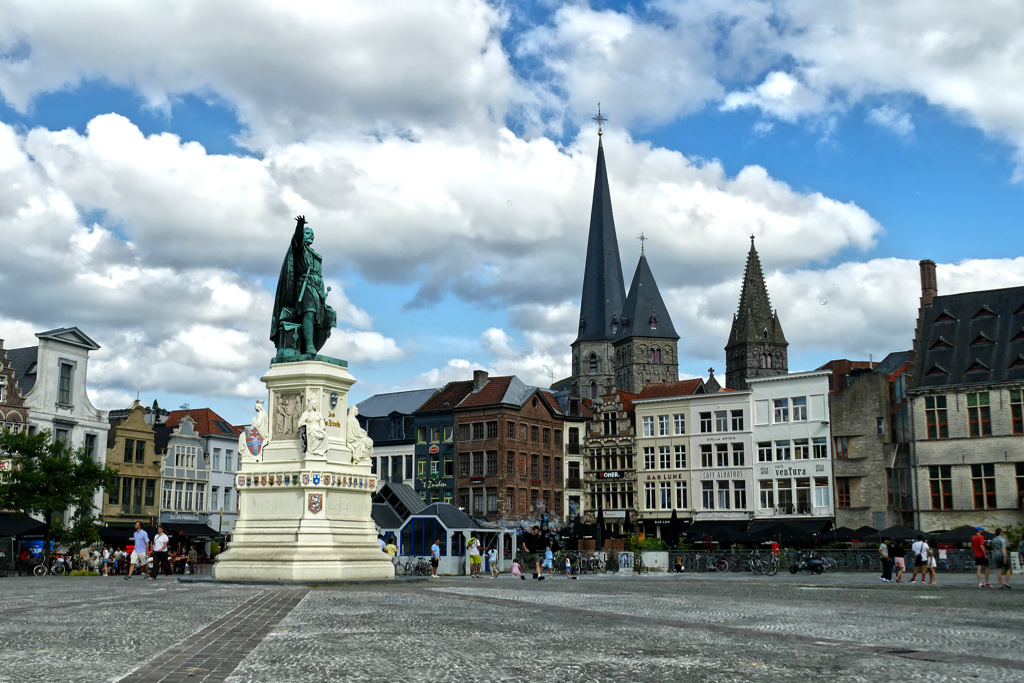
And quite honestly, if you stroll through the city center with your eyes open on a city break, you’ll still see and feel Ghent’s importance at every turn.
Once in Ghent, you need to
- take a boat trip on the Leie and Lieve rivers
- travel back into Ghent’s past at Gravensteen, the Castle of the Counts
- look out over the city from the top of the Belfry
- admire the world-famous Altarpiece Adoration of the Mystic Lamb by Jan and Hubert van Eyck
- walk in the footsteps of Ghent’s wealthy merchants along the Korenlei, Graslei, and Kraanlei quays
- visit the SMAK, one of Belgium’s boldest contemporary art museums
- eat a generous portion of the best fries of your life at the Frituur Tartaar
But there is much more to explore – as you can read in my post.
Practical Information
How to Get There and Around
When in Belgium, quick city breaks are easy to squeeze in. Not only because of the country’s moderate size but mainly due to its excellent system of public transportation. There are trains going crisscross the country. Also, the tickets are very reasonably priced. You can get practically everywhere for about 10 €uros. SNCB, the national train company, has a very comprehensive website. It comes in four languages and is really easy to navigate. You’ll find all the price info and schedules you need there.
My Tip
Antwerp and Ghent have two train stations each: Antwerpen-Centraal and Antwerpen-Berchem, respectively Ghent-Sint-Pieters and Ghent-Dampoort. Especially if you spend the night in these cities, it might be worth checking which one is closer to your accommodation and if your train stops there as well.
The city centers and even the immediate quarters can easily be visited by walking. Obviously, you can also rent a bike and cycle from landmark to landmark. I have to admit, though, that in cities with trams such as Antwerp and Ghent, I’m always terrified of getting caught in the tracks and falling flat on my face. Anyway, lots and lots of other cyclists manage it without incident, so just ignore me.
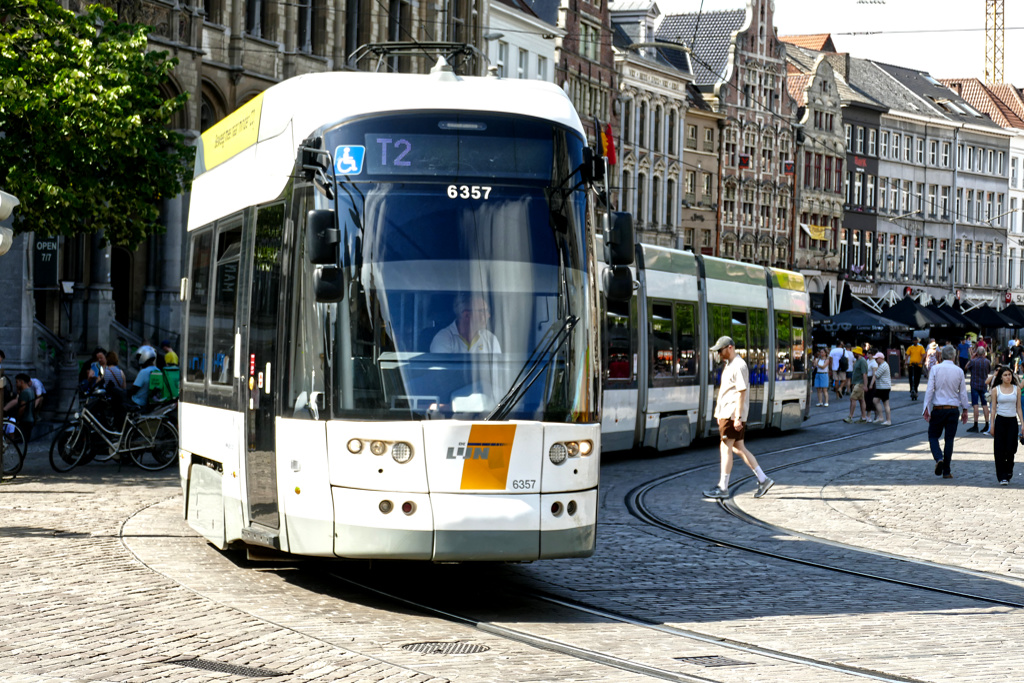
However, the cities have very comprehensive networks of public transportation. Quickly, yes, but not exactly cheaply. A single journey costs 3 €uro and is valid for 60 minutes, including transfers. Note that there is no automatic fare cap. If you plan on taking several trips during your stay, you can save money with a 10-trip ticket for 22 €uro. Various passengers can even share this ticket. Alternatively, a day ticket is a good option at 9 €uro, which is valid for 24 hours from the time of first activation on all De Lijn vehicles throughout Flanders. The same applies to the 3-day ticket, which costs 18 €uro.
In general, contactless payment is the most convenient way to buy a ticket. Simply hold your bank card, smartphone, or smartwatch in front of the white reader on board the vehicle. Please keep in mind that you must check in with a physical ticket or a digital scan when boarding – regardless of whether it’s a single ticket, a multi-journey ticket, or a day pass.
Where to Stay
Antwerp, Bruges, and Ghent are undoubtedly among Europe’s best destinations for a day trip. However, this very fact leads to an influx of day-trippers that sometimes detracts from the cities’ charm, especially on weekends and during peak season. You can easily counter this by staying overnight. This lets you soak up the cities’ magic after the day-trippers leave in the evening and again early in the morning, before the tourist hordes arrive. Therefore, take into consideration to spend the night and use this map to choose from a wide range of accommodation options that best suit your needs and budget*:
What to Eat
Not only do Belgians fry potatoes. Basically, everything that accompanies these famous frites is deep-fried. There are many frying houses claiming to be the best. There’s actually no other way than trying out yourself at which of thosefrituur or frietkot you like the grease best. Mind you, Belgian fries are a culinary institution in their own right and are traditionally served with a wide array of sauces.
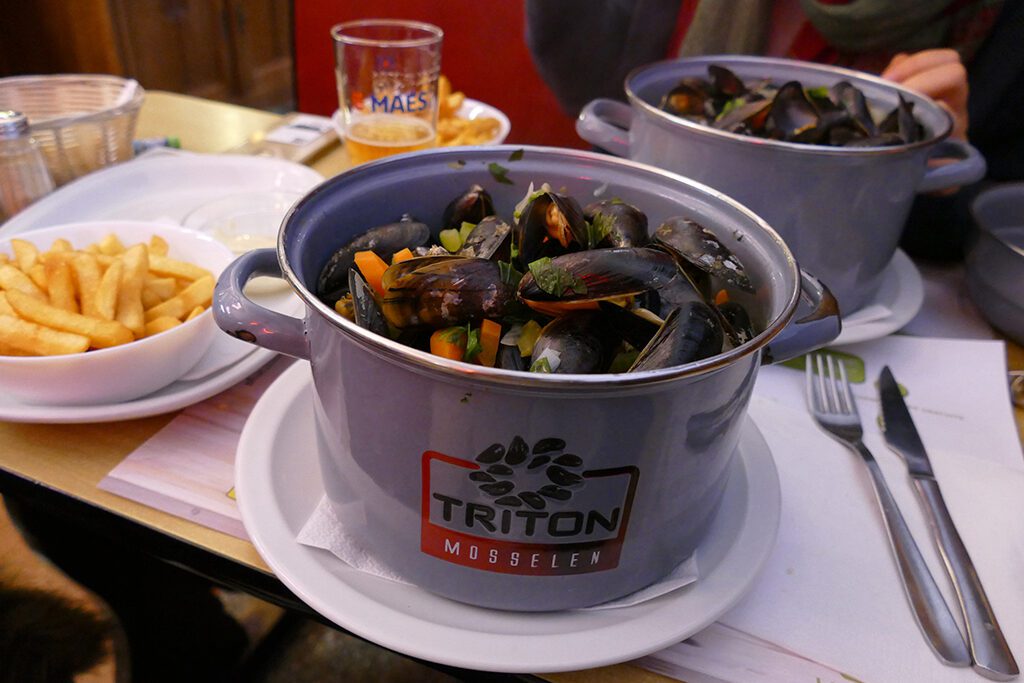
This being said, Flanders’ cuisine is as diverse as its inhabitants. Alongside classic Flemish cookery, the food scene is shaped by international influences, fine dining, and a vibrant café culture. Visitors should therefore sample both traditional specialties and modern interpretations. Among the best-known dishes are stoofvlees, a slow-cooked beef stew made with dark Belgian beer, and vol-au-vent, a puff pastry case filled with chicken fricassée. Moules-frites, hence, mussels with fries, are another staple.
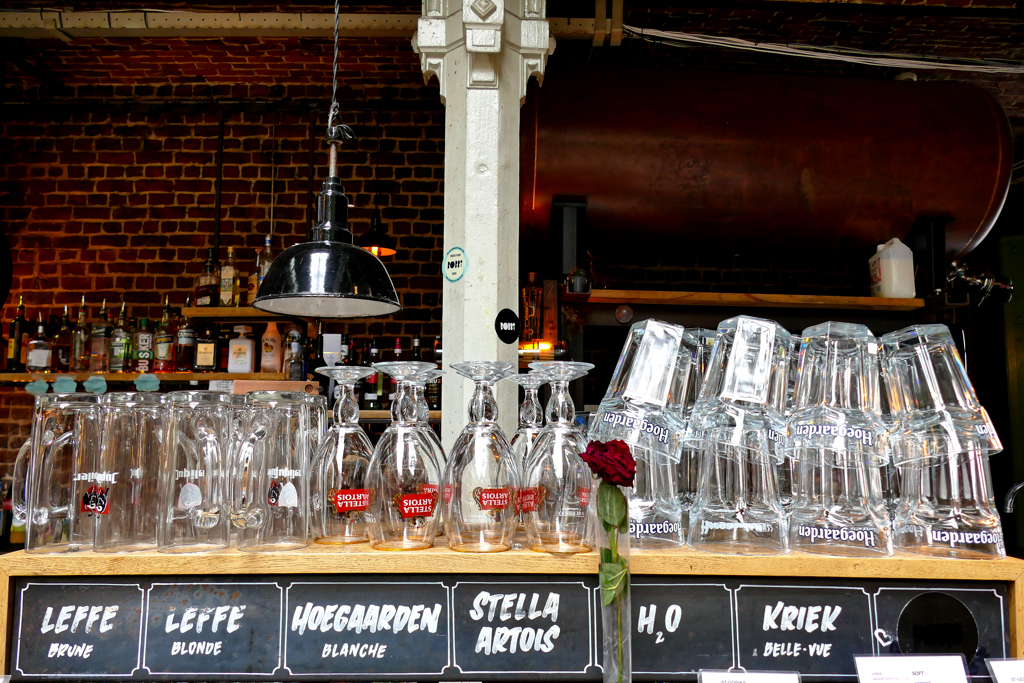
Obviously, you need to wash your meal down with Belgian beer. In one of Europe’s smallest countries are approximately 280 breweries that offer more than 1,000 different brews. Amazingly, many of them come with specially designed glasses. These are great for collectors and also a wonderful souvenir!
Visiting Organized
I’m an avid solo-travelling woman. Since solo travel doesn’t equal solitude, I love to join organized tours here and there. They allow me to meet fellow travellers – for just a short moment or a lifelong friendship.
Therefore, here are some great ideas of what to do during your stay in Belgium. Especially if you have only a short time to stay, they’ll enable you to make the best of it*:
Cash, Cards, And Deals
In May 1998, the heads of the member states of the European Union agreed – nota bene in Belgium’s capital, Brussels, on the implementation of the €uro.
Until now, 21 European countries have replaced their former local currency with the €uro starting in 2002. Obviously, Belgium is one of them. The exchange rate is 1 US$ = 0.84 EUR as of September 2026. However, you can check today’s conversion rate on this page.
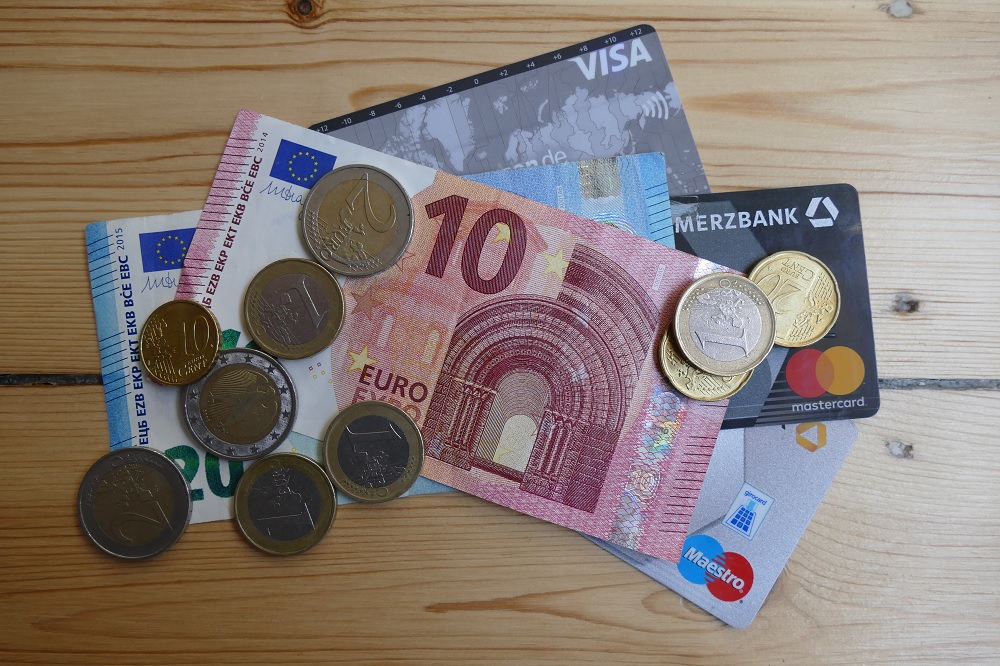
Credit cards and contactless payments are widely accepted. However, there are not as many ATMs as in other European countries, so sometimes the queues can be pretty long.
The three cities have a lot to offer, and entrance fees aren’t exactly cheap. As costs can quickly add up, you should get the respective city passes to save at least some money.
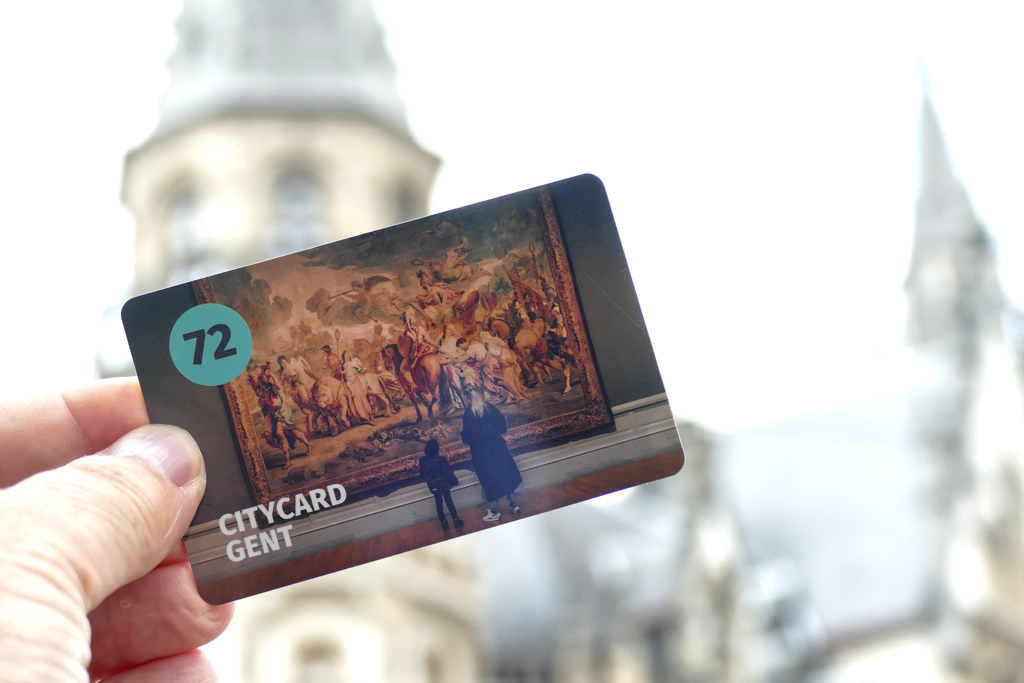
Antwerp’s and Bruges’ city cards can be obtained for 24, 48, and 72 hours, while for Ghent, you can choose between 48 and 72 hours. While the city pass in Bruges does not include free use of public transport, the cards in Antwerp and Ghent do, which is a significant saving factor considering the high fares. In my comprehensive guides to Antwerp, Bruges, and Ghent, I’m explaining these city cards in detail – along with many other well-researched information that will make your trip smoother and therefore more fun.
However, before you obtain any of these city passes, keep in mind that museums in Belgium offer age-based discounts. These are not tied to EU citizenship or residency. Adults under 26 often pay half price, and entry is even free for those under 18.
Languages
I always find it fascinating that some of the smallest European countries have several official languages. Switzerland leads the way with four, but Luxembourg and Belgium each boast three. Belgium’s three official languages, Dutch, French, and German, are the result of two historical events. First, there was a centuries-old ethnic border. Second, a border shift occurred after the First World War.
The French-speaking population in the south of the country, comprising about 39 percent of the population, arose because Wallonia had been under the influence of France and Roman culture for centuries. When Belgium seceded from the Netherlands in 1830, it was the French-speaking elite who led the revolution and established French as the official language of the state and the upper class. The 60 percent of the population in the north, however, retained their own language. The small German-speaking group in the east, which makes up just under one percent of the population, only became part of Belgium over a century later, in 1919, through the Treaty of Versailles. This treaty granted Belgian citizenship to the German minority virtually overnight.
On top of that, most Belgians also speak English quite well.
Since it’s always nice to be able to say at least a few polite things in the local language, you could learn some Dutch words online with Babbel. The first lesson, which already covers all the greetings and expressions of thanks, is even free. However, you’ll also find French and German courses there.
Connection and Communication
Since June 2017, travelers with a mobile contract from an EU country have been able to use their phones in Belgium without incurring additional roaming charges. This rule applies throughout the European Union, as well as in Iceland, Liechtenstein, and Norway. After Brexit, providers continue to offer EU roaming, though this now depends on the specific contract rather than statutory regulations.
If EU roaming is not available, finding Wi-Fi is rarely an issue. Most hotels, museums, cafés, restaurants, shopping centers, and many public spaces offer free Wi-Fi, making it easy to stay online during your visit.
For visitors from outside Europe, purchasing a prepaid SIM card is easy. Belgium’s three national mobile network operators are Proximus, Orange Belgium, and BASE. All providers offer prepaid SIM cards with generous data allowances and nationwide 4G coverage, as well as expanding 5G coverage. These SIM cards are available at provider stores, electronics retailers, supermarkets, and Brussels Airport. Prices and data allowances change frequently, but most prepaid packages aimed at tourists cost between 10 and 25 €uro and provide enough data for a typical city break.
An even more convenient option is an eSIM, provided your smartphone supports it. Providers such as Airalo, Holafly, Nomad, and Saily offer data plans for Belgium and Europe that you can purchase and activate online before your trip. Prices generally start at around 5 USD for 1 GB, with larger packages and unlimited data plans available for longer stays. For travelers visiting multiple European countries, a regional Europe eSIM is often the most cost-effective choice.
The standard voltage in Europe is 220 V and the frequency is 50 Hz. In Belgium, they are using plug types C and E.
Whereby, since nowadays, all these chargers have integrated adapters, in general, the voltage and frequency don’t really matter. However, if you are looking for more comprehensive travel info, you’ll find everything you need in my post World’s Most Complete Travel Information– an indispensable globetrotter-classic.
Pinnable Pictures
If you choose to pin this post for later, please use one of these pictures:
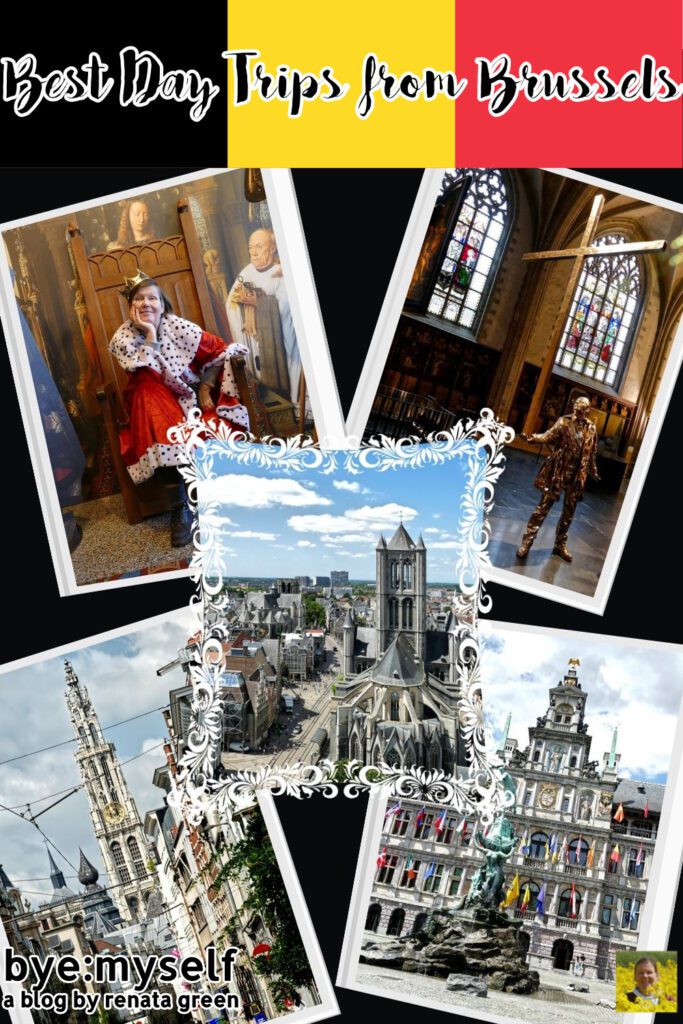
Note: I’m completing, editing, and updating this post regularly – last in September 2026.
Did You Enjoy This Post? Then You Might Also Like These:
Disclaimer: I obviously appreciate that visitGent as well as visitAntwerpen supported my blogger trip by supplying me with the respective City Cards. However, all opinions on these services are mine and weren’t by any means influenced by my cooperation partners.
*This is an affiliate link, so if you book through this page, not only do you get the best deal. I also get a small commission that helps me run this blog. Thank you so much for supporting me!