The Seychelles: A Great Post-Safari Stop
After days of early wake-up calls and exhilarating safari activities, the idea of beach relaxation is a natural draw for travelers. The Seychelles is our answer, and it’s not just a beach. It’s sea turtles, land tortoises, birds you won’t see anywhere else, and some of the most active conservation work in the Indian Ocean.

Wildlife in the Seychelles
This is the part most people don’t expect: the traditional safari ends, but the wildlife doesn’t have to. It’s a different kind of wildlife encounter than a safari drive, but it’s still wildlife, and it’s still real. Here are a few reasons the Seychelles works so well as your next stop.
Giant Tortoises Call the Islands Home

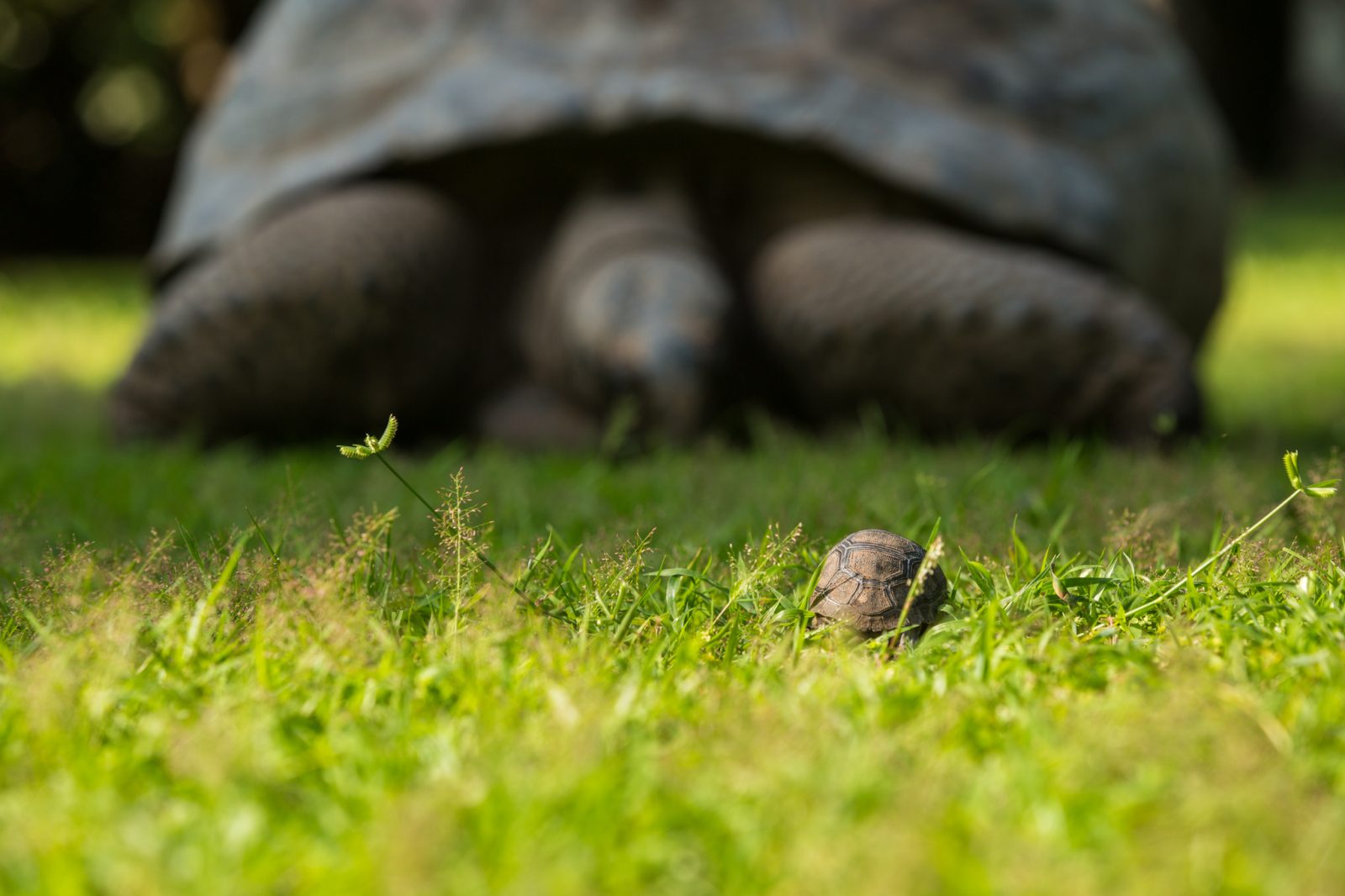
Giant land tortoises turn up across the Seychelles in a way that surprises a lot of first-time visitors. Take a day trip to Curieuse Island to see a large colony of Aldabra giant tortoises roaming freely. North Island has a free-roaming population of its own, including Brutus, estimated at nearly 200 years old – and arguably the island’s most popular resident. A visit usually means walking among these tortoises rather than watching from a distance. None of it is staged for visitors: the tortoises were here well before the resorts, and the conservation ethos that protects them runs deep.
Cousin Island: For Birders

Although beautiful white sand beaches surround much of the island, Cousin Island isn’t a typical beach stop. It’s a working nature reserve, and on your day visit, island conservation specialists introduce you to the wildlife that calls the island home. Five endemic Seychelles land bird species live here: the Seychelles warbler (brought back from near extinction on this island), Seychelles magpie-robin, the sunbird, the fody, and the Seychelles blue pigeon. Overhead, nesting seabirds are everywhere you look. Thousands of white terns nest in the trees, white-tailed tropicbirds nest in tree holes and on the ground, and during the southeast monsoon season (June through August), up to 80,000 pairs of lesser noddies descend on the island to breed. Your warden guide will share the story of how a forgotten coconut plantation became one of the Seychelles’ greatest conservation achievements.
Note: Hawksbill turtles also nest and hatch here from roughly August to March, and giant tortoises and lizards round out the wildlife on this 70-acre island.
Vallee de Mai: For Nature Enthusiasts

Going into this tour, I wasn’t sure what to expect Vallee de Mai and was delighted that it turned out to be one of the most interesting spots on my trip!
At just 48 acres, Vallee de Mai on Praslin Island is one of the world’s smallest natural UNESCO World Heritage Sites, yet it contains the largest intact forest of the endemic Seychelles coco de mer palm tree. The coco de mer is a source of pride for Seychellois: its seed is the largest in the plant kingdom, and it grows naturally only in the Seychelles, and only on Praslin and Curieuse Islands. Your private guide will walk you through the reserve’s endemic plants, birds, and reptiles. You’ll likely see geckos, sunbirds, and blue pigeons, and if you keep an eye out, maybe the rare Seychelles black parrot, the national bird. The reserve’s trails range from 1 to 2.5 miles, so the visit can be tailored to your pace and interest.
Islands and Beaches in the Seychelles
Part of what makes the Seychelles work well after a safari is the range of islands to choose from. No two are the same.
Granitic and Coralline Islands

The inner granitic islands, including Mahé, Praslin, La Digue, and Félicité, feature giant granite boulders stacked along the shore, sometimes built directly into a resort’s architecture. The outer coralline islands, including Desroches and Alphonse, are flatter and less inhabited, closer to the remote beaches people picture when they think of Indian Ocean islands. Wherever you land in the Seychelles, you won’t get it wrong: every island offers the same quiet reset after a safari, just a different backdrop for it.
Time in the Water

The water in the Seychelles is a beautiful, clear turquoise blue, unlike anything you’ve likely seen before. It’s warm and calm most of the year, making it easy to spend real time in it, not just look at it. Take advantage of the snorkeling for an underwater version of your safari, or book a fishing charter or an evening sundowner cruise.
Why the Seychelles Works After a Safari
The Seychelles offers great diversity of wildlife and landscapes. The thread running through all of it, from the tortoises to the sea turtles to the accommodations themselves, is that conservation is a normal part of how these islands operate. It’s not just a program added on for visitors. After the early mornings and packed days of a safari, that’s what makes the Seychelles work as a next stop: a few days with nothing scheduled, still shaped by the same commitment to place that drew you to the bush in the first place.