Home prices fall across the capitals as regions remain resilient

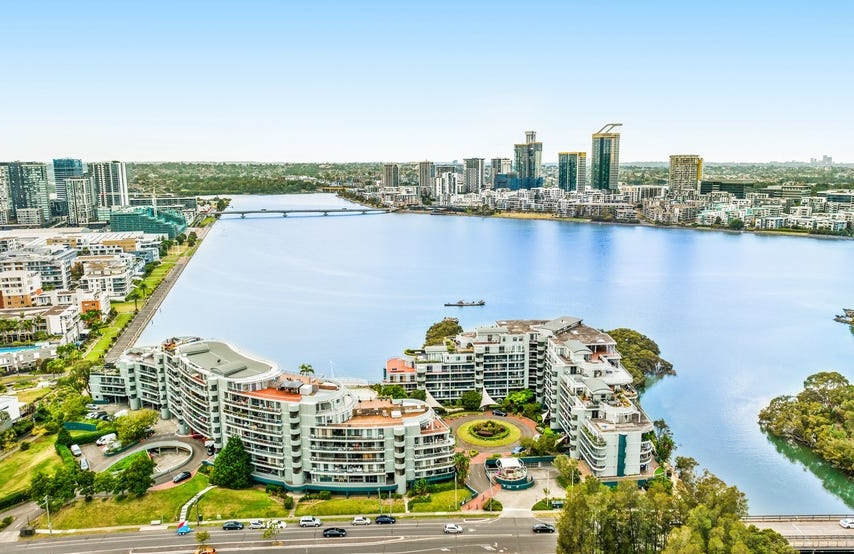
Australian home values have declined for a fourth straight month, but prices are holding up in pockets of affordability across the country.
The national median home price fell by 0.3% in July, according to the monthly PropTrack Home Price Index.
Prices fell in all the capitals except Darwin, with Sydney, Adelaide, Canberra and Hobart recording the largest falls, while prices stayed flat across most regional markets.
The decline in home prices follows three interest rate rises delivered in quick succession earlier this year, in addition to major tax changes targeting investors.
The changes introduced in the federal budget, which prohibit negative gearing for established homes and reduce the capital gains discount, were designed to disincentivise property investors from purchasing established properties.
But the new rules have exacerbated a property market downturn that had been brewing since the resurgence of Australia’s inflation problem late last year, which prompted the Reserve Bank to rapidly reverse all of last year’s rate cuts.

Melbourne home prices declined by 0.4% and are 4.4% below the peak recorded in October last year. Picture: realestate.com.au/sold
REA Group senior economist Anne Flaherty said high interest rates had constrained borrowing capacities and tax changes had dented investor demand, contributing to price weakness as buyers held back.
“Ongoing price falls could be driving some buyers to delay purchasing until prices stabilise,” she said.
Although there are expectations that interest rates will need to be raised again this year, homeowners may have been given at least a temporary reprieve from a rate hike next month.
A softer inflation result last week significantly reduced the odds of a hike at the RBA’s next interest rate decision on August 11, with financial markets pricing in just a 3% chance that rates will be lifted.
How home prices changed around Australia in July
Sydney prices fell the most out of all the capitals, with the median home value declining by 0.6% in July.
Prices declined by 0.5% in Adelaide, Hobart and Canberra, 0.4% in Melbourne, 0.3% in Brisbane and 0.2% in Perth.
Home prices in all the capitals except Darwin are now below peaks recorded in late 2025 and early 2026.
Darwin prices reached a new record high in July after values climbed a further 0.1%.
Perth prices fell 0.2% in July but are still about 15% higher than a year ago and have roughly doubled in five years. Picture: realestate.com.au/sold
Price weakness in the capitals contrasts with more resilient conditions in regional Australia.
While regional NSW and Victoria recorded small falls of 0.1%, prices remained flat in other regional areas, and regional South Australia had a 0.6% lift in values.
“Home prices in Australia’s regional areas continued to show greater resilience than the capital cities,” Ms Flaherty said.
“Overall, regional home prices remain 8% higher compared to a year ago.”
Prices have held up better in regional areas than the capitals. Prices in Launceston are up 2% in the past three months and 15% in the past year. Picture: Getty
More-affordable areas have outperformed for price growth over the past year, Ms Flaherty said.
“Regions that have seen the largest price falls, in contrast, are typically in more expensive markets including Melbourne’s inner east and inner south, and Sydney’s eastern suburbs,” she said.
Units held up better than houses in most markets, with the relative affordability of units attracting more buyers who were priced out of purchasing houses, Ms Flaherty said.
“While houses have historically outpaced units for price growth, this trend has reversed over the past year, with houses seeing 3.6% growth nationally compared to 5.1% for units,” she Flaherty said.
Unit values have held up better than houses, with more buyers gravitating towards more-affordable properties. Picture: realestate.com.au/sold
Brisbane real estate agent and Ray White AKG group chief executive Avi Khan said despite some investors exiting the market and reducing competition, many were still active.
“There’s a lot of people looking for great rental yields because negative gearing is gone,” he said.
“We’ve also seen a lot of people trading up to a bigger house. It’s a great time to be upgrading and people are taking advantage.”
Home values still near record highs
Despite the series of headwinds battering the property market, the data shows that Australian homes are still almost as valuable as ever.
Australia’s median home value remains within 2% of the all-time high recorded in March this year, while Sydney and Melbourne prices are about 4% lower than the peaks reached late last year.
Even after four months of price falls, the national median home value is still 3.9% higher than a year ago, and 31% higher than five years ago.
Nonetheless, Ms Flaherty said it was possible that prices could decline further this year.
“Home prices likely have further to fall in 2026, though the magnitude of further declines will be determined by whether interest rates are lifted, as well as the number of homes listed for sale,” she said.
Get your realEstimate™
Track your property’s value and unlock insights and data tailored for property owners.
LJ Hooker head of research and business intelligence Matthew Tiller said the recent downturn in prices served as a reminder that the property market moves in cycles.
“We’ve had a fairly steady and prolonged period of growth, and after growth there does come a time where it does turn down,” he said.
“There are still transactions happening in the market. It’s just that buyers are being a little bit more cautious and taking their time to choose the right property and understand the market they’re buying in.”
Mr Tiller said last week’s improved inflation result was a positive sign.
“If the RBA does hold and sends a few signals that we will see rates remain stable for a prolonged period, that will add a little bit more confidence back into the market,” he said.
“When inflation falls, cost of living pressures ease and interest rates start to fall, that’s when we will see more buying activity.”
Ms Flaherty said Australia still faces a housing supply shortage relative to projected population growth, which would underpin home values.
“Despite current headwinds, the fundamentals underpinning home price growth over the long term remain unchanged,” she said.
“Most capital cities and regional markets continue to face a shortage of housing relative to population growth which will limit the extent to which home prices can fall over the long term.”