


Free Inquiry Project Series Intro: Jaroslav Pelikan once observed, “Orthodoxy is truly orthodox only when it is eager to encourage free and responsible inquiry, even into orthodoxy itself.” Pelikan’s observation is the foundation of this “Orthodoxy and Free Inquiry” series. Discussion, conversation, dialogue, and debate have been critical to the articulation and flourishing of Christianity. And yet, there are examples of attempts to suppress certain conversations within the Orthodox Church today. This series will explore the merit and boundaries of free inquiry with an eye to considering how Orthodox Christians—clergy and laity alike—might faithfully foster “free and responsible inquiry, even into orthodoxy itself” in the Orthodox Church today.
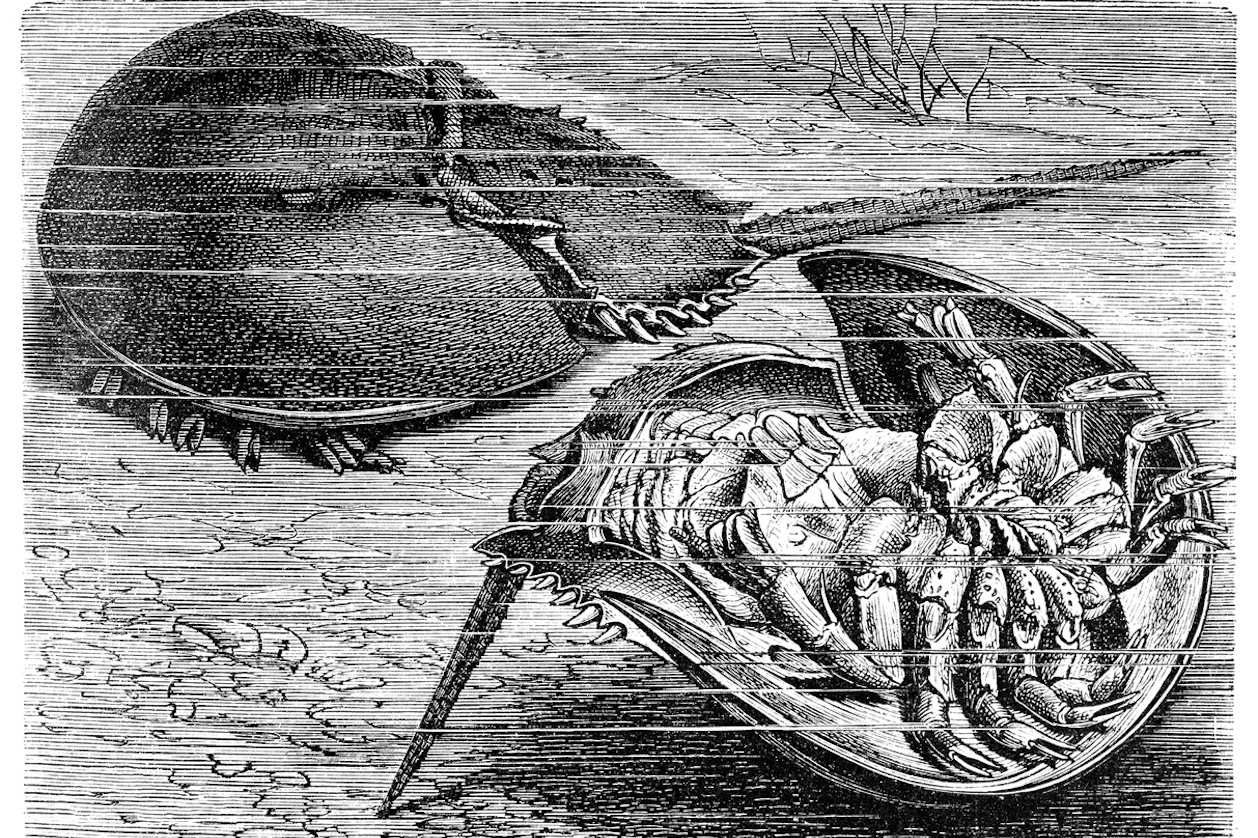
A common misunderstanding of classical evolutionary theory is that the “fittest” organisms that natural selection favors are merely those who have mastered their environmental milieux. Even in Darwinian terms, that is an impoverished picture; if it were the whole story, it would not be a formula for the preservation of actual life and of adaptive change, but only of a sterile persistence that would soon exhaust itself and die away. As far as the advancement of organisms towards higher, richer, and more capable forms is concerned, fragility is every bit as important as durability, and exposure as important as safety. Environmental pressures often cause organisms to diminish themselves into something stable but without much real potential. Horseshoe crabs and crocodiles have endured from prehistoric times by acquiring impenetrable physiological panoplies and efficient metabolisms, and both are impressive creatures; but neither species is on its way to producing a Shakespeare. Pandas, however, which are scarcely the fittest animals in any environmental niche, even the one they occupy, just might make it, at least as far as The Two Gentlemen of Verona.
Orthodoxy is, as such things are reckoned in historical terms, a very old phylogenic form indeed. Is it, though, a living tradition or only an evolutionary relic, preserving itself against change by jealously wrapping itself in a dogmatic armor? It has been both, at various points in its development; and, when it has had to endure periods of intense social or political adversity, it has often, understandably, mistaken paralysis for fidelity. Moreover, some of that adversity has come in the form of apparent good fortune, as occurred in the age of Constantine. The first great golden age of Eastern Christian intellectual life was the patristic era, when a certain speculative liberty produced not only ingenious appropriations of the accomplishments of Jewish and Hellenistic intellectual culture, but also whole new dimensions of metaphysical and spiritual reflection, prompted by the special questions of Trinitarian and Christological theology. It was also, however, the first great age of theological and, in time, doctrinal conflict, and this was made inevitable precisely by the progressive incorporation of the faith into the structure and spiritual rationales of empire. Increasingly, from the fourth through the seventh centuries, the daring freedom of the earliest Fathers had to yield to a tendency toward dogmatic retrenchment. More and more, the fine distinctions of theological differences had to be hidden from view behind the battlements of dogmatic pronouncement. It is fitting that the patristic era culminated in John Damascene’s On the Orthodox Faith, a magnificent précis and formulary of six centuries of both expansion and contraction in Christian thought, but also a monument to a lost intellectual liberty, and the paradigm for a phylogenic equilibrium more apt to survival than to life.
When we ask ourselves about the importance of intellectual freedom in Orthodox scholarship and reflection, we should first make an honest assessment of what actually happened in the conciliar age. We should recognize first the degree to which creedal symbols served the imperatives of imperial politics rather than spiritual life. We should recognize also the grammatical parsimony of those symbols, and how much more minimalist they were in both form and content than later theology treated them as being. Most important, perhaps, we should recognize what a vast project of historical reconstruction, much of it quite squalid, subsequently went into misrepresenting those creeds as faithful summaries of what had been believed always, everywhere, and by everyone since the time of the apostles. Not only did this involve impugning the motives and characters of those whom the tradition now remembers as “heretics”; it totally obscured the degree to which the most important conciliar decisions were the fruits of extraordinarily original speculative reasoning, syntheses far newer and less historically attested than the supposedly heterodox views they displaced. Such language as “homoousios” or “one ousia in three hypostases” was not a digest of the faith of centuries, even if it was continuous with some of its broad streams, but something provocatively novel.
There have been other periods of enormous creativity in Orthodox history, including that of Byzantine scholasticism and, most certainly, that of Silver Age Russian religious philosophy. The latter even helped form the greatest Eastern Christian theological mind since Maximus: Sergei Bulgakov. But the prevailing temper of Orthodoxy in the twentieth century, after the Russian Revolution, was one of anxious fragility. The rise of Neo-Palamism was—quite apart from its dubious claims for doctrinal authority and philosophical solvency—chiefly a reaction to the perils of its moment. It rapidly became a system for reading the Fathers and for asserting an Orthodox identity at once uniform, stable, and exclusive of all intellectual diversity. Predictably, as could not be otherwise, this involved a reconstruction of the past and a purging of all anomalies from the record. Though in fact Palamism was never an accurate reading of the patristic inheritance, and was contrary to it in many respects, it was a plausibly durable vehicle of evolutionary survival, like the carapace of the horseshoe crab.
That period may be passing, but it is still a large part of global Orthodoxy’s current intellectual state. The habit of inflexible and systematic dogmatism, oddly emulous of the old French Thomism to which original Neo-Palamism was largely a response, remains a pervasive impulse in the ‘tradition’ in its late modern reconfiguration, especially in its apologetics. This may be why in America Orthodoxy has become increasingly hospitable to the barren intellectual instincts of fundamentalism. Whether the world of Orthodox scholarship and speculation can arrest the Church’s modern habit of withdrawal into a jealous, protective, indurated, and spiritually paralytic form, and prompt a serious and fruitful engagement with new questions and styles of thought, is yet to be seen; it all depends on how much academic and intellectual freedom it has the capacity to tolerate. Which brings me back to the distinction between mere survival and true life. Orthodoxy might not die out, but it still might die inside.



