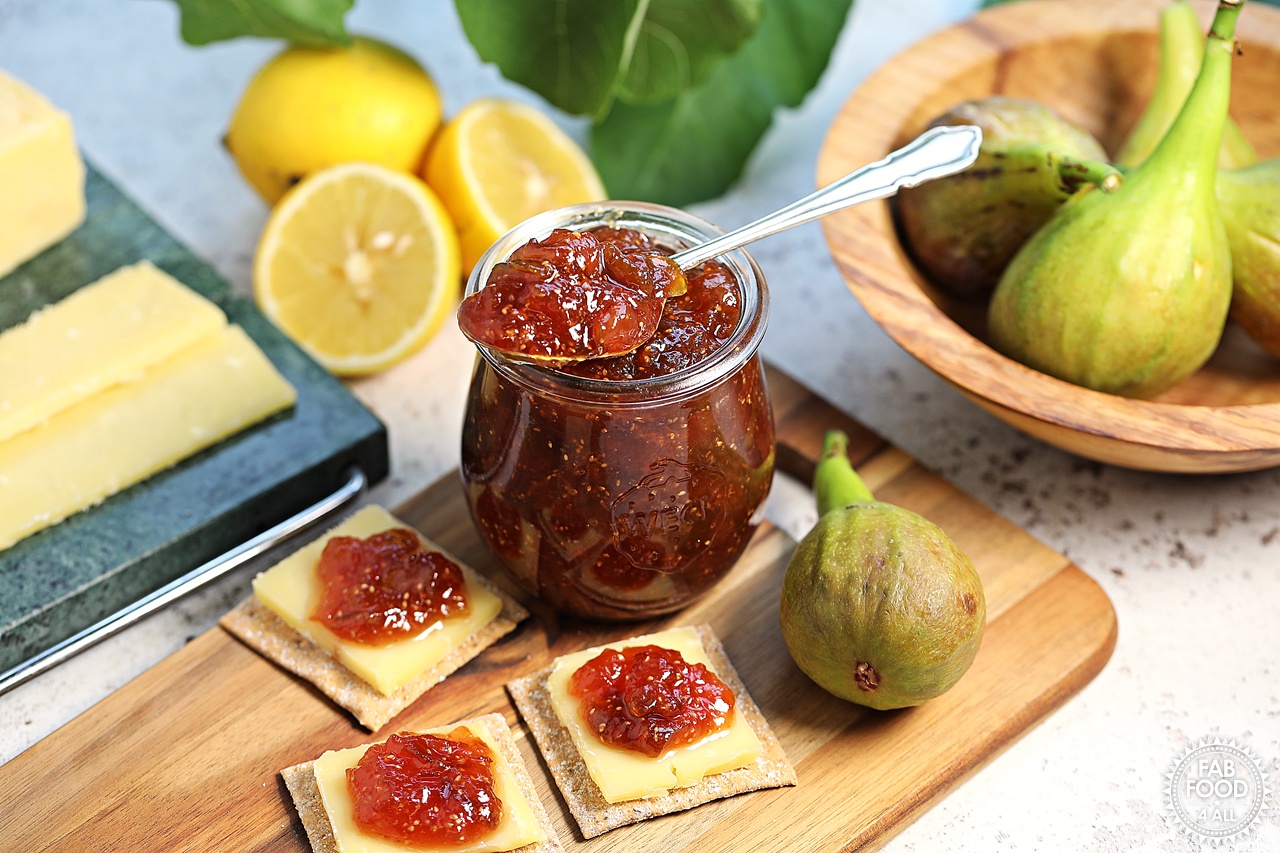
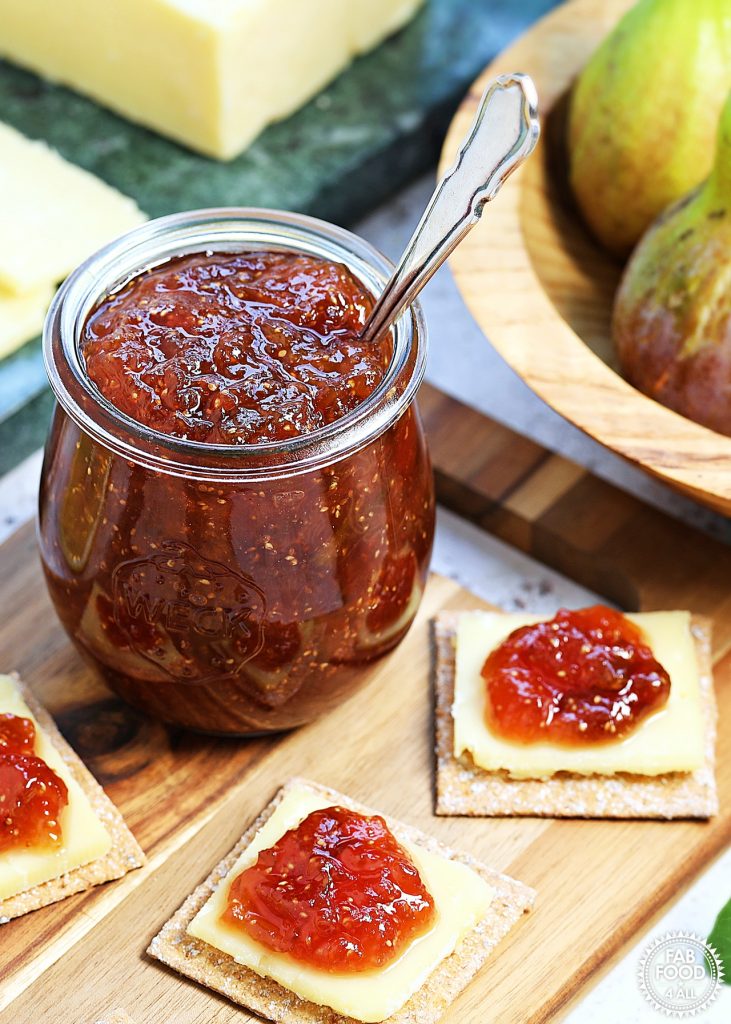
This Simple Fig Jam recipe (no pectin) is easy to make with just 3 simple ingredients: figs, lemons, and sugar. It’s the perfect way to preserve figs, which tend to spoil after a couple of days! Enjoy on toast, with cheese boards or charcuterie!

Background
I’d never liked figs, but after trying a jar of fig jam that my mother brought back from Greece one year, I realised I liked them jammed!
So, back in 2015, I developed this delicious Simple Fig Jam recipe.
I decided to keep the flavour clean and simple by adding lemon juice plus the rind for added pectin.
Figs have fairly low pectin levels, so the lemon not only adds brightness to contrast the sweetness but also enables the jam to set.
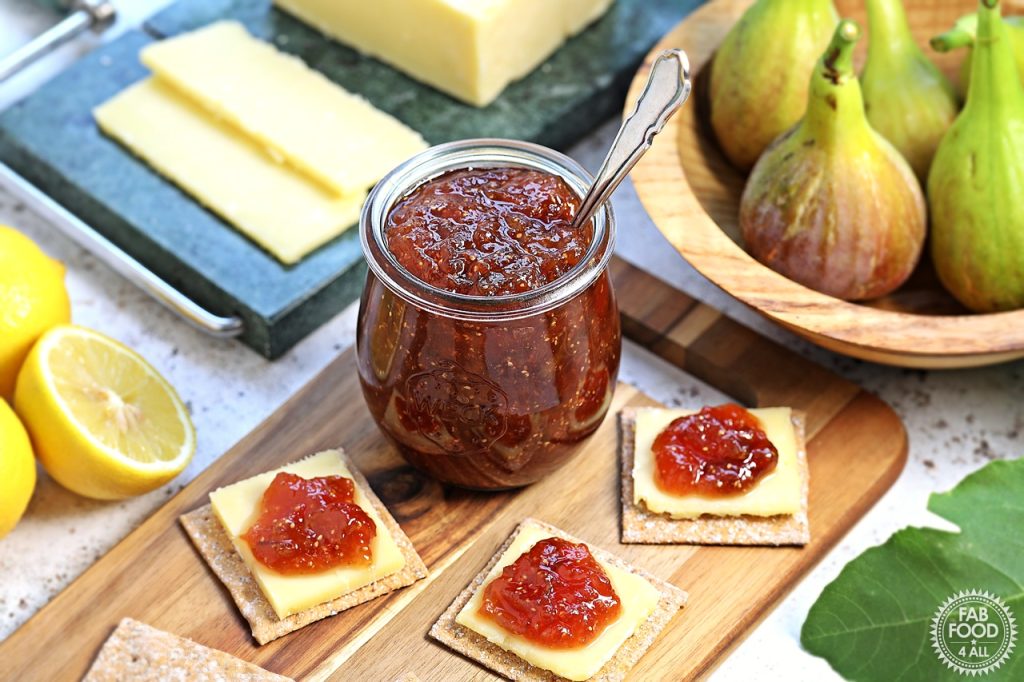
In hindsight, this jam should have been called Fig Conserve because of the low sugar and long cooking method!
Recently, I was super lucky to meet a lovely lady at my local supermarket whilst I was eyeing up the figs to reshoot my fig jam. I’d only gone in to get something for a family member on the spur of the moment, not figs.
Long story short, she kindly offered to let me come and pick figs in her garden, which were pesticide-free; unlike the ones we were standing in front of!
So a few days later, after coffee and a chat, we picked figs from her magnificent Brunswick fig tree, and the rest is history or rather, jam!
Why This Simple Fig Jam Recipe Works
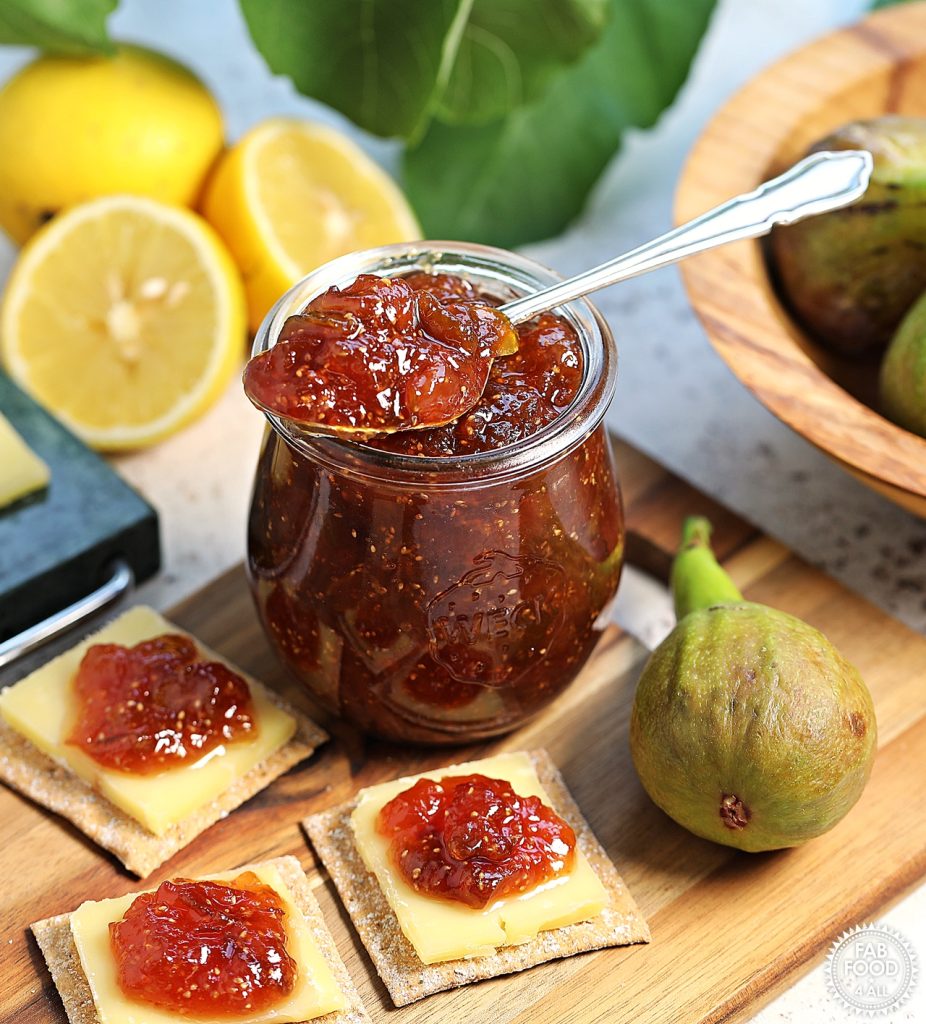
This fig jam recipe uses the conserve method, which keeps the figs chunky and not mushy.
- Macerating: Involves soaking the figs, sugar, and lemon juice and rinds overnight. This keeps the fig pieces plump as the sugar is absorbed, draws out the moisture, and deepens the flavour.
- Low sugar ratio: Uses just enough sugar to balance the figs’ natural sugars without drowning them out.
- Lemon juice: Adds acidity to balance the fig’s natural sweetness. It also helps activate the fruit’s natural pectin, enabling the jam to set.
- Lemon rind: Adds extra citrus zing and pectin (found in the pith and membrane).
- Slow simmer: Cooking the fruit gently over medium-low heat breaks down the cell walls without scorching the sugars, so you get deep flavour without bitterness. Did I mention the beautiful tawny colour?
Fig Picking Tips
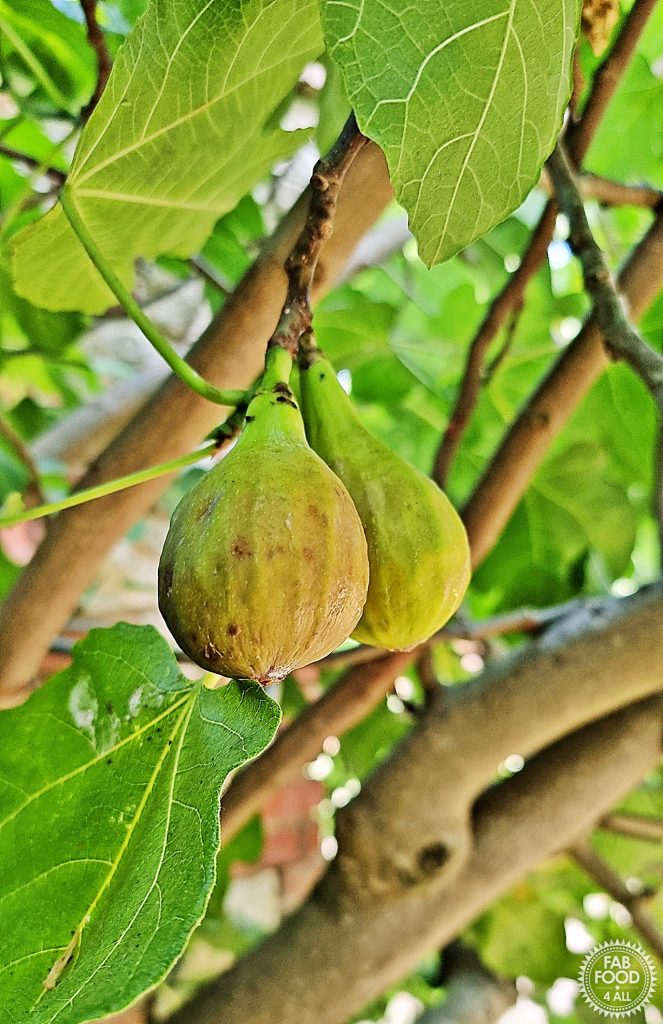
For the best results when making fig jam, follow these tips:
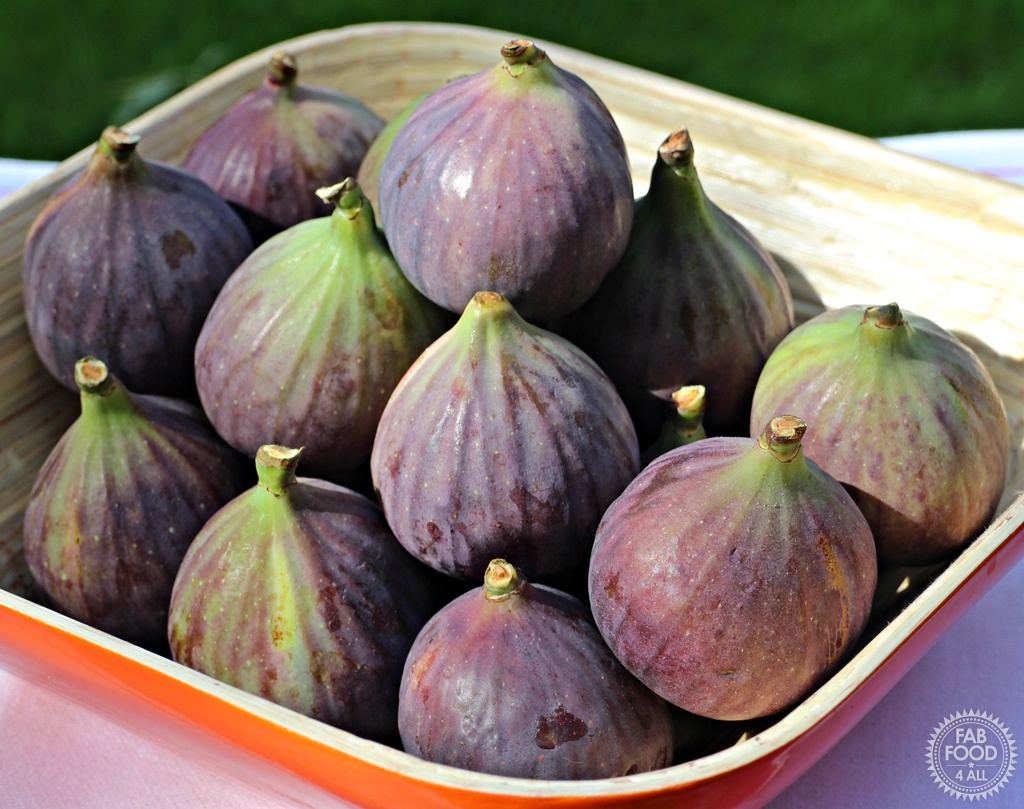
- Pick plump, soft figs that hold their shape, not squishy ones. Figs ripen from the base upwards, so if the necks are soft, they’re ripe. Plus, they’ll have some colour to them (depending on variety).
- Avoid insect-damaged or burst figs and ones with a fermented, alcoholic smell. Leave hard, dark green, unripe figs on the tree, as they won’t ripen once picked.
- Ideally, pull the fig by the stem, pushing in the opposite direction to cleanly snap it from the branch without tearing the flesh. If the figs are out of reach and you need to use a fruit picker, this may not be possible.
- Wear gloves and long sleeves because the milky fig sap can be an irritant.
- Place freshly picked figs in a single layer onto a flat tray or shallow crate lined with baking paper. Do not use a bag, as figs are very delicate, easily bruised, and therefore likely to spoil more quickly.
- Use picked figs within 2 days and ideally store in the fridge. Freeze any figs you don’t need (see tip in FAQs).
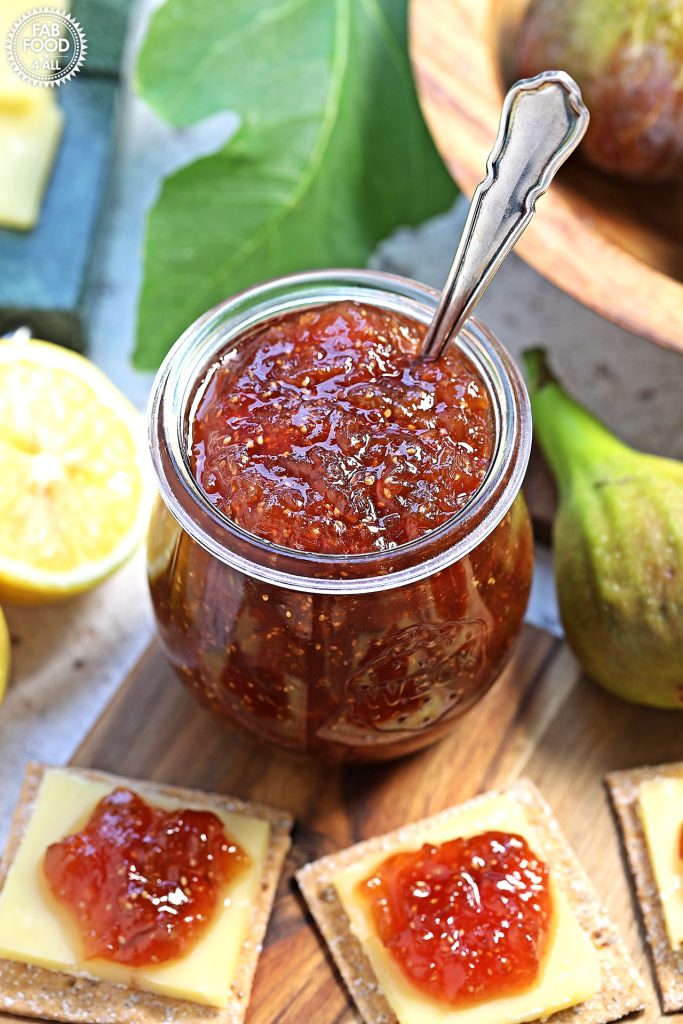
How to Make Simple Fig Jam Recipe
Find full instructions for this homemade fig jam recipe in the recipe card at the bottom of this post.
Ingredients
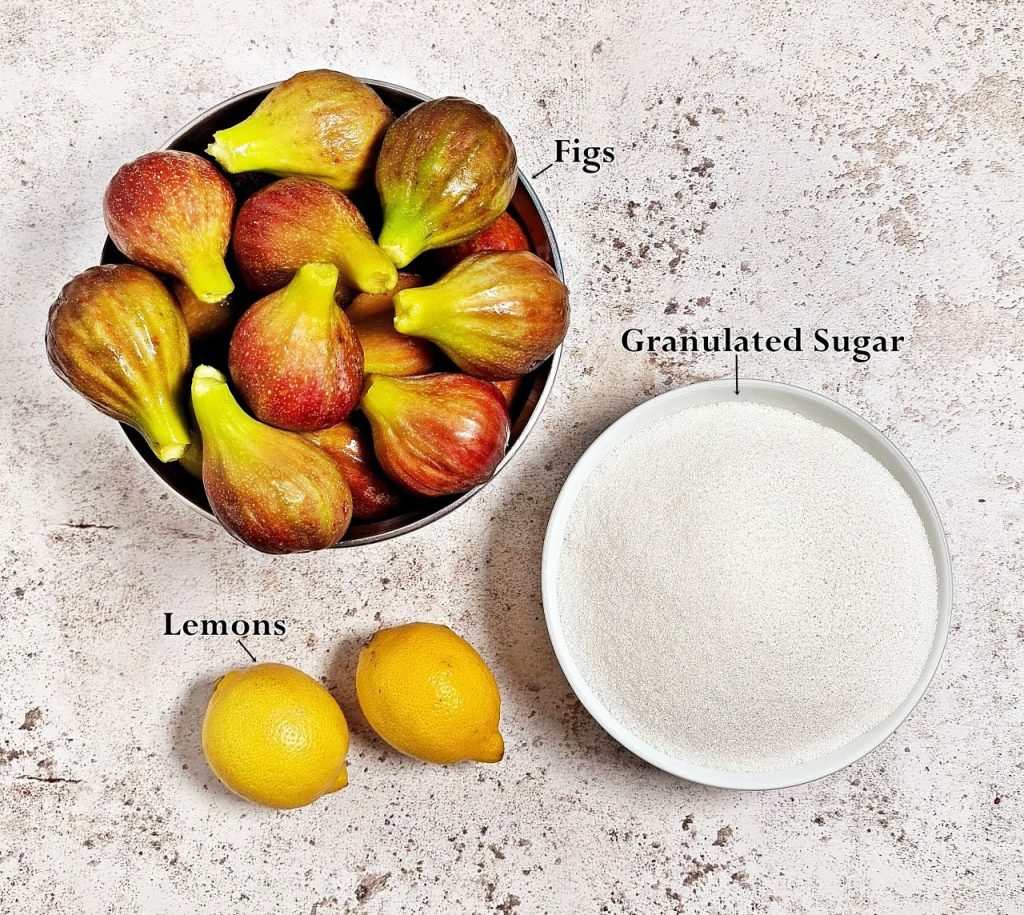
- Ripe Figs: I used Brunswick figs but previously used Brown Turkey Figs. Any fig variety will do, but organic is best; otherwise, soak in a bicarbonate of soda solution to help wash off pesticides.
- Granulated Sugar: needed to preserve the jam and make it shelf-stable.
- Organic Unwaxed Lemons: so important, as lemons are treated with so many chemicals these days (look at the label).
Equipment
A few key tools you’ll need make the process smoother and safer.
- Preserving pan or similar-sized large pot: A large, heavy-based pan prevents hot spots and the jam from bubbling over the side.
- Wooden spoon: A metal spoon would get too hot and scratch the base of your pan, making it harder to hear if the sugar has dissolved.
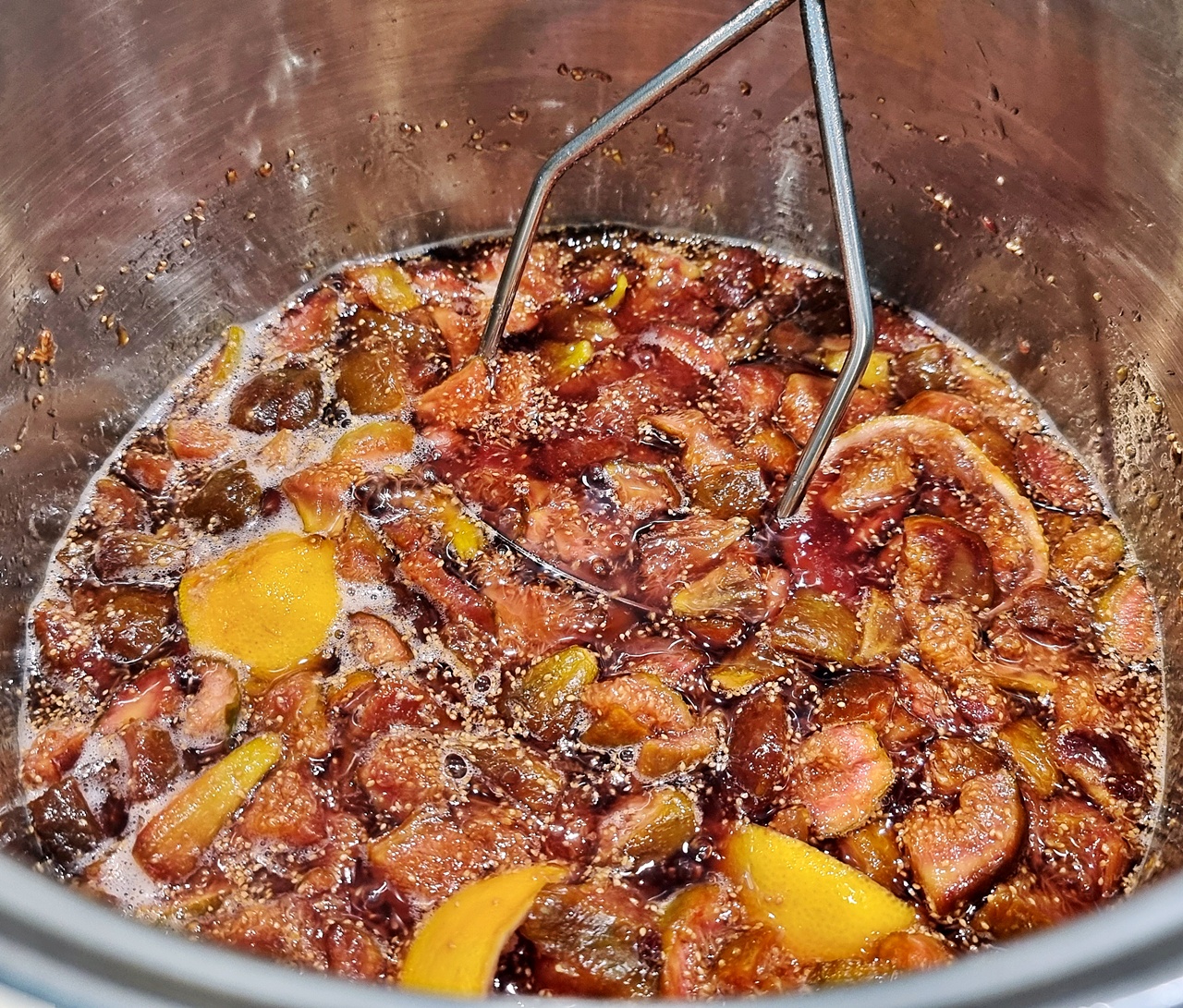
- Potato masher: Used to break down the figs partway through cooking.
- Small plates: For the chilled plate test to see if the jam has reached the setting point.
- Glass jars with lids: Choose from Mason jars, Weck jars, or classic jars with screw-on lids.
- Ladle: For potting up the jam.
- Jam funnel: Optional, but makes potting up less messy.
Step-by-Step Instructions
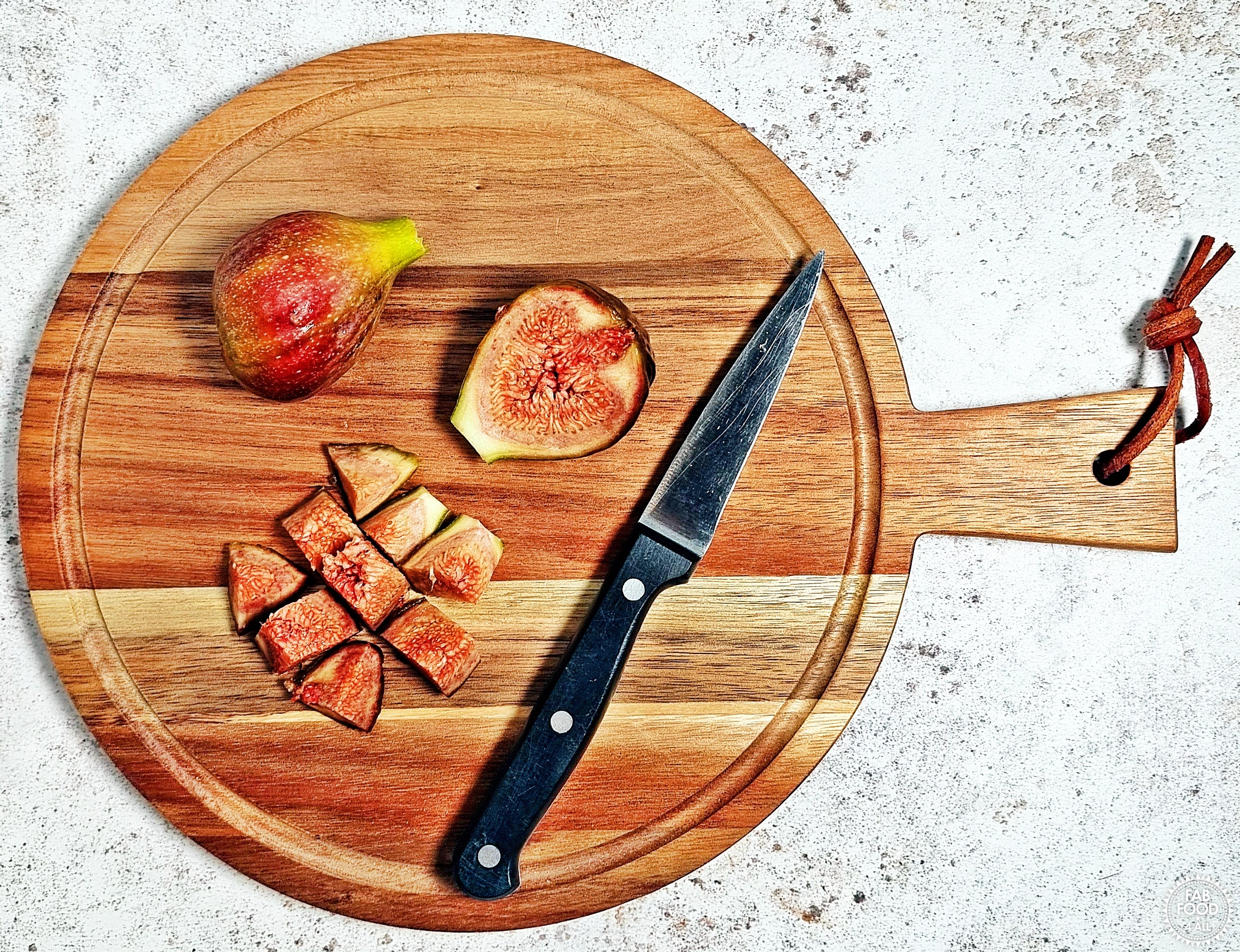
- The night before, prepare the figs by cutting off the necks/stems and dicing.
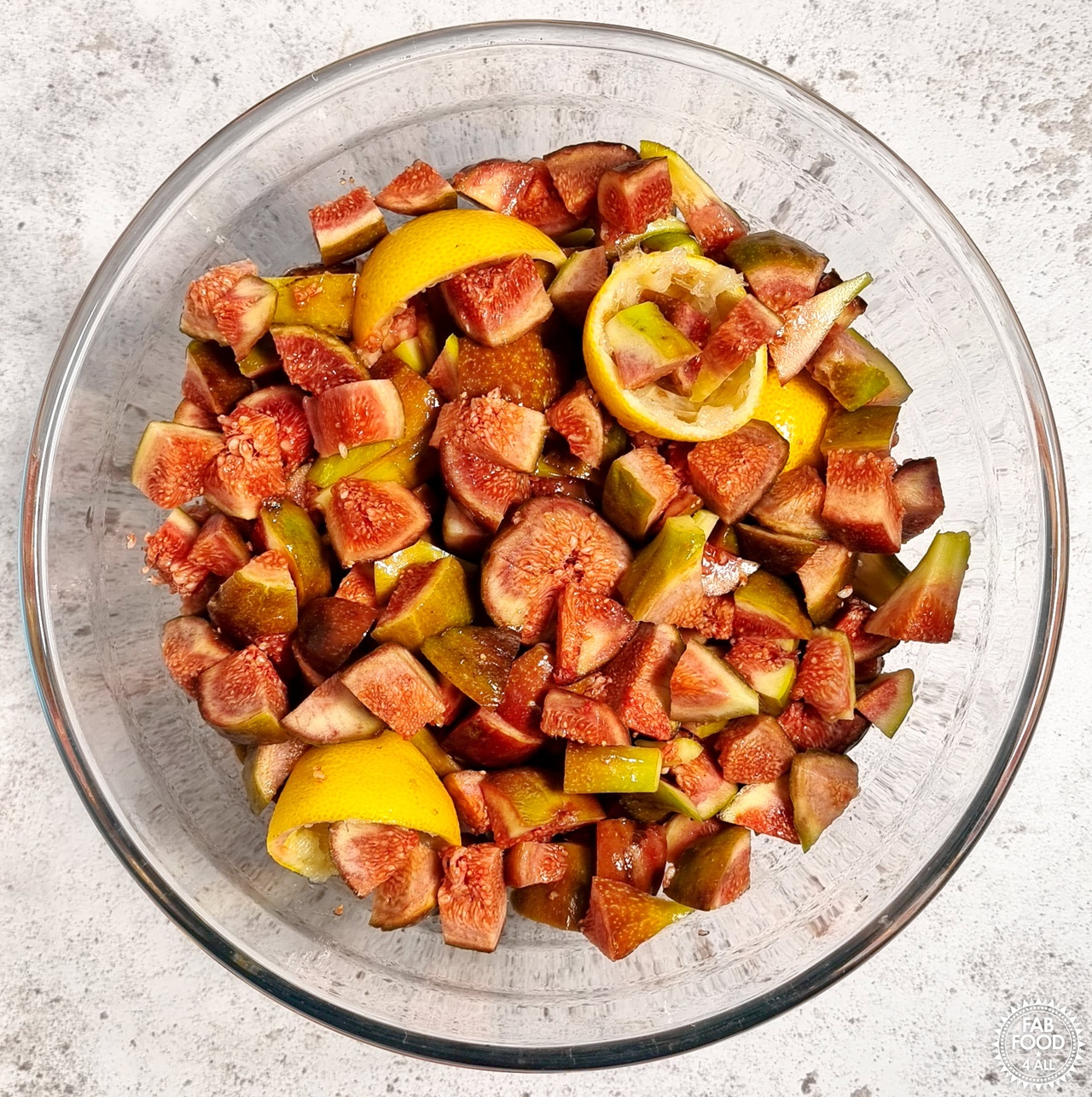
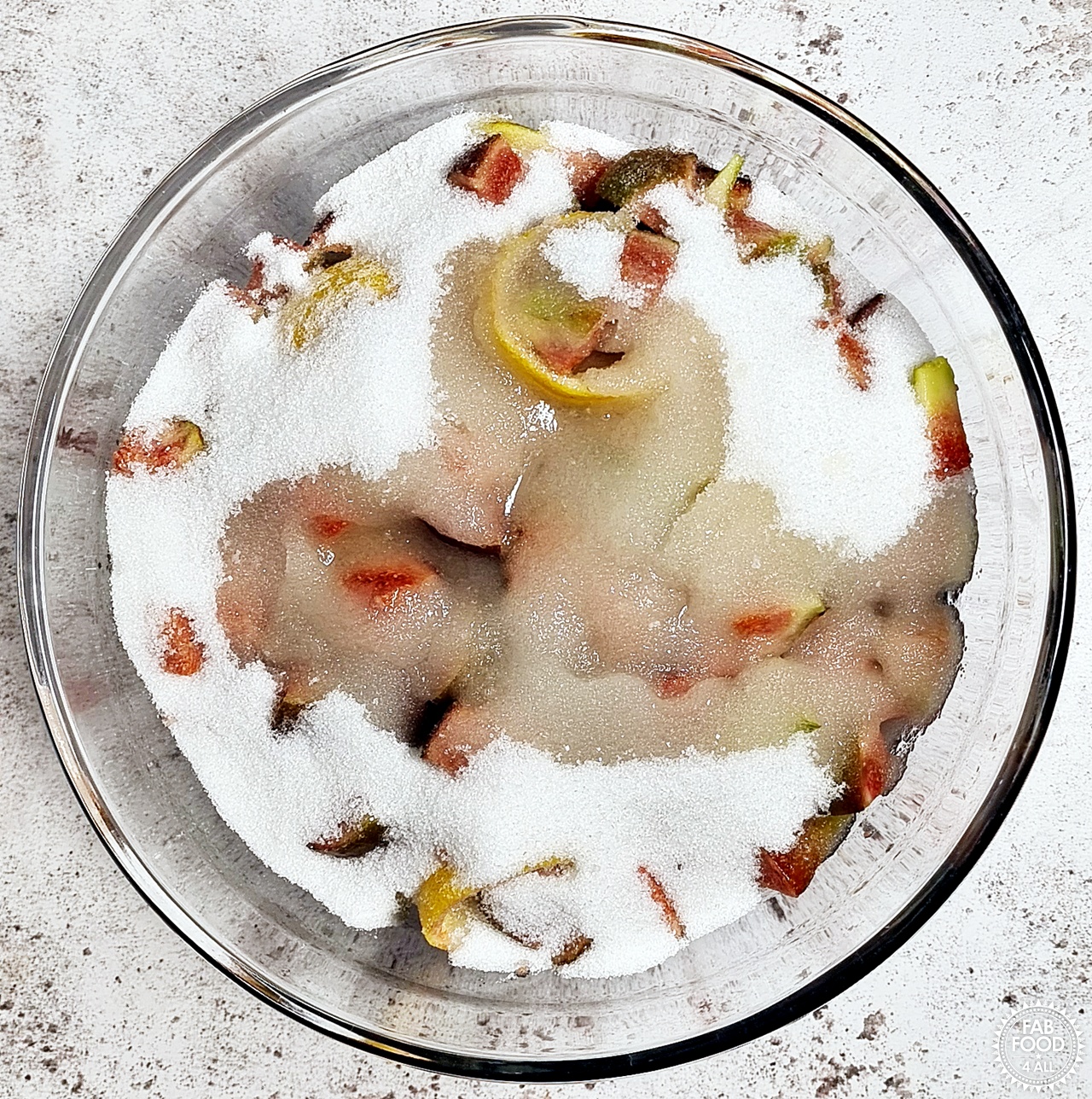
- Place lemon rind, chopped figs, sugar, and lemon juice in a large bowl (covered) to macerate overnight at room temperature.
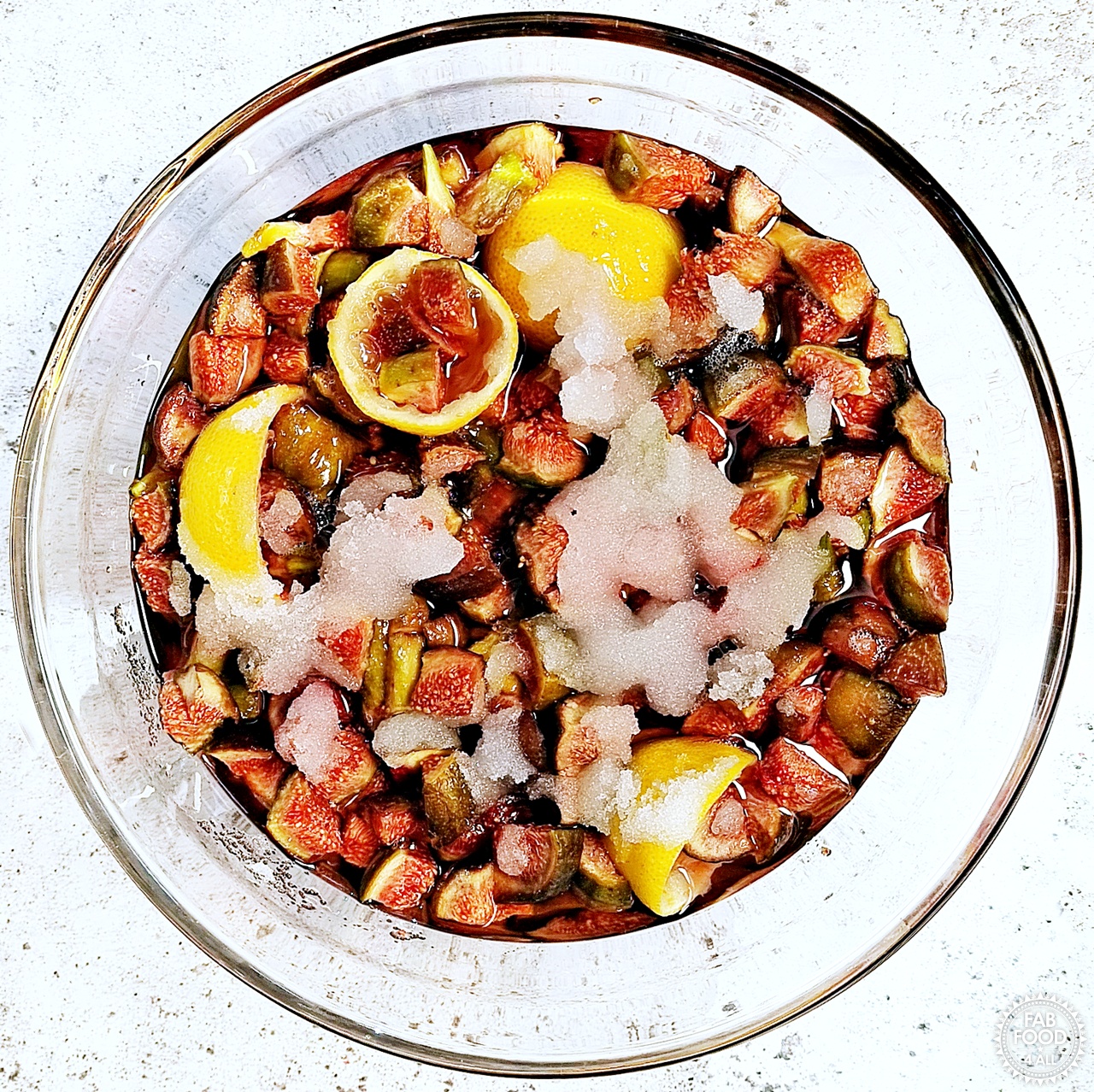
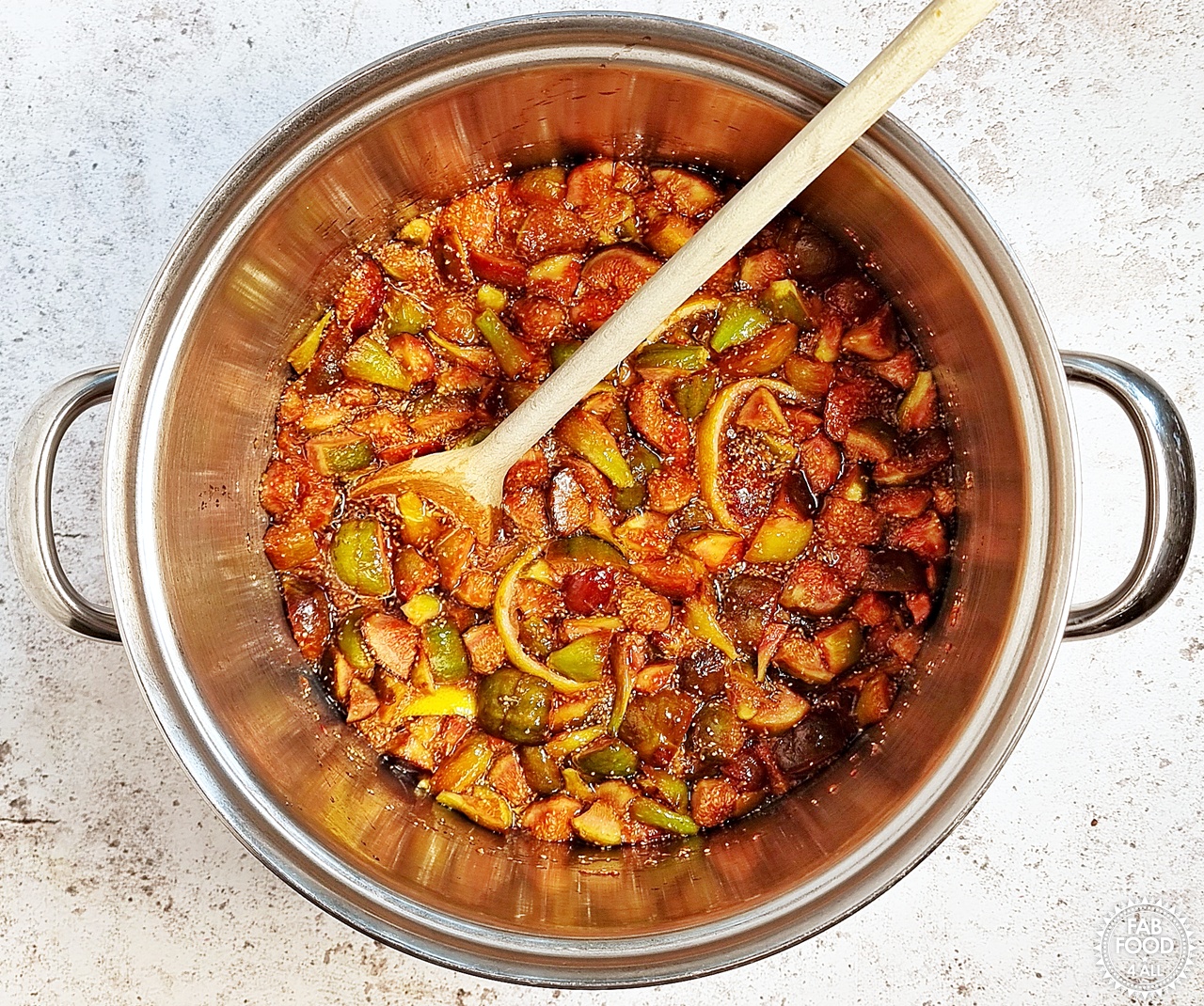
- Pour the fig mixture into a preserving pan (or similar) and dissolve the remaining sugar over a low heat.
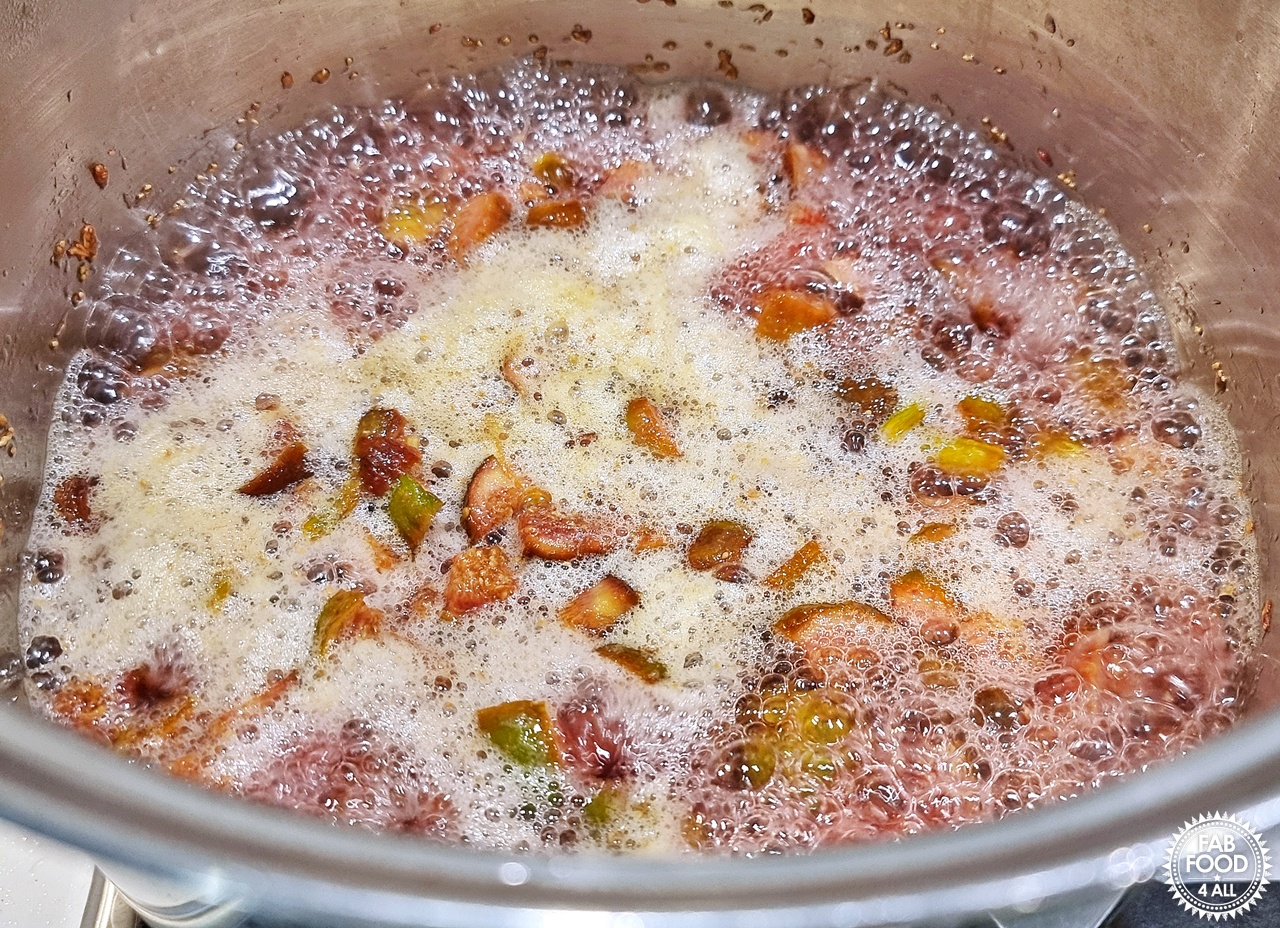
- Increase the heat to high and bring the pan to a rolling boil.
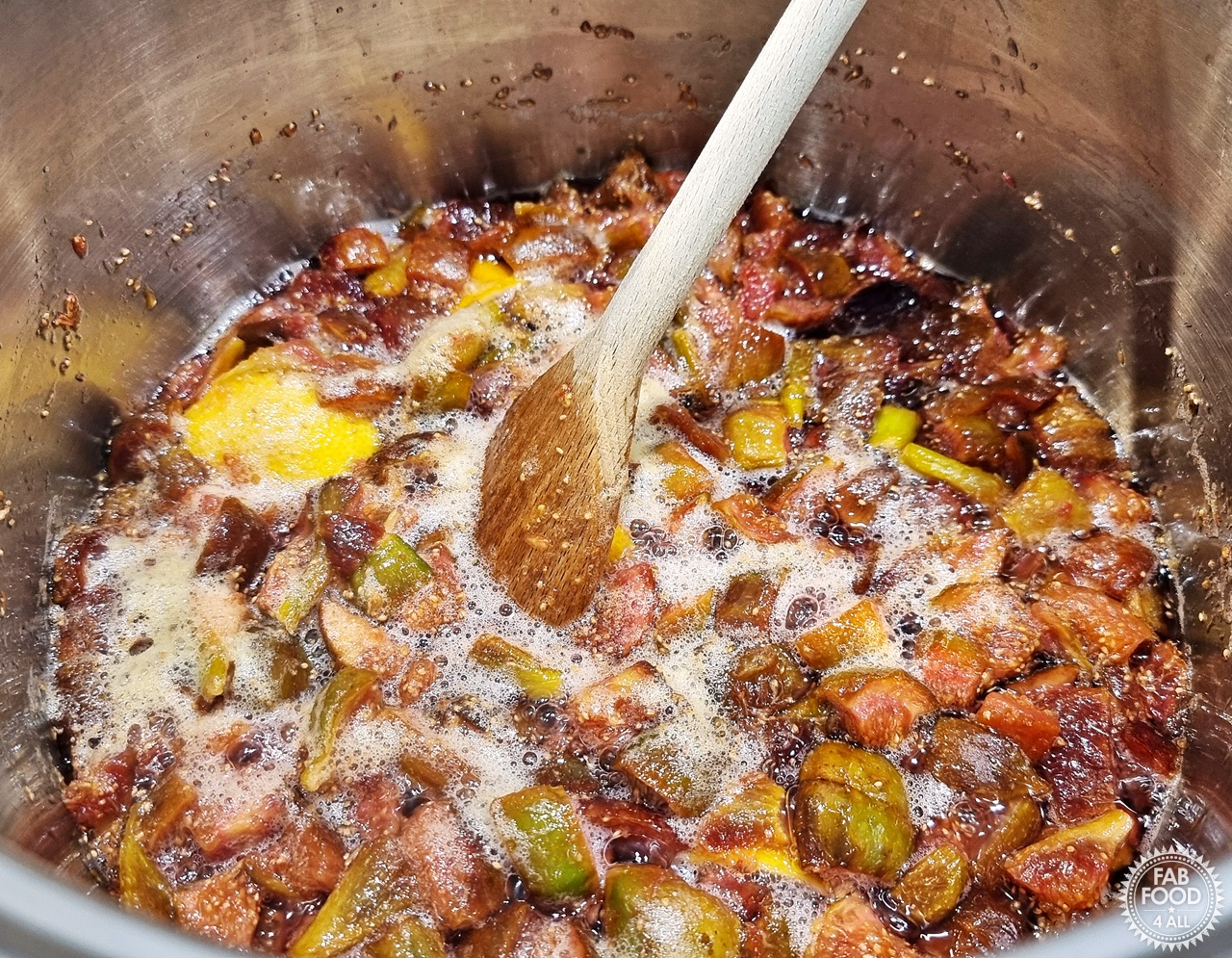
- Reduce the heat and simmer for about 30 to 50 minutes (whilst stirring) until the jam looks thick and syrupy. During this time, use a potato masher to break up the fruit and release more juices.
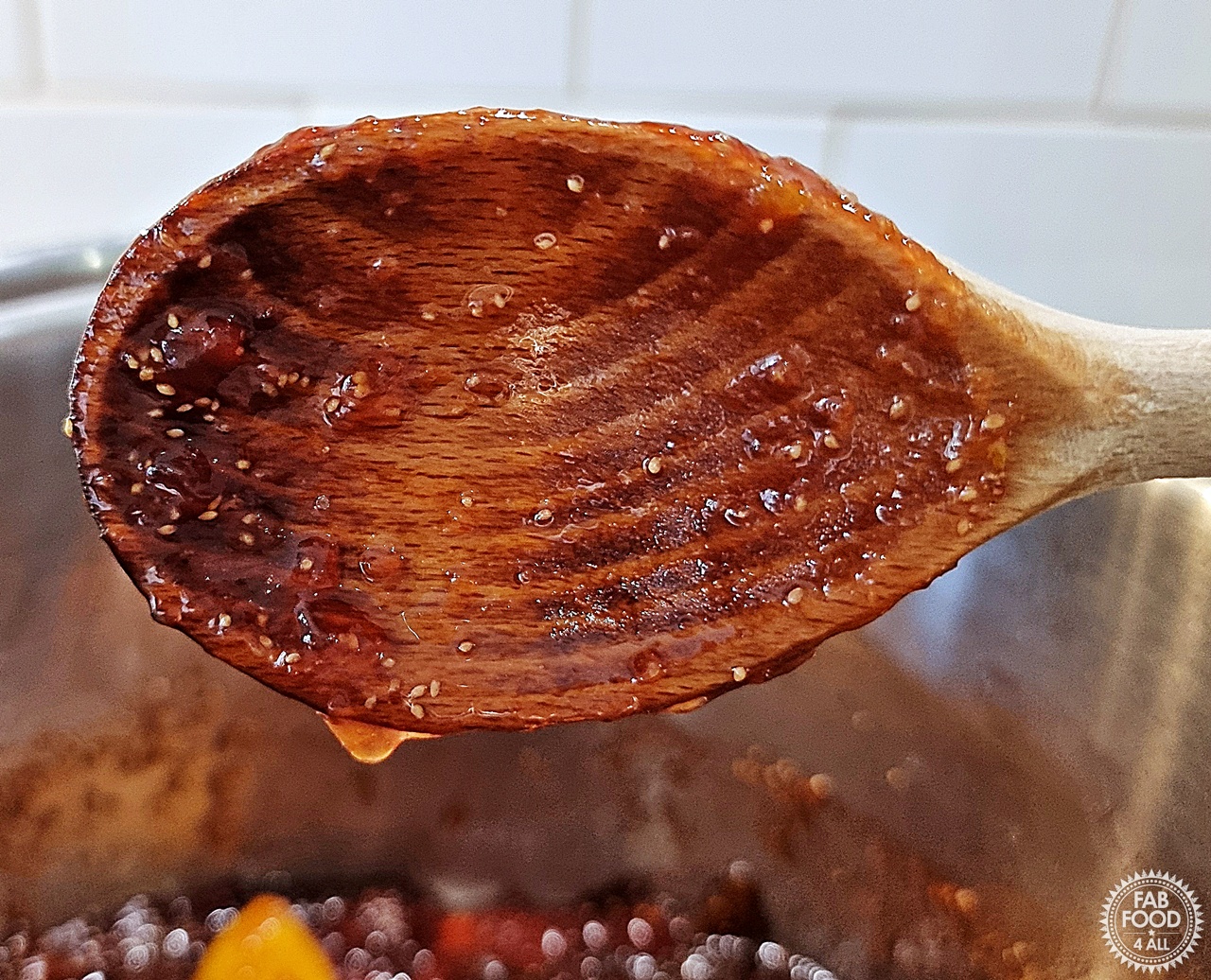
- To test if the jam is near the setting point, do the drip test. A drop of jam should hang suspended from the spoon.
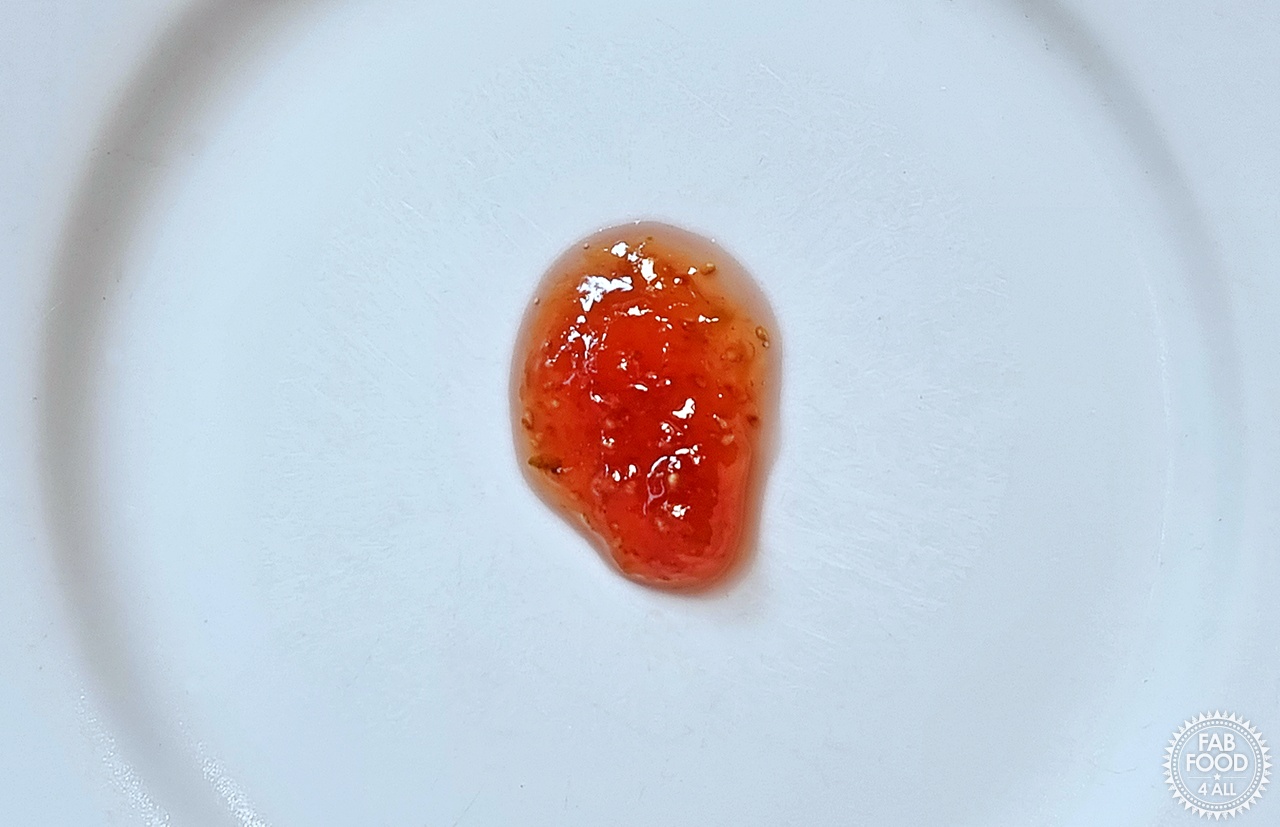
- Then do the chilled plate test: pour a small amount of jam onto a cold plate and chill for 30 seconds.
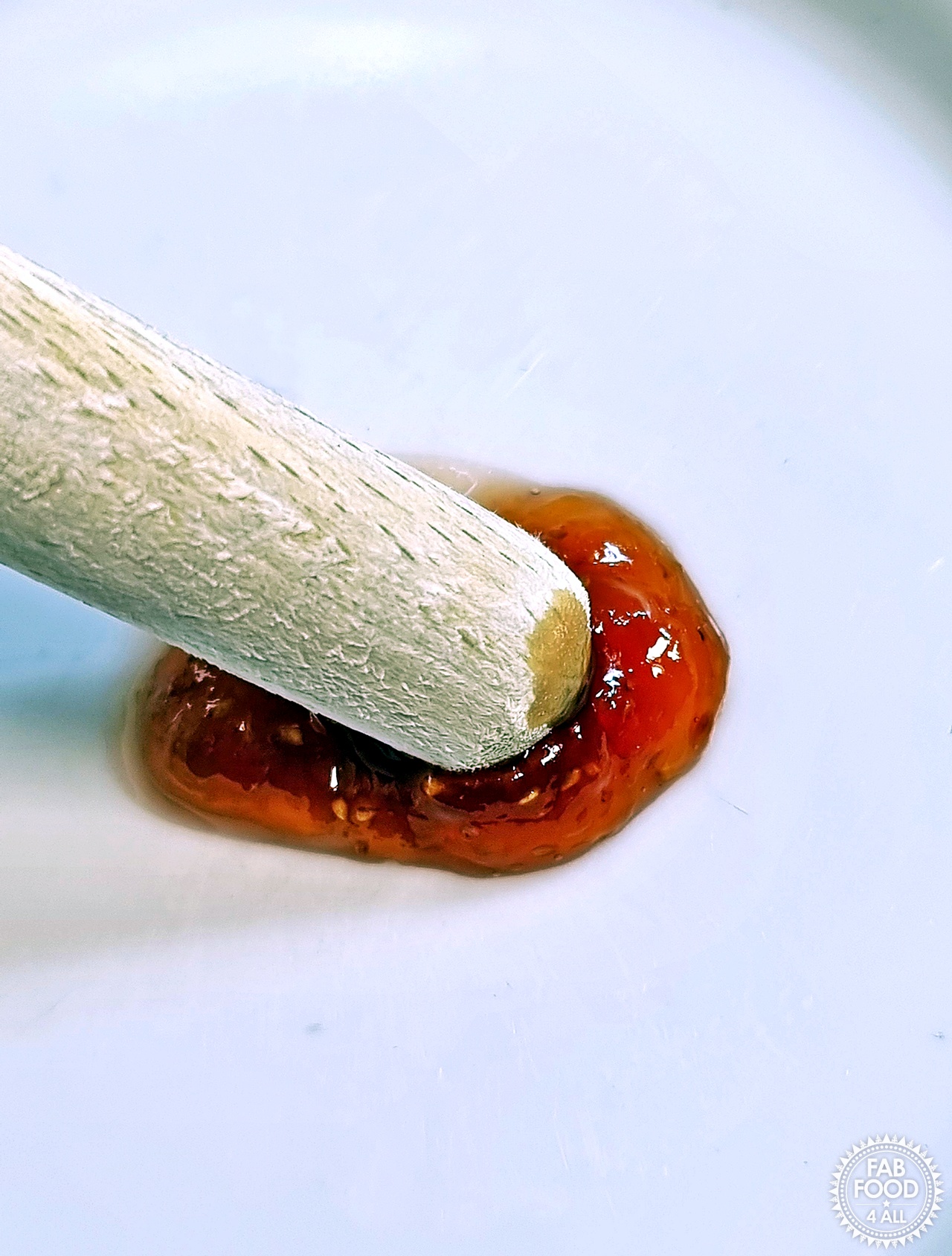
- Push a finger through the jam; it should gently wrinkle and not run back on itself at the setting point.
- If the jam hasn’t reached the setting point, simmer it a little longer and repeat the test until it’s ready.
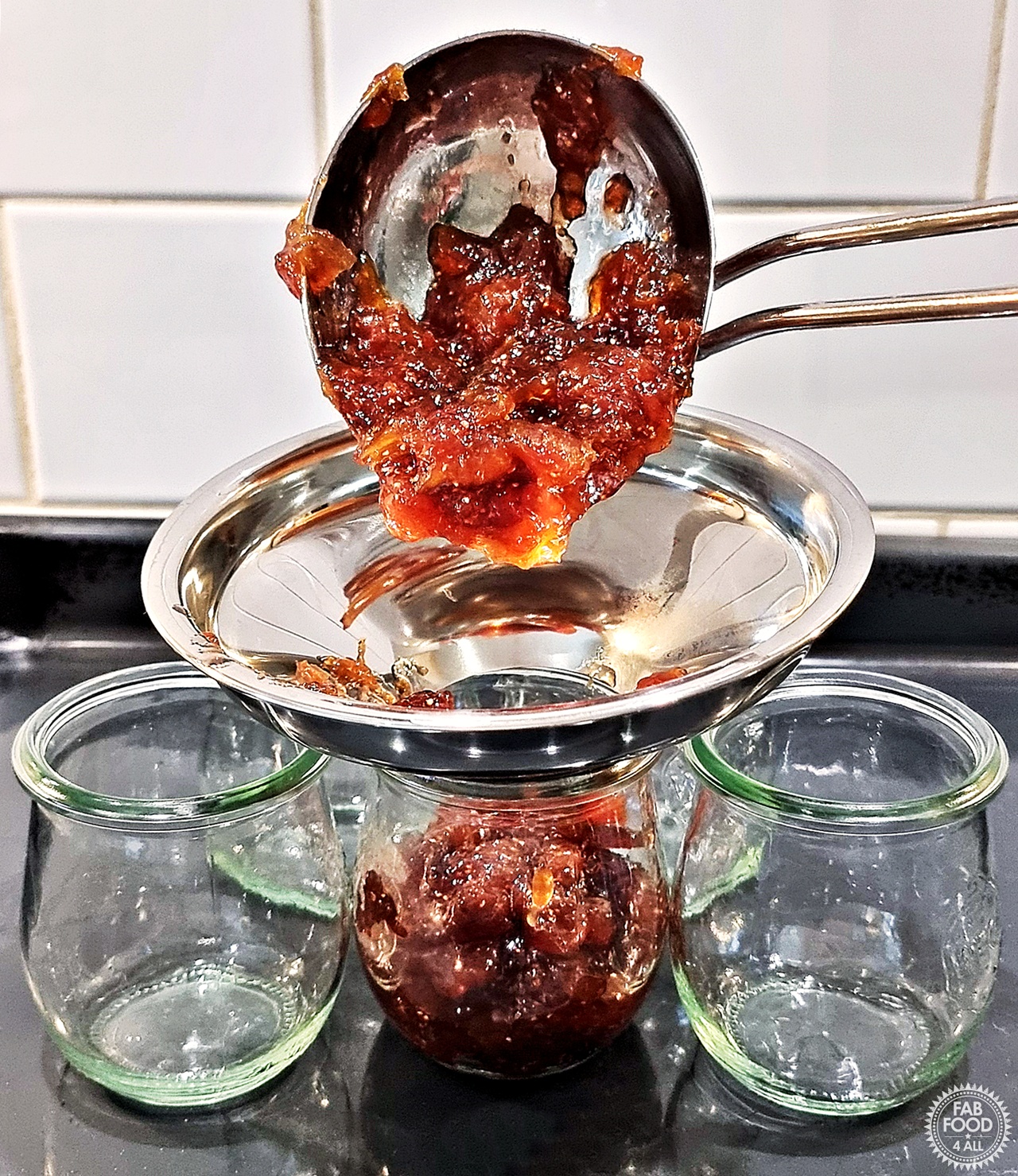
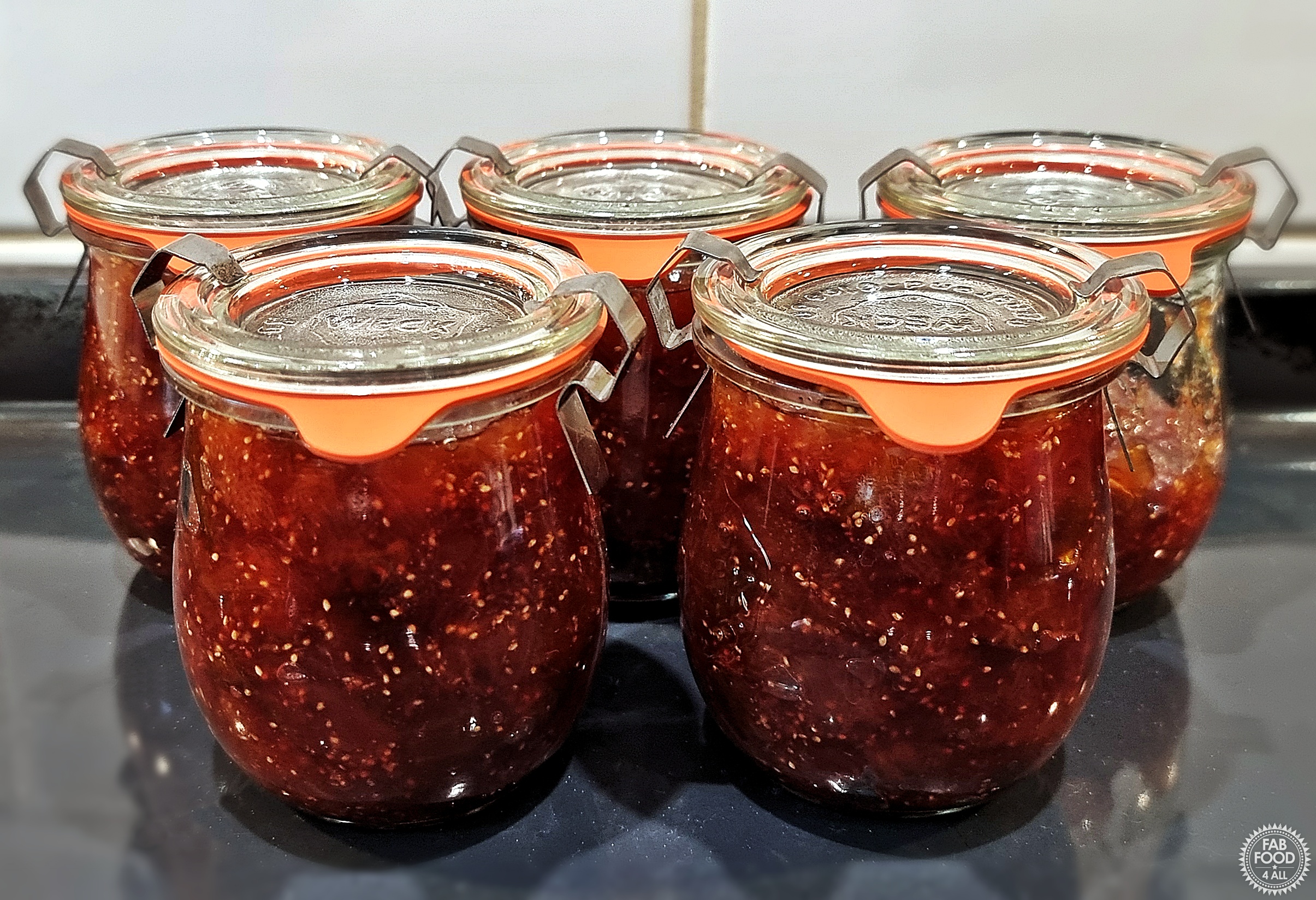
- Discard the lemon skins, then pot up the hot jam into hot sterilised jars and place the lids on immediately.
Cook’s Notes
- Rely on your senses and visual cues with this recipe. There’s no set timing.
- As the jam simmers and reaches the setting point, the bubbles will go from tiny to large and lava-like.
- Another way to test for the setting point is to drag a wooden spoon across the bottom of the pan; you should see the bottom of the pan before the jam slides back.
- If you prefer a smoother jam, then use an immersion blender at the end.
- If you prefer, macerate the figs first thing in the morning and then make jam late in the afternoon.
Additions and Substitutions
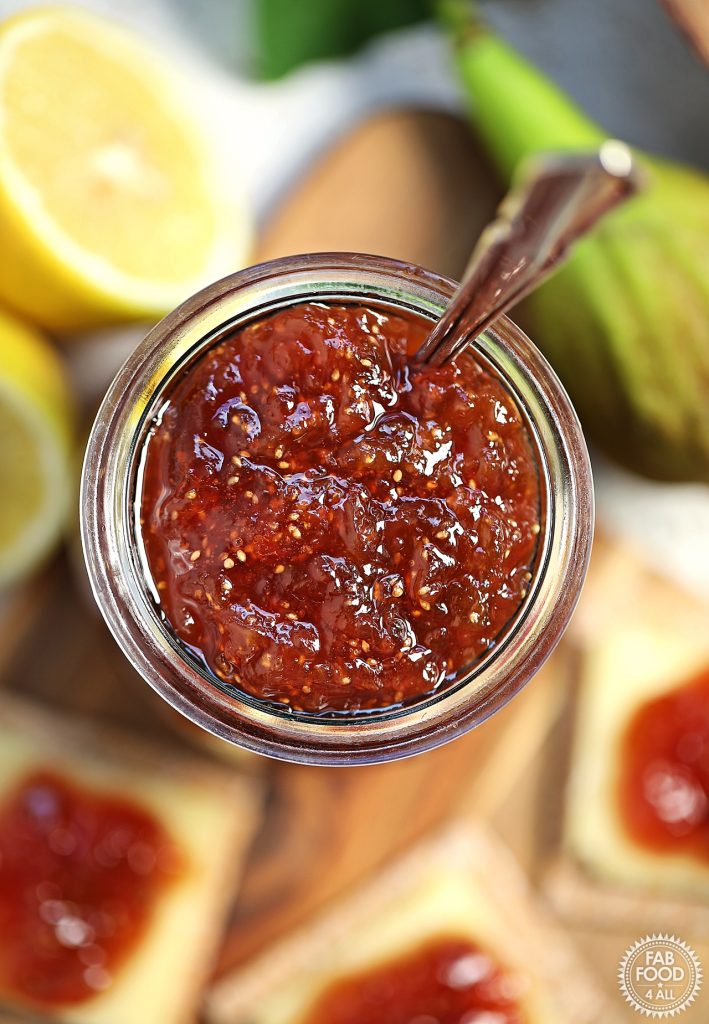
Once you’ve mastered this simple fig jam recipe, you can switch things up:
- Vanilla Fig Jam: Stir in a tablespoon of vanilla extract at the end of cooking.
- Orange Fig Jam: Swap lemon juice and rind for orange juice and rind for a sweeter jam.
- Spiced Fig Jam: Add a cinnamon stick, a few whole cloves, and a star anise, and remove before potting up.
- Ginger Fig Jam: Add a tablespoon of finely grated ginger root at the maceration stage for mellow warmth.
Serving Suggestions
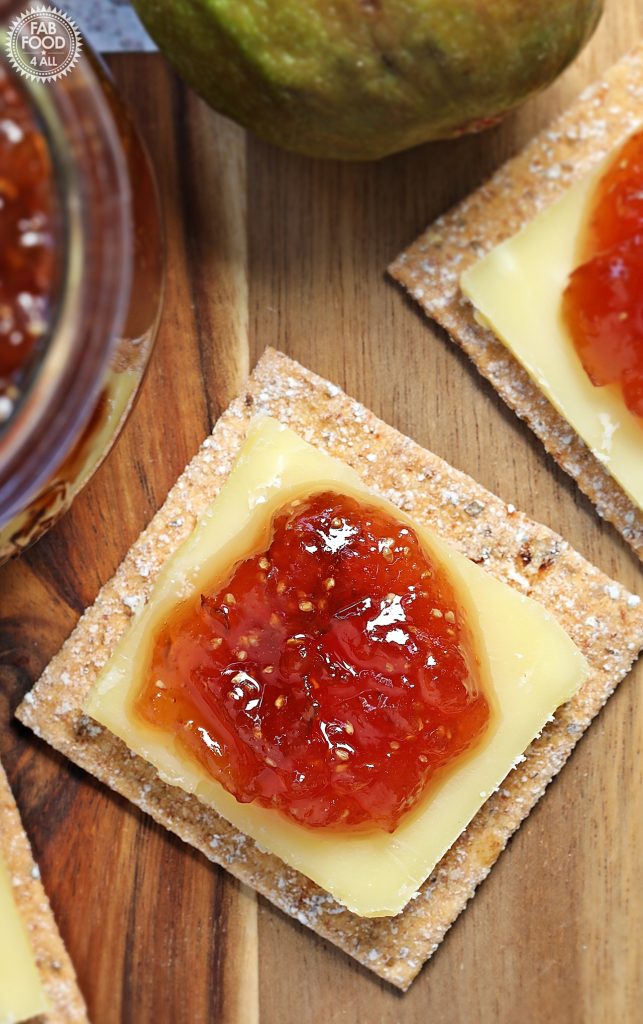
Fig Jam pairs well with salty, creamy, or tannic flavours.
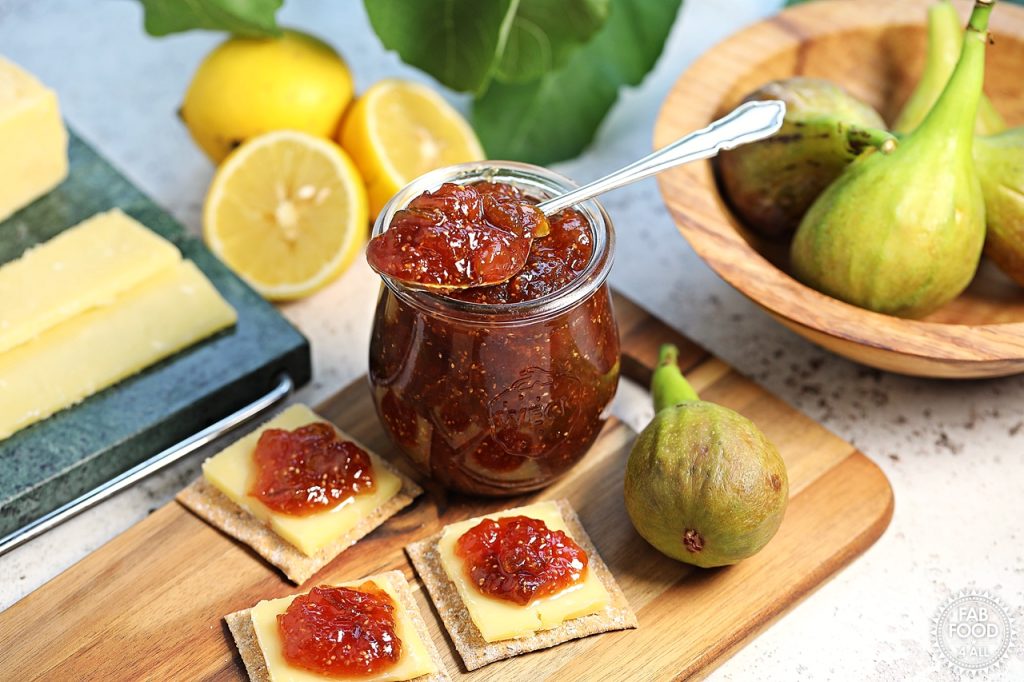
- Cheese: Serve on a cheese board with aged cheddar, goat cheese, brie, crumbly blue cheese, etc. The sweetness cuts through the fat beautifully.
- Sourdough toast, croissants, bagels, scones, etc: Generously buttered with a thick layer of jam.
- Yogurt or porridge: Swirl into Greek yogurt with a few halved walnuts or stir into a warm bowl of porridge for a breakfast treat.
- Charcuterie: Serve with cured meats such as prosciutto, Parma ham, salami, or pâté for a delicious sweet-savoury vibe!
- Cocktails: Stir a spoonful into an Old Fashioned or a Whiskey Sour for a delicious seasonal twist.
Storage
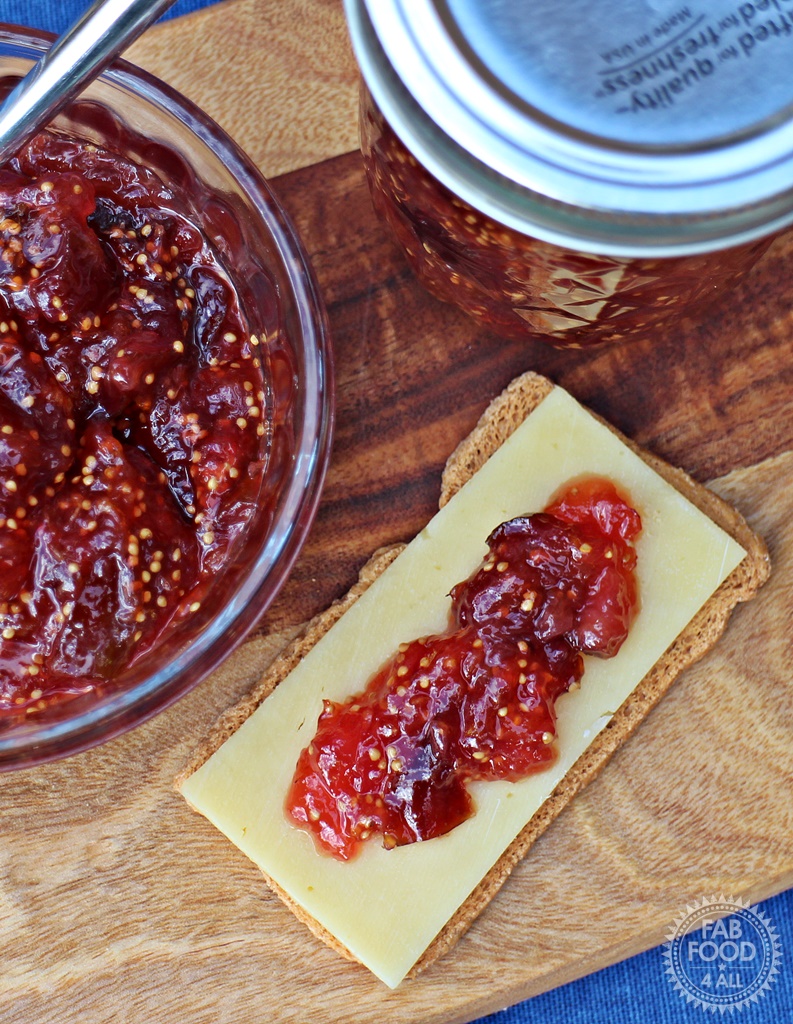
Store fig jam in a cool, dry, dark place and use within the first 12 months for the best flavour and colour. I keep mine in a cupboard in the garage.
Once opened, store it in the fridge where it will keep for months. Always use a clean teaspoon to serve to prolong its shelf life.
More Late Summer Preserve Recipes
Check out these delicious homemade jam recipes once you’ve made my fig jam:
More Fig Recipes
Here are some more fig recipes you should try:
Frequently Asked Questions
Yes, proceed as if they were fresh, although you may need to thaw them a little to make it easier to cut them up.
Wash and thoroughly dry whole figs before freezing in a single layer. Once frozen, place in a freezer bag (remove excess air) and use within 6 months.
Yes, just be aware that the setting point will take much longer to reach.
Conclusion
Don’t let the fig season pass you by without making my delicious easy fig jam recipe. Your friends and family will thank you – take it from me!
Within hours of gifting a jar to my parents, my mum was straight on the phone to say how wonderful the jam was, and my own family loves it too!
I have to admit that figs have actually grown on me now; so much so that I’ve ordered a Brown Turkey fig tree.
This will not only save me money in the future, as figs are so expensive, but best of all, they’ll be organic!
So next year I’ll hopefully be able to make more fig preserves and develop other fig recipes. Watch this space!
Pin this Simple Fig Jam recipe for later:
Leave a comment and rating below when you’ve made this recipe; I love getting your feedback! You can also share your pictures by tagging @FabFood4All over on Instagram.
Simple Fig Jam Recipe (No Pectin)
A Simple Fig Jam with lemon whose bright acidity beautifully balances the fig’s natural sweetness.
Servings 1 L
Equipment
-
1 Digital scale
-
1 Paring knife
-
1 Wooden chopping board
-
1 Lemon squeezer
-
1 Set of measuring spoons
-
1 large glass bowl
-
1 Preserving pan or similar large pot
-
1 long wooden spoon
-
1 potato masher
-
1 ladle
-
1 jam funnel
-
5 220 ml (7.4 fl oz) glass jars with lids (or other combination)
Ingredients
- 1.2 kg ripe figs organic (10 lb 3 oz)
- 600 g granulated sugar (1 lb 5 oz)
- 2 small organic lemons halved and juiced (equating to 5 tbsp)
Instructions
-
The night before, prepare the figs by cutting off the necks/stems. Then cut the figs in half and chop each half into nine pieces, by making 2 cuts in each direction. (If you like a finer textured jam then chop into smaller pieces.)
-
Place lemon rind halves, chopped figs, sugar, and 5 tbsp lemon juice in a large bowl (covered) to macerate overnight at room temperature.
-
The next day, put 2 small plates in the freezer for the chilled plate test and sterilise the jars and lids (see notes below).
-
Pour the fig mixture into a preserving pan (or similar) and dissolve the remaining sugar over a low heat.
-
Increase the heat to high and bring the pan to a rolling boil.
-
Then reduce the heat to low-medium and simmer for about 30 to 50 minutes (whilst stirring) until the jam looks thick and syrupy. During this time, use a potato masher to break up the fruit and release more juices. The timing will depend on how juicy the figs are and the intensity of the simmer.
-
To test if the jam is near the setting point, do the drip test. Pour a spoonful of jam back into the pot; the final drop of jam should hang suspended from the spoon.
-
Then follow up with the chilled plate test. Pour a few drops of jam onto a cold plate and chill for 30 seconds.
-
Then push a finger through the jam. If it gently wrinkles and the jam doesn’t run back on itself, it’s ready.
-
If the jam hasn’t reached setting point, simmer it a little longer and repeat the test until it’s ready.
-
Discard the lemon skins, then pot up the hot jam into hot sterilised jars and place the lids on immediately.
-
Allow to cool at room temperature before opening (see storage information above).
-
Makes approximately 1L of jam equating to four and a half 220m jars.
Notes
Sterilise 5 x 220 ml (8 oz) jars and lids (or variation thereof). Start by washing the jars in hot soapy water (or take them straight from the dishwasher). Then fill with boiling water, empty, and place in the oven for 20 minutes at 140°C, 120°C fan, 285°F, gas mark 1. Leave the jars in the oven until the jam is ready to pot up. Washed lids should be sterilised by immersing in boiling water and then left to drain.
Previously published: 13 September 2015