Starcloud’s AI computing payload will get a ride to lunar orbit on Firefly’s space vehicle

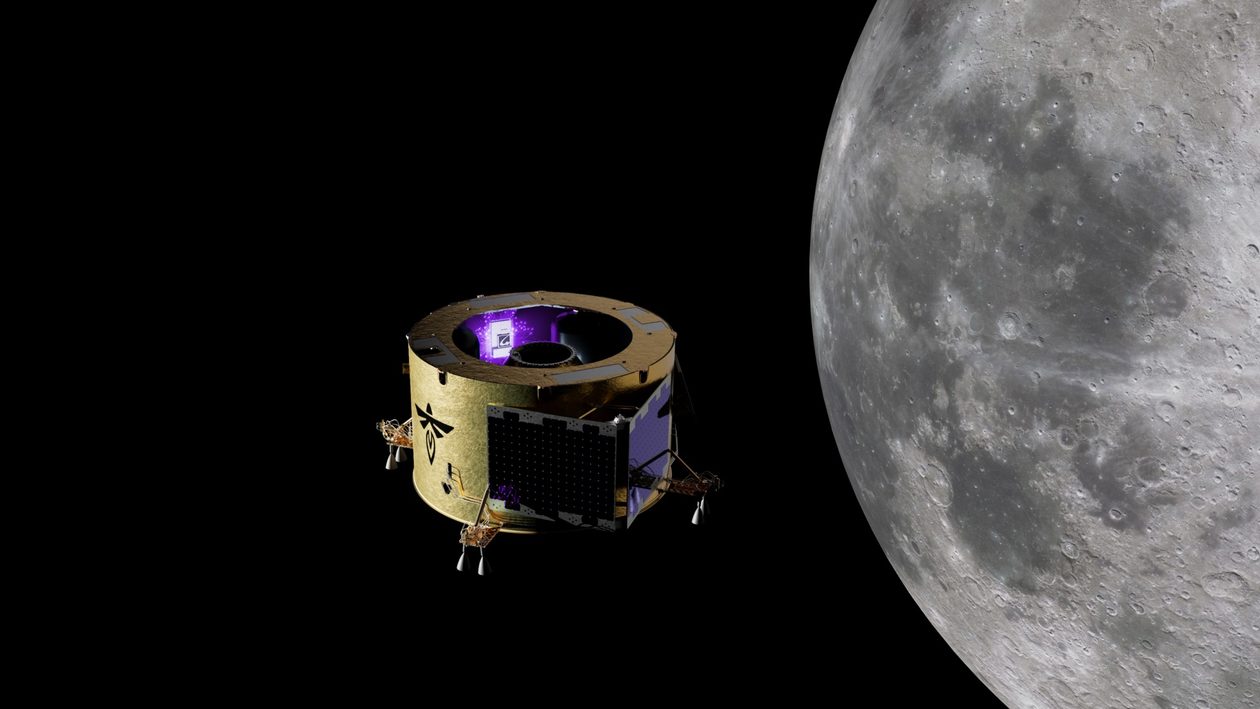
Redmond, Wash.-based Starcloud has signed up to send its artificial intelligence data-processing hardware into lunar orbit on a Firefly Aerospace spacecraft.
Starcloud’s payload, known as SC-1L, will fly on Firefly’s Elytra orbital vehicle during a NASA-supported mission that’s scheduled for launch no earlier than 2028. The mission will demonstrate technologies that Starcloud plans to use on AI data centers in Earth orbit — and around the moon as well.
“Space is the future of data centers, and the moon is the next frontier for that vision,” Ezra Feilden, Starcloud’s co-founder and chief technology officer, said today in a news release.
Starcloud made its mark in Earth orbit last year with Starcloud-1, a satellite equipped with an Nvidia H100 chip. Starcloud-1 successfully trained a large language model called NanoGPT, marking a first for orbital computing. “We successfully validated our ability to run and train AI models on enterprise-grade GPUs in low Earth orbit, and now we’re taking this proven technology to lunar orbit,” Feilden said.
Starcloud’s SC-1L payload will be integrated aboard the Elytra vehicle for a mission aimed at delivering Firefly’s Blue Ghost lander to a lunar region known as the Gruithuisen Domes. After the lander separates from Elytra and descends to the surface, the orbiting vehicle will serve as a data relay for Blue Ghost.
The data-processing demonstration begins when the Blue Ghost mission ends. SC-1L will ingest data from Elytra’s onboard Solux vision system, execute high-performance AI computing in orbit and transmit the processed data back to Earth.
The Solux system is designed to serve as an autonomous navigation and tracking tool in space environments where global positioning systems are otherwise unavailable. Firefly expects the Elytra orbiter to operate in lunar orbit for at least five years.
“We’re proud to collaborate with innovative customers like Starcloud and collectively take another step toward establishing the infrastructure that will power a permanent human and robotic presence at the moon,” said Ray Allensworth, Firefly’s vice president of spacecraft.
Elytra will also use high-resolution telescopes and Firefly’s Ocula moon imaging service for surface mapping, mineral detection and reconnaissance. Firefly recently announced a collaboration with Nvidia to process the data for Ocula using Nvidia’s Jetson module.
In August, Starcloud reported raising $250 million in funding to support the creation of a constellation of AI data-center satellites in low Earth orbit, powered by Nvidia’s Space-1 Vera Rubin Module. Starcloud has filed an application with the Federal Communications Commission to operate as many as 88,000 satellites as orbital data centers.