What Sound Does an Iguana Make? A Complete Breakdown
Understanding what sound does an iguana make requires breaking down each noise type, what triggers it, and what it means. Here’s a detailed look at every common iguana vocalization.
Hissing
Hissing is the most recognizable sound of iguana communication. It’s a sharp, sustained rush of air forced out through the open mouth. Iguanas hiss when they feel threatened, cornered, or annoyed.
You might hear hissing at night if:
- A predator (cat, raccoon, or opossum) approaches a roosting iguana
- Two iguanas encounter each other in a territorial dispute
- An iguana is startled by sudden light, vibration, or noise
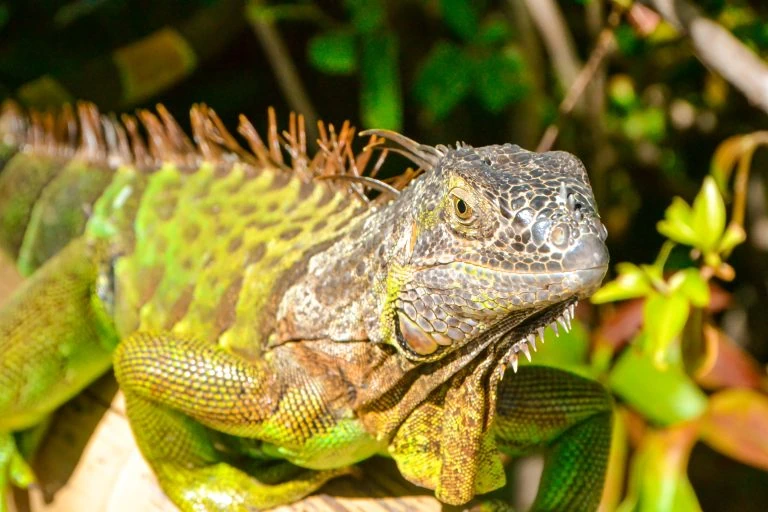
The hiss serves as a clear warning: back off. A hissing iguana often accompanies the sound with an inflated dewlap (the flap of skin under the chin), a raised body posture, and sometimes an open mouth displaying rows of small serrated teeth.
Sneezing and Snorting
Iguana sneezes sound exactly like what they are — sudden, forceful blasts of air through the nostrils. However, iguana sneezes aren’t caused by colds or allergies. Iguanas sneeze to expel excess salt from their bodies through specialized nasal salt glands.
Because iguanas are herbivores that consume high-potassium plant matter, they need to regulate salt and mineral levels. The nasal salt glands filter excess sodium and potassium from the bloodstream, and the iguana forcefully sneezes the crystallized salt out. This creates a distinctive, sometimes startling, snorting noise.
At night, you might hear repeated sneezing from an iguana roosting in a tree directly above your patio or bedroom window. The sound is sharp and rhythmic — easy to mistake for a small animal sneezing or coughing.
Clicking and Clucking
Some iguanas produce quiet clicking or clucking sounds, particularly during social interactions. These low-level noises are less dramatic than hissing but can be audible in close quarters.
Clicking sounds typically occur when:
- Male iguanas are in proximity to females during breeding season
- An iguana is making subtle jaw movements while adjusting its position
- Young iguanas communicate distress or discomfort
These sounds are quieter than hissing and usually only noticeable if the iguana is very close — on your roof, inside a soffit, or in a tree directly overhead.
Grunting and Low Vocalizations
During breeding season, male iguanas occasionally produce low grunting or rumbling sounds. These vocalizations are part of territorial displays and mating behavior. The sound is guttural and brief, sometimes accompanied by head bobbing and pushup-like body movements.
If you hear low, rhythmic grunting from your roof or yard between October and March, breeding-season territorial behavior is the likely explanation.
Physical Noises: Rustling, Scratching, and Thumping
Not all nighttime iguana noises are vocalizations. Iguanas are heavy-bodied reptiles — adult green iguanas commonly weigh 10 to 15 pounds and can exceed 5 feet in length. When they move across your roof, climb through tree branches, or shift positions on a wall, they create noticeable physical sounds:
- Scratching from claws on roof tiles, stucco, or wood
- Thumping when an iguana drops from one branch to another or lands on a flat surface
- Rustling through palm fronds, hedge rows, or leaf litter
These mechanical sounds are often what homeowners actually hear at night, even more than vocalizations. A large iguana climbing across a barrel tile roof sounds surprisingly similar to a raccoon or large rat moving through an attic.