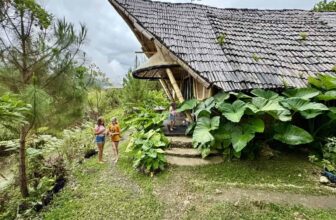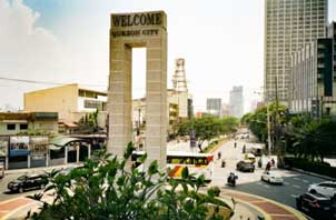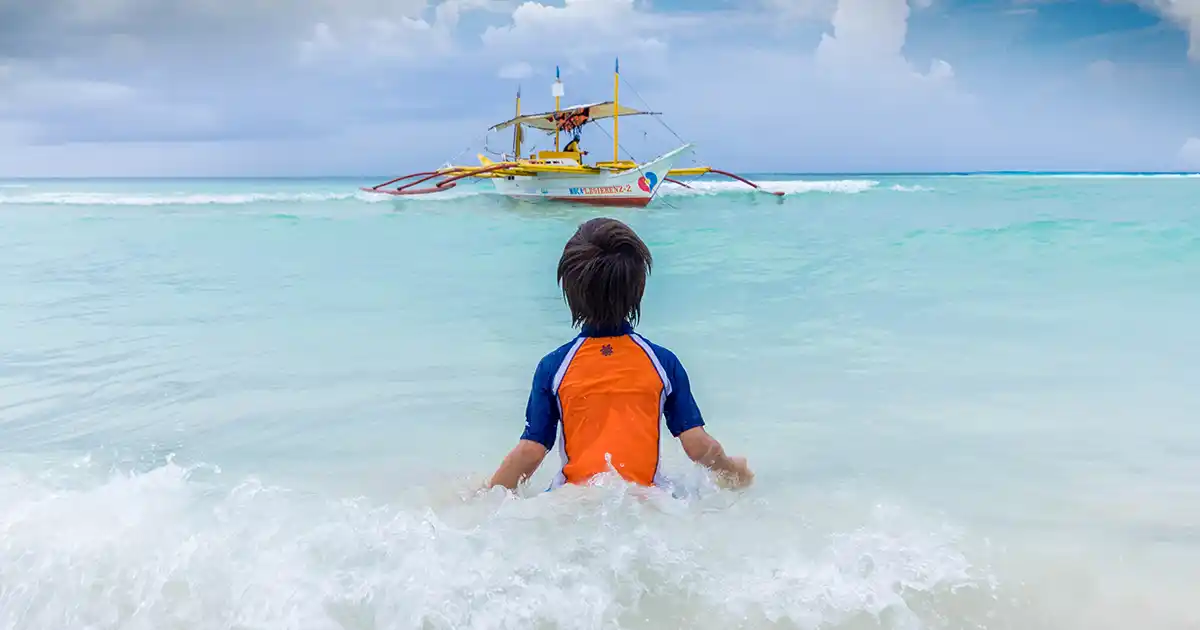
The complete family packing list for the Philippines, covering men, women, teens, and kids. Built from firsthand family travel experience across Palawan, Boracay, Coron, and Manila. Quick-dry, reef-safe, and ready for 7,000 islands’ worth of adventure.
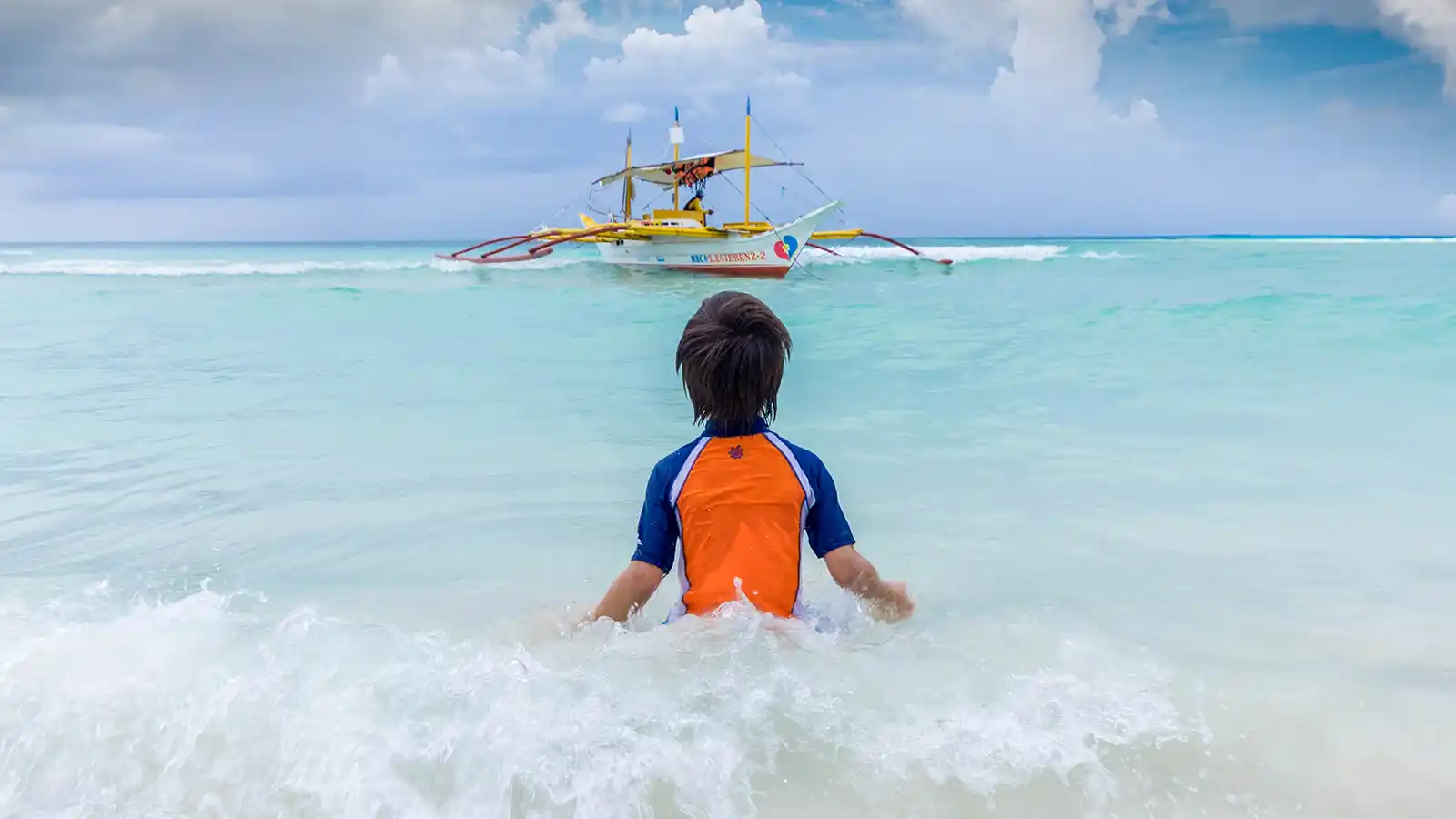
The Philippines is not one single beach destination. This country is spread out over 7,000 islands, with three distinct seasons. Packing strategies for family travel in the Philippines change significantly depending on whether you are island hopping in Palawan, wreck diving in Coron, lounging on the white sands of Boracay, or navigating the organized chaos of Manila before your domestic connection.
Most families arrive in the country having packed for the idyllic Philippines and spend the rest of the trip adjusting to all the other sides of the country.
My family has traveled across the Philippines on multiple visits. In fact, Christina was born there, raised in Manila before moving to Canada at ten. We’ve experienced island hopping through El Nido’s karst limestone lagoons, watching the boys wade into water so clear you could read a book through fifteen feet of it, exploring the shipwrecks and hidden lakes of Coron, riding paraw sailboats off Boracay’s White Beach at sunset, and paddling through the Underground River at Puerto Princesa.
The Philippines rewards families who show up prepared. The water, the heat, the rain, and the sheer amount of time you spend in boats and on beaches all demand specific things from your suitcase.
This is the Philippines family packing guide that covers all of it.
What You’ll Find in This Packing Guide for the Philippines
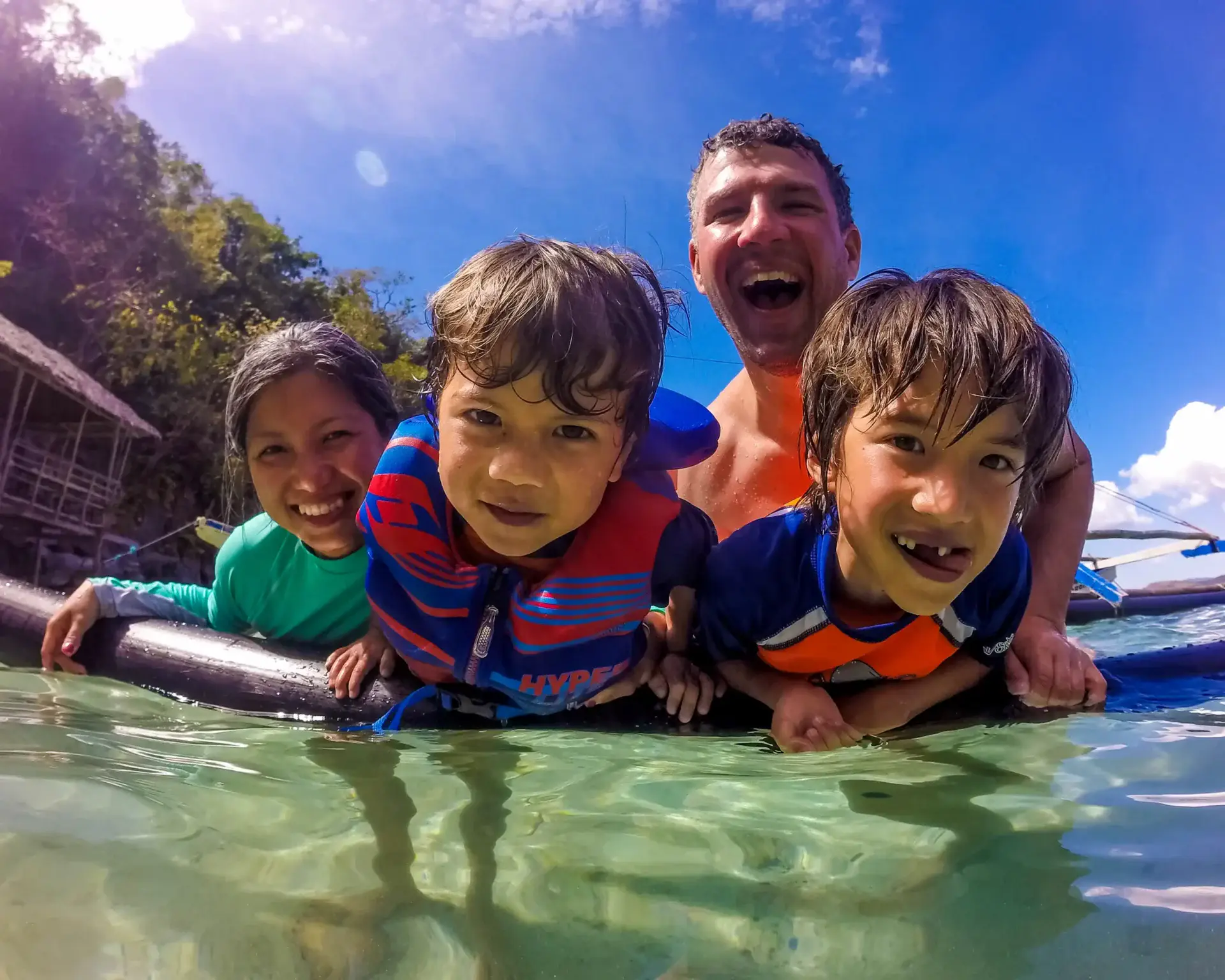
The Philippines presents families with a specific set of packing challenges that many packing guides either gloss over or miss entirely:
- Serious heat and humidity year-round. Temperatures across the Philippines sit at a consistent 86 to 95 degrees Fahrenheit (30 to 35°C) regardless of the season in which you’re traveling. With its famous humidity that makes every degree feel like more. Quick-dry fabrics are not a preference here. They are a practical requirement. Anything that cannot be hand-washed and air-dried overnight becomes a logistical nightmare for those spending more than a few days in the country.
- Three distinct seasons with real packing implications. The dry season from November through April is the prime window for travel to popular places to visit in the Philippines, like Palawan and Boracay. The wet season from June through October brings daily rain and rough seas that close some island routes and affect boat tour availability. The shoulder months of May and October sit in between. This guide focuses on the dry season while noting what changes for wet season travel.
- Water is the main event. Island hopping, snorkeling, cave swimming, lagoon kayaking, and long days on open boats are the defining experiences of a Philippines family trip. Reef-safe sunscreen, rash guards, quick-dry everything, and waterproof protection for electronics are essential, not optional.
- Children’s life jackets. Island hopping tours in El Nido and Coron often do not carry life jackets sized for young children. Bringing your own compact life jacket for young kids and specific life jackets for babies and toddlers is one of the most important Philippines-specific packing decisions a family can make. Inflatable lifejackets are often promoted in the Philippines family travel guides, but they are not considered safe or approved by most coast guards.
- Domestic flight luggage limits. Budget carriers between Manila and Palawan or Boracay often cap checked luggage at 15 to 20 kg (33 to 44 lbs) with fees for overages. Pack light enough to avoid the check-in counter surprise.
This guide covers the complete packing list for a Philippines family trip, organized by category with specific callouts for men, women, teens, and kids throughout.
Before You Pack: Understanding the Different Seasons in the Philippines
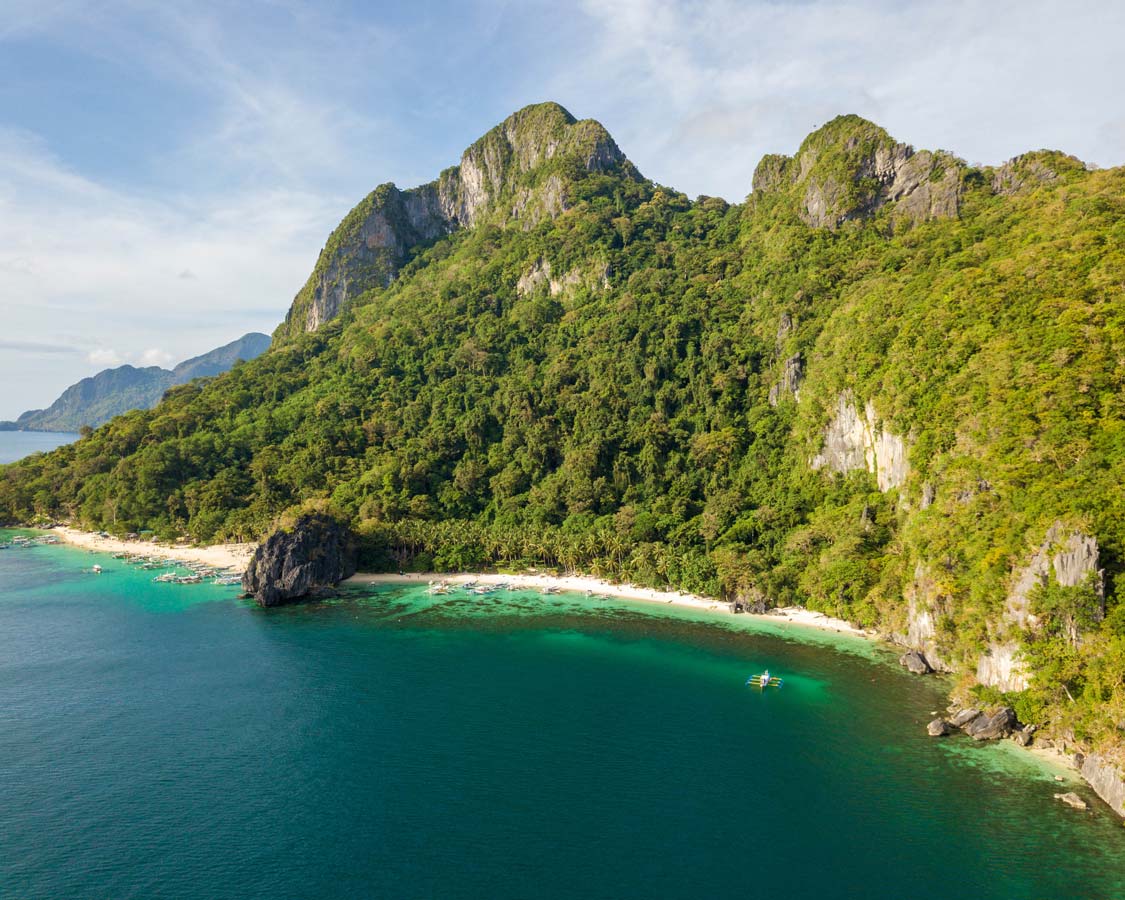
The Philippines sits just north of the equator and is warm year-round, but the changes in the seasons matter significantly for island and beach travel. The country’s complex island geography means that when one coast is experiencing the wet season, another may be in the middle of its dry season, but for the most popular family destinations, the patterns below generally apply.
Dry Season: November through April
This is the peak window for family travel in the Philippines and the season when Palawan, Boracay, and Coron are at their best. Skies are clear, seas are calm enough for island hopping, and the humidity, while always present, is more manageable than during the wet months.
December through March is the coolest and most pleasant stretch. April is the hottest month of the year across most of the country, with temperatures pushing toward 100 degrees Fahrenheit (38°C) in Manila and on lower-elevation islands. Pack for heat management above everything else in the dry season.
Wet Season: June through October
The southwest monsoon, known locally as habagat, brings daily rain and rougher seas across much of the country from June through October. This does not mean constant rain: the Philippines wet season typically delivers heavy downpours in the afternoon that pass within an hour. Mornings are often clear.
The practicalities for families are that some island-hopping routes become unavailable due to rough sea conditions, some smaller resorts close entirely, and a waterproof shell for each family member becomes genuinely useful rather than precautionary. The upside is significantly lower prices and thinner crowds at most destinations.
Shoulder Months: May and November
May sits at the tail end of the dry season and the beginning of the wet season, with increasing heat and the first signs of the southwest monsoons. November marks the transition back to dry season and is an excellent month to visit, with conditions improving rapidly through the month. Both months offer a reasonable balance of good weather and lower prices than peak season.
A Note on Quick-Dry Fabrics in the Philippines
Most Philippine guesthouses, resort bungalows, and smaller island accommodations do not have clothes dryers. Everything gets washed by hand or in a laundry machine and hung to air dry. In the Philippines’ heat and humidity, this works quickly for quick-dry fabrics. It does not work at all for denim, heavy cotton, or any clothing material that holds moisture. Bring quick-dry for every item that matters. Leave heavy fabrics at home entirely.
What To Pack For Philippines Family Travel
Philippines Packing List for Men and Teens
The Philippines is warm, casual, and almost entirely outdoors. The packing goal for travel in the country is radical lightness: as few items as possible, all of them quick-dry, all of them appropriate for moving between a boat, a beach, and a restaurant on the same afternoon without having to stop and change.
- 3 to 4 lightweight short-sleeve shirts in moisture-wicking or linen fabric. Shirts like these dry quickly after a hand wash, they don’t wrinkle after a day in a dry bag, and handle the full range of Philippine situations from Manila airports to beach town restaurants.
- 1 to 2 lightweight long-sleeve shirts for sun protection on long boat days and snorkeling excursions. As much as it might seem practical to pack something dressy, a nice rash guard like this can perform double-duty and fits right in to the local Filipino style.
- 2 pairs of lightweight shorts like these as your primary bottoms. Shorts are the right call for the Philippines. Quick-drying, relaxed shorts that work on a boat, on a beach, and at a beachfront restaurant.
- 1 pair of lightweight travel pants like these ones for Manila, church visits, and nicer restaurants. The Philippines is casual, but Manila and some air-conditioned restaurants call for something beyond board shorts.
- 2 to 3 swimsuits or board shorts. Bring more swimsuits than you think you need. You will be in the water every single day, and rotating through wet swimsuits is a quality-of-life issue on a two-week Philippines trip. These are the ones I usually pack. They’re stylish enough to pass for pants around town.
- Underwear x7 in lightweight made with quick-dry fabrics like this. Cotton underwear in the Philippine humidity becomes uncomfortable within hours.
- Socks x3 to 4 pairs. You will rarely wear them. Bring a few breathable pairs for air-conditioned situations and any days spent hiking.
Philippines Packing List for Women and Teens
Christina’s Philippines packing philosophy isn’t far from mine. Everything is quick-dry, everything is versatile, and pack a midi dress for every situation where shorts are too casual, and a rash guard is too wet. The Philippines is one of the most relaxed dress-code environments in Asia. The priority is comfort and function, not formality.
- 3 to 4 lightweight linen or moisture-wicking tops
- 1 pair of lightweight travel pants for Manila and nicer evenings: Rekucci Women’s Wide-Leg Linen Pants
- 1 to 2 lightweight midi dresses. Dresses like these are the most versatile items for the Philippines. They cover everything from a beachfront dinner in El Nido to a Manila restaurant to a sunset paraw sail in Boracay. Breathes properly in the heat and dries fast after being splashed on a boat.
- 2 pairs of lightweight shorts like these for beach days and casual island exploring.
- 2 to 3 swimsuits. Rotating through dry swimwear rather than pulling on a wet one every morning is one of the small packing decisions that makes a genuine difference on a longer Philippines trip. Christina packs these ones that come with a sarong.
- 1 or 2 lightweight sarongs or wraps. It doubles as a beach cover-up, a shoulder cover for church visits in Manila, a picnic blanket on a sand bar, and a layer on cool air-conditioned buses. One item, four uses, zero weight.
- 2 to 3 rash guards with UPF 50 or higher are the most important clothing items for the Philippines. The reason is the same as the men’s version. The Philippines sun on open water is intense and unrelenting. A rash guard is the most effective sun protection available during island hopping and snorkeling days. They also act as a great, lightweight everyday top for beaches, boats, and even around beach towns.
- Underwear x7 in lightweight, quick-dry fabrics.
- Socks x3 to 4 pairs for air-conditioned situations and any days on the hiking trails.
Philippines Packing List for Kids Under 12
The Filipino culture is friendly toward children, with a genuine and open warmth that is one of the most memorable things about traveling here with a family. Kids will be doted on, offered treats, and welcomed everywhere. Pack them in light, quick-dry clothing and focus the gear energy on sun protection and water safety.
- 4 to 5 lightweight t-shirts in quick-dry fabrics. Light to mid-range colors rather than white.
- 2 to 3 pairs of board shorts or lightweight pants. Lightweight pants are useful for air-conditioned Manila situations and for evenings.
- 2 to 3 swimsuits for daily rotation and to ensure you’re not putting on a wet pair.
- 2 to 3 rash guards with UPF 50 or higher are the single most important clothing item for kids in the Philippines. Kids on island-hopping tours in El Nido and Coron are in direct sunlight for four to six hours at a stretch. A UPF rash guard is the most effective and lowest-maintenance sun protection solution available.
- Underwear x7 to 8 in quick-dry fabrics
- Socks x3 to 4 pairs.
Family Footwear for the Philippines
Footwear in the Philippines is one of the simpler packing decisions that a family needs to make while packing for travel in the Philippines. The top activities are beach, boat, and water, and the primary requirement is footwear that handles all three without complaint. The main footwear mistake families make in the Philippines is bringing too many pairs, not the wrong kind.
- One pair of comfortable water sandals with ankle support is the primary Philippine shoe. My family uses the Teva Hurricane Drift, which comes in men’s, women’s, and kids’ sizing. These waterproof sandals handle boat boarding and disembarking, beach walks, snorkeling site entry, El Nido and Coron town streets, and beachfront restaurant dinners with equal ease. They dry in minutes, take serious abuse without complaint, and are comfortable enough for a full day of walking. Bring these and one other pair, and you are done.
- One pair of lightweight walking shoes or trail runners for Manila city days, the Underground River boardwalk at Puerto Princesa, and any hiking in the interior. These do not need to be waterproof for most Philippine situations. These are the ones that I wear. These are Christina’s favorite pair, and these are the ones I recommend for kids.
- Bring flip-flops for guesthouse and resort use. Do not rely on flip-flops as your primary footwear for boat days and beach walks where grip and ankle support matter.
Water Safety in the Philippines: What No One Else Talks About
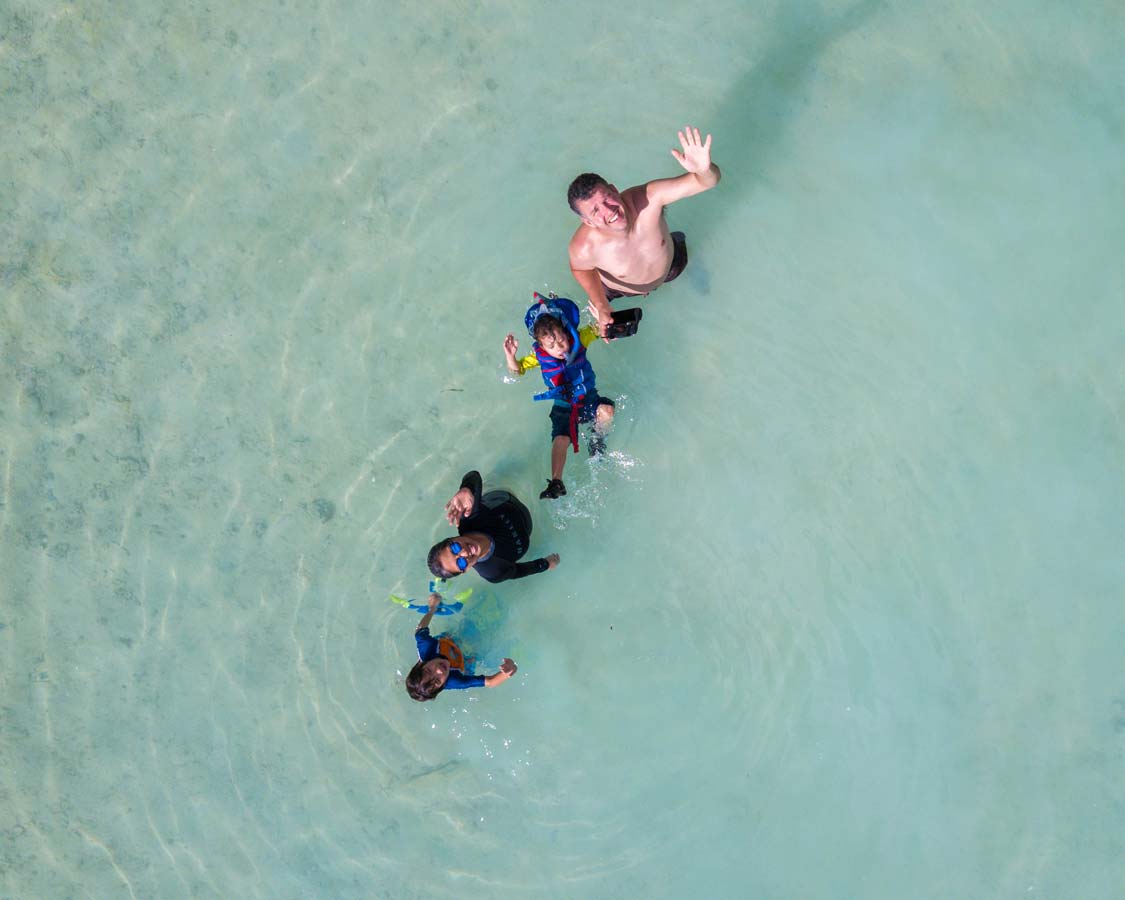
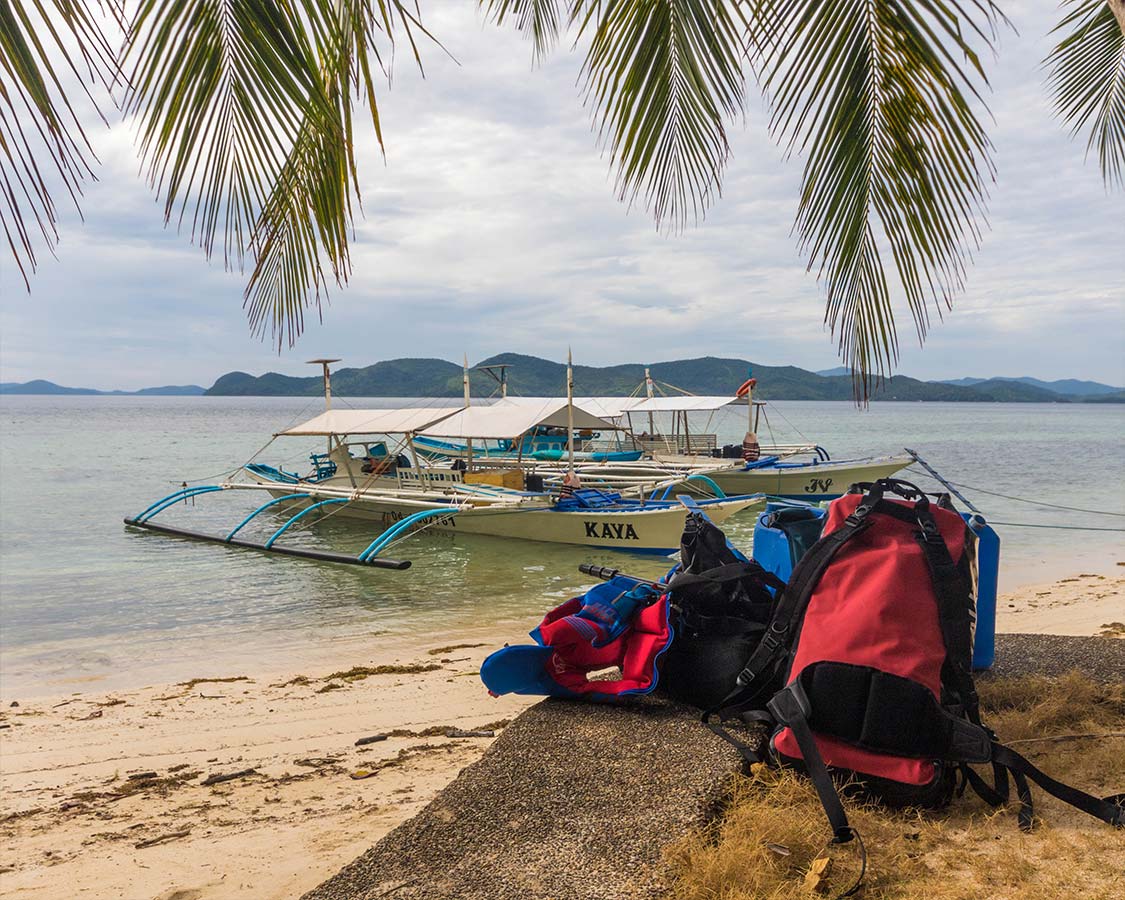
Island hopping tours in El Nido, Coron, and across Palawan are among the best family experiences the Philippines offers. They are also conducted on small outrigger boats called bangkas, operated by local guides, and they rarely carry life jackets sized for young children. This is not a criticism of the operators. It is simply the practical reality of how the local regulations and how tours are run across the Philippines archipelago, and it is something families need to prepare for before they arrive.
I strongly recommend bringing a compact life jacket for young children and a proper lifejacket with head support for babies and toddlers. They are a bit bulky, but the peace of mind a proper lifejacket provides is meaningful. Even a bulky one fits in a daypack without adding much weight or taking up too much space. This is one of the most important Philippines-specific packing decisions a family can make.
The few Philippine family packing guides that do mention lifejackets often recommend inflatable ones. Inflatable lifejackets are prone to damage and are not recommended by coast guards. I recommend packing a proper foam one for safety.
Beyond life jackets, the water safety considerations for the Philippines are standard tropical ones: reef-safe sunscreen to protect the marine ecosystems you are swimming in, rash guards for UV protection during long snorkeling sessions, and a waterproof bag for electronics and documents on all boat days.
Sun Protection for the Philippines
The Philippines sits just north of the equator, and the UV index year-round is extreme. The combination of direct tropical sun, open-water reflection, and the hours families spend on boat decks and snorkeling makes sun protection the most important health consideration for a Philippines trip. It is not background logistics. It is the thing that determines whether the family comes home with good memories or bad sunburns.
- Pack reef-safe sunscreen SPF 50 or higher for the whole family, and bring significantly more than you think you need. The Philippines’ coral reefs are among the most biodiverse in the world, and regular sunscreen chemicals cause genuine damage to coral ecosystems. Reef-safe sunscreen brands are both the right environmental choice and increasingly required at certain protected marine sites. Buy enough at home. Quality reef-safe sunscreen is expensive and inconsistently available outside Manila.
- Pack a wide-brim sun hat with UPF 50 or higher for everyone. I like the Tilley LTM6 Broad Brim Hat. It’s ventilated and packable. A full day on an open bangka boat without a hat in the Philippine tropical sun is the kind of experience that leaves a lasting impression on the top of your head. They also have them in sizes for all ages.
- Make sure to pack a pair of polarized sunglasses for all family members. The glare off the Sulu Sea and the South China Sea on a clear day is intense.
Gear and Accessories for Family Travel in the Philippines
Bags
- Bring a packable daypack for island-hopping days and cave tours. A bag like this one compresses to nothing in your main bag and holds everything you need for a full day on the water: sunscreen, water, snacks, a change of clothes, and a dry bag for electronics. Essential for El Nido and Coron island days.
- Small crossbody or sling bag for city days. Something like this helps to keep both hands free in Manila’s busy streets and markets, with your valuables secure in crowded areas.
- Packing cubes to organize across multiple islands and accommodation types. A Philippines itinerary moves between Manila, domestic flights, multiple islands, and different resorts. Organized packing cubes save real time when you are repacking at 5 am for a domestic flight.
Water Protection
Every Philippines island hopping adventure puts your gear at risk of getting wet: boat spray, rain showers, snorkeling transfer entries, and the general enthusiasm of children near water. Electronics, documents, and anything that cannot get wet need dedicated waterproof protection.
- A waterproof dry bag like this for electronics and documents is a must for all boat days. Every device, every document, every item that cannot survive a wave over the bow of a bangka boat goes in here. This is the most-used gear item in our Philippines packing list after rash guards.
- A waterproof phone case for beach days and snorkeling. This doubles as an underwater camera housing for shallow snorkeling shots.
- Large zip-lock bags as a backup waterproof system for passports, cash, and anything else that absolutely cannot get wet. The Philippines will find every gap in everything.
Snorkeling Gear
The Philippines has some of the finest snorkeling in the world. The coral gardens around El Nido, the WWII shipwrecks of Coron, and the marine park at Siete Pecados are all world-class snorkeling destinations accessible to families. Rental gear and snorkeling equipment offered by tour companies aren’t always in the best shape. Having your own gear transforms these experiences significantly.
Bringing your own set means you know it’s good quality, can be used over and over again, and best of all, you know it, so that skips the learning curve every time you go out on the water. This is a great beginner set for adults, and this one is excellent for kids.
Tech and Power
Bring a portable power bank like this one during your travels in the Philippines. Long island hopping days and beach days drain phones fast when you are photographing, navigating, and keeping kids entertained on boat transfers. It offers about two full charges per device.
The Philippines uses Type A and Type B outlets at 220V (60Hz). North American travelers’ devices are generally compatible with the same plug types, but should verify voltage compatibility for any non-dual-voltage devices. A universal adapter like this one handles any Type C socket situations in older accommodations.
Camera
Bring a waterproof action camera for underwater photography. A GoPro works great for close-up shots, but if you want something more versatile, I recommend the Olympus Tough series. Waterproof, shockproof, kidproof. But it also has zoom and a better all-around photo experience. The Philippines is the destination in this guide series that most rewards an underwater camera. The clarity of the water in El Nido’s lagoons, the color of the coral at Coron, and the tropical fish around every snorkeling site are genuinely worth capturing properly.
Packable Quick-Dry Towels
Bring one packable, quick-dry towel per person. These lightweight towels are great for island-hopping tours, which do not provide towels. Many smaller resorts provide one per room, but not extras for beach use. A quick-dry towel in every daypack is the piece of gear that the whole family reaches for multiple times every single day in the Philippines.
Reusable Water Bottles
Bring one insulated reusable water bottle per person. If you want something even better, bring a filtered water bottle. The tap water in the Philippines is not safe to drink. Bottled water is available everywhere, but it generates significant plastic waste across a multi-week island itinerary. A filtered bottle like this one eliminates the constant plastic purchasing and saves meaningful money over a longer trip.
Toiletries: What to Bring and What to Leave at Home
Bring From Home
- Sunscreen SPF 50+ for the whole family and enough for the full trip. Pharmacies in Manila and Cebu are well stocked. Outside the main cities, particularly in smaller islands and in the north, options thin out considerably.
- Insect repellent. Dengue fever is present in the Philippines and transmitted by daytime mosquitoes. The risk is higher in urban and jungle areas than on open island beaches, but repellent belongs in the bag regardless of where you are staying. This is the repellent I recommend for adults, and this is a DEET-free one that’s good for young children.
- Prescription medications with a doctor’s note for anything controlled.
- Children’s paracetamol and ibuprofen in familiar brands.
- Oral rehydration salts for summer travel and long desert days. The Philippines’ heat dehydrates children faster than many parents expect.
- Allergy medications.
- Hand sanitizer x2. Street food and market exploring involve a lot of hands.
- Wet wipes in multiple packs. Invaluable on desert days, at Petra snack stops, and with children in general.
Buy in the Philippines
- Shampoo, conditioner, body wash, and toothpaste in Manila before heading to the islands. Robinson’s Place, SM Mall of Asia, and Mercury Drug are all well-stocked. On smaller islands and in El Nido and Coron towns, options are available but more limited and more expensive. Stock up in Manila before flying south.
- Basic medications. Philippine pharmacies in cities are well-stocked, and pharmacists are generally helpful. Mercury Drug is the main chain and operates across the country.
Documents, Money, and Administration Needs for Family Travel in the Philippines
- Valid passports for all family members with a minimum of 6 months’ validity beyond your travel dates.
- Philippine Pesos in cash. The Philippines is primarily a cash economy outside Manila. ATMs are available in Puerto Princesa, El Nido town, and Boracay. In Coron and on smaller islands, ATMs are limited and sometimes out of cash. Withdraw sufficient amounts before leaving each major town. Many island-hopping operators, local restaurants, and guesthouses accept cash only.
- Domestic flight tickets printed or downloaded to your phone. Philippine budget carriers, including Cebu Pacific and AirAsia Philippines, are reliable, but their check-in and boarding processes are faster with documentation readily accessible.
- Travel insurance documents, printed and digital. Medical care in Manila is good. On smaller islands and in Palawan outside Puerto Princesa, medical facilities are very basic. Emergency evacuation coverage is worth having for families with young children. I typically use Safetywing or World Nomads for my family’s travel insurance.
- Printed and digital copies of accommodation confirmations and emergency contacts.
- Vaccination records, if required. Hepatitis A, Typhoid, and for jungle areas of Palawan, consideration of Japanese Encephalitis vaccination is commonly recommended. Consult a travel health clinic well before departure.
Quick Reference: Clothing Quantities per Person
Based on a two-week Philippines itinerary covering Manila, Palawan (El Nido and/or Coron), and Boracay during dry season
| Item | Men | Women | Teens | Kids |
|---|---|---|---|---|
| Lightweight t-shirts | 3-4 | 3-4 | 3-4 | 4-5 |
| Long-sleeve shirt | 1-2 | 1-2 | 1-2 | 1-2 |
| Light pants | 2 | 2 | 2-3 | 2-3 |
| Shorts | 2 | 2 | 2-3 | 2-3 |
| Sarong or wrap | — | 1-2 | 1-2 | — |
| Swimsuit | 2 | 2 | 2-3 | 2-3 |
| Rash guard | 2 | 2 | 2 | 2 |
| Underwear | 7 | 7 | 7 | 7-8 |
| Socks | 7 | 7 | 7 | 7-8 |
| Travel dress | — | 1-2 | -12 | — |
Frequently Asked Questions
November through April is the dry season and the best window for family travel to Palawan, Boracay, and Coron. December through March offers the coolest temperatures and the calmest seas for island hopping. April is the hottest month of the year and requires more careful heat management. November is an excellent shoulder month with improving conditions and thinner crowds than peak season. If you have flexibility, late November through early February is the sweet spot, combining good weather, manageable crowds, and the full availability of island-hopping routes.
The Philippines is a safe family destination across the main tourist areas of Palawan, Boracay, and Manila’s tourist districts. Filipinos have a genuine and open love of children that makes family travel here particularly welcoming. The main practical considerations are standard tropical ones: sun and heat management, water safety on island hopping tours, food and water hygiene, and awareness of petty theft in crowded Manila areas. Check your government’s current travel advisory before traveling, as the southern Philippines, including parts of Mindanao, has specific safety considerations distinct from the main tourist regions.
You do not need to, but bringing your own mask is strongly recommended. Island-hopping tour operators in El Nido and Coron provide basic snorkeling gear, but the quality and fit vary significantly. An ill-fitting rental mask that fogs constantly or lets in water ruins the snorkeling experience in some of the world’s most spectacular marine environments. A personal mask that fits properly and that you have tested at home transforms those snorkeling stops completely.
The Philippines uses the Philippine Peso (PHP). Cash is essential throughout the country and especially critical on smaller islands and in rural areas where ATMs are scarce, and card payment is uncommon. Withdraw adequate Pesos in Manila or Puerto Princesa before heading to smaller island destinations. ATMs in El Nido town and Coron exist but run out of cash during busy periods. Most island-hopping operators, local restaurants, and small guesthouses are cash-only.
Manila is an excellent city for forgotten gear. SM Mall of Asia, Robinsons Galleria, and the Landmark department stores all carry outdoor gear, clothing, and electronics. Mercury Drug is the main pharmacy chain with excellent stock. Once you leave Manila and fly to the islands, options shrink considerably. El Nido and Boracay towns have basic supplies and some tourist-oriented shops. Coron is more limited. The general rule applies: buy in Manila anything you are uncertain you packed, before flying south.
Final Word on Packing for the Philippines
There is a moment on an island-hopping tour in El Nido when the bangka anchors in a lagoon and the boatman cuts the engine, and the only sound is water against the karst limestone cliffs and whatever the boys are arguing about in the bow. The water is a color that does not photograph properly. It is too clear and too blue and too lit from below to look real in a photo. You have to be there.
That is what the Philippines does to families. Dylan was in the water before the anchor was down. Cohen is pointing at something on the reef and then immediately trying to touch it. The paraw sailing off Boracay’s White Beach at sunset, the outrigger hull cutting through the Sibuyan Sea with the kind of silence that only happens on a boat under sail. The Filipinos on the boat offered the boys mango from their own lunch because that is simply what you do when there are children nearby.
The families who arrive with the right rash guards, the right reef-safe sunscreen, the right waterproofing for their electronics, and a life jacket that actually fits their kids get to be fully present for all of it. The ones who do not spend the first morning in El Nido in a panic about wet phones and sunburned children.
Pack light. Pack quick-dry. Bring more sunscreen than you think you need. The Philippines will handle the rest.
This page is updated as new regional guides and planning resources are published. Looking beyond the Philippines? Explore my International Family Travel Guide.