The Hard Trade: Why Tough Trading Decisions Can Win

The Power of the Hard Trade: Why Uncomfortable Decisions Can Lead to Trading Success
Hard Trade
One of the most valuable lessons I have learned from years of trading is easy to explain but difficult to follow: the trade that feels hardest to make is often the trade most closely aligned with the market.
This does not mean traders should take reckless positions simply because they feel uncomfortable. A hard trade must still be supported by price action, sound analysis, and disciplined risk management. The difficulty usually comes from having to follow a strong market move when the price no longer looks attractiveor from resisting the temptation to pick a top or bottom.
The principle applies not only to forex but also to stocks, bonds, commodities, indices, futures, and cryptocurrencies. Human nature encourages traders to seek comfort. Markets frequently reward those who can set that instinct aside and respond to what price is actually doing.
Why the Easy Trade Is So Appealing
Most traders understand the familiar advice to buy low and sell high. It sounds logical, and under the right conditions it can be a valid strategy. The problem begins when traders apply it automatically to a strongly trending market.
Imagine that a currency pair, stock index, or commodity suddenly falls sharply. After such a large move, buying can feel like the obvious decision because the market appears cheap. A rapid rally creates the opposite temptation: sell because the price looks too high.
These trades are psychologically easy because they offer a familiar entry point and an apparently convenient location for a stop. A trader buying after a decline can place a stop below the recent low. Someone selling after a rally can place one above the recent high.
The setup may look tidy, but it can be misleading. A market is not required to reverse simply because it has moved a long way. What appears cheap can become considerably cheaper, while an apparently expensive market can continue rising.
The easy trade often puts the trader directly in front of the dominant momentum.
The Emotional Trap of Trying to Pick a Top or Bottom
The desire to trade against a strong move is usually driven by emotion rather than evidence.
Suppose a trader is correctly positioned short during a decline and takes a profit. The market then falls another 50 points or pips. Re-entering the short position now feels difficult because the new selling price is worse than the original one. The trader may decide to buy instead, assuming the move has gone far enough and a bounce must be coming.
Nothing in the price action may support that conclusion. The decision is based largely on regret over exiting too soon and discomfort with selling at a lower level.
This is how a trader can move from being correctly positioned with the trend to standing directly in its path.
Markets do not know where a trader previously entered, exited, made money, or missed an opportunity. Those reference points exist only in the trader’s mind. Allowing them to influence the next decision can turn a sound analysis into an emotional reaction.
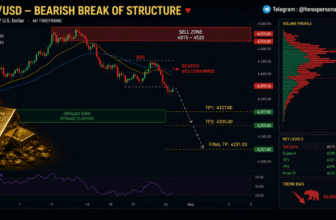
XAUUSD (GOLD) 1 HOUR CHART (August 28, 2026)
Trying to catch a falling knife by buying would be the easy (to get filled) but low odds tradse.

What Is a Hard Trade?
A hard trade is usually one that makes sense based on the market evidence but feels uncomfortable to execute.
It may involve:
- Buying a market that has already risen sharply
- Selling a market that has already experienced a steep decline
- Re-entering a trend at a less favorable price after taking profits too early
- Accepting that a perfect pullback or entry may never arrive
- Reducing position size because the logical stop is farther away
- Remaining on the sidelines instead of guessing at a reversal
The hard trade is not the same as blindly chasing price. Chasing means entering because of fear of missing out, often without a valid plan or acceptable risk. A professional hard trade has a reason, an invalidation point, an appropriate position size, and a clear understanding of the market environment.
Its difficulty comes from discipline and not from recklessness.
How Economic News Affects Stocks, Bonds, Commodities, Crypto and Forex
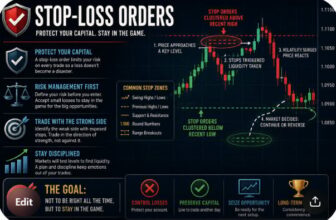
Why Strong Trends Make Stop Placement Difficult
One reason traders gravitate toward countertrend positions is that strong markets rarely provide convenient entries.
When a trend accelerates, nearby support or resistance may be difficult to identify. The most technically logical stop can appear too far from the current price. A trader who wants a tighter stop may therefore take the opposite side of the move because the latest high or low offers an obvious reference point.
This is especially common in intraday trading during an acceleration, liquidation, or profit-taking episode. Prices can move rapidly with only shallow pauses. Traders waiting for an ideal retracement may never receive one, while traders attempting to call the end of the episode can suffer repeated losses.
The inability to find a comfortable stop does not justify taking the opposite side. It may mean that the position must be smaller, the strategy must use a different time frame, or the trade should be avoided altogether.
Sometimes the professional decision is to participate cautiously. At other times, the hardest and best decision is not to trade.
Why the Hard Trade Can Offer an Advantage
The hard trade can work because it respects momentum and the path of least resistance. Instead of assuming that a market must reverse, the trader accepts that an established move can continue farther than expected.
This shifts the focus from finding the perfect price to answering more useful questions:
- Which side is controlling the market?
- Which side is most at risk of stops being run?
- Is the current move accelerating or losing momentum?
- Where would the trade idea be proven wrong?
- Can the position be sized so that the risk remains acceptable?
- Is there actual evidence of a reversal, or does the market merely look overextended? In other words, there is no reason to guess at a top or bottom unless there is a reason to do so.
A trader does not need a perfect entry to make a successful trade. Direction, timing, stop placement, and position size all matter. An imperfect entry aligned with a powerful move may have a better probability of success than a precise entry taken against it.
The Difference Between a Hard Trade and a Bad Trade
Not every uncomfortable trade is a good one. This distinction is critical.
A hard trade is supported by market structure but challenges the trader emotionally. A bad trade lacks a sound setup, violates risk limits, or depends on hope. Buying after a strong rally without a plan is not automatically courageous. Selling during a collapse without knowing where to exit is not automatically professional.
Before entering, a trader should be able to explain:
- Why the trade is being taken
- What market behavior supports it
- Where the analysis becomes invalid
- How much capital will be risked
- Whether the potential reward justifies that risk
If those questions cannot be answered, discomfort may be a warning rather than an opportunity.
Risk Management Makes the Hard Trade Possible
Traders sometimes believe they have only two choices: chase the move with an excessively wide stop or attempt to catch the reversal with a tight one. There are better alternatives.
If the logical stop is farther away, position size can be reduced so the amount of capital at risk remains controlled. A trader can also wait for a shorter consolidation, use a lower time frame to refine the entry, or allow the market to prove that momentum is still intact before participating.
If no reasonable entry or stop exists, the correct choice may be to stand aside. Missing a move is frustrating, but it does not damage trading capital. Forcing a trade because the market has already moved often does.
Risk management allows traders to make difficult decisions without turning those decisions into oversized bets.
Stop Fighting the Market
Repeatedly fading a strong move can become expensive. After each loss, the market may look even more overextended, encouraging the trader to try again with greater conviction. Instead of accepting the message from price, the trader begins fighting it.
This behavior is often rooted in ego. Calling the exact top or bottom feels satisfying, but markets do not reward traders for making dramatic predictions. They reward effective decisions and controlled risk.
A trader does not need to capture the first or last part of a move. The objective is to recognize the dominant side, participate when the risk is manageable, and protect capital when conditions are unclear.
Trading Success Requires Productive Discomfort
The hard trade teaches an important lesson: successful trading rarely feels as comfortable as it appears in hindsight.
Following a trend after it has already moved can feel late. Re-entering at a worse price can feel wrong. Reducing position size can feel overly cautious. Sitting out while others appear to be making money can feel unbearable.
Yet each of these decisions can reflect discipline.
The easy trade offers immediate psychological comfort. The hard trade requires the trader to separate feelings from evidence. Over time, that ability can make the difference between reacting impulsively and operating with a repeatable process.
To sum up, the central lesson of the hard trade is not that traders should always buy strength or sell weakness. It is that they should stop choosing a position merely because it feels comfortable.
Before fading a powerful move, ask whether the chart is actually signaling a reversal or whether the market simply appears to have traveled too far, too fast. Before chasing momentum, determine whether there is a defensible entry, a logical stop, and an acceptable amount of risk.
The hardest decision may be to follow the trend. It may be to re-enter at a less attractive price, trade a smaller position, wait for confirmation, or stay out completely.
In forex and across global financial markets, the professional trade is the one based on price action, probability, and risk, not comfort, regret, or hope.
The next time a trade looks almost too easy, pause and ask: Am I responding to the market, or am I simply choosing the position that feels best?