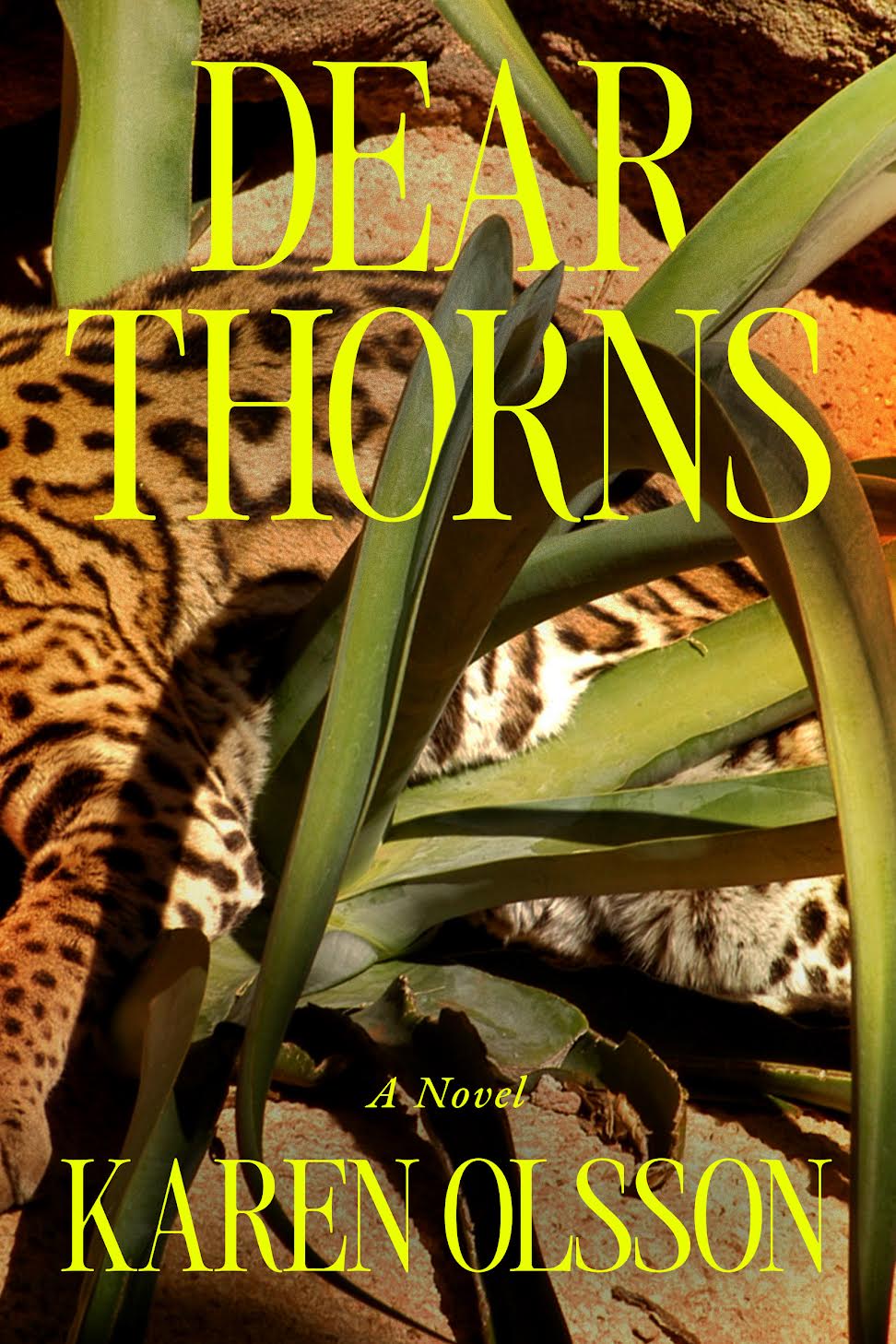
Austin author Karen Olsson’s latest novel, Dear Thorns, opens with maybe the most depressing testicle joke in human history. Her protagonist, Lora, is called to a dark road in South Texas to scrape up the car-kissed corpse of one of the few remaining ocelots in Texas. Lora is a middle-aged scientist who has lived and worked at the local ocelot refuge for more than a decade, seeing only minimal gains (if any) in the work to repopulate the endangered species. All that’s left now is top FedEx recovered sperm in hopes it can be used in a zoo breeding program.
Throughout the novel, Olsson returns to the road as a sign of death and imprisonment. The refuge can protect the land all they want, but ocelots still try to roam despite the fatal nature of crossing the work of state transit. Freedom is at odds with the casual cruelty and apathy of Texas drivers who speed down the highways no matter how many signs beg them to please slow down for the cats’ sakes.
Likewise, a plan to import Mexican ocelots to Texas to increase biodiversity is a plan brought up throughout the book, never coming to fruition thanks to various political reasons. The theme is clear: South Texas will be contained, tamed, and isolated. To prove this point further, the refuge is situated just miles from an immigration detention facility.
“There is the Laguna Atascosa National Wildlife Refuge that this wildlife refuge is based on, and there is a detention center across the highway in this place where there really isn’t much else at all,” said Olsson in a phone interview. “I think of how we hide, detained people. It’s part of this landscape, the same way that thorns are.”
Dear Thorns is Olsson’s third novel and fourth book overall. As a writer for Texas Monthly, she’s crisscrossed the state in pursuit of stories, seeing a lot of the land and the politics around it. When she first conceived of Dear Thorns, she says it was a more surrealist work centered around an immigration enforcement facility. As she struggled to finish the book, she became intersected in ocelots.
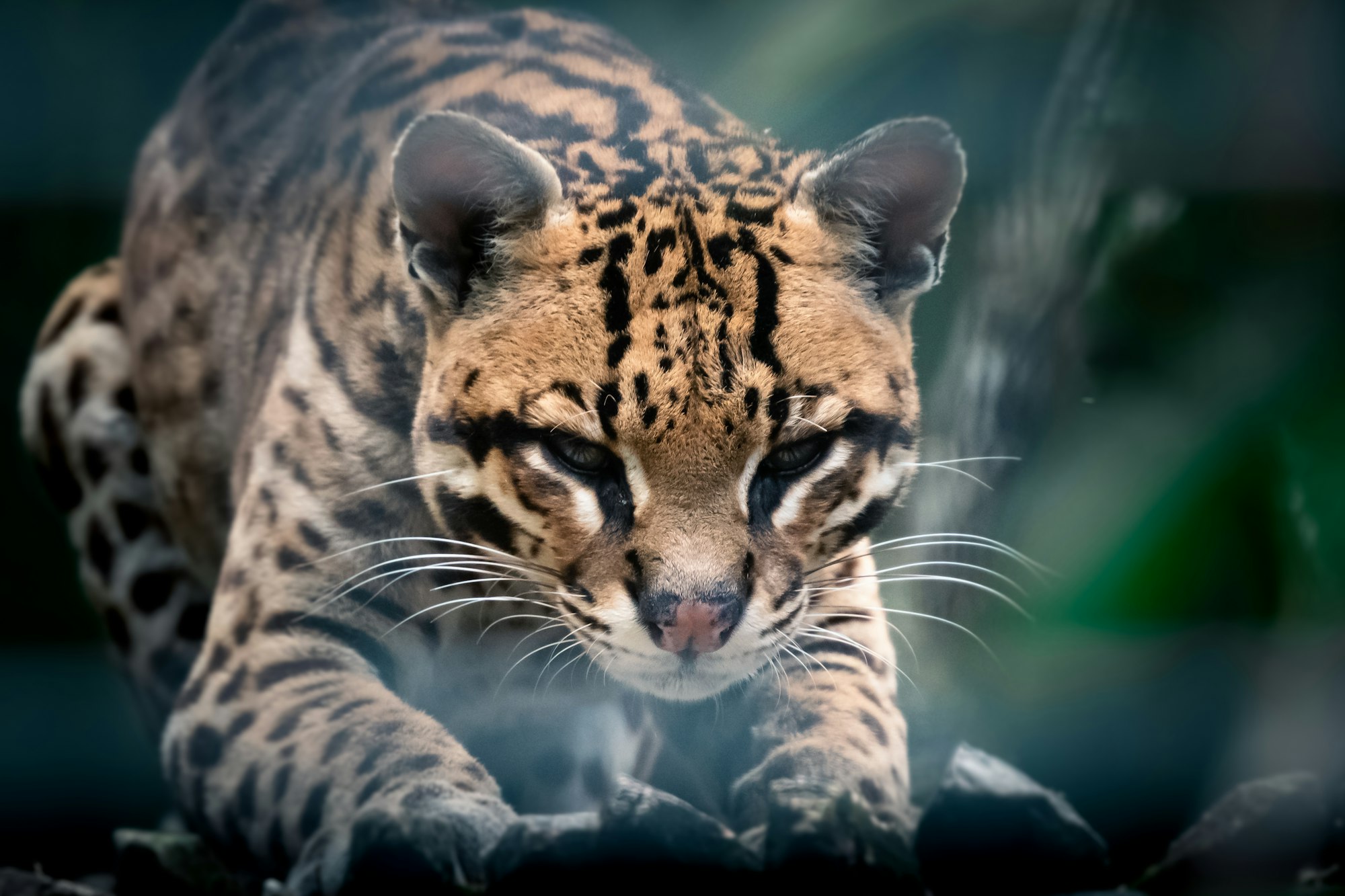
There are maybe 150 ocelots left in Texas. Once, they lived all over the Gulf Coast and South America, with fossils found as far west as Florida and south as Argentina. Roughly twice the size of a large house cat, their numbers have dwindled thanks to the fur trade and habitat loss. The Texas ocelots are living on borrowed time, with too few members for healthy breeding diversity. Captive breeding programs have had only marginal success.
A chance look at an ocelot during a bout of writer’s block led Olsson to revamp Lora as both a scientist and a person largely hiding from the real world in the Texas woods.
“The thing I like most about ocelots is the ocelots themselves but I think there’s also a way in which they are unseen,” said Olsson. “They resonated for me in that way.”
At one point in the novel, Lora gives a talk about ocelots to the staff at the detention center. Just the staff. Lora never sees any of the detainees. They are as hidden and regulated as the cats, prohibited from moving around freely.
It is impossible to escape the border politics of Texas. The statewide leadership of the state has been largely held on promises to restrict immigration and remove unwanted elements. It’s an action plan often carried out hidden in the dark, with migrants tracked via the same game cameras that Lora uses to find her ocelots. The fact that ill-conceived border barriers mean harmfully restraining the migration of animals further shows how silly nativist elements are.
Dear Thorns is an excellent but melancholy book about what freedom actually means. Lora fights hard for her incrementalist work, like installing speed bumps on the road and building culverts for animals to cross. The bigger questions, such as how to make an indifferent wealthy class actually care, go unanswered. There are moments in the book that do feel hopeless.
Olsson’s genius is how much she makes a reader love Lora for trying where she can to win and at least standing witness to the fights she loses. There aren’t a lot of answers in the book about what to do with immigration policy, ocelot salvation, or even how to effectively navigate a mid-life crisis.
But it does remind people that building walls (even in road form) has devastating consequences on beings that just want to live. There’s something heroically human in that.
“Before I even knew this book was going to involve ocelots, it was about somebody who was witnessing something happening in the world and asking herself if she was making a difference or if she was just watching it get worse,” said Olsson.