In the world of luxury watches, few brands carry the same weight as Patek Philippe. The reputation comes from technical achievement, but a surprising amount comes from consistency in the symbols, the designs. Join us in this blog as we cover an in-depth look at how Patek Philippe has built a visual language that still feels relevant today, and why so many collectors favour the brand.
Patek Philippe: Origins Traced Back to 1839
The early story of Patek Philippe is closely tied to the founding partnership, an important starting point for what would become a defining name in the watch industry. You can read more about the history of Patek Philippe here.
Brand’s Identity: How Patek’s Style Can Understate Power
What makes Patek Philippe feel distinctive isn’t loud branding; it’s a controlled, coherent system. Patek Philippe has a way of making a watch look calm yet authoritative, through proportion, finishing, and a focus on restraint that can make a simple dial feel quietly confident. This is the heart of the brand: consistency as an aesthetic and as a promise.
Placed alongside other luxury brands and luxury watch brands, whether you’re thinking of Breguet for historical influence or Cartier for design legacy, Patek Philippe stands out for staying unusually consistent while still moving forward. In practical terms, this means its visual choices and its decisions about what “matters” in a watch feel deeply aligned with the brand’s long-term view and the brand’s values, the idea that the best objects are built to endure. (That perspective is also what many enthusiasts casually call Patek’s “quiet confidence”.)
Patek Philippe Logo: The Cross Emblem,
The Patek Philippe logo is more than an emblem, and it’s a huge part of the brand’s identity. Patek Philippe’s presentation tends to be clean and disciplined, often a carefully spaced wordmark on a white background, supported by typography that reads traditional and authoritative. Design-minded collectors will often describe that effect as rooted in a classic serif, and some modern brand discussions even name-check type options like Monotype Grotesque Regular as a complementary, understated companion for technical text.
Crucially, the logo doesn’t try to dominate the watch. It supports recognition without becoming the main event, which is part of what makes a Patek watch feel “finished” rather than flashy.

Calatrava Cross,
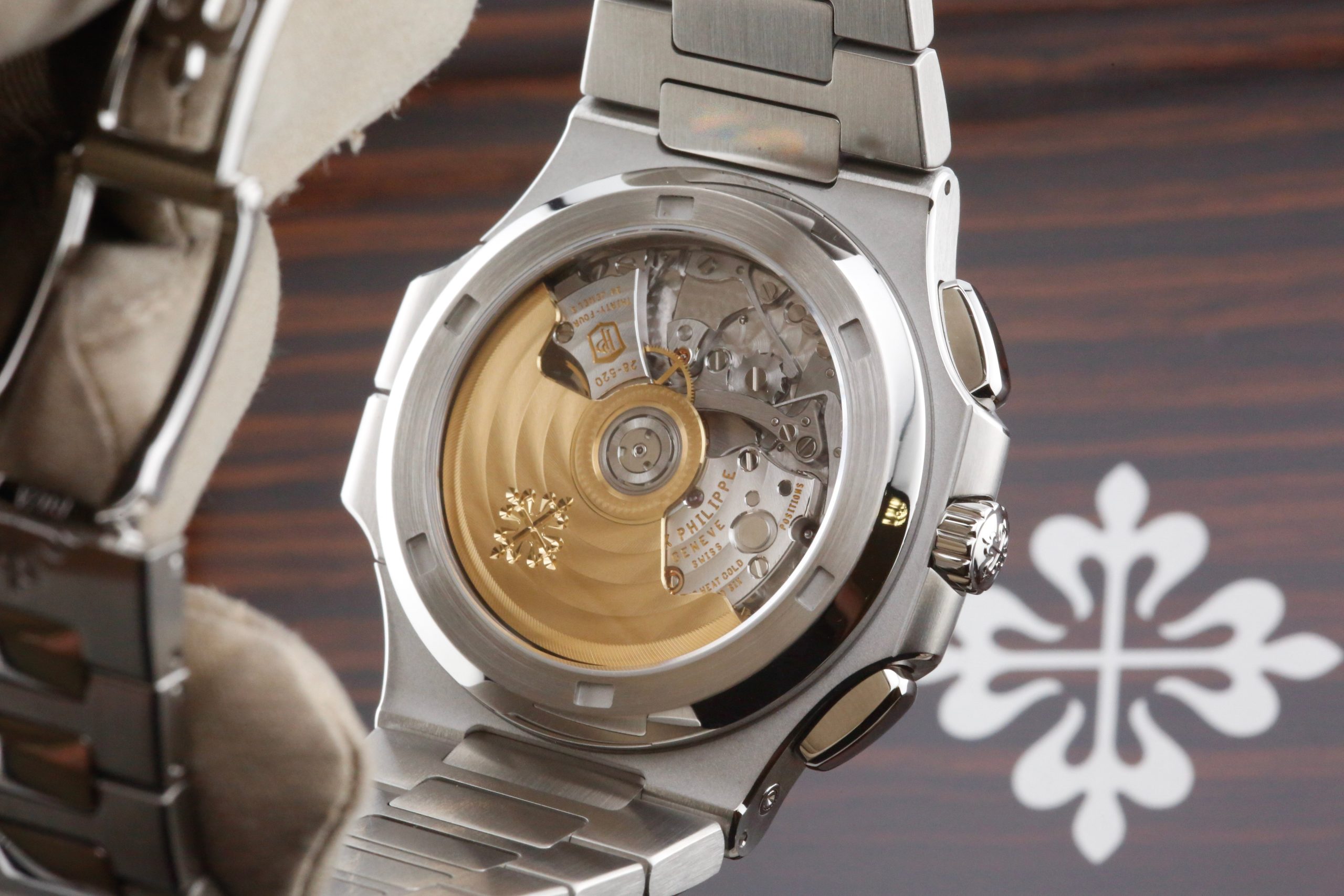
The emblem’s deepest resonance comes from history: the symbol is frequently linked in discussion to the order of Calatrava, giving the mark a heritage “weight” beyond simple decoration. On many pieces, that presence shows up as subtle engraving, a signature-like detail that’s meant to reward close attention, not demand it.
Watchmaking: Geneva Heritage, Swiss Watchmaking, and Luxury Watchmaking
Brand identity only works long-term when the product keeps earning it. In enthusiast parlance, Patek Philippe sits near the peak of the horological world because its watch design is underpinned by genuine technical discipline.
The broader watch-making culture of Geneva, and the wider finishing tradition, helps explain why the brand’s reputation has adapted to different audiences so well: the standard isn’t only how a watch looks from across a room, but how it’s constructed, finished, and expected to perform over time. That’s also why collectors talk about watchmaking art as part of the experience: the craft is functional, but it’s also expressive. At its best, this becomes a philosophy of timekeeping that treats the watch as something closer to a long-term companion than a gadget.
Even the “sportier” side of the catalogue fits into the same identity. The Nautilus is no doubt one of the most recognised luxury sports watches, and it still maintains the same level of finishing discipline. The Aquanaut extends that modern, versatile spirit without abandoning the core codes that make a watch feel like a Patek Philippe, whilst adapting to a new era of watch designs for its target audience.
If you want to see how far that intent can go, the Patek Philippe Museum in Geneva offers a concentrated view of the brand’s full range, where decorative techniques like enamel sit beside technical ambition. It’s also a place where enthusiasts connect the “story” to the actual objects, from elegant classics to truly extreme mechanical feats.
Patek Philippe Seal and Brand’s Commitment
The Patek Philippe seal is one of the clearest expressions of how the brand wants to be perceived; it goes one step further than competitors, creating and setting its own standard. Think of it as a statement of internal standards, a way of saying the brand is prepared to define quality on its own terms and stand behind those expectations. Saying “We’re better” without saying it aloud.
At the highest end of technical legend, calibre 89 is often mentioned as a symbol of maximum ambition, celebrated for its complexity and 33 complications, a reminder that the brand’s identity is built on real capability, not only marketing.
“Begin Your Own Tradition”: Heirloom Thinking and Last for Generations
A Patek Philippe watch is a meaningful personal object, linked to milestones and memories. That sentiment is captured in the famous line people love to quote: You never actually own a Patek, you merely look after it for the next generation. Now, that’s not just a hint at the everlasting popularity and relevance of the designs, but also the quality craftsmanship, the watches are built to last.
The deeper point isn’t flexing your luxury watch; it’s more sophisticated, it’s the mindset. Rather than looking at what’s fashionable this season, the brand makes you think in decades. Ultimately, that depends on many things, condition, care, and, eventually, the skill of the watchmaker who services it, yet the ideal stays the same: a great Patek Philippe should feel like it belongs to the future as much as it belongs to the present. (And that’s why collectors sometimes sum up the entire philosophy with a simple, human idea: Patek’s watches are made for continuity.)