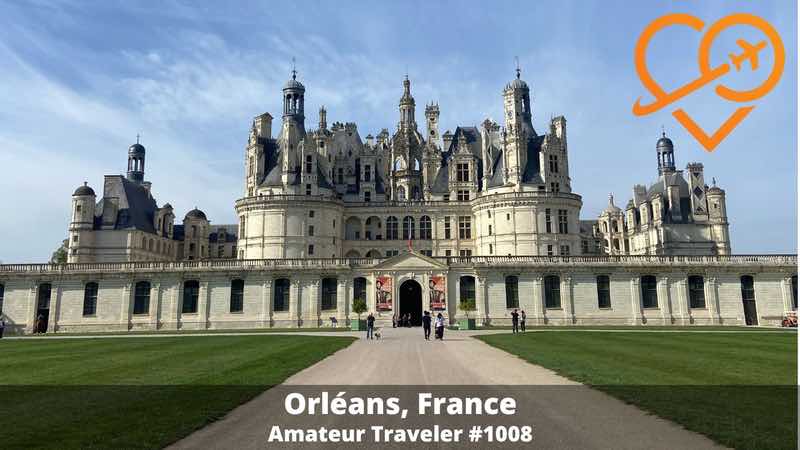
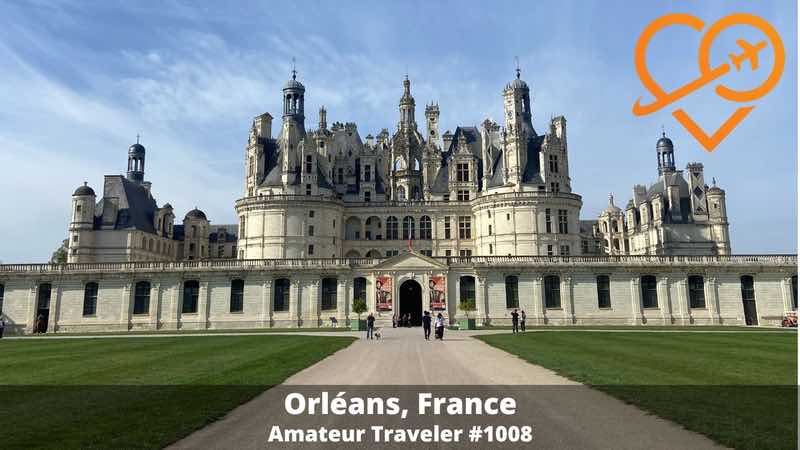
Travel to Orléans, France, with Riana from Teaspoon of Adventure as she shares a seven-day itinerary featuring Joan of Arc history, Loire River scenery, medieval towns, museums, local food, and some of the most impressive châteaux in the Loire Valley.
Orléans is about 75 miles southwest of Paris and approximately 90 minutes away by train. Its compact historic center, good train connections, and access to the surrounding countryside make it a practical base for exploring both the city and the Loire Valley.
Riana recommends spending the first three days in Orléans, taking train trips on days four and five, and renting a car for château-hopping on days six and seven.
Day 1: Historic Orléans and the Loire River
Begin at the tourist office in Place du Martroi, the main square in central Orléans. Rent the self-guided audio tour, which leads visitors through many of the city’s most important historic sites.
The first major stop is Hôtel Groslot, a 16th-century mansion that later served as Orléans’ city hall. Visitors can enter for free and walk through rooms decorated with tapestries, paintings, and period furnishings. The building still hosts weddings, and King Francis II died here in 1560.
Across the street is Sainte-Croix Cathedral. Although earlier religious buildings occupied the site, most of the current Gothic cathedral was constructed between 1601 and 1829.
Joan of Arc visited the cathedral during the campaign to lift the English siege of Orléans in 1429. A chapel inside is dedicated to her, and the cathedral contains statues, stained glass, and reminders of damage suffered during World War II.
Continue through the historic center, passing cobblestone streets and half-timbered houses on the way to the Loire River.
The river was central to Orléans’ development. Goods bound for Paris once passed through the city, including sugar and wine. When some wine spoiled during the slow journey along the shallow river, local producers turned it into vinegar. Orléans remains known for vinegar and mustard today.
As you walk, look above the city’s street signs for small mosaic artworks by artists including MifaMosa and Tag Lady. Many of the mosaics are visual jokes or references to the names of the streets.
The audio tour ends back at Place du Martroi, where a large equestrian statue of Joan of Arc dominates the square. The statue was created partly from bronze taken from British cannons.
Depending on the day and season, spend the afternoon at the Friday food market, take a boat trip on the Loire, or stop for a drink at one of the seasonal riverside guinguettes.
Visitors may also want to time their trip for one of Orléans’ major festivals. The Festival de Loire celebrates the city’s river heritage every two years, while the 10-day Fêtes de Jeanne d’Arc take place during the first part of May.
Day 2: Museums of Orléans
Dedicate the second day to the city’s museums. Orléans offers a combined ticket that covers four museums when they are visited on the same day.
Start at the Museum of Biodiversity and the Environment, known as MOBE. Exhibits include animal skeletons, taxidermy, interactive displays, and activities designed for children. Most explanatory material is in French, although the visual exhibits can still be enjoyed without reading every display.
Walk through nearby Parc Pasteur, which has sculptures, fountains, playgrounds, a carousel, and a small steam train.
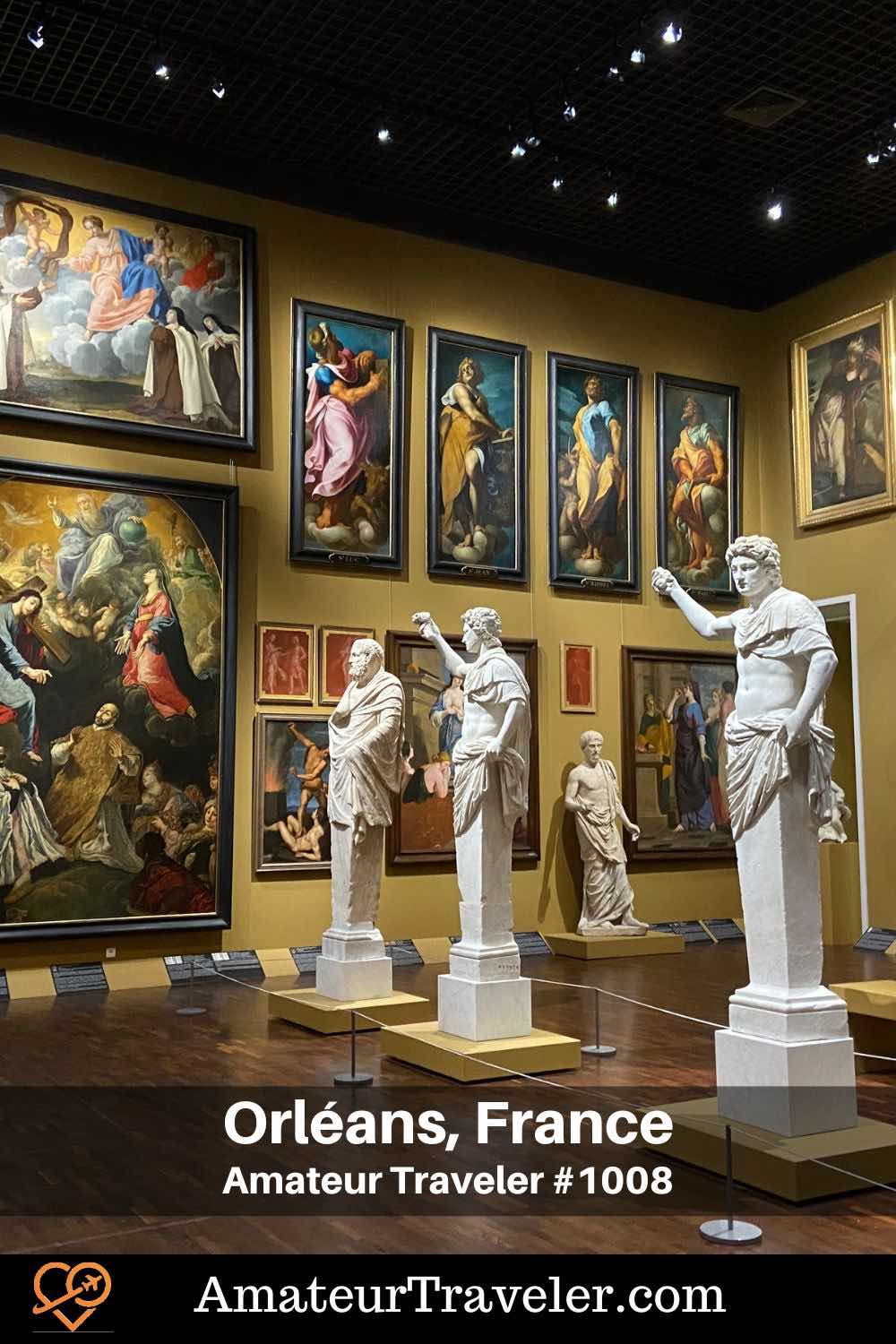
The park leads toward the Musée des Beaux-Arts d’Orléans. The museum displays works from the 16th through the 21st centuries, with a strong collection of historical art and an entire room devoted to Joan of Arc.
Stop for lunch at Well in Town, a New Zealand-inspired café serving pizzas, salads, and flatbreads with Italian and French influences.
Continue to the Historical and Archaeological Museum of Orléans. Housed in a Renaissance building, the museum includes sculptures, carvings, metalwork, archaeological objects, and exhibits explaining the history of vinegar production in Orléans.
The fourth museum is the Maison de Jeanne d’Arc. Joan stayed on this site while helping to defend the city, although the original house was destroyed during World War II. The present attraction consists primarily of a short film introducing Joan’s life and connection with Orléans.
Afterward, walk through the garden named for Jacques Boucher, the man who hosted Joan during the siege.
Visitors with energy for another museum can finish at FRAC Centre-Val de Loire. This free museum focuses on contemporary art and experimental architecture and occupies one of the city’s most distinctive modern buildings.
Day 3: World War II History and Parc Floral
Begin the third day at the Cercil Museum and Memorial to the Children of the Vel d’Hiv.
This museum examines the persecution of Jewish communities in France during World War II and the history of three internment camps near Orléans.
Thousands of Jewish men, women, and children were held in these camps before being deported. The final memorial room displays photographs and names of children who were sent to Auschwitz and murdered.
The visit can be emotionally difficult, so Riana recommends following it with an afternoon outdoors.
Take the tram from central Orléans to Parc Floral de la Source, the city’s largest park. The paid attraction includes landscaped gardens, ponds, fountains, playgrounds, a butterfly conservatory, birds, farm animals, and a flock of flamingos.
The park takes its name from the underground source that feeds the Loiret River. Seasonal festivals, food trucks, and artisan markets are also held on the grounds.
Day 4: Train Trip to Blois
Take a direct train from Orléans to Blois, a journey of approximately 35 minutes.
Begin at the Château Royal de Blois. Seven French kings lived here at different points, and the castle’s courtyard displays four distinct architectural styles: Gothic, Flamboyant Gothic, Renaissance, and Classical.
Inside are recreated royal apartments, sculptures, historical exhibits, and a fine arts collection. The château’s terrace and gardens also offer views over Blois.
Across the street is the Robert-Houdin House of Magic, named for the French illusionist often described as the father of modern stage magic. Performances take place inside, while mechanical dragon-like creatures regularly emerge from the windows of the building.
Continue into the old town for lunch, shopping, and pedestrian streets.
The Museum of Resistance, Deportation and Memory examines the history of Blois during World War II. Visitors can also see the Denis Papin Staircase, a set of 120 steps painted each year with a large artwork.
Other options include the contemporary art center known as the Foundation of Doubt, Blois Cathedral, St. Nicholas Church, and St. Saturnin Church.
Return to Orléans by train for the night.
Day 5: Meung-sur-Loire and Beaugency
Take a train approximately 12 minutes west of Orléans to Meung-sur-Loire.
Visit the Château de Meung-sur-Loire, which served as a residence for the bishops of Orléans, a military stronghold during the Hundred Years’ War, and a prison.
The castle embraces the local legend of Saint Liphard, who supposedly defeated a dragon terrorizing the town. Its Dragon’s Land attraction features elaborate animatronic dragons inspired by mythical creatures from around the world.
Families can also explore the Knight’s Path, an obstacle course with ropes, trampolines, and zip lines.
Inside the castle are decorated rooms, kitchens, bedrooms, a bishop’s bathroom, an attic, and a chilly basement once used as a prison. A final animatronic dragon waits in a dungeon-like lair beneath the château.
The grounds include gardens, wooded paths, farm animals, and a nearby church.
In the afternoon, take the train another five minutes to Beaugency.
The Château de Beaugency is also called the Château des Lumières, or Castle of Lights. Instead of traditional furnished rooms, the castle contains digital art, light installations, interactive floors, AI-generated portraits, projections, and a ball pit.
Before returning to the train station, walk past Beaugency’s medieval towers, churches, historic city hall, and clock tower.
The train trip from Beaugency back to Orléans takes about 18 minutes.
Day 6: Château de Cheverny and Château de Chambord
Rent a car in Orléans for the final two days. Although some châteaux can be reached by public transportation, driving makes it easier to visit more than one in a day.
Drive approximately 70 minutes to Château de Cheverny.
Cheverny is unusual because it remains privately owned and is still occupied by descendants of the family that first acquired the property in the 14th century.
The château is known as the Dog Castle because approximately 120 Anglo-French hunting hounds live on the estate. Dogs also appear in statues, paintings, decorations, and playful displays throughout the château.
The interior is richly furnished with tapestries, wallpaper, artwork, antiques, and modern family photographs.
Outside are formal gardens, a vegetable garden, a maze, a café, and opportunities for boat rides or driving tours of the estate.
Cheverny also inspired Marlinspike Hall in the Tintin comics. A separate Tintin exhibition explores the connection between the château and cartoonist Hergé’s fictional estate.
After lunch, drive approximately 25 minutes to Château de Chambord.
Chambord is one of the largest and most recognizable castles in the Loire Valley. It has more than 400 rooms, 77 staircases, and 282 chimneys.
Its best-known architectural feature is the double-helix staircase traditionally associated with Leonardo da Vinci. Two people can climb or descend the intertwined staircases without meeting.
The château contains royal apartments, temporary art exhibitions, children’s activities, hunting displays, and large rooms that demonstrate the enormous scale of the building.
Continue to the rooftop terraces for close views of Chambord’s chimneys, towers, and decorative stonework.
The estate also includes formal gardens, canals, restaurants, boat rides, bicycle rentals, golf carts, and extensive parkland.
Drive approximately one hour back to Orléans.
Day 7: Château de Chenonceau and More of the Loire Valley
Drive about 90 minutes from Orléans to Château de Chenonceau.
Known as the Ladies’ Castle, Chenonceau was shaped by a series of influential women, including Catherine Briçonnet, Diane de Poitiers, Catherine de’ Medici, Louise of Lorraine, Louise Dupin, and Simone Menier.
Diane de Poitiers built the bridge extending across the River Cher. Catherine de’ Medici later removed Diane from the property and constructed the gallery above the bridge.
During World War II, the river marked the boundary between occupied France and the Vichy-controlled zone. Members of the French Resistance used the château’s gallery to help move people across the river.
Inside are furnished bedrooms, tapestries, artwork, floral arrangements, studies, and large 16th-century kitchens.
The bedroom of Louise of Lorraine is decorated in dark colors to reflect her mourning after the death of her husband, King Henry III.
Outside, compare the formal gardens created for Diane de Poitiers and Catherine de’ Medici. The estate also includes a vegetable and flower garden, farm buildings, animals, an apothecary, a science exhibit, and a display explaining the château’s use as a military hospital during World War I.
Chenonceau can fill most of the day, but travelers who want to see more have several options.
Drive to Domaine de Chaumont-sur-Loire for gardens and contemporary art, or visit Amboise. The Château Royal d’Amboise contains Leonardo da Vinci’s tomb, while nearby Clos Lucé was his final home and displays models of his inventions.
Another option is to rent bicycles and ride part of La Loire à Vélo, a cycling route extending approximately 560 miles through the Loire Valley.
Wine lovers can visit a nearby vineyard to taste Loire Valley white, sparkling, and red wines. Chenin Blanc is one of the varieties specifically mentioned in the episode. Château de Chenonceau also has its own historic wine cellar.
Return to Orléans and drop off the rental car.
Food and Drink in Orléans
Local specialties include Orléans vinegar, mustard, Loire River fish, chocolates, and pear brandy.
Riana recommends Well in Town for pizza, salads, and flatbreads; Yen Sabai for Laotian cuisine; and Boulangerie Saint-Paterne for croissants and baguettes.
When to Visit Orléans
Spring and fall offer mild weather and smaller crowds. Riana visited in September and October and found the shoulder season ideal for exploring the city and châteaux.
Summer offers Loire River boat trips and seasonal guinguettes. Early May brings the Joan of Arc Festival, while the Festival de Loire takes place in the fall every two years.
Many attractions in Orléans have limited opening hours, particularly on Mondays. Check museum and château schedules before finalizing the order of the itinerary.
Sponsors

- Upgrade your wardrobe with high-quality essentials and get free shipping and 365-day returns at Quince.com/TRAVELER.

- This week’s show is supported by the new Smart Travel Podcast. Travel smarter — and spend less — with help from NerdWallet. Check out Smart Travel here.



subscribe: rss feed | Apple podcasts

right click here to download (mp3)
Show Notes
Teaspoon of Adventure
Orléans
Orléans Val de Loire Tourism
Place du Martroi
Hôtel Groslot Orléans
Orléans Cathedral
Martin Pouret Mustard – Boutique de l’Office de Tourisme d’Orléans
Festival de Loire
Fêtes de Jeanne d’Arc
28 Interesting Things to Do in Orléans, France
Museum pass – Orléans museums
MOBE – Orleans Museum for Biodiversity and the Environment, Orleans
Parc Louis Pasteur
Musée des Beaux-Arts d’Orléans
Well’In Town Restaurant, Orleans
Musée Historique et Archéologique de l’Orléanais
La Maison de Jeanne d’Arc
Jardin Jacques Boucher d’Orléans
Frac Centre-Val de Loire
Musée Mémorial des enfants du Vel d’Hiv à Orléans
Parc Floral de La Source à Orléans
Blois
Château of Blois
House of Magic
Centre of the Resistance, Deportation and Memory
Denis-Papin Staircase – Ville de Blois
Foundation of Doubt – Ville de Blois
Blois Cathedral
Church of Saint-Nicolas, Blois
Meung-sur-Loire
Château de Meung-sur-Loire
Dragon’s Lair in Meung-sur-Loire
Knights’ Trail in Meung-sur-Loire
Beaugency
Château de Beaugency
Château de Cheverny
The Secrets of Marlinspike Hall Tintin Exhibition
Château de Chambord
Château de Chenonceau
Domaine de Chaumont-sur-Loire
Amboise
Château d’Amboise
The Château du Clos Lucé in Amboise
Cycle itineraries: routes and outings in the Loire Valley
Loire Valley Wines
Yen Sabai Restaurant, Orléans
Boulangerie Saint-Paterne, Orléans
Lao Eats List
Which Châteaux of the Loire Valley Should You Visit?





![Can I Be More Gentle With Myself? With Micah E. Davis [Episode 375]](https://som2nynetwork.com/wp-content/uploads/2026/10/11_06_25_Pod_375_GentleMyself_Oblong-336x220.jpg)