Who Pays Closing Costs: Buyers or Sellers?


Whether you’re buying or selling real estate, it’s crucial to know the various expenses involved. While you may assume that the buyer pays the majority of all closing costs, that’s not necessarily true. In the video below, we’ll review who pays closing costs and which expenses the buyer and seller are each responsible for.
Discover the truth about real estate closing costs! Who really foots the bill? Dive into our quick guide to uncover the expenses buyers and sellers need to know!
Key Moments in the Video
- 00:19 – What are Closing Costs?
- 00:46 – Who Pays Closing Costs?
- 02:14 – How Much are Closing Costs?
- 02:43 – Common Buyer Closing Costs
- 03:54 – Common Seller Closing Costs
- 04:49 – How to Reduce Closing Costs
Main Takeaways
- Both buyers and sellers typically pay closing costs, but the exact expenses depend on the purchase agreement, loan type, and local customs.
- Buyer closing costs often include lender fees, appraisal costs, title-related fees, prepaid expenses, and taxes.
- Sellers commonly pay transfer-related fees and any negotiated concessions, but many closing costs are negotiable.
What Are Closing Costs?
Closing costs are fees and expenses associated with finalizing a real estate transaction, typically the purchase or sale of a home. As the name suggests, these fees are paid at the closing of a transaction and may include lender fees, property taxes, title insurance, and more.
Both buyers and sellers need to know what closing costs they’re responsible for. Both parties usually pay some type of closing costs, and the amount can vary. Typically, it depends on the price of the home, the type of mortgage the buyer chooses, the location of the property, and more. And if you are purchasing a rental property, understanding the ongoing costs of ownership is just as important as budgeting for closing costs. A trusted property management company in Baltimore can also help investors prepare for the responsibilities that come after closing.
Today, we’re going over what costs buyers and sellers pay, how much they typically pay, and how to reduce these costs during a sale.
Who Pays Closing Costs?
Who pays closing costs when a property is bought or sold? Both buyers and sellers do! However, the costs they’re responsible for differ and may depend on certain factors, including the following.
- Type of Home Loan- The type of home loan can influence who pays what in closing costs. For instance, certain loan programs, such as FHA or VA loans, may make seller concessions more common or allow buyers to negotiate for additional assistance with closing costs. However, who pays which expenses ultimately depends on the purchase agreement.
- Buyer’s vs. Seller’s Market- Market conditions can also impact who pays closing costs. In a buyer’s market where there are more homes for sale than there are buyers, sellers may offer to cover some closing costs to make their property more attractive. However, in a seller’s market where demand exceeds supply, buyers may have less negotiating power, and sellers may be less inclined to offer closing costs.
- Seller Concessions- Seller concessions are closing costs that the seller agrees to pay, which can be negotiated as part of the sales contract. Sellers typically offer concessions to incentivize buyers or to ensure a smoother transaction. However, there may be limits on the amount of concessions depending on the loan type and lender requirements.
Ultimately, while each situation is different, closing costs can often be negotiated between the buyer and seller.
How Much Are Closing Costs?
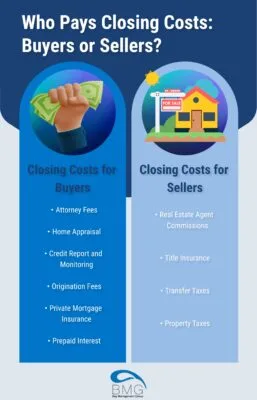 The amount that buyers or sellers may pay in closing costs varies depending on the location, loan type, and other factors. That said, buyer closing costs typically range from 2% to 5% of the home’s purchase price. Sellers may also pay significant closing costs. Depending on the negotiated terms of the transaction, these expenses often total between 6% and 10% of the home’s sale price. Let’s go over some of the major expenses for both parties.
Common Buyer Closing Costs
Homebuyers cover several costs at closing, including one-time fees like an appraisal, loan origination fees, and taxes. Buyers also commonly pay for certain expenses incurred before closing, such as a home inspection. Additionally, there are plenty of ongoing costs, like taxes, private mortgage insurance (PMI), and more. Here are some of the costs buyers can expect to pay.
- Attorney Fees- Depending on where you’re located, you may be required to hire an attorney to help oversee the closing process. However, even if it’s not required, buyers may want to work with one to understand the complexities of the home-buying process. The costs for an attorney may vary, but you can expect either a flat or hourly rate.
- Home Appraisal- Lenders typically require a home appraisal as part of the mortgage application process. That said, the typical cost for a single-family home appraisal is around $500.
- Credit Report Fee- Lenders need to pull your credit report to process your real estate loan, which can cost anywhere from $30 to $50.
- Origination Fees- Lenders typically charge origination fees to cover the costs of processing and underwriting your mortgage. Buyers can expect to pay 0.5% to 1% of the mortgage amount.
- Private Mortgage Insurance- When buyers put less than 20% down on a conventional mortgage, they’ll likely have to pay private mortgage insurance (PMI). Depending on the loan program, PMI may be paid monthly, upfront, or through another lender-approved structure.
- Prepaid Interest- Prepaid interest is the amount paid upfront by the buyer between the closing date and the first mortgage payment.
Common Seller Closing Costs
While buyers may have more individual expenses, sellers have their fair share of closing costs to pay. Here are some of the typical closing costs for sellers.
- Real Estate Agent Compensation – Buyers and sellers each negotiate compensation with their own real estate professional. Depending on the purchase agreement and local market conditions, one party may agree to cover certain costs as part of the negotiation, but commission arrangements are no longer handled the same way in every transaction.
- Title Insurance – Who pays for title insurance depends on state and local customs, as well as the purchase agreement. In some areas, the seller typically pays for the owner’s title policy, while in others the buyer does.
- Transfer Taxes- Transfer taxes cover the cost of transferring ownership from the seller to the new owner and can be paid by either party.
- Property Taxes- Depending on when the property is sold, property taxes are typically prorated between the buyer and seller based on the closing date, although the exact calculation depends on local tax rules. For instance, sellers pay a percentage of the tax cost up to the sale date, and buyers are responsible for covering the rest of the year.
 How to Reduce Closing Costs
Closing costs easily add up for both buyers and sellers. However, there are some steps each party can take to help reduce these costs while buying or selling a property.
For instance, if you’re a homebuyer looking to get a mortgage loan, ask about expenses and fees that will affect the cost of your loan. You’ll want to shop around and get multiple loan offers, and don’t forget to negotiate. Additionally, you can request seller concessions and negotiate for them to pay more of the closing costs.
On the other hand, sellers can negotiate their listing agreement, agent compensation, and other transaction fees. These fees take a large portion of a seller’s expenses, and even a small discount can make a large difference.
FAQs About Who Pays Closing Costs
Closing costs can vary from one real estate transaction to another, so it’s normal to have questions about who pays for what. Below are answers to some of the most common questions buyers and sellers have about closing costs.
Who usually pays closing costs?
Both buyers and sellers typically pay closing costs, although the specific expenses each party covers depend on the purchase agreement, loan type, and local customs.
Are closing costs included in the mortgage?
Usually not. Most closing costs must be paid at closing, although some loan programs allow certain costs to be financed into the loan under specific circumstances.
Can closing costs be negotiated?
Yes. Many closing costs are negotiable, and buyers and sellers can negotiate who pays certain expenses during the purchase process.
How much are buyer closing costs?
Buyer closing costs typically range from 2% to 5% of the home’s purchase price, although costs vary depending on the loan, location, and lender.
Can a seller pay a buyer’s closing costs?
Yes. A seller may agree to contribute toward the buyer’s closing costs as part of the purchase agreement. These are commonly referred to as seller concessions.
What closing costs do sellers usually pay?
Seller closing costs may include transfer taxes, title-related expenses (depending on location), negotiated concessions, and other transaction fees.
Protect Your Investment With BMG
If you’re purchasing an investment property, it’s important to budget for closing costs as well as the ongoing expenses of ownership. While the closing costs may differ depending on the loan type, property location, and other factors, both buyers and sellers should expect to pay some.
Need More Advice? contact us today!
If you’re a real estate investor closing on another investment property, you’ll want to consider how you’ll manage it. Bay Property Management Group offers comprehensive rental management services, including rental marketing, tenant screening, maintenance, rent collection, and more. Contact us today to learn more about our services throughout Baltimore, Philadelphia, Northern Virginia, and Washington, DC.