Homeowners looking to upgrade and interstate investors seeking value are the main winners in Melbourne’s softer housing market, experts say.
Local real estate agents say the Garden City’s property market is transitioning to a more balanced landscape where buyers can be more selective, but competition remains strong for quality properties that are priced realistically.
Getting the fundamentals right this spring, including pricing, presentation and local market knowledge from an experienced agent, will be critical in achieving the best possible sale outcome.
Home values have been softening nationally, driven by cash rate hikes, federal budget tax reforms, affordability constraints, geopolitical uncertainty, and the usual winter lull.
On top of that, agents say the Victorian property market has faced pressure from state government changes to land tax and rental reforms, causing many landlords to sell.
In Melbourne, median home prices were down 0.4% to $839,000 in June, and were 1.1% lower than a year ago, according to the latest PropTrack Home Price Index.
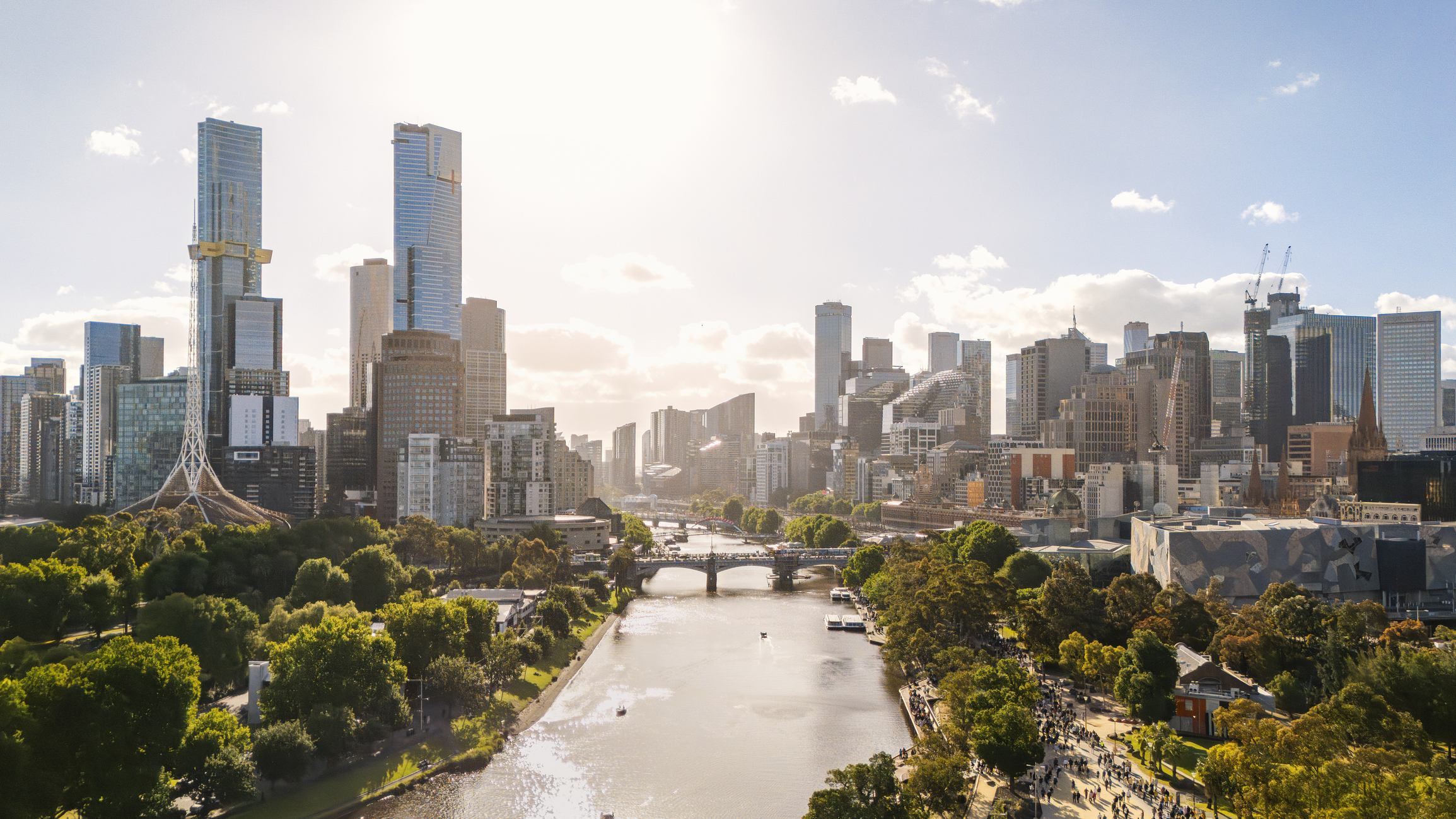
Homeowners looking to upgrade and interstate investors seeking value are the main winners in Melbourne’s real estate market at the moment. Picture: Getty
New property listings increased 9% during the year to June, while the total number of listings was up 5.8%.
It comes as Melbourne’s auction market has struggled this winter with a 48% clearance rate across June, although it has fared better than Sydney.
There have been signs of improvement in auction activity over recent weeks, as vendors become more realistic about pricing expectations.
Fastest growing suburbs in Melbourne – houses
| Suburb | Region | Median sale price | Annual price change |
| Mount Cottrell | Melbourne – West | $770,000 | 25.7% |
| Middle Park | Melbourne – Inner | $3,135,000 | 22.9% |
| Riddells Creek | Melbourne – North West | $1,090,000 | 21.1% |
| Essendon North | Melbourne – Inner | $1,460,000 | 20.5% |
| Bonbeach | Melbourne – Inner South | $1,240,000 | 18.1% |
| Balaclava | Melbourne – Inner | $1,473,500 | 16.9% |
| Pearcedale | Melbourne – South East | $1,110,000 | 16.8% |
| Cranbourne South | Melbourne – South East | $867,500 | 16.4% |
| Bunyip | Melbourne – South East | $889,000 | 16.2% |
| Attwood | Melbourne – North West | $900,000 | 16.1% |
Local real estate agents say compared to recent years, buyers have more choice, greater negotiating power, and more time to make informed decisions.
Aaron Chuah, group director of sales and auctioneer at Stockdale & Leggo – Central, said buyers should not mistake a softer market for a weak one.
He said Melbourne’s property market was balanced, but remained price-sensitive.
This four-bedroom house in Mount Cottrell, Melbourne sold for $805,000 last month. Mount Cottrell had the fastest growing house prices in Melbourne for the year to June. Picture: realestate.com.au/sold
“While buyer demand is healthy, purchasers are taking longer to make decisions and are more selective than they were during the peak market,” Mr Chuah said.
“Prices have softened in some segments, particularly where properties are overpriced or appeal to investors.
“However, well-presented homes in quality locations continue to attract strong competition and premium prices.”
Fastest growing suburbs in Melbourne – units
| Suburb | Region | Median sale price | Annual price change |
| Kingsbury | Melbourne – North East | $529,000 | 33.9% |
| Notting Hill | Melbourne – South East | $435,444 | 26.2% |
| Hampton | Melbourne – Inner South | $1,090,000 | 19.1% |
| Sunshine North | Melbourne – West | $600,000 | 17.1% |
| Forest Hill | Melbourne – Outer East | $800,000 | 17.0% |
| Seaford | Mornington Peninsula | $701,750 | 17.0% |
| Blackburn South | Melbourne – Inner East | $970,000 | 15.6% |
| Canterbury | Melbourne – Inner East | $1,182,500 | 14.8% |
| Templestowe | Melbourne – Inner East | $972,500 | 14.4% |
| Mill Park | Melbourne – North East | $608,000 | 14.3% |
Mr Chuah’s top tip for vendors was to price their property based on today’s market, and to get the price correct from the beginning.
Brenton Wilson, managing director of Barry Plant Rowville-Lysterfield, described it as an “even market” and said upsizers were the hidden winners.
He said that while a homeowner’s $1 million property may have fallen to $900,000, the $1.5 million home they’re looking to buy may have also dropped in value to $1.35 million.
Stockdale & Leggo’s Aaron Chuah says buyers should not mistake a softer market for a weak one. Picture: Supplied
“You’re dropping $100,000 on the sale, but you’re picking up $150,000 on the purchase, so your changeover is good,” he said.
“Smart upgraders are doing that now while the market is really good for them.”
Ben Thomas, director and sales consultant at Ray White Ferntree Gully, said smart advocates were really active and seizing opportunities.
“I’d sell two or three properties a month off‑market to buyers’ agents, and they’ve got investors coming in from Sydney, Brisbane and Adelaide,” he said.
“They can see the market has eased and they’re taking advantage of it.”
Looking to the end of 2026, agents say interest rates will be the biggest factor shaping Melbourne’s property market, as well as the Victorian state election.
Barry Plant’s Brenton Wilson described Melbourne as an “even market” with upsizers as the hidden winners. Picture: Supplied
This week, Jacinta Allan resigned as Victorian premier, with Ben Carroll taking over the reins.
Mr Carroll is now facing calls for urgent changes to legacy policies and plans from the former Allan government that are yet to come into effect, but could sway voters and hurt homebuyers, sellers and renters without amendment.
“Depending on what happens after November in Victoria, if the Liberals get in we’ll see some more optimism – historically that’s been the case,” said Mr Wilson.
“We may be in for a good finish to the year, but November will be crucial.”
Mr Chuah expects activity to gradually improve throughout the remainder of 2026.
“If interest rates remain stable and consumer confidence continues to recover, we should see stronger buyer participation and improved transaction volumes,” he said.
Get your realEstimate™
Track your property’s value and unlock insights and data tailored for property owners.
“I don’t anticipate significant price growth in the short term, but I do expect prices to stabilise, with quality properties continuing to outperform the broader market.
“Overall, I believe confidence will improve progressively rather than dramatically.”