Winding Up the Week #482 – Book Jotter

An end of week recap
“When I have a little money, I buy books; and if I have any left, I buy food and clothes.”
– Desiderius Erasmus Roterodamus
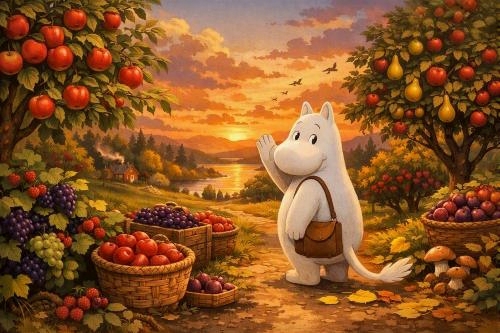
 Sadly, we bid Tove & Moomin Month farewell this coming week as August draws to a close, the last of its soft light slipping away while we in the north ready ourselves for the more muted tones of September. Mrs J’s BIG birthday is coming up soon, which means you will see a little less of me in coming days (plus, next Saturday’s wind up is likely to be on the short side) – but I won’t be too far away.
Today marks the start of Literacy and Numeracy Week in Australia (running until 4th September) – a time for storytelling, composing poems, writing short stories and indulging in number games, while tomorrow brings Frankenstein Day around the world in honour of Mary Shelley’s birthday.
Awaiting an ethereal slice of birthday cake today are American poet and polymath (of the Fireside group) Oliver Wendell Holmes (1809), Belgian playwright, poet and essayist Maurice Maeterlinck (1862), Haitian-French poet René Depestre (1926) and English poet Thom Gunn (1929). 🍰 Joining the eerily silent queue on Sunday are English writer Mary Shelley (1797), French poet, author and critic Théophile Gautier (1811), Paraguayan poet in the Guarani language Julio Correa (1890), American writer N.H. Kleinbaum (1948) and the Swedish crime writer who may be alone among the living Camilla Läckberg (1974).
As ever, this is a post in which I summarise books read, reviewed and currently on the TBR shelf. In addition to a variety of literary titbits, I look ahead to forthcoming publications, see what folk have on their nightstands and keep readers abreast of various book-related opinions and happenings.
CHATTERBOOKS >>
If you are planning a reading event, challenge, competition or anything else likely to be of interest to the book blogging community and its followers, please let me know. I will happily share your news here with the fabulous array of bibliowonks who read this weekly wind up.
* Blogs from the Bookcellar *
 Retrieved from our subterranean shelves this week – 1) John Folk Williams of SciFi Mind shared his thoughts on Mohamed Kheir’s Egyptian fantasy novel Sleep Phase (“beautifully translated by Robin Moger”), in which its protagonist, Warif, having been released from prison, experiences “the world as derealized” or with a sense that nothing around him is quite real. The reader follows him “on a powerful journey through political oppression, panic attacks, uncertain memories and a collapsing identity” along the streets of a much altered Cairo. Everything about the city seems different to him and there “are foreigners everywhere, who seem to have taken over a great many jobs.” Amid these “new sensations and questions about a changed reality, Warif tries to focus on getting back his old job as a translator” but merely goes through a series of “inconclusive interviews with officials who […] probe his background rather than give him a conclusive answer”. John declares it “an unforgettable portrait of a man in limbo” and says the narrative held his “interest despite the lack of a complex plot.” Indeed, he deems it a story that “portrays a wounded mind and soul with intensity and compassion.”
  You can read his full review at Sleep Phase by Mohamed Kheir, Translated by Robin Moger. 2) Last March, Zimbabwean Jacqueline Nyath of Harare Review of Books examined Darya Bobyleva’s 2025 horror fantasy novel set in a Russian village where the residents “spend their summers resting and relaxing, gardening and repairing roofs […]”, until one midsummer morning when they wake to find the road leading out of the village is “missing.” What’s more, the “clocks have stopped working”, as has the internet, TVs and phones; in fact, all exits “lead right back” to where they started. The Village at the Edge of Noon (translated by Ilona Yazhbin Chavasse) is “incredibly well-written” and “very funny,” says Jacqueline; its “cast of characters, and the setting are a complete delight.” She declares it “enchanting” and intends to read it “again, and again, and again.” Please see her review at The Village at the Edge of Noon x Darya Bobyleva, Ilona Yazhbin Chavasse (tr.).
* Irresistible Items *

Umpteen fascinating articles appeared on my bookdar last week. I often make a point of tweeting/x-ing (not to mention tooting and bsky-ing) a few favourite finds (or adding them to my Facebook group page), but in case you missed anything on your literary rambles through cyberspace, here is a selection of interesting snippets:
If you would like to stay up to date with the latest Tove Jansson and Moomin news, views and happenings, please head over to Tove Telegraph. Don’t miss out on events happening near you! 🎩👜
****************************
 Washington Independent Review of Books: 🦥⚣ Crocodilopolis: A Novel – “Any writer who attempts to combine sweeping historical fiction with achingly elegant prose is walking a tightrope indeed. In Crocodilopolis, [the gay Costa Rican–Uruguayan poet and novelist] John Manuel Arias pulls it off. Mariko Hewer describes it as a “searing portrayal of generational strife set against a lush Costa Rican backdrop.”
BBC Symphony Orchestra & Chorus: 🎩👜🎶 Total Immersion: The World of Tove Jansson – Seasons in Moominvalley (19:30 Sat 3 Jul 2027 Barbican, London) – “As the climax of a day of Total Immersion in the imagination of Tove Jansson, the BBC Symphony Orchestra and Principal Guest Conductor explore the cultural context and enduring legacy of Jansson’s life and work. Sibelius’s luminous seascape lays the scene for the premiere of Finnish composer Outi Tarkiainen’s new homage to Jansson, using images as well as Jansson’s own writing to create a vivid sonic portrait.”
The Spectator (via Archive Today): Shots in the dark: Fatal Love, by Louisa Treger, reviewed – “The tragic story of Ruth Ellis, hanged in 1955 for murdering her abusive lover, is retold in gripping fictional form”. Julie Bindel finds Louisa Treger’s historical mystery novel A Fatal Love “brings Ellis to life”, presenting us with “a remarkable woman who committed a remarkable crime.”
McNally Editions: Those Phosphorescent Years: “Quake” by Kitty Mrosovsky – “Quake is the [third and] last work [of] Anglo-Russian writer and scholar Catharine (‘Kitty’) Mrosovsky, who in 1995 became one of the first women in the UK to die from a complication of HIV”, says Maggie Gee – “a friend of [the author] and a fellow alumnus of Somerville College, Oxford.” The story of a woman’s erotic odyssey, the novel wasn’t published during her lifetime as for many years it was considered “lost”.
ABC Arts: 🦘 If My Brilliant Career is all you know of Miles Franklin’s life, you’re missing out – “With the release of Netflix’s new TV adaptation of My Brilliant Career […] and the announcement of the winner of this year’s Miles Franklin Literary Award earlier this month, August feels like the month of Miles”, says Hannah Reich.
The Times (via Archive Today): 📖✍️ James Marriott: The 36 books that changed my life – “An obsession with words got the columnist [James Marriott] through his eccentric childhood and his parents’ divorce. Now 33, he has written a book — in praise of reading, of course”. The New Dark Ages: The End of Reading and the Dawn of a Post-Literate Society is his attempt to do his bit to save the world of books.
Word on Fire: 🍁🎓 Flatness and Shine: ‘Lords of Serendipity’ and the Modern University – Canadian novelist, essayist, literary critic and professor of English at the University of Toronto, Randy Boyagoda, repeats the phrase “flatness and shine” throughout his new campus novel, Lords of Serendipity. And while “those words could be applied to many specific things in modern life, [here] they most directly describe two universities, one in the United States and one in Sri Lanka […]”. Eric Cyr’s review explores how the author uses this motif to illuminate the hollowness of contemporary academic culture.
 The Boston Globe: 🍂 Looking for your next great read? Here are 40 of the best new books to read this fall. – “It’s publishing’s hottest season, just in time for cooler weather”. Carolyn Kellogg, Cory Oldweiler and Kate Tuttle share forty titles arriving between September and November, books they believe “will pair perfectly with a cozy scarf and steaming latte.” Among them is Daisy Johnson’s Long Wave – a novel in which “several generations of women strive […] to support each other while coping with the fears […] and joys of motherhood, all while a remote, possibly mythic, island offers the temptation of salvation.”
The Duck-Billed Reader: ⚔️🛡️ Sir Gawain and the Green Knight: Promising as a Test of Faith – Claire Laporte looks carefully at Sir Gawain and the Green Knight, the “medieval poem [which] illuminates the inner world of a man as he undertakes a deathly quest”, examining what a deadly serious act promising can be and asking questions about his fidelity to “the mysterious Green Knight”.
EcoLit: 🦄 The Parliament of Mice, A Fable – “Animals have always been used in storytelling as a mirror on our own sorry human selves, and [Robert Epstein’s tale] is no exception”, says JoeAnn Hart. At the farm in The Parliament of Mice, a Fable, every creature wants something and is willing to plot and scheme to get it. Its hero is “a house mouse in love with a barn mouse” who lives “with a fat lazy cat” and woven into the stories are foxes, wolves, humans, and all manner of other creatures.
Reading in the Sentimental Age: 🕯️🫣 Terror in the Absence of the Sublime – Set entirely in Wybrany College, Spanish writer Sara Mesa’s Four by Four (translated by Katie Whittemore) is a Gothic-Dark Academia novel “of anticipated scarcity, taking place in a future that seems to be around the corner”, says Milena Billik. “In the relationship between the college and the [surrounding] woods, [she] found [herself] looking for the sublime but found it cancelled out by the human. It is other people that are to be feared” in this book, she cautions.
Bookforum: 🎤 Always Be Closing – In Laura B. McGrath’s new study of the literary agent, Middlemen: Literary Agents and the Making of American Fiction, she attempts to “execute the most complete portrait yet” of the profession’s “undersung role in literary history”, drawing “upon stray papers in disparate archives, industry publications, biographies, memoirs, and her own quantitative analyses,” says Elias Altman. Over at The Paris Review, Rosa Lyster speaks with McGrath about the book in a wide ranging conversation: The Literary Agent’s Invisible Hand: Laura B. McGrath on Middlemen.
Womack’s Wanderings: 🦄🪄 Deep Secret by Diana Wynne Jones [Review] – Philip Womack “came late to Diana Wynne-Jones” – it “was only as an adult that [he] began to read her” – though she is principally (but not exclusively) known for writing speculative fiction novels for children and young adults. Here he discusses Deep Secret, the first in the Magids series, published in 1997, a fantasy written with adult readers in mind (complete with a sprinkling of adult themes). So why, he wonders, does her publisher classify it as a “children’s book, suitable for 11+”?
The Times (via Archive Today): Life with the du Mauriers — by Daphne’s grandson – “Paul de Zulueta’s highly personal family biography, Last Night I Dreamt, will be lapped up by Rebecca fans”, says Robert Douglas-Fairhurst.
 NPR: 💯👦👧 In which ‘Winnie-the-Pooh’ turns 100 – “100 years ago, Edward Bear — also known as Winnie-the-Pooh — also known as Pooh — went bump, bump, bump down the stairs for the first time.” Samantha Balaban looks back at Winnie-the-Pooh, author A.A. Milne and illustrator Ernest H. Shepard’s 1926 “collection of stories about the honey-loving bear.” She also reviews Annette Bay Pimentel’s new non-fiction picture book about the creation of the ‘world’s most famous bear’, How a Bear Became a Book: The Collaboration That Created Winnie-the-Pooh (illustrated by Faith Pray).
Women of letters: 🎤 “I continue to be surprised”: Téa Obreht on her career as a writer – “I have a huge sense, maybe from having moved around so much, that things are temporary. I’m often like, ‘Well, something new is coming.’ That’s been enormously helpful. That’s been sustaining.” Jana M. Perkins has a long conversation with Téa Obreht – the American author born in Belgrade in the former Yugoslavia – who feels “culturally Balkan and at home almost anywhere”.
The New York Times (via Archive Today): 🕵️♂️🔪 Iceland’s Murder Rate Is Off the Charts — in Its Books, at Least – “The Nordic nation has almost no homicides, yet crime fiction is its favorite literary genre. That means writers face a challenge: making murder feel believable”, says Amelia Nierenberg.
Marginalia: 📖 5 ways to read more, without overcomplicating your life – Emm’s light-hearted post offers “practical (if a little snarky) tips [on] adding more meaningful reading to your life”.
The Arts Fuse: 🔮 Book Review: “The Eighth Wonder” Traps a Drifting Man in a Dream of Doubt – “In Vlady Kociancich’s newly translated Argentine novel, an indecisive Buenos Aires lawyer wanders through Berlin, cinema, erotic fantasy, and a reality that may be entirely of his own making.” David Mehegan reviews The Eighth Wonder, Kociancich’s 1982 work of speculative fiction, freshly rendered in English by Jessica Sequeira.
Books in the Scullery: 📖 Is Lizzy Bennet A Great Reader? – “Another week, another moment in Pride and Prejudice which I had misunderstood.” Jem Bloomfield on “the alleged bookishness of a heroine”.
Degruyter Conversations: “Stories Provide a Safe Space for Discussion” – A Conversation about African Folktales in Youth Crisis Management – “Adolescence means finding your place in the world—facing challenges big and small, even sometimes existential. In times of upheaval, could age-old folktales be part of the answer? In this interview, the editors of [African Storytelling and Images in Teaching,] a new book on storytelling and youth crisis management in Kenya and Ethiopia make their case.”
Odyssey double feature: 🏛️🔱🏺
AP: Emily Wilson’s ‘Odyssey’ became a cultural flashpoint. Now, she’s retranslating the whole thing – “If you’re among the many readers who learned to love The Odyssey through Emily Wilson’s 2017 translation, you might be surprised that she’s going to translate it again”, says Hillel Italie. Apparently, it will be “a complete retranslation [and] not a revision of the old version”. She is already “about halfway through.”
A Commonplace Book: Many Faces, Many Words – “The time has come to stop reading about and thinking about The Odyssey and about Emily Wilson’s translation of The Odyssey and about Christopher Nolan’s The Odyssey and start writing about them”, says Margaret. And she does.
The Observer (via Archive Today): Ruth Rehmann, German literature’s lost illusionist – Megan Nolan writes: “With her 1959 allegorical novel, the author ruminated on her country’s fascist past while offering a prescient glimpse into a more individualistic future”. Illusions (translated by Rob Madole) is set within the Wellis Corporation’s 23-story, neon-adorned glass complex where we delve into the dichotomy of corporate uniformity versus human individuality, as seen through the eyes of an acrobatic window cleaner.
 The Readerista: 🍂🛸🔮 September New Releases – According to Kimberly Morales, “September is shaping up to be an amazing month for new books.” She has a list of 41 titles she’s keeping her eye on, including The Strangers, a sci-fi/speculative fiction novel by Naomi Alderman about a “writer wrestling with grief even as a new species is discovered, forcing humans to reconsider what it means to share our planet.”
The Irish Times (via Archive Today): The Writer’s Writer: A dive into John McGahern’s literary archive shows his huge impact – Leitrim writer John McGahern’s “archive features words of praise from Seamus Heaney, Brian Friel and Colm Tóibín, while Claire Keegan and Anne Enright also speak of his influence”, says Eamon Maher, who along with Kathleen Costello-Sullivan, Derek Hand and Barry Houlihan is co-editor of The John McGahern Companion.
Gathering Bones: Properly funny: five novels from the 1930s – Eva Baker has “been reading a lot of 1930s novels lately” and is “surprised by how funny they are.” All of them “feature women constrained by money, class, family expectations or simply other people’s low estimation of them” and she finds them “laugh-out-loud funny. And oh so clever, too.”
Asharq Al-Awsat: 🏛️🔱🏺 Is this Cave in Türkiye Where Homer Wrote ‘The Odyssey’? – “On a Turkish hillside overlooking the olive-covered slopes outside Izmir is a cave known to generations of locals as the place where Homer penned The Odyssey.” Could this place, known to them as Homer’s Valley, be the spot where he composed his poems?
Jansplaining: 👦👧 For what you did for young readers, we will always love you, Dolly Parton (1946-2026) – “We should remember Dolly Parton as an author and children’s literacy advocate, not just as a beloved singer-songwriter”, says Jan Harayda.
Tuổi Trẻ News: Which foreign author has had the most books published in Vietnam? – “Higashino Keigo, a major figure in Japan’s mystery genre, is the foreign author with the most works translated and published in Vietnam, with more than 60 titles to date and around 70 expected by the end of 2026.”
The Ink-Stained Desk: 🫣 The History and Psychology of Cults in Horror Literature – This week Christine Maree Reid takes a deep dive into cult fiction. Of all the horror tropes she finds this “the most interesting.”
Toronto Star (via Archive Today): 🍁🎤 The Toronto author of ‘Becalming’ on her dream coffee date and which novelist should be more widely read – Polish-Canadian writer Aga Maksimowska “has described her latest novel, Becalming […], as a book ‘about the rage and frustration of early adulthood in a time of toxic positivity and polished appearance.’” Here she answers Jean Marc Ah-Sen’s author questionnaire.
 World Literature Today (via Archive Today):🔭 Range by Dorthe Nors – “In her new novel, Range [Danish author Dorthe] Nors’s protagonist, Gunn Haven, is a successful astrophysicist,” who has taken “leave from her job and moved to a rural area that seems to have some neighbors who find her unconventionality threatening. She is forced to tread lightly.” Aside from her work, “she seems to have one other obsession”. Elaine Margolin explains.
Poetry Foundation: 📜🪶 The Truth Is in the Detail – Lucy Ives on the German-speaking Romanian poet, Holocaust survivor and literary translator Paul Celan – and his “writing between languages.”
Sipping Italy with Tino: ✈️📚 The Library of the Dazed Ones – “The quietness and brick walls make me forget the outside world. And when I need a break from my writing, I go into the central cortile and sit for a while.” Tino Masecchia introduces us to the Biblioteca Comunale degli Intronati.
The MIT Press Reader: 🛸 The Man Who Saw Humanity From Two Billion Years Away – First published in 1930, the English philosopher and author Olaf Stapledon’s science fiction classic, Last and First Men “imagines humanity’s rise, ruin, and strange rebirth on a mythic scale”, says Matthew De Abaitua.
BBC Guernsey: Hidden manuscripts reveal medieval reading habits – “Seventeen fragments of medieval manuscripts that had been ‘hidden in plain sight’ for centuries have been uncovered in Guernsey”, reports Britta Zeltmann. “Offering insight into the island’s early literary culture, the fragments suggest [it] was home to keen readers, [especially those] reading in French […]”.
Colin Marshall’s Books on Cities: ✈️ How Seoul Joined the First World: Reading the Korean Metropolis – Seoul-based essayist, broadcaster and public speaker on cities, language and culture, Colin Marshall, shares his thoughts on “Sung Hong Kim’s Seoul Urban Architecture (2026), Russell Burge’s The Promised Republic (2026), Yu-Min Joo’s Megacity Seoul (2018), Todd Henry’s Assimilating Seoul (2014), and more”.
Financial Times (via Archive Today): 📖 Must a novel’s hero be good company? – “Readers are falling into a ‘likeability’ trap. But fiction was never meant to be a charm contest”. Jem Calder would like to know “what’s so important about likeability? What’s the problem with reading about fictional people who have done fictional bad things, or had problematic fictional thoughts?” Over at The Common Reader Henry Oliver gets in on the act with Does it matter if you don’t like the characters? He cannot, he insists “reconcile [his] heart to this unlikeable approach to literature”.
The Conversation: 🦘🔖 Sophie, Standing There by Meg Mason: a tale of introspection and burgeoning self‑awareness Jane Austen would have relished – New Zealand-born but Sydney-based contemporary novelist “Meg Mason’s new [book-about-books], Sophie, Standing There, has been advertised as a bittersweet story of love, loneliness and finding connection in the most unlikely of places”, says Jenni Ramone. Most reviews describe [it] as a novel about loneliness, chaos or obsession. Others focus on its insider insights on the world of literary festivals, drawing parallels with Mason’s own rapid rise to literary success.”
 Publishers Weekly: 🎤🎩👜👦👧 Voracious Appetites: PW Talks with Katherine Rundell – “Renowned U.K. author of children’s fiction and adult nonfiction Katherine Rundell champions the merit of engaging with books for young people as an adult in her new nonfiction work, Why You Should Read Children’s Books, Even Though You Are So Old and Wise”. She tells Amanda Ramirez, “Moominland Midwinter [by Tove Jansson], which is one of [her] favourite children’s books, is essentially about the idea that there will be moments where we will have to stride out into the world alone, and our aloneness will be so intense that it will almost overwhelm us. Despair always tracks your heels, and that is part of what it is to be a person. It will be cold and it will be dark and you will be lost—that is inevitable, that is the human heart—and yet in that lostness there will be truth, and there will be things that you can uncover. Maybe you will find an enchanted horse that will come to life. Maybe you will find a friend you didn’t expect to see. Maybe the sun will rise, and as it does, the snow will be flooded red and pink and gold.”
Biographers Conversation: 🦘🎤 ‘Chameleon: A Memoir of Art, Travel, Ideas and Love’ – “At 82, [Australian novelist, essayist and journalist] Robert Dessaix compares his own head to an ‘ant’s nest, alive with tiny scurrying thoughts’. In the latest episode of Biographers in Conversation, Robert tells Dr Gabriella Kelly-Davies that his memoir, Chameleon: A Memoir of Art, Travel, Ideas and Love, began life as a cancelled COVID-era festival talk on: ‘What life has taught you.’”
Big Think: The outsized power of a great short story – “Short fiction is powerful because of its constraints. By compressing language and time, it achieves a singular intensity the novel cannot.” Jasna Hodžić explains why the “short story offers readers [so much] and deserves [far] more attention.”
BGNES: Hungarian writer Peter Nadas, critic of communism and Orban’s rule, dies at 83 – “Hungarian writer Péter Nádas, renowned for his epic and surrealist works exploring the darker chapters of 20th-century European history, […] died [at his home in Gombosszeg] at the age of 83”.
Dear, Strange Things: 🎨👨🎨 Book Review: Art Is – Known for blending traditional Japanese Nihonga techniques with contemporary abstraction in his ‘slow art’ practice and for coining the phrases ‘Culture Care’ and ‘Theology of Making’, “Makoto Fujimura is that rare artist who can work in two different media—painting and writing—with equal skill”, says Gina Dalfonzo in her review of Art Is: A Journey into the Light – a book that “reflects on his life as an artist, giving us a closer look at how he expresses that vision through his paintbrush as well as his pen.”
The Bookseller (via Archive Today): 📈 A record year looms as print sales pass £1bn at their earliest point – “The physical book market in the UK [last] week surpassed the £1bn point a week earlier than it ever has, according to the latest data from NielsenIQ BookScan’s Total Consumer Market (TCM)”, reports Alex Call.
The Hollywood Reporter: 🎬 Naomi Scott, Josh Finan, Nicola Coughlan Set for Adaptation of Roald Dahl’s Short Stories for Netflix – “The six-part show, also starring Dominic West and Imelda Staunton, will follow a young couple marooned in a faded seaside town, depicting the work Dahl wrote for adults — not children”, reports Lily Ford.
The Lady Novelist Writes: ✍️ The problem with being ‘nice’ – Among numerous topics touched on by Harriet Evans in her latest delightful newsletter is the issue of women writing critical (as opposed to unfailingly praiseworthy) reviews. Apparently, it’s highly irregular and not at all the done thing in polite society. Read on to discover why “books will suffer” if “we keep drowning in a sea of positivity”. Well, quite…
****************************
FINALLY >>
If there is something you would particularly like to see in Winding Up the Week or if you have any suggestions, questions or comments for Book Jotter in general, please drop me a line or comment below. I would be delighted to hear from you.
Thank you for taking the time to read this post. I wish you a week bountiful in books and rich in reading.
NB In this feature, ‘winding up’ refers to the act of concluding something and should not be confused with the British expression: ‘wind-up’ – an age-old pastime of ‘winding-up’ friends and family by teasing or playing pranks on them. If you would like to know more about this term, there is an excellent description on Urban Dictionary.
>> See my monthly digest at the Book Jotter Journal on Substack. >>
Categories: Tove Jansson, Winding Up the Week