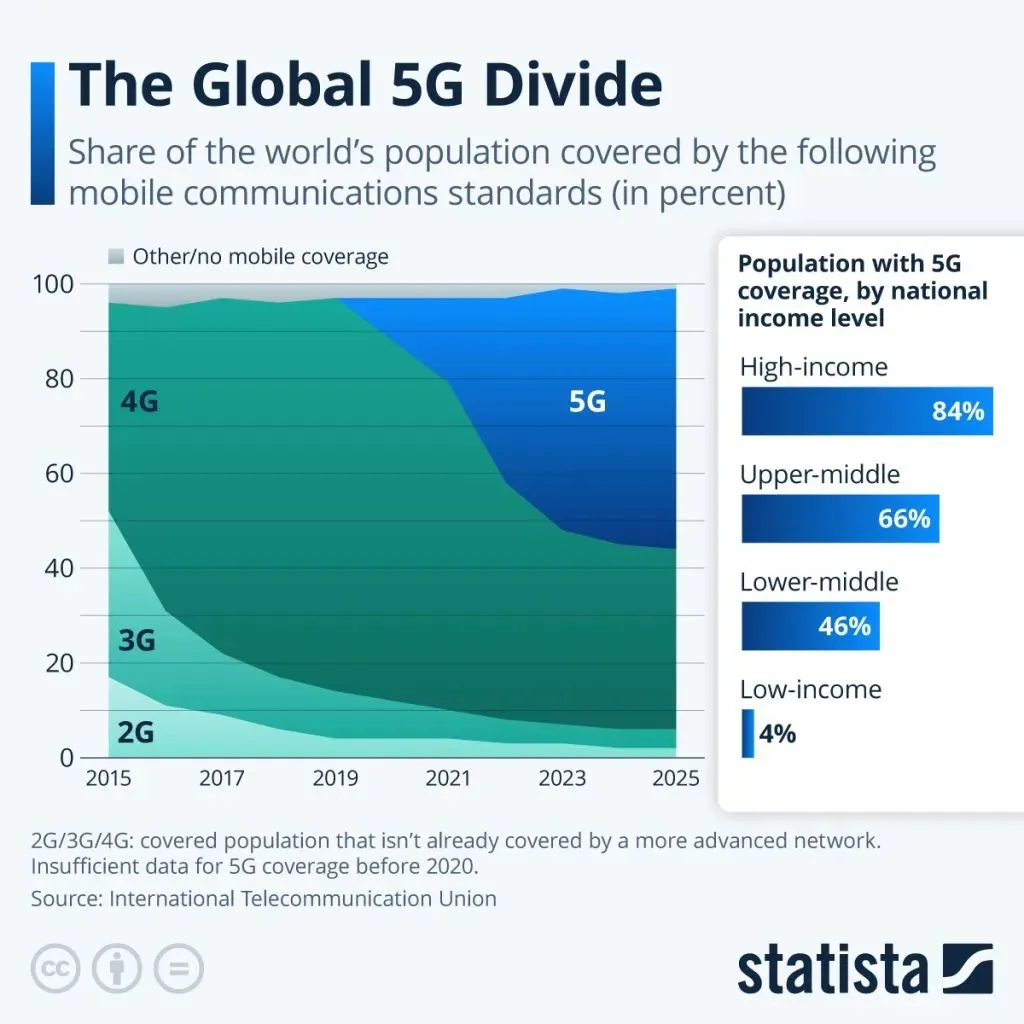
Far from bridging the digital divide, 5G has widened the connectivity gap between high-income and low-income regions, according to thevInternational Telecommunication Union.
5G networks covered 55% of the world’s population at the end of 2025, but access is highly uneven. In high-income countries, over 80% of the population has 5G coverage, while in low-income countries, less than 5% do.
The urban-rural gap is also particularly pronounced: globally, 66% of urban residents have 5G access, compared to just 40% in rural areas.
Regions like East Asia, led by China, South Korea, and Japan, are at the forefront of 5G deployment, with China alone surpassing the 1 billion 5G connections mark in 2024 and reaching near-universal urban coverage.
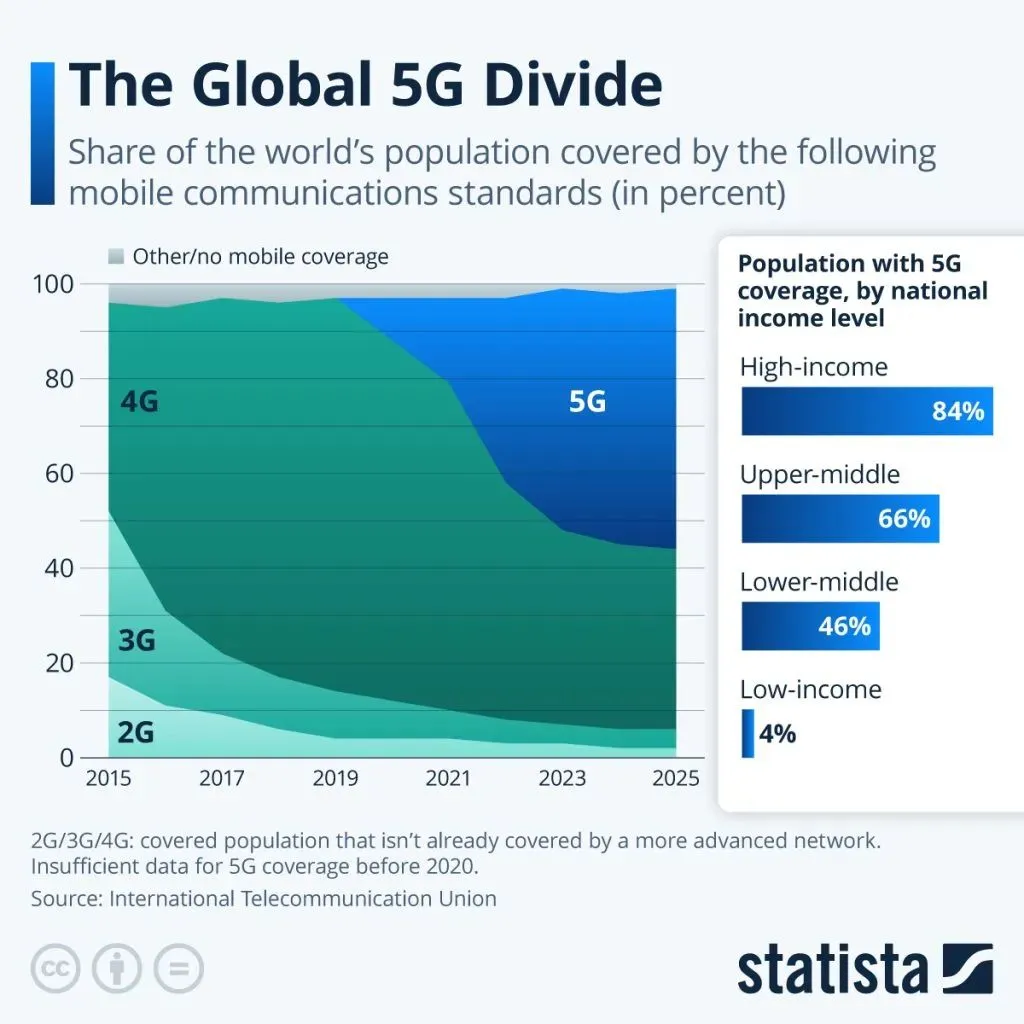
South Korea was the first to launch 5G and now enjoys nearly 100% coverage nationwide, followed by countries such as Denmark, the Netherlands, Switzerland, Singapore and Japan (98 to 99%).
North America, particularly the United States and Canada, also shows coverage and adoption above the global average, with over 300 million 5G connections and rapid expansion in both urban and suburban areas.
In contrast, much of Africa and some parts of South Asia and Latin America remain far behind. For example, it was estimated that only 12% of the African population would be covered by 5G by the end of 2025, with rural areas often completely unserved.
Elsewhere in the world, countries like India, while making progress (40% 5G coverage in 2025), still face significant barriers due to infrastructure costs and regulatory challenges.