The back and forth shows how the new Brussels proposal, unveiled Tuesday, threatens to trigger retaliation from Beijing at a sensitive moment, as the EU also faces the possibility of a trade war with the U.S. over Greenland.
But the EU push to block Chinese vendors could also help defuse tensions with Washington, which has urged European capitals to block Chinese vendors like Huawei for years. A new U.S. National Security Strategy released in December 2025 listed “encouraging Europe to take action to combat mercantilist overcapacity, technological theft, cyber espionage, and other hostile economic practices” as one of seven priorities for U.S. policy in Europe.
Brussels’ new cyber bill is the latest in a wide-ranging series of initiatives by the EU to strengthen its “strategic autonomy” in sensitive technologies and industries, and de-risk its economies from trade shocks and economic coercion.
Just hours before the bill was revealed, Commission President Ursula von der Leyen told global leaders in Davos that Europe faces a “necessity to build a new form of European independence” and needs to “fix the structural dependencies we have” — a comment directed both at Beijing and at Washington.
Under the cyber bill, the European Commission and EU capitals would name “countries of concern” they deem a cyber threat in sectors including telecoms, renewable energy, electricity, water, cloud services and security services.
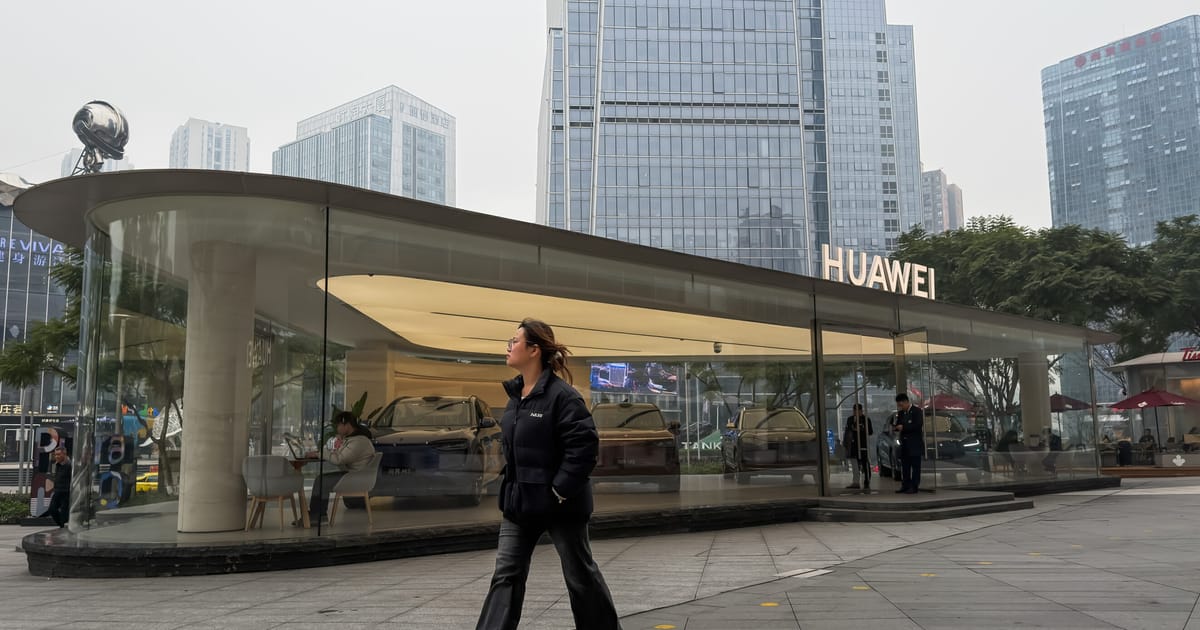
Though the draft legislation itself does not name any specific countries or companies, it is widely seen as targeting China. 5G suppliers Huawei and ZTE are in the EU’s immediate crosshairs, while other Chinese vendors are expected to be hit at a later stage. That could include airport scanner maker Nuctech, camera maker Hikvision, drone maker DJI and others.