Terri gave me this large stone when we met up in 2022 at the Conference on Iroquois Research (Figure 1).1 That year it was held on Seneca Nation territory. Terri had driven to the casino from her home 12 miles away. I had travelled 130 miles from my parents’ home in Rochester, after flying up from Atlanta earlier that week.
“Here’s something I brought you from the Quaker Bridge Boat Ramp. I found it during our Remember the Removal walk last month,” she said.
The size and weight of the rock were remarkable. Too big to put into a pocket. Heavy enough to be dangerous. It was beautifully smooth and rounded. Dark veins formed a large X across it.
“This is beautiful, thank you,” I said as we slipped into our seats for the conference opening. We didn’t talk more about the stone.
Quaker Bridge was an Onöndowa’ga:’ (Seneca) village before it was destroyed by flooding in the 1960s after the U.S. government built the massive Kinzua Dam, despite intense resistance from the Seneca Nation. Nine Onöndowa’ga:’ (Seneca) villages were destroyed and over 700 Seneca people were forced to relocate. 10,000 acres of the Onöndowa’ga:’ Ohi:yo’ Territory were lost. Just under 16 square miles were flooded and forcibly dispossessed from sovereign Onöndowa’ga:’ jurisdiction. Stolen. A breach of the Treaty of Canandaigua, signed in 1794 by the United States government and the Haudenosaunee Confederacy (also known as the Six Nations of the Iroquois Confederacy), the political alliance of the Seneca, Cayuga, Onondaga, Oneida, Mohawk and Tuscarora Nations.2
The Kinzua Dam was built to protect the downstream city of Pittsburgh from being flooded by the Ohi:yo’ (Allegheny River).3 And crucially, to generate hydroelectric power for Pittsburgh during a time when the region was producing approximately 41% of the nation’s steel. And, to enhance the recreation areas of New York’s Allegany State Park, “The Wilderness Playground of Western New York,” with a large lake. All done through executive order by U.S. President John F. Kennedy.
The violence, displacement, and trauma unleashed by the creation of Kinzua Dam is considered the most devastating series of events in 20th century Seneca history. The destruction of ancestral lands, family homes, community structures, and village life – coupled with the loss of farming, language, and elders strained to withstand the move – continues to weigh heavily into the present.4
Terri did not say any of that. She just gave me the rock. She knew that I knew. We had first met five years earlier, at the 2017 Remember the Removal (RTR). There, she had approached me, eager to connect and guide. Me, a visitor, learner, settler, and stranger.
Every year the RTR route is different. Every year the theme is different. In 2022 it was “Protecting All of Our Relations.” I wasn’t able to go in 2022. That walk started at the former site of the Quaker Bridge village. At least, as best as one could be at the former village without being in the water. It’s now under the vast Allegheny Reservoir, a 27 mile long, 12,000 acre body of water backed up behind the Kinzua Dam. The giant lake “playground.”
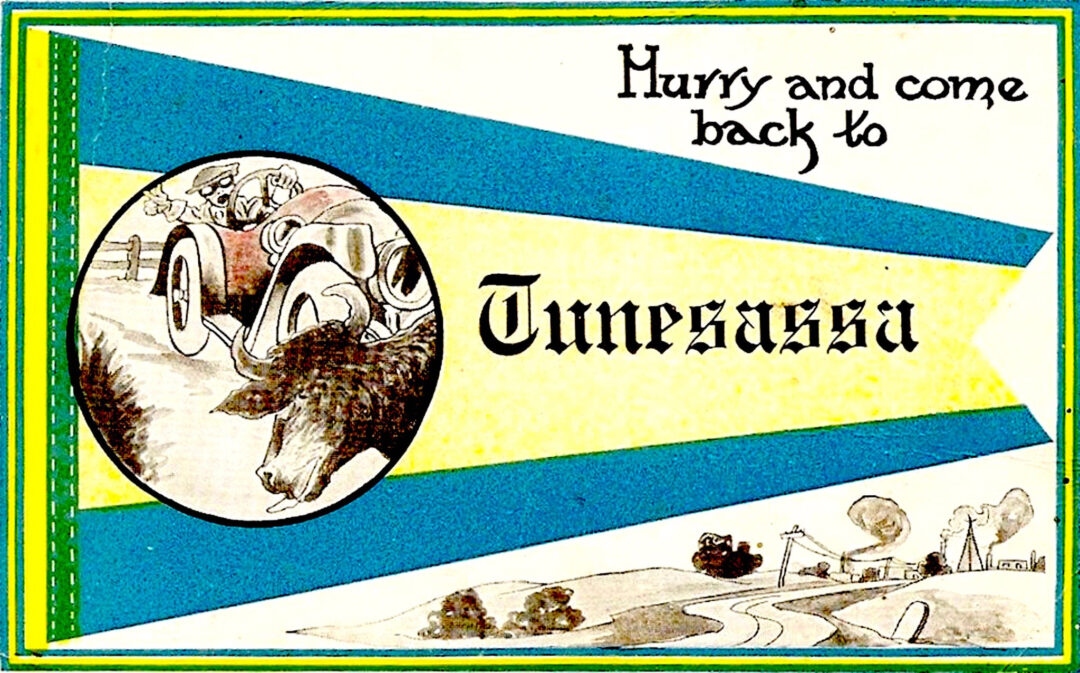
Terri was born and raised in Quaker Bridge, also called Tunesassa (“Where There is Fine Sand” or “Fine Sand There”).5 She was a child during removal. Figure 2 is a tourist postcard from a time when Tunesassa was known as “The Gateway to Allegany State Park,” because of its river bridge leading to the park’s entrance.
The boat ramp is part of the state park (Figure 3). So Terri found the stone there. Maybe it was a grinding stone? Maybe for corn?
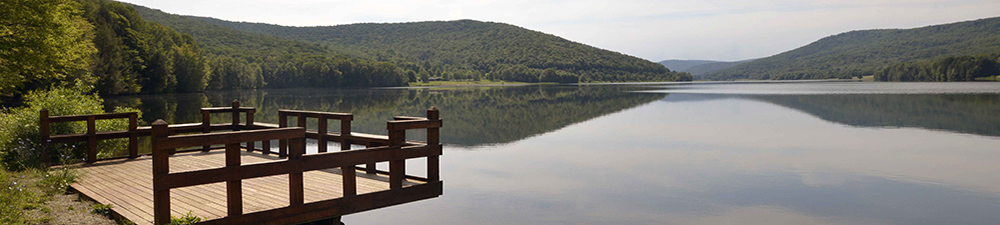
I kept the stone on the conference room table for a bit, and then put it in my backpack along with a yellow post-it note containing Terri’s handwritten description. She’s a meticulous researcher and documentarian. An accompanying note was crucial.
The next morning I woke up with Covid. After dodging it for 2 ½ years. I texted Terri right away. Luckily we had been wearing masks the day before. Too sick to return to the conference, or even Zoom in, I rested in the casino hotel room. The view was stunning (Figure 4).
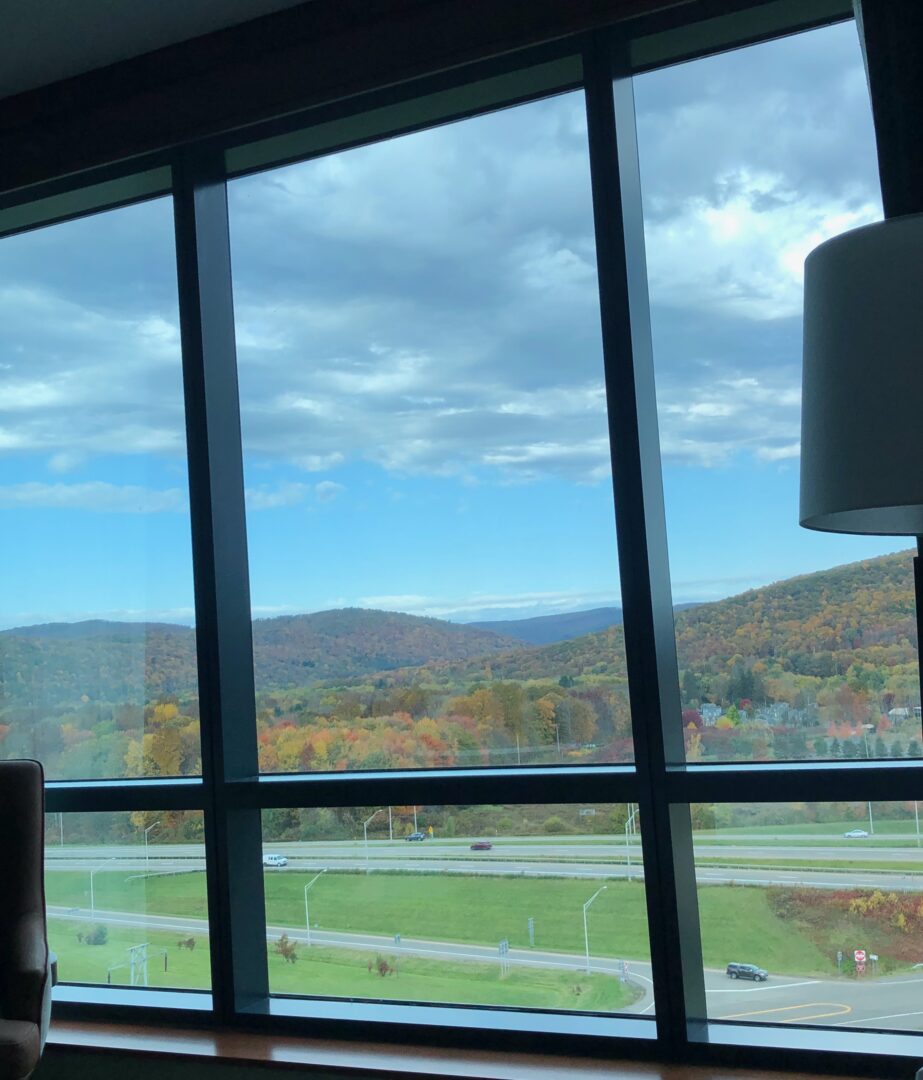
Terri and I checked in by phone, but I didn’t go back to the conference. Even though it was right downstairs. Sort of. I would have needed to go down a whole bunch of elevator floors and pass by gamblers and smokers, honeymooners, and retirees to get to the meeting rooms where the 77th Edition of the Conference on Iroquois Research was taking place. It has been happening every year since 1945.
We said goodbyes, til the next time. I held a worry that I might have brought Covid to folks at Seneca Nation. To elders like Terri and indirectly to her cousin Anna, a dynamo and one of the few people who know the Seneca language. I would be lying if I said that the thought of foreign invaders bringing devastating diseases to Indigenous nations didn’t cross my mind.
Life continued. Terri and Anna stayed strong.
I didn’t think much about the stone until this May. I was sent a prompt by the organizers of an performance workshop at an upcoming Society for Cultural Anthropology (un)conference in the Hudson Valley:
“[T]hink about your research in relation to some of the themes we’ll explore together: keeping company, conviviality, solidarities, connections among strangers, and other forms of relating . . . Drawing from your field notes and memories, please pick a particular encounter, experience, or story . . . related to either extraordinary or ordinary forms of coming together. Bring with you something related to your fleeting or more quotidian moment of connection. This can be in any form . . .”6
Terri’s stone was the first thing that I thought of. The stone was in Atlanta. I was already in New York State. So I had to carry it in my mind to the Hudson Valley.
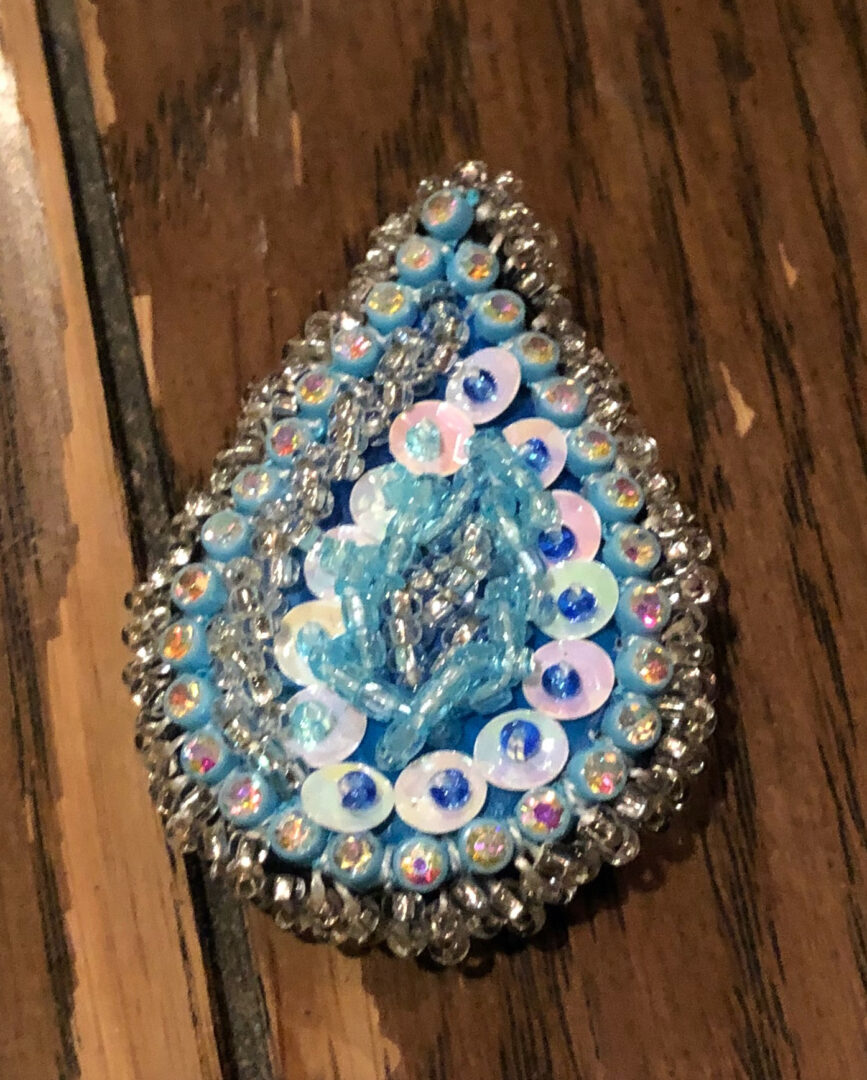
Over time the stone’s meaning expanded, emerged, landed. The stone was a gift, yes, one in a long series of gifts that Terri and I exchange every time we visit: A hummingbird magnet, a beaded pin (Figure 5), a pot for plants, a small water prayer sign in the Seneca language, a t-shirt, a bar of handmade soap, food, and good stories.
The stone was weightier. Its connections spiraled out in every direction. The stone represented the endurance of Seneca sovereignty in the wake of my government’s violation of a treaty with the Seneca Nation. Terri did not say that. She just gave me the stone.
The stone represented Terri’s home. And the devastation of that home.
It called me to witness. It represented my responsibility.
None of those things landed when Terri gave me the stone. In 2022, the Conference on Iroquois Research was beginning, we sat down, the opening Thanksgiving Address was given, I got Covid, drove to Rochester while still recovering, flew back to Atlanta, returned to a flurry of home and work activities, the swirl of holidays flying into 2023, my uncle passing, my mother’s illness worsening, many more visits to New York State and to Seneca territories including the 2023 powwow and a stay at Terri’s home, continued toxicity in my department, new ethnographic theater projects on light themes such as Planetary Life & Death, The End of the World, Generations, and Ancestors, and life was just busy and full in general.
But there I was in New York, moved by the email call from Meghan Rose and Valentina. The stone-as-a-gift-from-Terri spoke to me.7 Three years in waiting. That’s when I was ready to hear.
Driving from Rochester to the (un)conference, the stone in my mind was traveling with me to the region where my Dutch ancestors first settled in North America, in Haudenosaunee territories nearly 400 years ago. It was one more marker of my calling into the Two Row Treaty relationship, forged between Haudenosaunee and Dutch in 1613.8
The blossoming of the gift – and the stone’s reverberations – continued as I engaged in the performance workshop activities. Organizers Meghan Rose and Valentina invited us to create body statue tableaux to express what we had selected in response to their written prompts about “connection.” I enlisted six workshop participants and built this (Figure 6):
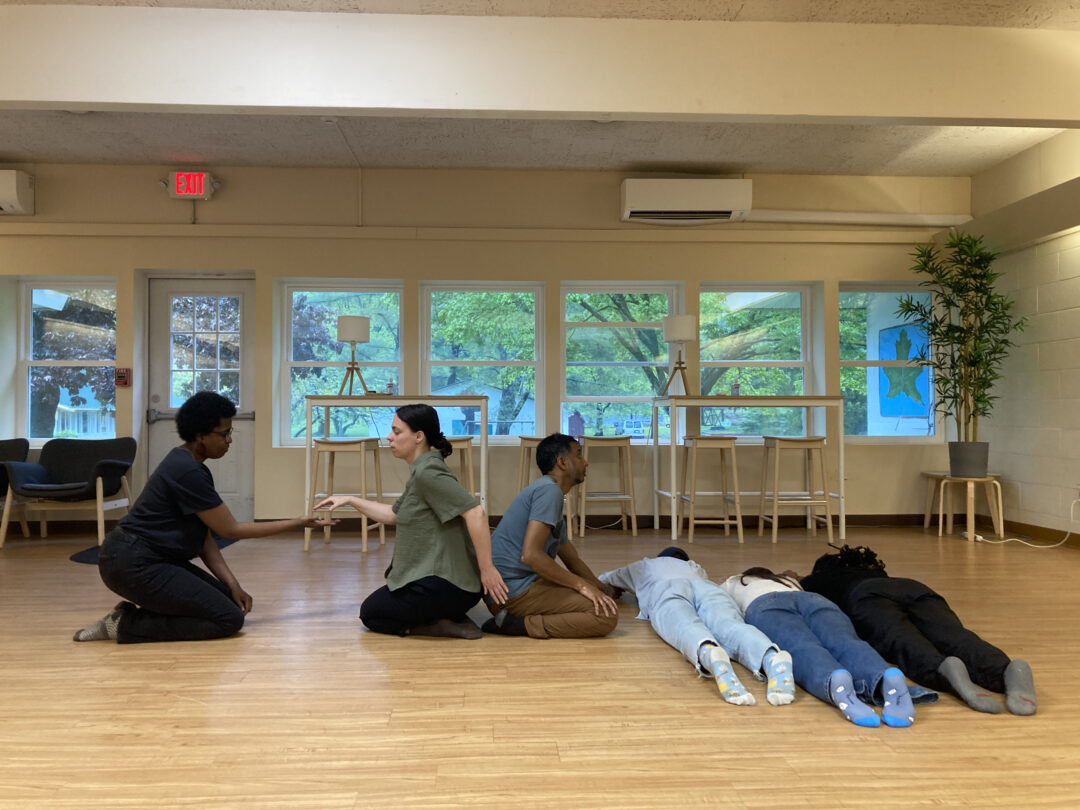
We had been instructed to build without words. Tapping AJ first, I indicated her placement as lake shoreline. I gestured for Monica and Victoria to lay beside her, to widen the lake. I set Anand reaching under AJ’s armpit, digging. Lauren was then placed against Anand’s back, reaching back towards him and forward to the final person placed in the scene, Kamela, the recipient. No words or visible stones were used. It was a frozen still life.
The story of the stone. And its weight.
The story of Kinzua Dam.
The story of Terri and me. In Fall 2022. And in a spiral of reverberating history.
As an ethnographic theater theorist, director, instructor, and practitioner, I have facilitated these kinds of tableaux creation exercises hundreds of times with hundreds of participants since starting this work in 2010. I’ve published on the alchemy of ensembled-based tableaux creation and the way that anthropological knowledge and theory can be co-produced through these embodied forms of communication (Vidali 2020, 2023a, 2023b; see Shankar 2016).
And stretching back to 2016, I brought tableau making activities into an earlier Society for Cultural Anthropology (SCA) conference – probably a first for SCA (Vidali 2020). At the time, one of the SCA leaders gushed to another, “This is like a Writing Culture moment!”9 And yes, over the years, I’ve co-created dozens of body statue still lifes with other participants in workshops facilitated by mentors and luminaries such as Ken Hornbeck, Julian Boal, and Michael Rohd. Those are the folks I learned from.
But I don’t think I ever sculpted my own tableau to tell a personal story, like the story of the stone.
As the frozen scene was “read” by workshop participants, as their voices processed what they saw, the weight of their responses nearly crushed me. Their consensus was to name it “Sorrow.” They saw the face down bodies as dead souls. They didn’t see a village flooded. Or a lake. Or a stone being retrieved. Or a witness/recipient. That’s fine. The visual of death was palpable, overpowering.
I started to cry. Then Meghan Rose asked me to share my title. I named it “Recovery.”
I couldn’t talk about how I also carried the weight of my mother’s recent passing into that workshop moment. About how I had been feeling unsettled over the thought of Mother’s Day, which happened to be the next day.
I couldn’t talk about how the last time that I had been at an SCA conference, in 2016, I was with my mother. This was a first for us. A mother and daughter team. She joined my workshop session as I introduced ethnographic tableaux creation to the conference participants. I guided folks to respond to what was calling us at that moment, related to the conference’s theme, “Collaboration.” My mother took photos; some appear in Vidali 2020.
There’s more to say about the story of the stone, how my workshop still life was processed and narrated by others, how my mother stayed with me constantly that weekend, and how I had been trying to reach Terri for a couple of months to no avail. I speculated that either she had either changed her phone number or was ill. We’re back in touch now. She did change her number. And she’s fine. Running around with 95 year old cousin Anna as usual.
Maybe another time I will say more about the next step in Valentina and Meghan Rose’s workshop where we were grouped with other participants. I worked with Emily and David. We shared the stories behind our individually created scenes. We listened with deep compassion and care. And then we built a new silent scene.
Shifting the weight, lightening the weight, deepening the weight, expanding the weighted spirals.
Acknowledgements
Thank you to Mom, Terri, Anna, the stone, Meghan Rose, and Valentina. Thank you to tableau volunteers AJ, Anand, Kamela, Lauren, Monica, and Victoria, and to scene partners Emily and David Si. Thank you to David Sy. for feedback on an earlier draft.
Image Credits and Descriptions
Featured image and Figures 4, and 5 are photos by Debra Vidali.
Figure 2 is a postcard image, courtesy of Terri John, posted October 12 2024 on the Facebook public group, CONSTRUCTION of the KINZUA DAM.
Figure 3 is an image of the Allegany State Park Quaker Area, featured on the New York State Parks, Recreation, and Historic Preservation website.
Figure 6 is a photo by Valentina Zagaria, used with permission.
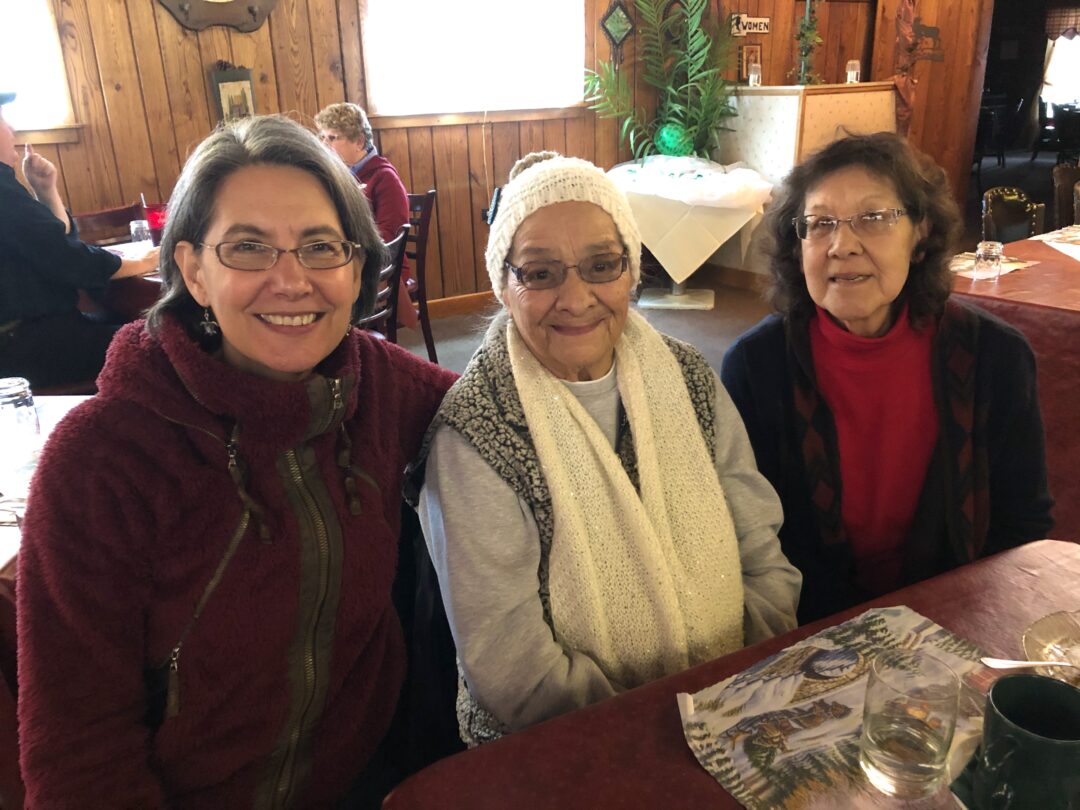
Figure 7 is a photo taken by a friend at Meyers Restaurant in 2018 (l to r: Debra, Anna, Terri).
Note on Spelling and Orthography
This essay uses standard Onöndowa’ga:’ Gawë:nö’ (Seneca Language) spelling and orthography from the Seneca Nation Language Department. Nasalized vowels are represented with two dots over a vowel (as in ö). Long vowels are represented with a colon after them (as in a:). Glottal stops are represented with single quote marks (as in the mark that follows the vowel a, in a’). The autonym Onöndowa’ga:’ (meaning “People of the Great Hill”) is variably spelled as Onöndowa’ga:’ and Onödowa’ga:’.
Notes
References
Lake of Betrayal: The Story of Kinzua Dam. 2017. By Scott Sackett, Paul Lamont, and Caleb Abrams. Vision Maker Media.
Boal, Augusto. (1992) 2002. Games for Actors and Non-Actors. Second edition. New York, NY: Routledge.
Chin, Elizabeth, ed. 2014. Katherine Dunham: Recovering an Anthropological legacy, Choreographing Ethnographic Futures. Santa Fe: School for Advanced Research Press.
Shankar, Arjun. 2016. What’s in the Room? with Debra Vidali, Mariam Durrani, and Tali Ziv. (video, 8:44)
Tinker, George “Tink”. 2004. The Stones Shall Cry Out: Consciousness, Rocks, and Indians. Wicazo Sa Review 19(2):105-125. http://www.jstor.org/stable/1409501
Vidali, Debra. 2024. Two Row Repair: A Trilogy. Anthropology and Humanism 49:57-62. DOI: 10.1111/anhu.12514
Vidali, Debra. 2023a. Craftwork in Ethnographic Theater Making. In The Routledge Companion to the Anthropology of Performance, edited by Lauren Griffith and David Syring, 423-440. New York: Routledge.
Vidali, Debra. 2023b. Icebreaking and Alchemy; Spontaneity, Surprise, and Joy; The Human Barometer; Human Statue Creation and Inquiry (Tools in Appendix). In The Routledge Companion to the Anthropology of Performance, edited by Lauren Griffith and David Syring, 506-512. New York: Routledge.
Vidali, Debra. 2020. Ethnographic Theater Making: Multimodal Alchemy, Knowledge, and Invention. American Anthropologist 122(2):394-409. DOI: 10.1111/aman.13387