Winter is the ultimate excuse to get the crew outdoors, fire up the pit, and cook over glowing embers. But here’s a truth many backyard cooks miss: not all firewood is built for the same job.
A fire that keeps your hands warm isn’t necessarily the fire you want to cook a premium steak over. Knowing the difference between a heating fire and a cooking fire helps you choose the right firewood, build a better ember bed, and get more from every winter fire.
Let’s break down exactly how to build the right fire for the right job.
Not All Fires Are Built the Same
When most people light a firepit, they chuck on whatever firewood they have and hope for the best. That works perfectly fine if you’re just chasing warmth.
Cooking is a completely different beast.
A heating fire is all about the visual show. You want rolling flames that throw out plenty of radiant heat to keep everyone comfortable on a chilly winter evening.
A cooking fire is all about patience.
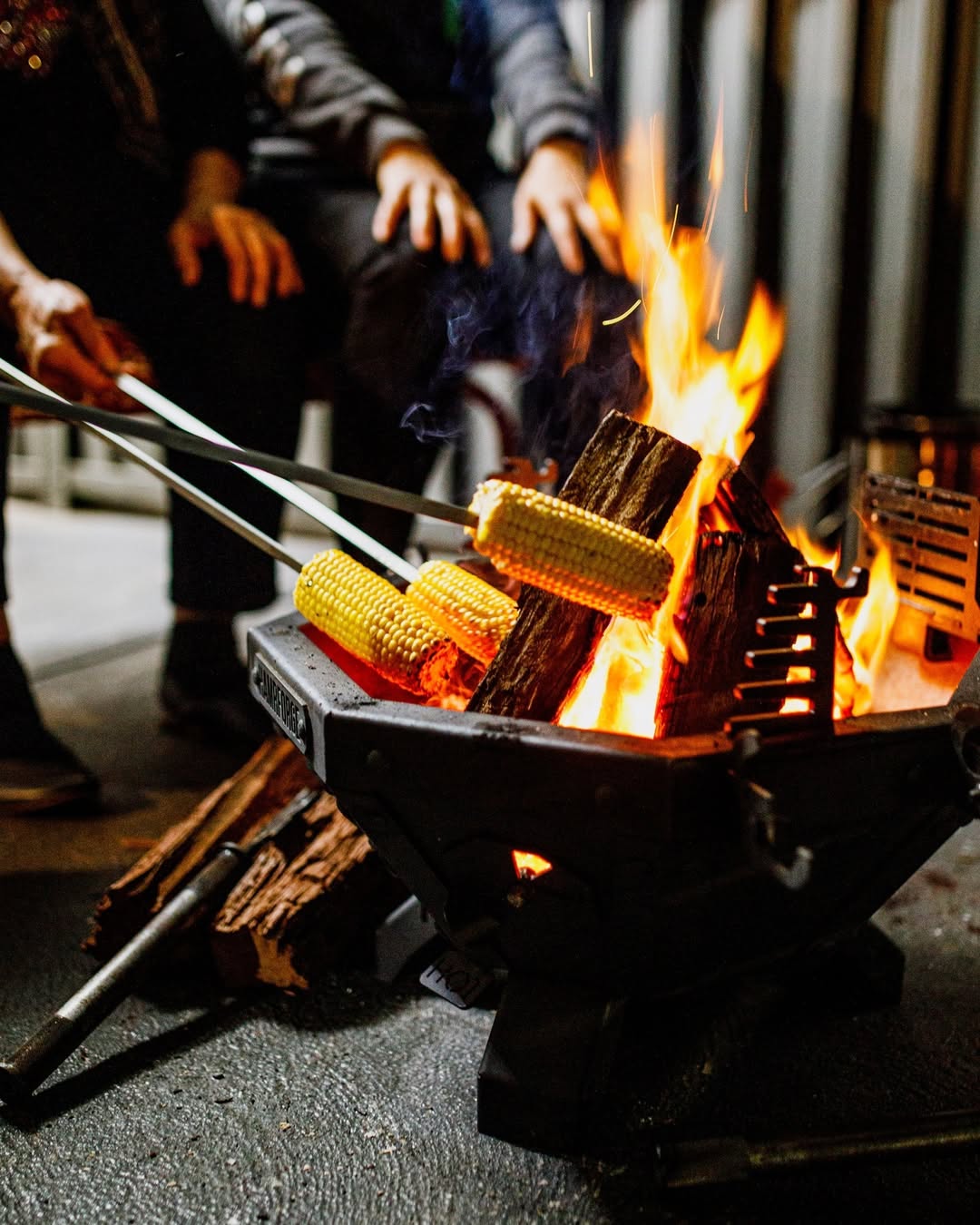
Once those big flames settle down, they leave behind glowing embers that radiate steady, even heat. That’s what makes firepit cooking so rewarding. Unlike tall flames that can scorch the outside of your food, glowing embers cook more gently, giving you far more control whether you’re grilling steaks, roasting vegetables or hanging a lamb shoulder over the fire.

If you’re trying to cook through massive, licking flames, you’re making life harder than it needs to be.
The best meals don’t come from the flames. They come from the embers.
Why Wood Density Matters
Every great firepit cook starts with one thing: choosing the right firewood.
Lighter firewood burns fast. It puts on a great show, throws out plenty of heat, and gets the fire going quickly. The downside? It burns away just as fast and leaves behind fewer long-lasting embers.
Dense Australian hardwood firewood, on the other hand, burns slower, produces longer-lasting heat, and creates a deep bed of glowing embers that’s perfect for cooking.

Neither is wrong. It just depends on your endgame.
If the goal is creating a brilliant atmosphere while everyone gathers around the fire, faster-burning firewood does the job beautifully.
But if dinner is on the menu, density is your best mate.
Dense hardwood gives you:
- More consistent cooking temperatures
- Better heat retention
- Fewer flare-ups
- Less time adding logs throughout the night
A good cook isn’t measured by the size of the flames.
It’s measured by the quality of the embers underneath them.
Building a Smarter Fire with Firebrand Firewood
The smartest pitmasters don’t light a fire and hope for the best. They build it with a plan.
Get your fire established, let the flames settle, then let the wood do what it does best. As it burns down, you’ll be left with the one thing every great firepit cook relies on: a deep bed of glowing embers.

That’s where Firebrand Vintage QLD Ironbark comes into its own.
As one of Australia’s densest hardwoods, Ironbark burns slowly, produces exceptional heat, and leaves long-lasting embers that are perfect for winter firepit cooking. Whether you’re grilling thick-cut steaks, roasting vegetables in cast iron, or hanging a roast over the fire, those steady embers provide the kind of consistency that open flames simply can’t.
Because Ironbark burns for longer, you’ll spend less time feeding the fire and more time doing what winter is all about—sharing good food with good people.
Think of it this way: Big flames start the conversation. The embers finish the cook.
Store Your Firewood Like You Mean It

Even the best Ironbark won’t perform if it’s been sitting outside soaking up winter moisture.
Australian winters might not bring heavy snow, but they do bring damp mornings, overnight dew, and the occasional shower. Leave your firewood sitting directly on the ground, and it’ll absorb that moisture, making it slower to light and far smokier than it needs to be.
Keep your setup professional:
- Store your firewood under cover with good airflow.
- Keep it raised off the ground using pallets or a sturdy firewood rack.
- Don’t wrap the stack tightly in plastic—it traps moisture instead of letting it escape.
- Rotate older firewood to the front so it gets used first.
Dry firewood lights faster, burns cleaner, and produces stronger, longer-lasting embers.
Your fire and your dinner will thank you for it.
Great Firepits Start with Great Fires
The best winter fire is the one you can control.

Once you understand how different firewood behaves, you’ll stop chasing huge flames and start building fires that burn longer, cook better, and keep everyone warm well into the evening.
Because at the end of the day, anyone can light a fire. Building one that keeps the crew warm and turns out an unforgettable meal? That’s where the real skill comes in.
Ready to level up your backyard setup this winter? Explore Firebrand Vintage QLD Ironbark and Firebrand’s range of firepit accessories to build better fires and cook with confidence!