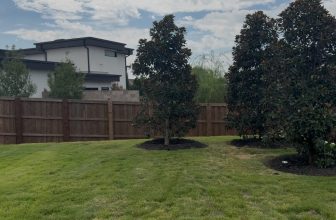
Today we’re here in Haslet, Texas, inspecting several mature Southern Live Oaks (Quercus virginiana) that are beginning to show early signs of environmental stress. At first glance, these trees still appear relatively healthy from a distance. The outer canopy maintains good color, and the primary leaders continue producing strong elongation growth. However, as I moved deeper into the canopy and began evaluating the tree from the inside out, several indicators immediately caught my attention.
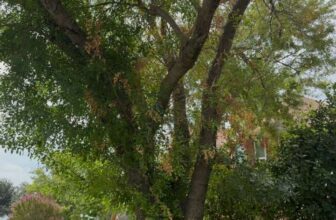
Approximately fifteen percent of the interior canopy is exhibiting necrotic leaf tissue accompanied by premature leaf drop during the month of July. That is significant because healthy Southern Live Oaks should still be maintaining a full, dense canopy at this point in the growing season. When a tree begins casting leaves this early, it is communicating that something within its environment has disrupted its normal physiological processes.
One of the encouraging observations during this inspection is that the apical growth remains healthy. The terminal shoots are producing good elongation, leaf size appears normal, and I found very little necrotic tissue on the newest growth. This tells me the tree is still producing energy and has not yet entered severe decline. The tree is stressed, but it is also responding. That is exactly the stage where proper plant healthcare can make a tremendous difference.
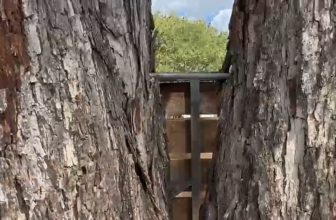
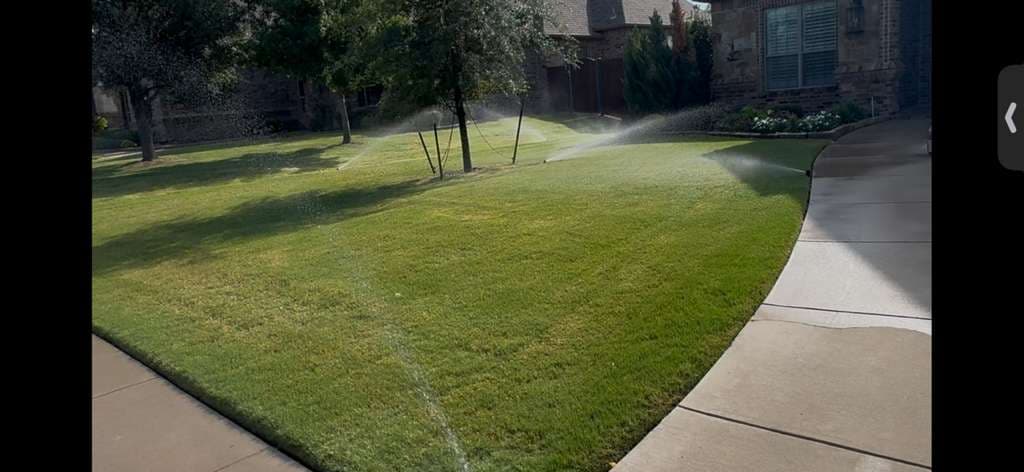
As I continued evaluating the site, several environmental factors became immediately obvious. The irrigation system is striking the trunk directly every time it cycles, and turfgrass has been allowed to grow completely against the root flare. Neither one of these conditions should exist around a mature Southern Live Oak. While they may seem insignificant individually, together they create an environment that continually places unnecessary stress on the tree.
This inspection is a perfect example of why proper diagnosis is so important. Many homeowners would simply notice leaves falling and assume the tree has a disease. In reality, the tree is responding to multiple environmental stressors, and until those stressors are corrected, simply spraying the canopy will not solve the underlying problem.
⸻
Understanding Southern Live Oak Biology
Southern Live Oaks are among the most resilient hardwood species growing throughout Texas. Their ability to tolerate heat, drought, wind, and poor weather has made them one of the most desirable landscape trees in North Texas.
However, resilience should never be confused with invincibility.
Like every living organism, Southern Live Oaks depend upon a delicate balance between root health, water availability, oxygen exchange, nutrient uptake, and carbohydrate production.
When one portion of that system becomes disrupted, the tree begins making physiological adjustments in an effort to survive.
One of those adjustments is premature leaf cast.
⸻
The Warm Winter and Dormancy Disruption
One of the biggest contributors to the stress we are seeing this year was the unusually warm winter experienced throughout North Texas.
Trees depend on dormancy just as much as they depend on the growing season.
Dormancy is not simply a period when trees stop growing.
It is an essential physiological process that allows the tree to conserve energy, regulate hormones, rebuild carbohydrate reserves, and prepare for another season of growth.
During an abnormally warm winter, trees may begin responding to temperatures that resemble spring conditions.
Hormonal activity changes.
Dormant buds begin waking prematurely.
Root activity may increase before environmental conditions are truly favorable.
When colder temperatures return, the tree must repeatedly shift between active growth and dormancy.
That constant interruption places significant stress on the tree’s energy reserves.
According to Texas A&M AgriLife Extension, irregular winter temperatures can disrupt normal growth cycles and contribute to delayed or uneven canopy development, particularly when followed by additional environmental stress during the growing season.
Although homeowners often focus on what they see above ground, much of the stress actually begins within the tree’s internal energy management system.
⸻
Why Premature Leaf Drop Matters
One of the most noticeable symptoms during this inspection was premature leaf cast occurring within the interior canopy.
Many people assume that because Southern Live Oaks naturally shed leaves, this is normal.
There is some truth to that.
Southern Live Oaks do replace foliage throughout the year.
However, timing and location matter.
When significant interior foliage begins dying and dropping during midsummer, it often indicates the tree is attempting to reduce energy demands.
Leaves require water.
Leaves require nutrients.
Leaves require carbohydrates.
If the tree cannot efficiently support every leaf within the canopy, it begins sacrificing older foliage to preserve healthier portions of the crown.
This is an adaptive survival response.
The tree is prioritizing resources.
By reducing the amount of foliage it must support, the tree lowers its water demand while preserving the newest and most productive leaves.
Although this response helps the tree survive, it also indicates that something within the environment is forcing the tree to make difficult physiological decisions.
⸻
Healthy Apical Growth Is an Encouraging Sign
One of the reasons I remain optimistic about these Southern Live Oaks is the condition of the newest growth.
The apical shoots continue producing healthy elongation.
Leaf size remains normal.
The newest foliage shows very little necrotic tissue.
This tells me several important things.
The vascular system is still functioning.
Photosynthesis is still occurring.
The root system continues supplying water and nutrients.
Most importantly, the tree still possesses enough stored carbohydrates to support new growth.
That means our goal is no longer saving a dying tree.
Our goal is reducing environmental stress before the tree progresses into more advanced physiological decline.
Healthy apical growth often provides one of the best opportunities for successful plant healthcare intervention because the tree still has adequate energy reserves available to respond positively to treatment.
⸻
Why Irrigation Hitting the Trunk Is a Problem
As I continued evaluating the landscape, another issue became immediately obvious.
The irrigation system was spraying directly against the trunk every time it operated.
Tree bark is designed to protect the vascular system beneath it.
It is not designed for repeated, prolonged moisture exposure.
When irrigation repeatedly wets the trunk, several problems can develop.
Constant moisture softens bark tissues.
Protective outer layers begin breaking down.
Fungal organisms become more active.
Bacterial pathogens become more favorable.
Over time, repeated moisture exposure can contribute to bark deterioration and create unnecessary stress around the root collar and lower trunk.
One of the simplest corrections homeowners can make is redirecting irrigation heads away from the trunk so water is applied to the root zone rather than directly against the bark.
⸻
Grass Growing Against the Root Flare
Another significant finding during this inspection was turfgrass growing directly against the root flare.
This is one of the most common landscape mistakes I encounter throughout North Texas.
The root flare is where the trunk transitions into the structural root system.
It should remain exposed, visible, and capable of exchanging oxygen with the surrounding soil.
When turfgrass grows against the trunk, competition immediately begins.
The grass competes with the tree for:
In addition, lawn irrigation keeps the area around the root flare consistently wetter than it was naturally designed to remain.
This creates additional environmental stress that compounds the effects of disrupted dormancy and summer heat.
Healthy Southern Live Oaks perform best when the root flare remains exposed and surrounded by a properly mulched root zone rather than actively growing turfgrass.
Trees Need Water, but They Also Need Oxygen
One of the biggest educational points I share with homeowners is that healthy trees require two essential resources to survive:
Most people understand the importance of watering.
Far fewer understand the importance of oxygen.
Every living root beneath this Southern Live Oak is constantly performing cellular respiration. During this process, the roots consume oxygen and convert stored carbohydrates into usable energy that powers nutrient uptake, water absorption, root growth, and overall tree function.
When oxygen becomes limited, root performance declines.
Even if adequate water is available, the tree cannot function efficiently when root respiration slows.
According to ISA arboricultural research, healthy soils contain thousands of microscopic pore spaces that allow both water and oxygen to move freely throughout the root zone. When those pore spaces become occupied by excessive moisture or compacted soil, oxygen availability declines dramatically.
Healthy roots require both moisture and oxygen working together.
One without the other creates stress.
Why Environmental Stress Often Leads to Disease
One of the biggest misconceptions homeowners have is believing fungal diseases simply appear for no reason.
In reality, many fungal pathogens are opportunistic.
They take advantage of trees that are already weakened.
Environmental stress reduces the tree’s natural defense mechanisms.
As carbohydrate reserves decline, the tree has fewer resources available to compartmentalize wounds, produce defensive compounds, and maintain healthy tissue.
This is why Arborist USA always focuses on identifying the original cause of decline before recommending treatment.
If we simply spray the canopy while ignoring the environmental problem, the tree remains under stress and the underlying issue continues.
Correcting the environment gives the tree the opportunity to recover naturally.
Our Plant Healthcare Program
Following my inspection, I recommended a comprehensive Plant Healthcare Program designed to reduce stress, improve vigor, and support long-term recovery.
The first component is a balanced micronutrient program.
Micronutrients play a critical role in:
- Chlorophyll production
- Enzyme activation
- Root development
- Photosynthesis
- Stress tolerance
Healthy leaves produce more carbohydrates.
More carbohydrates provide additional energy for root growth, tissue repair, and canopy regeneration.
The second component is a preventative antifungal treatment.
Although the primary issue on these trees appears to be environmental stress, stressed trees become increasingly susceptible to secondary fungal pathogens.
Applying a systemic antifungal helps reduce disease pressure while the tree rebuilds its natural defenses.
The third component is our Integrated Pest Management (IPM) program.
Trees under environmental stress frequently attract opportunistic insects.
Our IPM program allows us to monitor insect populations, reduce unnecessary pest pressure, and protect the tree while recovery is taking place.
Rather than reacting after infestations become severe, IPM focuses on prevention and long-term management.
Correcting the Landscape Is Just as Important as the Treatment
Plant healthcare is never just about products.
It is equally about correcting the environmental conditions that created the problem.
On this property, I recommended two important cultural changes.
First, redirect the irrigation heads so they no longer spray directly against the trunk.
The objective is watering the root zone while allowing the trunk to remain dry.
Second, remove the turfgrass from around the root flare.
Creating a properly mulched root zone immediately reduces competition for water and nutrients while improving oxygen exchange around the lower trunk.
These simple corrections often produce significant improvements over time because they eliminate the chronic stress that has been affecting the tree.
Sometimes the greatest treatment is simply removing the source of the problem.
Why Early Diagnosis Matters
One of the reasons I enjoy performing plant healthcare inspections is that many trees can still be preserved when problems are identified early.
This Southern Live Oak is a perfect example.
Yes, the tree is showing stress.
Yes, there is premature leaf cast.
Yes, there is interior canopy decline.
But the healthy apical growth tells me the tree still has good recovery potential.
The tree is communicating that it needs help—not that it has reached the end of its life.
That is why annual inspections by an ISA Certified Arborist are so valuable.
By identifying problems before major structural decline or widespread canopy loss occurs, we have a much greater opportunity to restore tree health and preserve mature shade trees for years to come.
Final Thoughts
This Southern Live Oak in Haslet, Texas demonstrates how several relatively small environmental issues can combine to create significant physiological stress.
The unusually warm winter disrupted normal dormancy.
The irrigation system repeatedly wets the trunk.
Grass has been allowed to grow directly against the root flare.
Together, these conditions have contributed to premature leaf cast, interior canopy necrosis, and reduced overall vigor.
Fortunately, the healthy apical growth tells us the tree still possesses excellent recovery potential.
By correcting the irrigation, removing turfgrass from the root flare, implementing a comprehensive micronutrient program, applying preventative antifungal treatments, and maintaining an Integrated Pest Management program, we can significantly reduce stress and help restore this tree’s long-term health.
At Arborist USA, our goal is never simply treating symptoms.
Our mission is identifying the environmental cause of decline, improving tree physiology, and preserving mature Southern Live Oaks through science-based plant healthcare built upon ISA Best Management Practices, TCIA standards, and research from Texas A&M AgriLife Extension.
For general tree-care best practices, homeowners can also reference guidance from the Texas A&M Forest Service, https://tfsweb.tamu.edu/trees/, a trusted authority on Texas tree health.
Schedule a professional inspection. Early detection and scientific intervention are the difference between preservation and loss. If you’d like to speak to an arborist, please call us at 817-880-6130 or visit https://www.arboristusa.com/
Today we’re in Haslet, Texas evaluating several mature Southern Live Oaks (Quercus virginiana) that are beginning to show early signs of environmental stress. At first glance these trees appear healthy, but a closer inspection reveals something many homeowners would completely overlook.
Inside the canopy, we’re finding approximately 15% premature leaf cast, necrotic interior foliage, and thinning canopy density during the month of July. While this may not seem alarming to the average homeowner, these are early indicators that the tree is responding to environmental stress.
The encouraging news is that the newest apical growth remains healthy. The terminal shoots are elongating normally, the newest leaves are well developed, and there is very little necrotic tissue on the current season’s growth. That tells us the tree is still producing energy and has excellent recovery potential if we address the underlying causes now.
One of the biggest contributing factors this year has been the unusually warm winter experienced across North Texas.