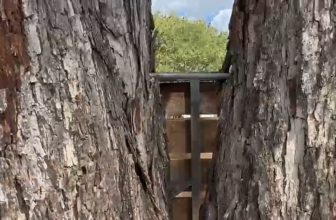
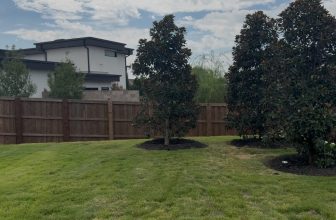
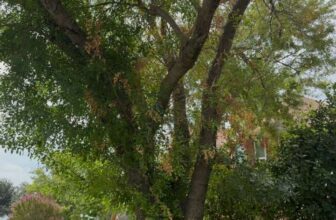
Today we’re here at Eagle Mountain Lake, Texas, inspecting approximately ninety mature Southern Live Oaks (Quercus virginiana) and Red Oaks (Quercus spp.) that are currently enrolled in one of our long-term Oak Wilt prevention programs. This property is an excellent example of why preventative plant healthcare is so important in North Texas. Although these trees are healthy today, they are surrounded by one of the largest oak wilt footprints in the region, making prevention far more valuable than waiting until symptoms begin to appear.
One of the biggest misconceptions homeowners have is believing Oak Wilt is something that only affects trees that already appear sick. In reality, the best time to treat Oak Wilt is before the fungus ever enters the vascular system. By the time a live oak begins showing classic symptoms of wilt, bronzing foliage, and canopy decline, the disease may have already spread underground to neighboring trees through interconnected root systems.
That is exactly why this property is maintained on a proactive two-year treatment cycle. Rather than reacting after infection occurs, our goal is preserving these mature trees for decades to come through science-based plant healthcare built around Texas A&M recommendations, ISA Best Management Practices, and TCIA standards.
Why Eagle Mountain Lake Is a High-Risk Area for Oak Wilt
The Eagle Mountain Lake area contains thousands of mature oaks growing in close proximity to one another. Large neighborhoods, native wooded areas, and lakefront properties provide ideal conditions for Oak Wilt to spread once it becomes established.
Throughout North Texas we continue seeing new infections every year. As neighboring properties become infected, healthy trees located nearby immediately enter a much higher risk category.
One infected tree can eventually affect dozens of surrounding trees if preventative measures are not implemented.
This is why understanding the biology of Oak Wilt is so important.
The disease does not remain isolated to one tree.
It expands.
What Is Oak Wilt?
Oak Wilt is caused by the fungal pathogen Bretziella fagacearum, one of the most destructive vascular diseases affecting oak populations throughout Texas.
Unlike many foliar diseases that attack leaves or twigs, Oak Wilt attacks the tree’s vascular system. Specifically, it colonizes the xylem. The xylem functions as the plumbing system of the tree, transporting water and dissolved minerals from the root system into the canopy. Once the fungus enters the xylem, the tree immediately begins defending itself by producing tyloses and gums that attempt to block the pathogen’s movement. Unfortunately, these same defense mechanisms also block water movement. The result is hydraulic failure. Leaves no longer receive adequate moisture. Canopies begin wilting. Branches decline. Eventually, the entire tree dies.
This process can happen very quickly in Red Oaks and more gradually in Southern Live Oaks.
Why Southern Live Oaks Spread Oak Wilt So Easily
Southern Live Oaks possess one unique characteristic that makes Oak Wilt particularly dangerous.
Their roots naturally graft together beneath the soil.
Over time neighboring live oaks form interconnected feeder root systems that allow trees to share water, nutrients, and structural support.
Under normal conditions these root grafts benefit the trees.
Unfortunately, they also provide the perfect pathway for Oak Wilt.
Once one tree becomes infected, the fungus can move directly through these interconnected vascular systems into adjacent trees without ever being exposed above ground.
According to Texas A&M Forest Service, root-graft transmission remains the primary method of Oak Wilt spread within mature live oak populations.
Once established underground, the disease may continue advancing outward year after year.
This is one of the primary reasons entire neighborhoods can eventually become infected.
The Role of Nitidulid Sap Beetles
Root grafts are not the only method of transmission.
Oak Wilt also spreads through Nitidulid sap-feeding beetles.
These small insects are naturally attracted to fresh wounds on oak trees.
They commonly visit:
- Fresh pruning cuts
- Storm damage
- Broken limbs
- Bark injuries
When these beetles feed on fungal mats produced by infected Red Oaks, microscopic spores attach to their bodies.
The insects then fly to healthy trees where they introduce the pathogen into fresh wounds.
This is why proper pruning practices are absolutely critical in Texas.
Fresh wounds become entry points for infection.
During periods of elevated Oak Wilt activity, unnecessary pruning should be avoided whenever possible.
If emergency pruning becomes necessary, fresh cuts should be properly sealed immediately following pruning in accordance with current Texas A&M recommendations.
Why Preventative Treatment Makes More Sense
One of the biggest conversations I have with homeowners is explaining the difference between prevention and reaction.
Waiting until symptoms appear often means the fungus has already become established inside the vascular system.
In live oak populations, root-graft transmission may already be occurring beneath the soil before the homeowner notices the first wilted leaf.
By treating healthy trees before infection occurs, we significantly increase the opportunity to preserve valuable canopy.
This property demonstrates exactly that philosophy.
Approximately ninety mature trees are maintained on a preventative program because replacing trees of this size would be virtually impossible.
The value of these mature specimens extends far beyond simple landscaping.
They provide shade, wildlife habitat, stormwater interception, energy savings, and tremendous property value.
Protecting them is far more economical than replacing them.
Low-Volume Macro Infusions with Alamo®
The foundation of this Oak Wilt prevention program is Low-Volume Macro Infusion utilizing Alamo® fungicide.
Alamo contains the active ingredient propiconazole and has become one of the industry’s most widely accepted fungicides for Oak Wilt prevention.
Rather than applying materials to the soil or foliage, the fungicide is introduced directly into the vascular system through low-volume macro infusion ports installed around the root flare.
Once inside the xylem, the fungicide moves throughout the tree, helping suppress fungal colonization before significant infection can occur.
One of the advantages of modern low-volume infusion systems is that they require significantly fewer infusion sites than older high-volume injection methods.
This reduces wounding while improving application efficiency.
Because the product is placed directly into the vascular system, distribution throughout the canopy is both efficient and targeted, providing protection where it is needed most.
Why We Rotate Fungicides Every Two Years
One of the unique aspects of our Oak Wilt prevention program is that we do not rely on a single fungicide indefinitely.
Although Alamo® has proven to be one of the most effective products available for Oak Wilt prevention, Arborist USA rotates our treatment cycle using Propizol® from Arborjet. Both products contain propiconazole, but rotating between formulations as part of a planned management program allows us to follow a consistent long-term strategy while maintaining protection across large tree populations.
Our standard recommendation for high-value live oak populations in Eagle Mountain Lake is maintaining a two-year treatment cycle.
This schedule closely follows current Texas A&M recommendations for preventative protection in areas with active Oak Wilt pressure.
The objective is maintaining continuous vascular protection before infection occurs.
Waiting until symptoms appear often places the tree at a significant disadvantage.
Healthy trees absorb preventative treatments more efficiently and respond better than trees already experiencing vascular dysfunction.
Why Integrated Pest Management Is Part of Every Oak Wilt Program
One of the advantages of working around Eagle Mountain Lake is the beauty of the landscape.
One of the disadvantages is the increased insect activity associated with large wooded environments and proximity to water.
Trees growing near lakes often experience greater pressure from numerous insects throughout the growing season.
Although Oak Wilt itself is caused by a fungal pathogen, insect pressure creates additional physiological stress that reduces the tree’s ability to defend itself.
Our Integrated Pest Management (IPM) program is designed to minimize unnecessary stress caused by:
- Leaf-feeding insects
- Sap-feeding insects
- Scale insects
- Caterpillars
- Secondary opportunistic pests
Healthy trees possess greater energy reserves and stronger natural defense systems.
Reducing insect pressure allows the tree to devote more energy toward growth, photosynthesis, and long-term health rather than constantly responding to environmental stress.
Plant healthcare is never about treating only one problem.
It is about improving the overall health of the tree.
Why Micronutrients Are Included In Our Program
Strong disease resistance begins with proper nutrition.
Many North Texas soils are deficient in essential micronutrients that play critical roles in plant physiology.
Micronutrients support:
- Chlorophyll production
- Enzyme activation
- Root development
- Cell wall strength
- Stress tolerance
- Photosynthetic efficiency
Healthy foliage produces more carbohydrates.
More carbohydrates allow trees to better defend themselves against environmental stress and vascular diseases.
This is why every Oak Wilt prevention program we install also includes a comprehensive micronutrient program designed to improve overall vigor rather than simply focusing on disease suppression.
Our goal is producing healthier trees—not simply applying fungicides.
Why Healthy Trees Resist Stress Better
One of the biggest lessons homeowners can learn is that healthy trees are naturally more resilient.
Trees growing in healthy soil with proper nutrition, adequate moisture, balanced oxygen levels, and reduced insect pressure generally tolerate environmental stress far better than weakened trees.
Plant healthcare is built around improving every aspect of tree physiology.
Healthy roots produce healthy canopies.
Healthy canopies produce carbohydrates.
Healthy carbohydrates fuel root growth, defense systems, compartmentalization, and long-term survival.
Everything works together.
When one portion of that system begins failing, the entire tree becomes more vulnerable.
That is why our treatment programs combine:
- Preventative fungicides
- Integrated Pest Management
- Micronutrients
- Long-term monitoring
rather than relying upon a single product.
Long-Term Monitoring Is Just As Important As Treatment
Preventative treatments should never be viewed as a one-time application.
Trees continue growing throughout their lives.
Environmental conditions change.
Construction occurs.
Storms happen.
Neighboring trees become infected.
Annual inspections allow us to evaluate:
- Canopy density
- Vigor
- Root flare condition
- Insect activity
- Environmental changes
- New disease pressure
The earlier changes are identified, the greater our opportunity to respond before significant decline occurs.
This long-term approach is exactly why Arborist USA has developed recurring Plant Healthcare Programs for many of our clients throughout North Texas.
Final Thoughts
Walking this property at Eagle Mountain Lake reinforces one important principle.
The best Oak Wilt treatment is prevention.
Once Oak Wilt becomes established within a mature live oak population, management becomes dramatically more difficult because the fungus can continue spreading underground through interconnected feeder root grafts while also being introduced above ground by Nitidulid sap-feeding beetles.
Our objective is preventing that process from ever beginning.
By maintaining these approximately ninety Southern Live Oaks and Red Oaks on a scheduled two-year treatment cycle utilizing Low-Volume Macro Infusions with Alamo®, rotating our fungicide program with Propizol®, implementing Integrated Pest Management, providing micronutrient support, and performing annual inspections, we are giving these mature trees the greatest opportunity for long-term preservation.
These trees did not become valuable overnight.
Many have been growing for generations.
Protecting them requires planning, consistency, and science-based arboriculture.
At Arborist USA, we don’t simply respond to Oak Wilt after it appears.
We work to prevent it before it ever has the opportunity to destroy the landscape.
Our goal is to identify the environmental cause of decline, restore proper tree physiology, and preserve mature Texas pecan trees through science-based plant healthcare programs built upon ISA Best Management Practices, TCIA standards, and research from Texas A&M AgriLife Extension.
For general tree-care best practices, homeowners can also reference guidance from the Texas A&M Forest Service, https://tfsweb.tamu.edu/trees/, a trusted authority on Texas tree health.
Schedule a professional inspection. Early detection and scientific intervention are the difference between preservation and loss. If you’d like to speak to an arborist, please call us at 817-880-6130 or visit https://www.arboristusa.com/
Today we’re at Eagle Mountain Lake, Texas, where we’re maintaining approximately ninety mature Southern Live Oaks (Quercus virginiana) and Red Oaks as part of a long-term Oak Wilt prevention program. Oak Wilt is caused by the fungal pathogen Bretziella fagacearum, which attacks the xylem—the vascular tissue responsible for transporting water throughout the tree. As the fungus spreads, the tree attempts to defend itself by plugging its own vascular system. Unfortunately, those same defense mechanisms also block water movement, causing leaves to wilt, branches to die back, and eventually leading to complete tree mortality.