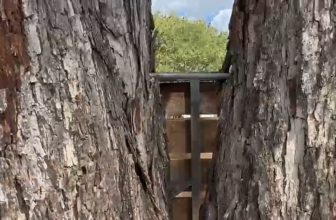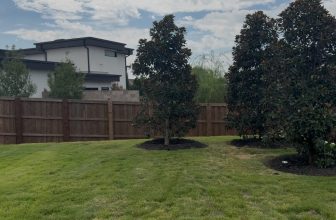
Today we’re inspecting three mature Shumard Red Oaks (Quercus shumardii) that have experienced two significant challenges affecting their long-term health. The first is heavy insect pressure throughout the canopy, and the second is a pruning practice commonly known as lion-tailing.
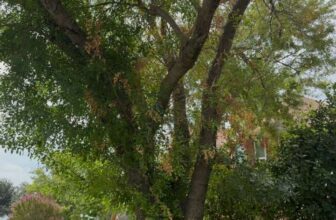
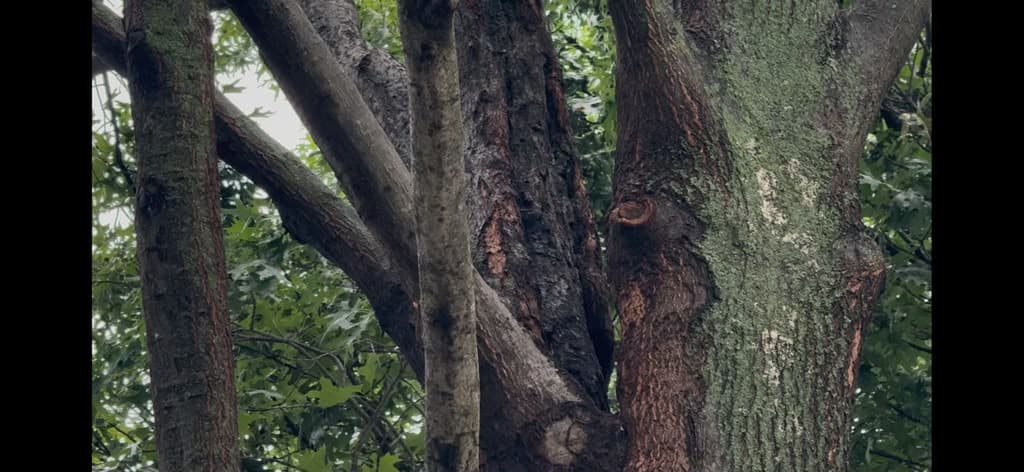
At first glance, these trees still appear healthy because the outer canopy remains green and vigorous. However, once I stepped beneath the canopy and began evaluating the interior structure, it became obvious these trees have lost a tremendous amount of interior foliage. The center of each canopy is extremely sparse, leaving the majority of the foliage concentrated only at the ends of the scaffold branches.
This is a classic example of lion-tailing.
While many homeowners believe removing interior branches allows more sunlight and airflow into the tree, excessive lion-tailing actually creates several long-term physiological problems that reduce the tree’s ability to produce energy and maintain proper structural balance.
Fortunately, these trees still have excellent recovery potential.
Our objective is helping these Shumard Red Oaks rebuild their interior canopy while reducing insect pressure and restoring overall vigor through a comprehensive Plant Healthcare Program.
⸻
What Is Lion-Tailing?
Lion-tailing is a pruning practice where excessive interior branches are removed, leaving foliage concentrated almost entirely near the ends of the limbs.
The branch begins resembling the tail of a lion, which is where the term originated.
Although the tree may initially appear cleaner or more open, removing too much interior foliage creates unintended consequences that affect both tree health and structural stability.
Trees depend on leaves throughout the canopy to produce carbohydrates through photosynthesis.
When a large portion of the interior canopy is removed, the tree immediately loses part of its food-producing capacity.
Less foliage means:
- Less photosynthesis
- Reduced carbohydrate production
- Lower energy reserves
- Increased environmental stress
One of the primary goals of proper pruning is maintaining enough interior foliage for the tree to continue producing the energy it needs to support roots, scaffold limbs, and future growth.
⸻
Why Interior Foliage Is So Important
Many people assume leaves simply make the tree look full.
In reality, every healthy leaf functions as a miniature food factory.
Through photosynthesis, leaves convert sunlight, water, and carbon dioxide into carbohydrates.
Those carbohydrates become the primary energy source for the tree.
They support:
- Root development
- New shoot growth
- Wound response
- Disease resistance
- Insect defense
- Structural maintenance
When interior foliage is removed excessively, the tree loses a significant percentage of its energy-producing surface area.
The remaining leaves must now support the entire tree.
Over time, this imbalance places unnecessary stress on the vascular system and root system.
⸻
How Lion-Tailing Changes Tree Structure
One of the less obvious problems associated with lion-tailing is how it changes weight distribution throughout the canopy.
Healthy branches normally carry foliage along much of their length.
When the interior branches are removed, most of the remaining foliage becomes concentrated at the tips of the limbs.
This shifts more weight toward the outer ends of each branch.
The result is greater leverage acting on branch attachments during:
- High winds
- Thunderstorms
- Ice events
- Heavy rain
Instead of distributing weight evenly throughout the scaffold system, the branches now carry much greater loading at their outermost ends.
Over many years, this increases mechanical stress on branch unions while making the canopy more susceptible to storm damage.
⸻
What I Observed During This Inspection
The three Shumard Red Oaks on this property all exhibited similar characteristics.
The outer canopy remains relatively healthy.
The terminal shoots continue producing new growth.
However, the interior canopy has become noticeably sparse.
Large sections of the center canopy now receive direct sunlight because so much interior foliage has been removed.
This reduction in canopy density has also allowed greater heat penetration into the interior of the tree.
During prolonged North Texas summers, excessive interior sunlight can increase bark temperatures on scaffold limbs while placing additional stress on remaining foliage.
Although the trees remain structurally stable, their long-term vigor has clearly been affected.
The encouraging news is that all three trees continue producing healthy new terminal growth, indicating that they still possess sufficient energy reserves to respond positively to treatment.
⸻
Heavy Insect Pressure
Another significant finding during this inspection was elevated insect pressure throughout the canopy.
Trees experiencing reduced vigor often become more attractive to opportunistic insect pests.
Insects frequently target stressed trees because their natural defense systems have been weakened.
As insects feed on foliage, several additional problems begin developing.
Leaf-feeding insects reduce photosynthetic surface area.
Sap-feeding insects interfere with normal vascular function.
Both situations reduce the tree’s ability to manufacture carbohydrates.
This creates another cycle of stress.
The tree loses energy.
Defense systems weaken.
Additional insect activity occurs.
That cycle continues until intervention breaks it.
For these Shumard Red Oaks, reducing insect pressure becomes one of the primary objectives of our Plant Healthcare Program.
⸻
Why Epicormic Growth Can Be Beneficial
One of the questions homeowners often ask after seeing a lion-tailed tree is why small shoots begin developing along the larger branches.
These shoots are called epicormic growth.
Epicormic shoots originate from dormant buds beneath the bark that become activated when the tree experiences stress or loses a significant portion of its canopy.
Many people immediately want to remove every one of these shoots.
However, not all epicormic growth is undesirable.
In situations like this, properly managed epicormic growth can actually help rebuild interior canopy density.
As new shoots develop, they begin producing additional leaves.
Those leaves increase photosynthesis.
Increased photosynthesis means greater carbohydrate production.
Greater carbohydrate production improves the tree’s ability to recover.
Rather than automatically removing every water sprout or epicormic shoot, the objective is selectively managing them to encourage healthy interior canopy regeneration.
That approach helps restore one of the functions that excessive lion-tailing removed in the first place.
Water Sprouts Are Not Always the Enemy
Another type of growth we frequently observe following improper pruning is the development of water sprouts.
Water sprouts are vigorous shoots that emerge from dormant buds along larger branches or the main trunk. They often develop after a tree loses a significant amount of foliage or experiences major stress.
Many homeowners immediately assume these shoots should be removed.
Not necessarily.
When properly managed, water sprouts can become an important part of the recovery process.
These new shoots immediately begin producing leaves.
Those leaves begin producing carbohydrates.
Those carbohydrates provide energy to the tree.
In a lion-tailed canopy where interior foliage has been removed, carefully managing selected water sprouts allows the tree to begin rebuilding its interior canopy naturally.
The objective is not allowing the canopy to become crowded.
The objective is restoring balance.
Proper structural pruning in future years can gradually train these shoots while preserving enough interior foliage to maintain healthy photosynthesis.
Why Micronutrients Play Such an Important Role
One of the biggest goals of our treatment program is helping these Shumard Red Oaks rebuild their energy reserves.
For that reason, our Plant Healthcare Program includes a comprehensive micronutrient application.
Micronutrients support several critical physiological functions including:
- Chlorophyll production
- Enzyme activation
- Root development
- Leaf development
- Photosynthesis
- Stress tolerance
Healthy leaves produce carbohydrates.
Healthy carbohydrates fuel every biological process occurring inside the tree.
The stronger the tree becomes, the greater its ability to naturally defend itself against environmental stress and future insect pressure.
Micronutrients do not replace proper pruning.
They support the tree while it recovers from improper pruning.
Integrated Pest Management (IPM)
The second major component of our treatment program is a comprehensive Integrated Pest Management program.
The insect pressure observed throughout these trees is contributing additional stress to an already weakened canopy.
Rather than waiting for insect populations to become severe, our goal is reducing pest pressure before significant damage occurs.
Our IPM program focuses on monitoring and managing insects that commonly affect Shumard Red Oaks throughout North Texas.
Reducing insect feeding helps preserve healthy foliage.
Preserving healthy foliage allows the tree to produce more carbohydrates.
Everything works together.
Healthier foliage produces healthier trees.
Proper Pruning Moving Forward
One of the biggest goals for these Shumard Red Oaks is avoiding another cycle of lion-tailing.
Future pruning should focus on maintaining the natural architecture of the tree while preserving adequate interior foliage.
Proper pruning emphasizes:
- Removing deadwood
- Eliminating broken branches
- Correcting structural defects
- Maintaining branch spacing
- Preserving interior canopy density
A properly pruned tree should still contain healthy foliage throughout much of the scaffold structure.
That foliage continues producing energy while reducing excessive weight concentrated at the branch tips.
Good pruning improves both tree health and structural performance.
Recovery Will Take Time
One of the most important conversations I have with homeowners is setting realistic expectations.
Trees do not recover overnight.
These Shumard Red Oaks did not become lion-tailed in one season, and they will not rebuild their interior canopy in one growing season.
Recovery is gradual.
Each year the tree produces additional foliage.
Each year carbohydrate reserves increase.
Each year the canopy becomes denser.
With proper pruning, micronutrients, and insect management, these trees have an excellent opportunity to regain much of the interior canopy they have lost.
Patience is part of successful plant healthcare.
Final Thoughts
These three mature Shumard Red Oaks demonstrate how improper pruning and insect pressure can work together to reduce tree vigor over time.
The lion-tailing removed a significant portion of the tree’s interior food-producing canopy.
Heavy insect pressure further reduced the tree’s ability to efficiently produce carbohydrates.
Fortunately, these trees continue producing healthy terminal growth, which tells us they still possess excellent recovery potential.
By implementing a comprehensive Plant Healthcare Program that includes micronutrients, Integrated Pest Management, and encouraging properly managed epicormic growth, we can help restore canopy density and improve the long-term health of these beautiful shade trees.
At Arborist USA, we believe successful tree care begins with understanding why a tree is declining—not simply reacting to what we see on the outside.
When we improve the environment, support healthy physiology, and allow the tree to rebuild its natural energy reserves, we give it the best opportunity to thrive for decades to come.
For general tree-care best practices, homeowners can also reference guidance from the Texas A&M Forest Service, https://tfsweb.tamu.edu/trees/, a trusted authority on Texas tree health.
Schedule a professional inspection. Early detection and scientific intervention are the difference between preservation and loss. If you’d like to speak to an arborist, please call us at 817-880-6130 or visit https://www.arboristusa.com/
Hello Community, I’m Henry Friar, Lead Arborist with Arborist USA. Today we’re in Keller, Texas inspecting three mature Shumard Red Oaks (Quercus shumardii) that have experienced significant insect pressure and the long-term effects of improper pruning, commonly referred to as lion-tailing.
At first glance, these trees still appear healthy because the outer canopy remains green. However, once we moved beneath the canopy, it became clear that the interior structure had been heavily over-pruned, leaving most of the foliage concentrated only at the ends of the scaffold branches.
This pruning practice dramatically reduces the tree’s ability to efficiently produce carbohydrates through photosynthesis.