For much of modern agriculture, success has been measured by a simple metric: how much can we produce from every hectare?
That ambition has transformed global food production. Better genetics, improved agronomy and advances in plant breeding have helped farmers feed a growing population for decades. But the conditions those crops were bred for are quickly changing.
Across many parts of the world, farmers are facing more frequent heatwaves, prolonged droughts, unpredictable rainfall and increasing disease pressure. The challenge is no longer simply achieving the highest possible yield under ideal conditions; it is producing reliable harvests despite increasingly unpredictable ones.
This represents one of the biggest shifts in crop improvement and agriculture in a generation. Yield stability and resilience are becoming just as valuable as maximum yield.
Climate volatility is changing the definition of performance
Farmers have always adapted to changing weather conditions. What is different today is the pace and complexity of the challenges they face.
A growing season can now expose crops to multiple stresses in quick succession: periods of heat followed by drought, intense rainfall, emerging diseases or nutrient limitations. Each affects plant performance, but together they create even greater uncertainty.
For growers, consistency is increasingly becoming a commercial advantage. A crop that delivers dependable performance across difficult seasons often creates more value than one capable of exceptional yields only under ideal conditions.
That matters not only for farm profitability across the wider food system. Processors and retailers depend on predictable volumes and quality, while communities already vulnerable to food insecurity are hit hardest when harvests fail.
The biology is more complex than we once believed
One reason resilience has proved difficult to improve is that it is not controlled by a single gene.
Traits such as yield stability, drought tolerance or nutrient efficiency emerge from complex biological networks involving many genes working together. Improving one characteristic in isolation does not necessarily improve overall field performance. This is changing how scientists approach crop improvement.
Rather than asking which individual gene controls a trait, researchers are increasingly asking how entire biological systems interact under evolving real-world conditions.
This systems-level approach to complex traits is opening new opportunities to develop crops capable of performing more consistently under environmental stress.
Breeders therefore need to understand not only a crop’s average yield, but how widely that performance varies between environments and whether improvements remain stable when several stresses occur together.
New technologies are helping breeders work faster
Recent advances in artificial intelligence, genomics, omics technologies and precision breeding are making it possible to study complex biological systems in ways previously unimaginable.
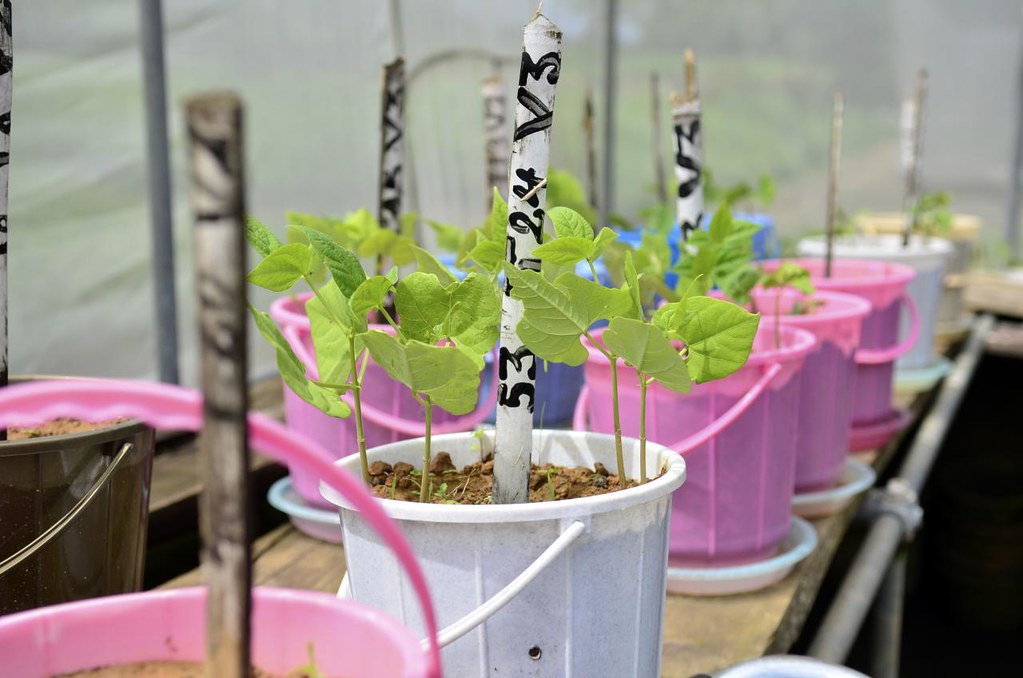
Artificial intelligence can identify patterns across enormous biological datasets. Genomic and other omics data, including gene expression, proteins and metabolites, provide a richer picture of the biological processes influencing a trait. Modern genome editing allows researchers to investigate multiple genes simultaneously, while automated phenotyping generates detailed information about how plants actually perform under different conditions.
The real value comes from bringing these capabilities together to create a more holistic understanding of how genetics, molecular processes, plant performance and environmental conditions interact. Researchers can then use these integrated data to predict which genetic combinations may influence a trait, create and test those combinations, measure how plants respond and feed the results into the next cycle of research.
Importantly, these technologies should not be viewed as replacements for conventional breeding. They are additional tools that complement decades of breeding expertise and accelerate the development of improved varieties.
Regulation is beginning to catch up with the science
Scientific capability alone is not enough. Innovation also depends on appropriate regulatory frameworks.
Recent progress on New Genomic Techniques in Europe reflects a growing recognition that modern breeding technologies have an important role to play in addressing climate resilience, food security and agricultural sustainability. While implementation will take time, greater regulatory clarity gives researchers, breeders and investors more confidence to pursue long-term innovation.
But these tools must ultimately deliver practical value in the field and support the development of varieties that meet farmers’ needs.
A more resilient food system starts with more resilient crops
As climate risks continue to grow, agriculture needs to think differently about success. Maximum yield will always matter. Feeding a growing global population requires continuous improvements in productivity, but resilience is becoming equally important.
The crops of the future will not simply be those capable of producing the highest yields in exceptional seasons. They will be those that continue delivering dependable harvests when weather patterns become less predictable, resources become more constrained, and environmental pressures intensify. That is the challenge that modern agriculture must rise to.