Free for nonsubscribers
By Howard Hardee
August 3, 2026, © Leeham News: Boeing has finally secured a long-sought amended type certificate for the 737 Max 7, a major milestone in the commercial division’s financial turnaround plan and a symbolic victory in what has become a years-long struggle to certificate new aircraft with the FAA.
The US airframer confirmed on August 3 that the FAA had signed the documents granting Boeing an amended type certificate for the Max 7, the smallest variant in the airframer’s lineup of latest generation narrowbody jets.
Stephanie Pope, head of Boeing Commercial Airplanes (BCA), addressed the moment’s significance in a message to employees.
“This pivotal certification clears the way for us to deliver the airplane and begin meeting the commitments to our customers,” Pope said. “The multi-year journey to this milestone has been long and winding. Our team has had to navigate various challenges, an extended pandemic and the transition to new certification processes as lawmakers put in place new requirements to strengthen airplane safety.”
Perhaps more notable than certification of the Max 7 itself is the implication that the strong-selling Max 10, the most-stretched 737 variant, could soon clear final certification hurdles. Boeing concluded the certification test-flight campaign for the Max 10 last week, leaving the FAA’s extensive paperwork requirements as the bulk of the remaining work.

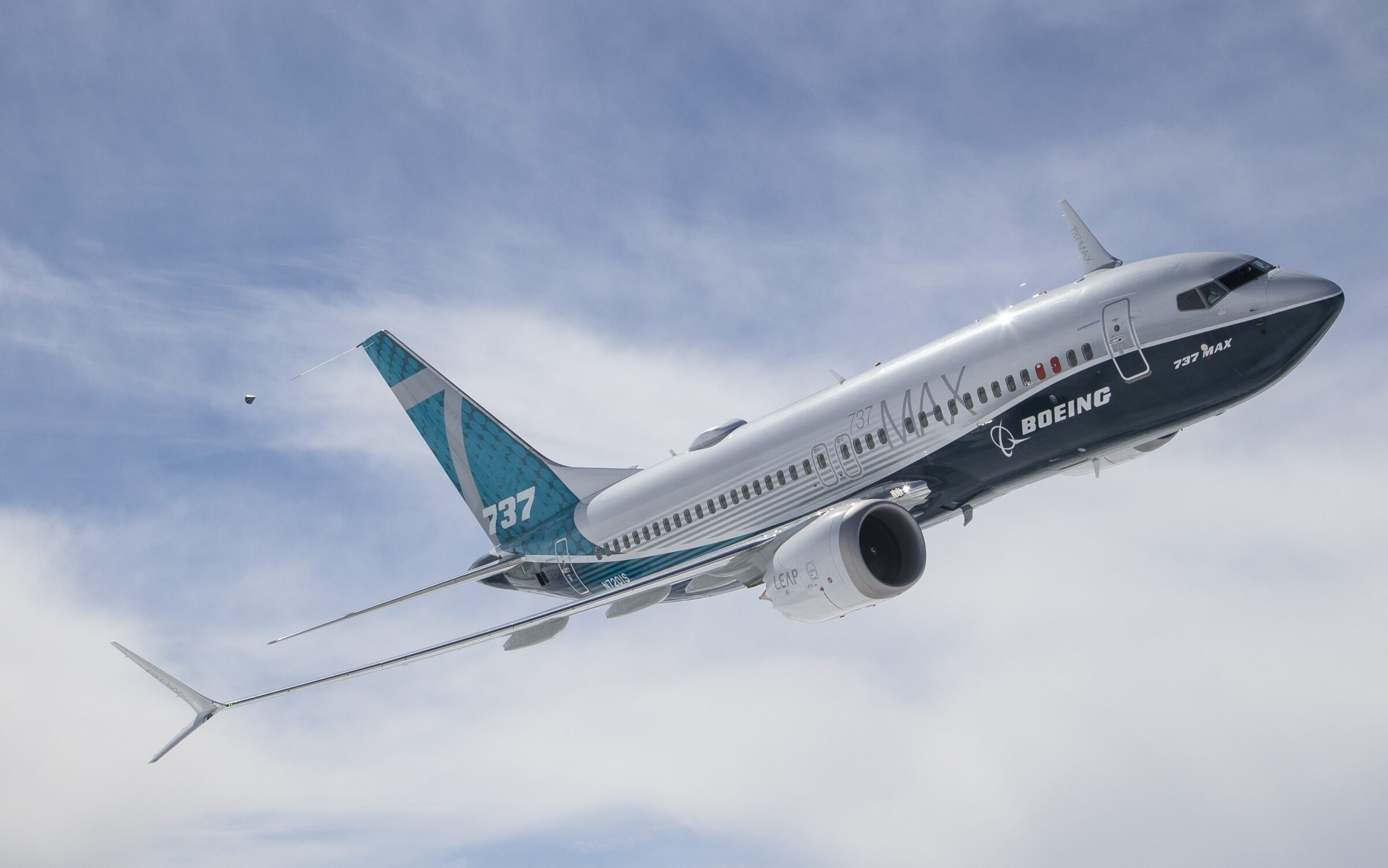
The Max 7 is considered a niche product, but its above-average range and performance in “high and dry” climates could broaden its market appeal. Photo credit: Boeing
It has been a long and painful journey from the lows of the Max crisis late last decade, in which a pair of fatal accidents in 2018 and 2019 grounded the global 737 Max fleet and put BCA’s safety and quality practices under an intense spotlight for years afterward.
The airframer originally anticipated certifying and delivering the first Max 7s to customers in 2019. But intense FAA scrutiny, coupled with workforce culture dysfunction—arguably culminating in January 2024 with the mid-flight door plug blow-out on a Max 9 operated by Alaska Airlines—contributed to delays in securing certification of Max 7 and Max 10.
In 2023, an engine anti-ice system that caused the type’s CFM LEAP-1B engines to overheat when running continuously emerged as the primary hurdle for certification of the Max 7 and Max 10. Boeing told reporters in July that it was on the verge of securing FAA certification of an engine anti-ice solution, after working with CFM to improve heat dissipation through aerodynamic and structural changes.
Boeing is also introducing an Enhanced Angle of Attack System (AoA) on the Max 10, in response concerns from US lawmakers that the sensor system that contributed to both Max crashes was not sufficiently redundant. Once the Max 10 achieves certification, the new AoA system will be equipped on all new Max jets, and retrofits will begin on aircraft already in service.
The Max 7 will be assembled at Boeing’s primary 737 factory in Renton; the new North Line in Everett does not have the required tooling. Deliveries of the Max 7 will likely begin sometime early next year.
Boeing’s critics will no doubt point to the jet’s market appeal, which to date has been limited essentially to a single airline customer—Southwest Airlines.
Fleets data provided by aviation analytics firm Cirium show that Southwest currently holds unfilled orders for 254 Max 7s, while US low-cost carrier Allegiant Air has 23 orders for the small narrowbody type. Cirium also lists 15 Max 7 orders placed by an “unannounced commercial customer.”
All told, that amounts to fewer than 300 aircraft orders for the Max 7.
Notably, Boeing has already built about 30 Max 7s that are currently awaiting delivery.
LNA‘s independent analysis, informed by discussions with industry insiders, concludes that the Max 7 could break out of that limited market due to some positive performance attributes—including the longest range of any Max jet—though it is unlikely to find a mass market in the manner of the Max 8, and will almost certainly remain a niche narrowbody jet.
A deeper analysis of the Max 7’s market potential will follow.
Related