Francesca Gaza, Kugelförmigkeit Ensemble – Crown Shyness (2026; New Amsterdam) – Avant Music News

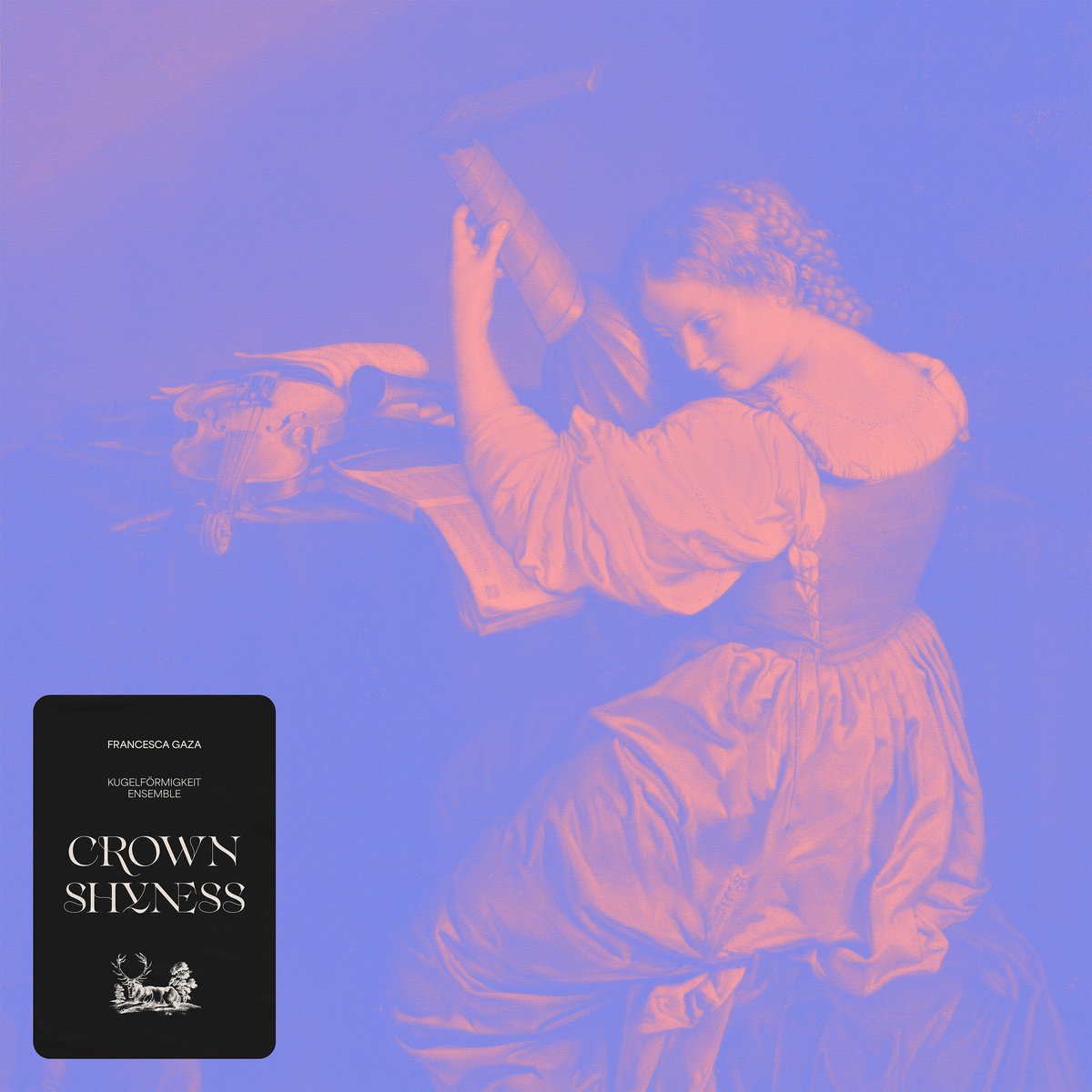
With a band name like the “Kugelförmigkeit Ensemble,” Francesca Gaza practically demands that we start with definitions. “Kugelförmigkeit” means something like “sphere-shapedness,” and it carries musico-philosophical baggage. It echoes composer Bernd Alois Zimmermann’s concept of “Kugelgestalt der Zeit”–“sphericality of time.” Zimmermann saw time as non-linear, going so far as to conceptualize his opera, Die Soldaten, with twelve sometimes-overlapping stages.
Die Soldaten has entered the repertoire, though in a much-simplified form. Gaza, too, has brought similar ideas to life in a way that–if you can get past the band name, anyway–is plenty accessible.
The new album is called Crown Shyness, a follow-up to 2021’s Kugelförmigkeit. Gaza wrote the music and sings; just as importantly, she orchestrated. The group is a one-of-a-kind set of instruments, mixing early-music staples like baroque flute, viola da gamba, virginal, and theorbo (a bass lute) with modern axes including electric guitar and drums. All told, it’s an eleven-person group, one that offers all kinds of unusual combinations.
Hence the sphere-shapedness of time: Why not score an electric guitar solo with a virginal in the background?
Fortunately this is much more than novelty. Yes, the guitar sticks out on its occasional appearances. The baroque flute, too, catches the ear, never really blending into the ensemble. But the album is still led by Gaza’s voice and some lovely songs. The 2021 album, with the same orchestration, was a sort of chamber-jazz dream-pop. Crown Shyness is less jazz and less pop, yet those influences remain audible.
The new record also brings us back to definitions. Gaza describes crown shyness as “the natural phenomenon where the crowns of tall trees avoid touching, leaving delicate patterns of space between them.” So we’re not quite in Zimmermann-esque territory, where every era collapses into one. The different sound sources are drawn to one another but don’t quite merge. If anything, it’s an even more suggestive musical metaphor than Zimmermann’s foundational concept.
All these ideas–and instruments–come together most dramatically on the album’s longest piece, “Spring is like a perhaps hand.” Gaza sets an E.E. Cummings text against an 11/4 loop that steadily gains complexity. The background texture combines theorbo and electric guitar; the baroque flute combines with clarinet and trombone for additional harmonies. Listen casually, and it’s pretty–if off-kilter–avant-pop. The more attention you give it, the more you can hear the component parts that, as in the botanical metaphor, don’t quite merge. It’s not the quickest route to beauty, but when it all comes together for a climax, it sure is beautiful.
No one genre could contain Gaza’s ambition, so she has somehow knitted them all together. Whether the initial draw is the philosophy or the oddball instrumentation, the ultimate appeal is music that transcends any attempt at classification.