
From a purely mechanical
perspective, Japanese watchmaking’s most significant contributions are
different in character from the Swiss “most important” movements. While
Swiss contenders are famous for their historical events or design
influence, Japan’s strength lies in democratizing quality, relentless
innovation, and achieving a unique synthesis of technologies.
The following table summarizes the three most significant Japanese contributions to mechanical watchmaking.
| Key Japanese Contribution | Primary Significance | Notable Movements & Legacy |
| Seiko’s Accessible & Robust Mechanics | Democratized automatic watch ownership with reliable, affordable movements. | 7S26/4R/NH Series: Workhorse movements powering millions of watches (e.g., Seiko 5, SKX divers). Proprietary Tech: Magic Lever (efficient winding), Spron alloys (durability), Diashock (shock resistance) |
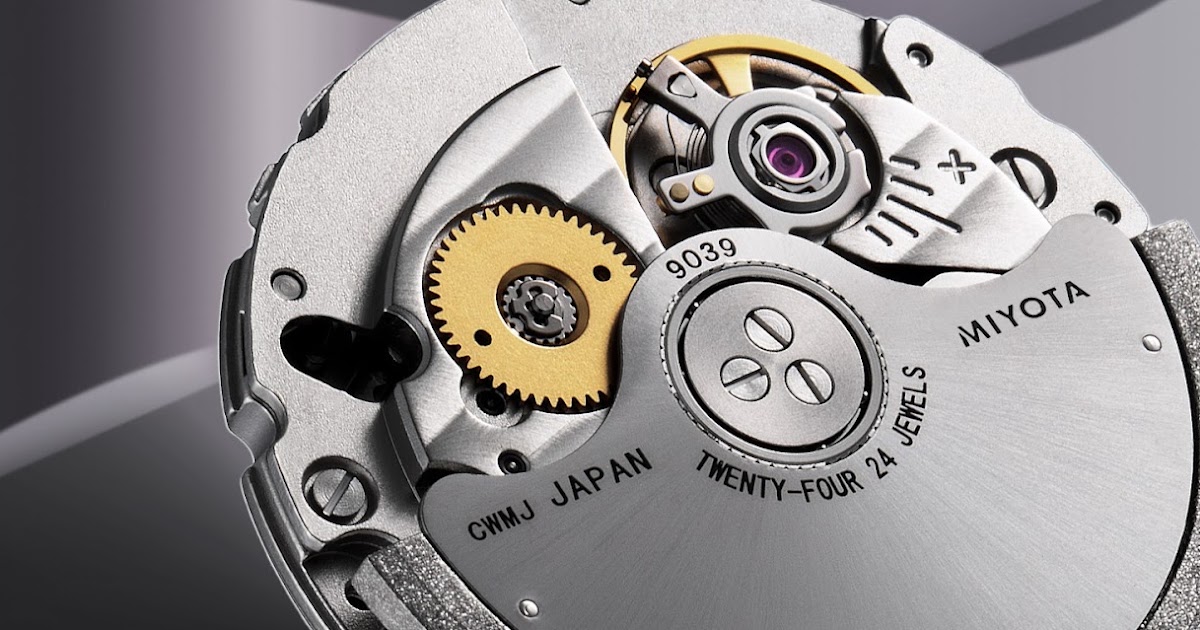
| Citizen/Miyota’s Ubiquitous Workhorses | Powered the global microbrand revolution as a reliable, off-the-shelf engine. | Miyota 8215/9015: Mass-produced, reliable automatic movements used by hundreds of brands worldwide. Citizen develops its own in-house mechanical calibers as a true manufacturer. |
| Grand Seiko & Credor’s High-Horology | Proved Japan could rival Swiss precision and craftsmanship at the highest levels. | Spring Drive (cal. 9R): A unique hybrid, using a mainspring regulated by a quartz-crystal-controlled “glide wheel” for exceptional accuracy (±1 sec/day). Hi-Beat (cal. 9S): High-frequency mechanical movements (36,000 BPH) for superior precision. |
A Closer Look at Japanese Mechanical Influence
Here’s how these contributions have shaped the watch industry:
-
Seiko’s Democratic Approach: Seiko’s philosophy of “kaizen” (continuous improvement) focused on making reliable mechanics accessible. The 7S26 movement (and its successors like the 4R and NH
series) offered features like automatic winding and day-date
complications at an unprecedented price point in the 1960s, bringing
mechanical watches to a global mass market. However, the true pinnacle is Spring Drive,
a revolutionary “third kind” of movement that combines a mechanical
mainspring with an electronic regulator for unparalleled smoothness and
precision. The ultra-high-end brand Credor uses these movements with exquisite hand-finishing.
- Citizen & Miyota’s Enabling Role: Through its subsidiary Miyota, Citizen produces movements like the 8215 and the higher-spec 9015.
Their reliability and affordability made them the default choice for
thousands of independent “microbrands” over the past two decades,
fueling a resurgence in mechanical watch interest. -
The Pursuit of Ultimate Precision: At the luxury end, Japanese brands compete on pure technical merit. Grand Seiko’s 9S Hi-Beat movements are adjusted in multiple positions for extreme accuracy. However, the true pinnacle is Spring Drive,
a revolutionary “third kind” of movement that combines a mechanical
mainspring with an electronic regulator for unparalleled smoothness and
precision. The ultra-high-end brand Credor uses these movements with exquisite hand-finishing.
Comparing Philosophies: Swiss vs. Japanese “Importance”
If we compare this to the Swiss contenders, the difference in philosophy becomes clear:
-
Swiss movements are often celebrated for singular achievements (the moon, the automatic chronograph, an iconic design).
-
Japanese mechanical movements are more notable for systemic impact: creating robust, scalable platforms that improved quality and access globally.
In essence, the Swiss contenders are icons, while the key Japanese contributions are foundations.