Did George Mallory and Sandy Irvine make the summit of Mt. Everest on June 8, 1924, becoming the first ever to do so?
That is the biggest mystery in the history of mountaineering. Over 100 years after they were last seen ‘going strong for the top,’ the question of exactly what happened to them on that fateful day has been left unanswered.
In The Everest Mystery, Julie Summers, Sandy Irvine’s great-niece, and Jochen Hemmleb, the world’s leading authority on the Mallory and Irvine Everest expedition, explore the life of Sandy Irvine, his relationship with George Mallory, and the many theories about what happened to the men as they aimed for the summit. Above all, it restores Sandy Irvine to his rightful place in the great mystery of Everest 1924. Read on for an introductory excerpt from this captivating read.
Chapter 1
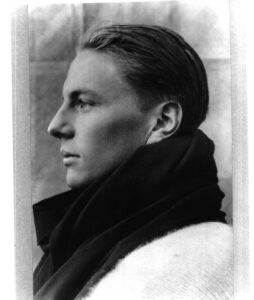
I expect we shall be at the mountain by the time this reaches you. We saw it for the first time yesterday but still nearly 200 miles away. The trek is nearer 400 than 300 miles so there is plenty of time yet.
Sandy Irvine to Lilian Irvine, 12 April 1924
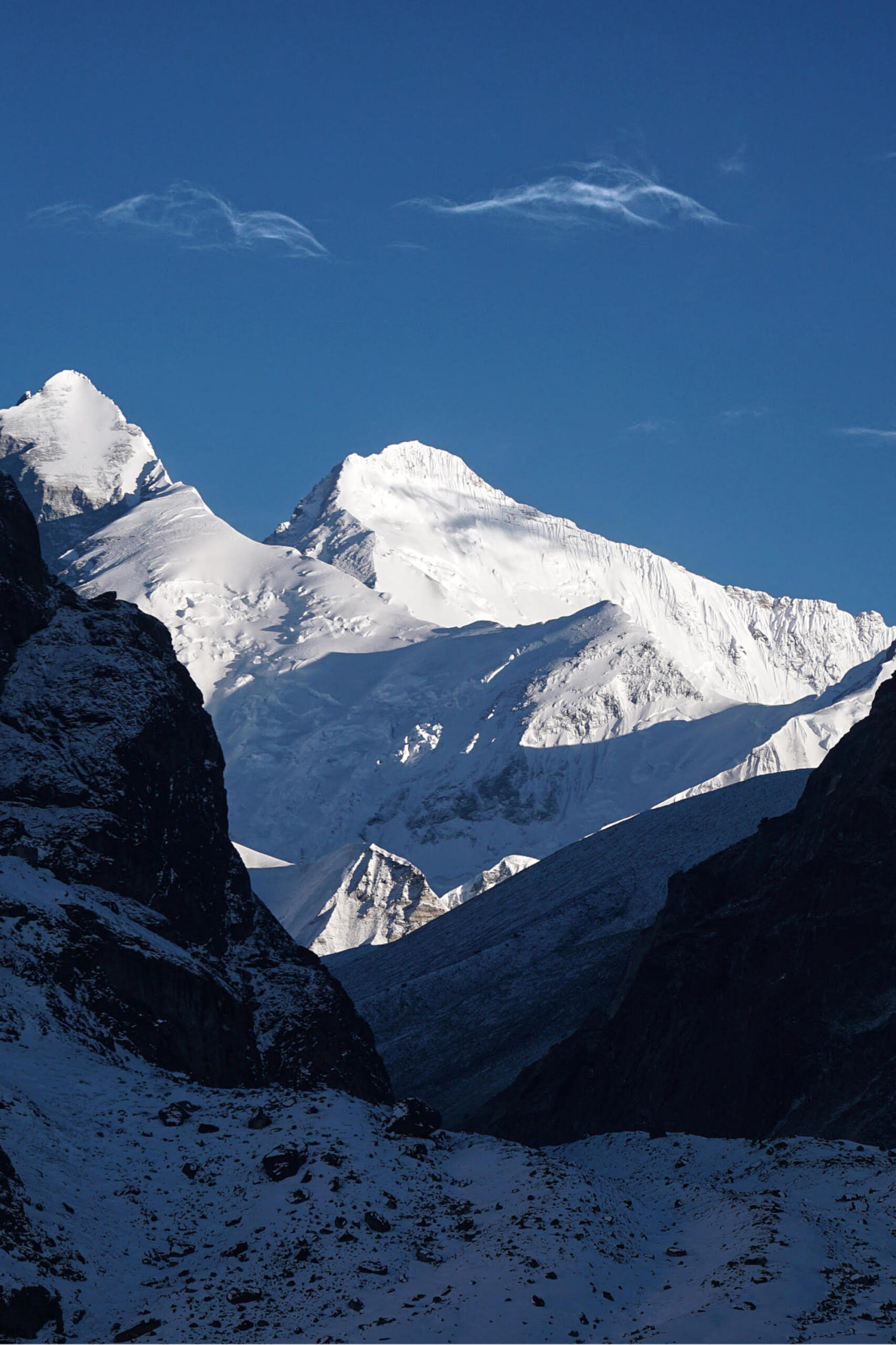
Today, most people think of Mount Everest as an overcrowded, commercialized mountain. Pictures of luxurious base camps and queues of climbers lining the windswept, narrow summit ridges have flooded the internet. What was once regarded as the ultimate challenge of human endeavour has become a consumer product with a hefty price tag.
In 1902, the year of Sandy Irvine’s birth, the situation was very different. The mountain had been known to Tibetans by the name of Chomolungma, ‘Mother Goddess of the World’, and to Nepalis as Sagarmatha, ‘Head of the Sky’. In the course of the British Great Trigonometrical Survey of India the peak had been surveyed from near the border of Nepal and in 1856 had officially been announced as the world’s highest mountain. In ignorance of any local designations, it received its name from the former Surveyor General of India who had pushed the survey campaign towards the Himalaya, Sir George Everest. But views of Everest had been from a distance, as the kingdom of Nepal was off-limits to foreigners. The peak appeared as a fairly unremarkable summit poking out from behind more imposing mountains. No European had seen or photographed it from close quarters. That was still one or two years in the future, when, in 1903 or 1904, J. Claude White, then Britain’s political officer in Sikkim, would take a snapshot of the snow-white ‘spotless pinnacle’1 from the fortress town of Kampa Dzong (now Gampa) in Tibet, ninety-four miles away. And while locals had been living in the valleys near the mountain for centuries and may have trodden as far as its lower glaciers, it was only in 1913 that a young Indian Army officer, John Baptist Lucius Noel, stole into Tibet in disguise and managed to get to within forty miles of Everest, nearer than any other European before him. Noel presented the results of his clandestine journey at the Royal Geographical Society (RGS) in London six years later, bringing the question of climbing the mountain to the fore. This had been under consideration among alpinists since the 1890s, but British relations with Tibet were not good in the years before the First World War. Now, climbers and explorers in Britain were fully committed to making an attempt on the world’s highest mountain. Sir Francis Younghusband, a renowned explorer himself and leader of the controversial military campaign that had established Britain’s political presence in Tibet back in 1904, was the newly appointed president of the RGS. He described Noel’s lecture as the ‘spark which set flame to the train.’
There were many challenges to be faced. Firstly, Mount Everest was halfway across the world, not a two-day train journey from London; secondly, there were no exact maps or survey reports about the mountain and its immediate environs; and thirdly, there was the question of its height. Although climbers had reached 24,600 feet (7,500 metres) before, no one knew if they could survive at 29,002 feet (8,839 metres), then the established height of Everest’s summit;* balloonists who had aimed to reach such heights had died from lack of oxygen at over 26,250 feet (8,000 metres).
In 1921, the newly established Mount Everest Committee, comprising members of the Royal Geographical Society and the Alpine Club, launched the first reconnaissance. This was exploration in the classical sense. It set out to find a way to the mountain, survey and map its surroundings, and establish a feasible route to the summit. The appointed leader was Irish-born Charles K. Howard-Bury, an experienced explorer who had been instrumental in the negotiations with India and Tibet that opened the way for the expedition. Under his command were surveyors Henry T. Morshead and Edward O. Wheeler, geologist Alexander M. Heron and naturalist Alexander F. Wollaston. The climbing team consisted of Scotsman Alexander M. Kellas, his compatriot Harold A. Raeburn and Guy H. Bullock. The final member of the team was a thirty-five-year-old schoolmaster from Charterhouse whose name would for ever be linked with Everest and mountaineering’s greatest mystery: George Leigh Mallory.
Kellas, a doctor, had made a serious study of the problems of breathing at altitude and had conducted experiments in pressure chambers. He concluded that the use of supplementary bottled oxygen might be of value when climbing at great heights. He had also looked into the problem of acclimatization, a method whereby climbers scale heights and then return to a lower level to recover, repeating the process and thereby helping the body adjust to working with less oxygen than at sea level. Many of the basic principles of human adaptation to altitude had been recognized already, mainly due to the observations and experiences of medical doctor and mountaineer Tom Longstaff during his Himalayan climbs in the first decade of the twentieth century.* After the 1924 expedition, expedition leader Edward Norton was full of praise for Longstaff ’s insights and considered him ‘a true prophet’. Kellas was also among the first to recognize the value of the local hillmen, Sherpas, as strong and capable porters and helpers. With two such men, he had climbed Pauhunri, on the border of Tibet and Sikkim, in 1911, which, at 23,387 feet (7,128 metres), was the highest summit reached at the time.
Mallory had begun climbing in the Lake District, North Wales and the Alps before the First World War, gaining a reputation for balletic elegance, balance and boldness. Modern climbers, who in the early 2000s reassessed his first ascents in Wales, concluded that the technical difficulties set Mallory’s routes apart from most others: ‘His skills as a rock climber [. . .] were higher than those of most of his contemporaries’. He was also a gifted writer, who revealed his innermost struggles and could wax lyrical about the mountain experience. His account of the almost detective-like, step-by-step deciphering of Everest’s topography in 1921 became a captivating piece of alpine literature.
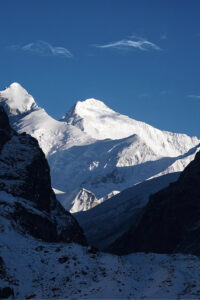
By the time the expedition reached the northern fringes of the Everest massif, in late June 1921, the climbing team had been reduced by half. Kellas had fallen ill with severe dysentery on the walk in and died of heart failure at Kampa Dzong. Raeburn had also been ailing and was forced to return to Sikkim. So, the task of scouting out possible climbing routes fell to Mallory and Bullock. The following month, together with a group of local porters, they explored the Central Rongbuk Glacier, which flows down from the northern foot of Everest. From a nearby summit, they discovered a broad spur leading from the North Col, a high pass between the peak of Everest and its northern neighbour, to the Northeast Ridge, which in turn led to the summit. Thinking the west side of the Col too steep, they hoped for an easier ascent from the far side. But Mallory missed the entrance to a side valley, the East Rongbuk, that provided access to the North Col from the east. Instead he and Bullock left the Rongbuk Valley, rejoined the rest of the expedition and travelled with them to the village of Kharta on the east side of the massif. It was surveyor Edward Wheeler who, a few weeks later, walked on the lower part of the East Rongbuk Glacier for the first time in the course of his work, photographed it and proved its importance as the gateway to the mountain.
After exploring the eastern approaches that led to the fearsome and dangerous Kangshung Face of Everest, which Mallory left to ‘other men, less wise’ to climb, he and Bullock received Wheeler’s information about the true nature of the East Rongbuk and finally saw it with their own eyes from the Lhakpa La (22,472 feet / 6,849 metres),* another high pass at the head of the Kharta Valley. Finally, on 22 September, Mallory, Bullock, Wheeler and ten porters crossed the Lhakpa La to the East Rongbuk and spent a freezing night below the North Col. Three tired mountaineers and three tired porters set off the next morning for the last stage up to the Col. Luckily for them, the climb was easy, with only the uppermost slopes being steep and covered in deep snow. After four and a half hours of climbing, they had made it; at 11.30 a.m., they stood on the storm-tossed saddle, 23,184 feet (7,066 metres) high. Mallory thought he could climb a further 2,000 feet (600 metres), but one look at the swirling plumes of snow whipping across the North Face and ridges of Mount Everest was enough; any further advance would be foolish. The reconnaissance was over. On the return, Howard-Bury revisited the Kangshung Valley and achieved another remarkable feat, largely overlooked in mountaineering histories. In a single day he and Sherpas Ang Tenze and Nyima Tendu climbed from the valley floor to the Tibetan–Nepalese border ridge, at 21,160 feet (6,450 metres), and back, an elevation gain of 4,600 feet (1,400 metres) and one of the best performances in Himalayan mountaineering at the time.
The first Everest expedition had been a complete success. With admirable perseverance and tenacity, the team had hiked and mapped all approaches to the mountain from the north and east (the Nepalese south side, now one of the two standard routes, was to remain closed to foreigners until 1950). Moreover, it had done so during the worst season, the monsoon. And it had identified a possible route to the summit via the North Col, North and Northeast Ridges.
It was by this route that the first serious attempt at the peak was mounted in 1922. The expedition decided to take bottled oxygen, as Kellas had suggested, but, right from the outset, opinions were divided on whether it was necessary. Those who voted against its use did so primarily for sporting reasons. For them, additional oxygen was considered ‘unfair’, as it effectively reduced the height of the mountain and thus the human challenge. And so began a fundamental ethical controversy in high-altitude mountaineering that persists to this day. At the time, Mallory was still an opponent of oxygen, writing: ‘When I think of mountaineering with four cylinders of oxygen on one’s back and a mask over one’s face – well, it loses its charm.’
The expedition was led by fifty-six-year-old General Charles G. Bruce of the 5th Gurkha Rifles, a jovial man, larger than life in every way. He was considered too old to climb high on the mountain, despite the fact he had more experience of Himalayan climbing than the rest of the party combined. Being fluent in Nepali, Bruce was universally liked by the porters and advocated their training in mountaineering, a first step in their becoming experienced and self-reliant climbers. He invited his cousin, twentysix-year-old Geoffrey Bruce, a Gurkha captain, to act as trans port officer, even though he had no experience of high-altitude mountaineering. Together, the two Bruces gathered an impressive group of porters in Darjeeling who would accompany the expedition to help manage the camps and carry loads and equipment for the climbers.
The team, which included Mallory, contained new men, all experienced climbers. Among them was thirty-four-year-old George Ingle Finch, an accomplished alpinist and scientist with a creative, if unorthodox mind. He was the main proponent of using oxygen. Howard Somervell, a thirty-two-year-old surgeon with a distinguished climbing career, had been earmarked from the start as a strong member of the expedition. He was also a musician and a talented painter, whose watercolours of the Tibetan landscapes were later featured in books and exhibitions. The other climbers were Henry Morshead, one of the surveyors from 1921, and Edward Felix Norton, a thirty-eight-year-old army officer with a distinguished war record and solid Alpine experience.
Following the route along the East Rongbuk Glacier, the expedition established four camps up to the North Col, from where they launched the first summit bid on 20 May. The party consisted of Mallory, Norton, Somervell and Morshead, and they were not using oxygen. From the outset, everything seemed to conspire against them. Only four porters were able to accompany them, and it was windy and bitterly cold. At a rest stop, Norton lost his rucksack with spare clothing. At 25,000 feet (7,620 metres), they had to pitch their two tents on the left side of the North Ridge, away from the wind. The night in the cramped canvas shelters on the sloping scree ledges was agonizing, and it snowed. The next morning, Morshead felt out of shape, and he turned back shortly after leaving the tents. The remaining three trudged upwards with difficulty – without oxygen, they could barely manage 400 feet (122 metres) of altitude per hour. They struggled for breath between each step, having to rest every twenty to thirty minutes. The summit had long been out of reach, and when Mallory, Norton and Somervell reached a less steep recess on the blocky spur at around 2.15 p.m., they decided to turn back. They had reached around 26,640 feet (8,120 metres)* – making them the first humans to pass the magic 8,000-metre mark.
On pictures of these early expeditions, the climbers’ outfits look almost primitive. Playwright and author George Bernard Shaw compared the 1921 reconnaissance team photo with a ‘Connemara picnic surprised by a snowstorm’.7 Indeed, the image of Mallory and Norton at 8,000 metres in their nailed boots, cashmere puttees (leg wraps), gaberdine jackets and knickerbockers could have been taken on an Alpine peak. But the appearance of the climbers’ attire belied the wealth of knowledge they had about climbing equipment. They knew about a good layering system. Silk wool underwear kept the skin dry, while Shetland wool and flannel provided insulation. Polar travel had taught them the necessity of outer garments that were windproof and breathable. Gaberdine was the 1920s equivalent of GoreTex. George Finch had even developed the first down clothing for high-altitude climbing in 1922, but the concept didn’t catch on at the time. Felt-insulated nailed boots were comparatively lightweight and all purpose, giving good grip on all but the iciest surfaces. And the mountaineers were soon learning about the benefits of supplementary oxygen.
When Finch made his own summit bid, on 24 May 1922, it was the first time oxygen was used as a climbing aid. Previous attempts, dating back as early as 1907, had not gone beyond an experimental stage. His two companions were Geoffrey Bruce and Tejbir Bura, a Gurkha soldier. The advantages of bottled oxygen soon became apparent: although the three of them were carrying heavier loads, they overtook their porters on the North Ridge, who had started an hour and a half ahead of them. Finally, they set up Camp V at 25,500 feet (7,770 metres), some 500 feet (150 metres) higher than the first party. But a severe storm kept them there for two nights. Without sleep and food, their life energy dwindled. Eventually, Finch decided to use oxygen inside their tent – and the effect was nothing short of miraculous. All three recovered noticeably. During a prolonged stay at high altitude, the body begins to decline and it cannot recover, even while resting or asleep. It is now well understood that oxygen prevents frostbite and general body deterioration. The next morning, they went for the summit. Tejbir was supposed to carry their spare oxygen cylinders, but, after a few metres, he collapsed, exhausted. Finch and Bruce took his load and climbed on. The wind forced them to branch out onto the North Face. After a diagonal traverse of almost a kilometre, they both aimed again for the Northeast Ridge. Finch led the way and was just reaching the top of a prominent snow triangle, high on the face, when Bruce’s oxygen supply suddenly failed. Finch quickly climbed back and was just able to prevent his partner from toppling backwards into the void. A connecting piece in the oxygen apparatus had broken. They managed to repair the damage, but any further ascent would have been too risky.
At around 27,500 feet (8,380 metres),* Finch and Bruce had set a new altitude record – on Geoffrey Bruce’s first climb ever. With oxygen, the two had climbed around three times faster than Mallory’s party, without. And, during the second night at Camp V, the oxygen had not only helped them and Tejbir to get a good night’s sleep, but it had probably saved their lives. These were impressive findings that did not go unnoticed by Mallory. On 7 June, with the threat of the monsoon breaking over the Himalaya any day, Mallory and Somervell decided to make a third bid. They set off with four parties: Mallory, Somervell, a porter and Colin Crawford, a thirty-one-year-old Indian civil servant, made up the first; the three parties behind comprised thirteen porters. After a short rest around 600 feet (180 metres) below the saddle, they had just set off again when an avalanche broke loose above them with a loud bang and swept the men away. While the climbers and four porters came to a halt and were able to free themselves from the mass of snow, the other porters were carried over a wall of ice and buried in the crevasse below. Seven of them lost their lives. It was a tragic end to the first attempt to climb the world’s highest mountain. Mount Everest remained unclimbed. The ‘death zone’ above 8,000 metres had barely been probed and was still a vast unknown. But they had gained more knowledge about the human body at high altitude, acclimatization, dehydration and oxygen. New clothing and equipment were to be developed and tested.
There was much excitement when the third expedition set out from England at the end of February 1924, and twenty-one-year-old Sandy Irvine entered the story of Mount Everest.
Start listening to an audio excerpt of The Everest Mystery!
The Everest Mystery. Copyright © 2026 by Julie Summers and Jochen Hemmleb. All rights reserved.